
Gutters, Drains, and Grading: A Fall Water Checklist
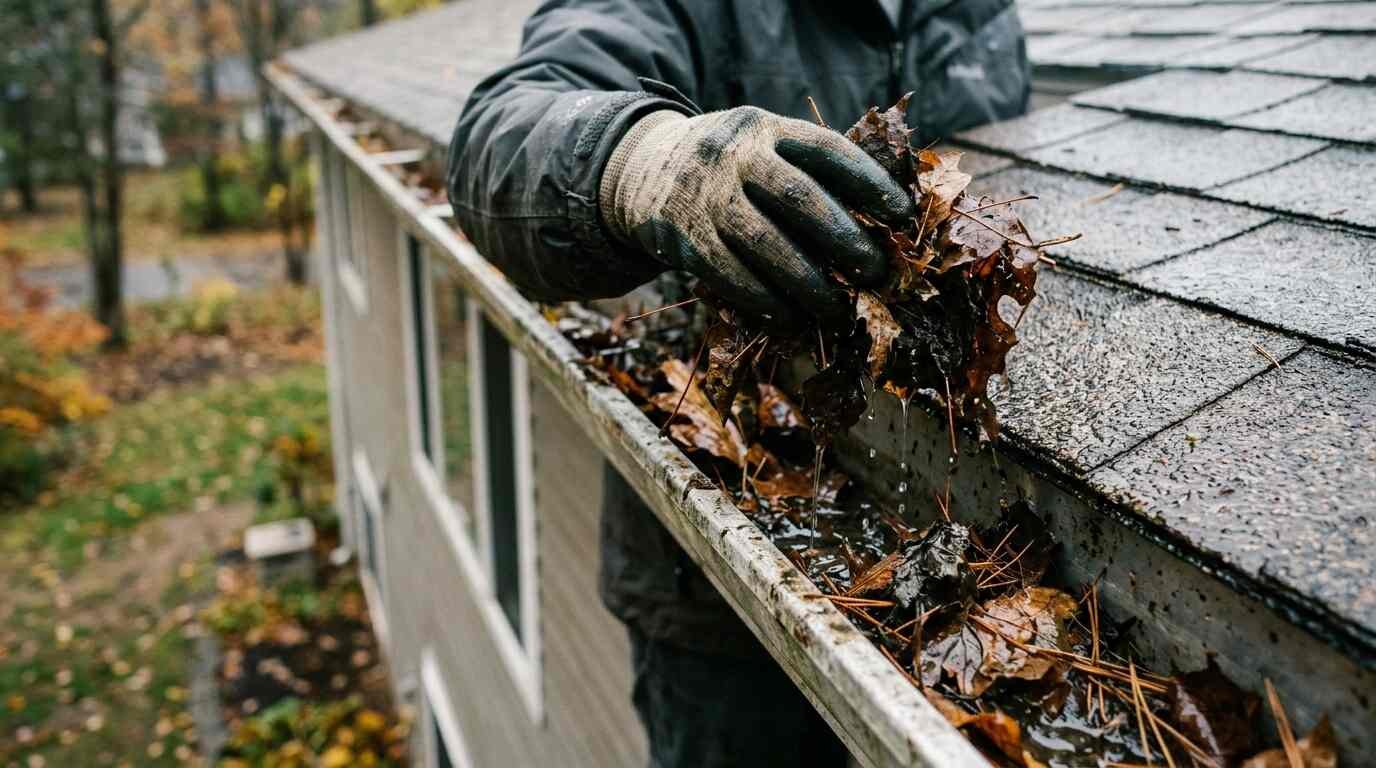
Water causes more slow, expensive damage to houses than almost any other force, and on Long Island the damage tends to start with small things: a gutter packed with oak leaves, a downspout that ends beside the foundation, a flower bed that has settled until it slopes toward the house. Late October is a useful time to look at all three. Most of the leaves have fallen, the heavy autumn rains and the first winter storms are close, and a few hours with a ladder and a hose can reveal problems that stay invisible all summer. The checklist below draws on federal, state, county and town sources, with a focus on how the pieces work together.
How the three systems connect
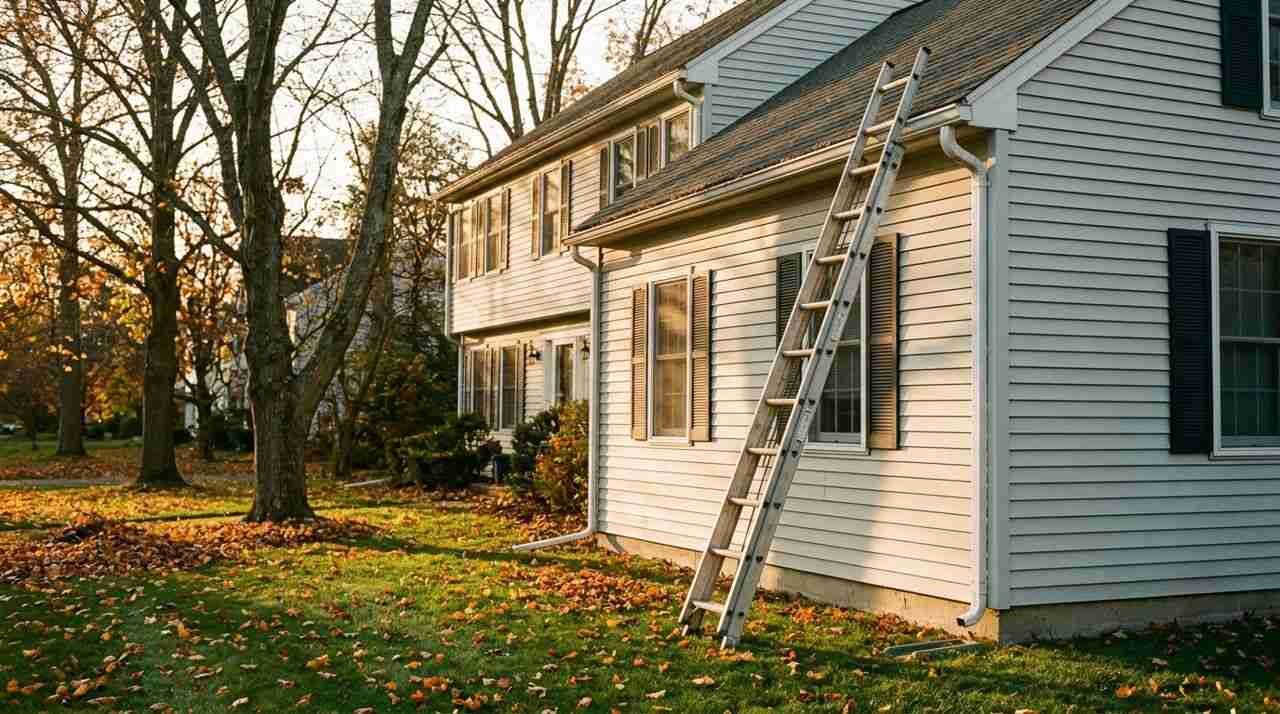
Gutters collect roof runoff, downspouts carry it down, and grading decides where it goes once it reaches the ground. A failure in any one undermines the other two. Perfectly clean gutters accomplish little if the downspout releases water against the foundation wall, and well-graded soil can still be overwhelmed by a gutter that overflows at a corner. The EPA’s guide to mold and moisture states the principle for foundations directly: gutters should be kept clean and repaired, and the ground should slope away from the foundation so water does not collect there.
The same guide notes that water is the necessary ingredient for mold growth, and that wet materials dried within 24 to 48 hours of a leak or spill generally will not grow it. A basement that takes in water through a wall or floor joint has a much harder time meeting that window than a roof leak in an attic does.
Gutters: sizing, slope and cleaning
Federal building science offers some numbers that are useful for judging an existing system. The Building America Solution Center guide to gutters and downspouts, lists gutter channels in 4-, 5- and 6-inch sizes, with larger channels moving more water provided enough downspouts are present. Its guidance includes:
- 1 square inch of downspout cross-section for every 100 square feet of roof area.
- Downspouts placed at least 20 feet and no more than 50 feet apart.
- Gutter slope of at least 1/16 inch per foot of run.
These figures are design guidance rather than local code, but they give a reference point. A long gutter run with a single downspout, or a gutter that holds standing water after rain, may be undersized or sagging.
Cleaning is the part of the job that most homeowners can manage. The same guide advises, for cold climates, cleaning gutters before winter or installing screen leaf guards so that gutters do not fill with water that can freeze. It does not specify a cleaning interval, so the practical answer depends on tree cover: a lot shaded by mature oaks and maples collects far more debris than an open lot.
A basic inspection after cleaning runs through a short list:
- Run a hose into each gutter and watch for sagging sections, pooling or leaks at seams and corners.
- Look at the end caps, fasteners and fascia boards for rot or pulling away.
- Confirm that each downspout flows freely by running water through it from the top.
- Check where each downspout ends and whether the outlet sits on a splash block or a pipe.
Ice is the winter complication. Gutters that are clogged in November can hold water that freezes in January, and the relationship between roof drainage and freeze-thaw cycles is covered in the article on ice dams on Long Island.
Downspouts: where the water lands
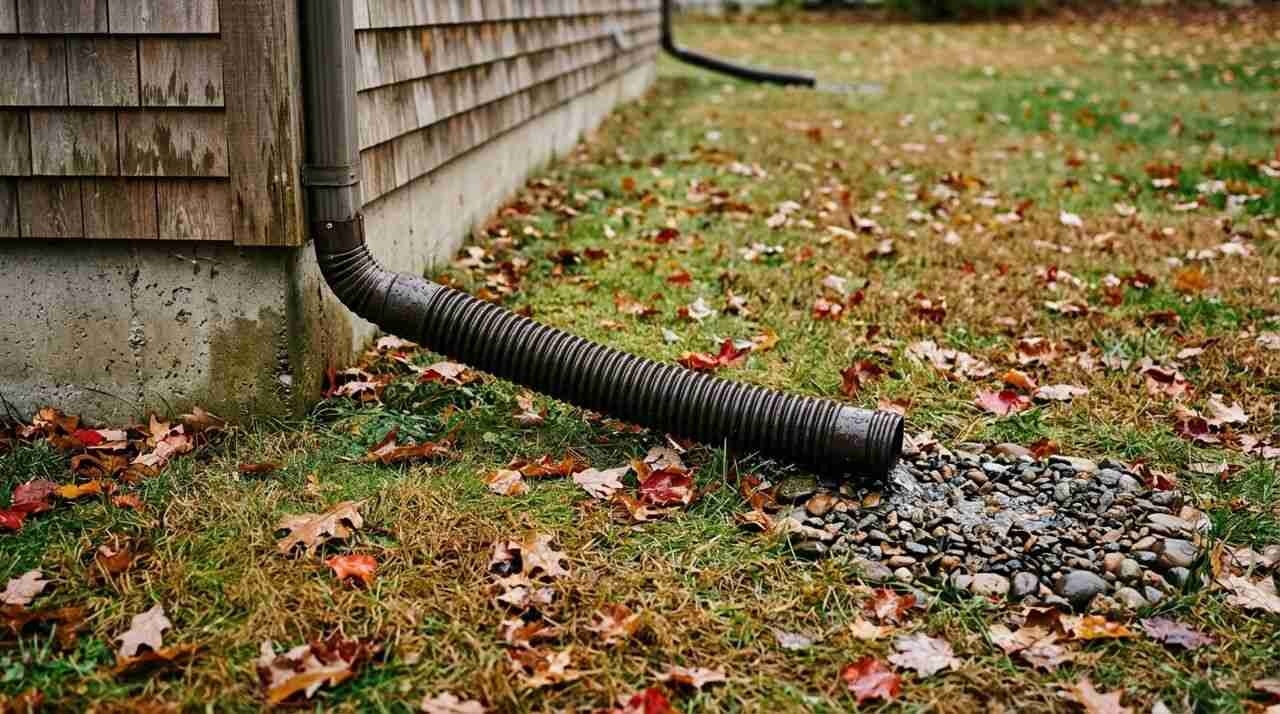
The destination is where many systems fail. The Building America guide recommends terminating downspouts at least 5 feet from the foundation, or running them into an underground catchment system at least 10 feet from the foundation. For piping, it calls for lateral runs extending at least 5 feet from the building and pitched at a minimum of 5/8 inch per foot, and for underground drain pipe sloped at least 0.5 inch per foot away from the home for at least 10 feet. It also says gutter drain pipe should not be connected to the perforated foundation drain, and it suggests a splash block at an outlet to control erosion.
An inexpensive way to test the arrangement is to watch it during real rain. If water exits a downspout and runs back toward the house along the surface, extending the discharge point or regrading the strip next to the wall is warranted. Pooling that appears 10 feet out and lingers for a day or more indicates a different problem, usually poor soil drainage in that spot.
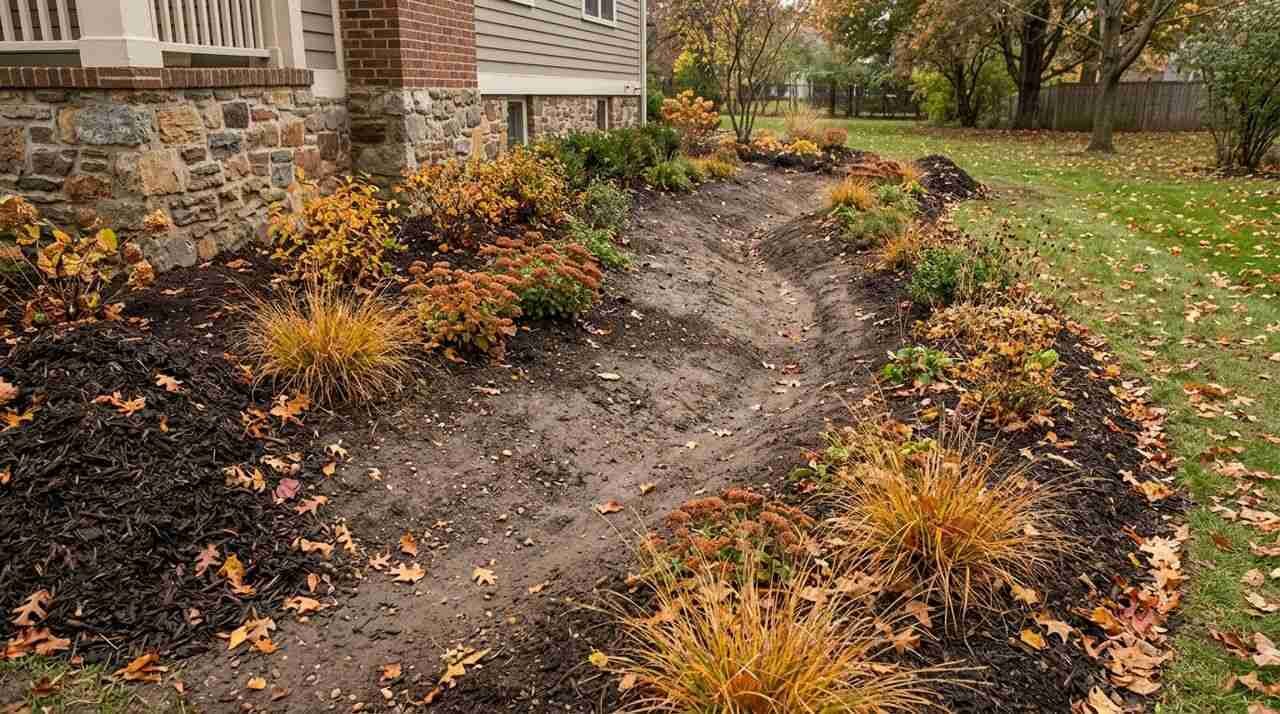
Two other options come up often. Buried drain lines carry water to a daylight outlet or a drywell, and the Town of Brookhaven code explicitly references dry wells: under its grading chapter, where roof runoff would cause erosion or drainage problems for adjoining properties, dry wells of adequate capacity must be installed. Rain gardens are the other route. The EPA’s Soak Up the Rain page defines one as a depressed area in the landscape that collects rainwater from a roof, driveway or street and lets it soak into the ground, planted with grasses and flowering perennials. The agency advises checking for areas to avoid and getting accurate information about underground utilities before digging, and it notes that the page is no longer being updated and may not be current.
Grading: the slope around the house
Grading is the least visible item on the list. Soil next to a foundation settles after backfilling, and landscaping projects, new patios and mulch layers can change the profile without anyone intending it. The Building America guide states that the final grade should slope away from the foundation at least 5 feet out, though the page gives no slope percentage. It also describes clearances: siding at least 8 inches above grade, and, for houses without gutters, foundation walls extended at least 16 inches above final grade.
Several signs point to a grading problem:
- Soil or mulch that sits against the siding or touches wood framing.
- Bare or eroded strips next to the foundation where runoff has been flowing.
- Efflorescence, a white mineral residue, or damp patches on the interior face of a basement wall.
- Window wells that fill with water or debris.
- A walkway, patio or driveway that has settled and now tilts toward the house.
Correcting minor grading usually means adding compacted soil, not topsoil alone, to restore a slope away from the wall, and then seeding or planting to hold it. A larger regrade changes how water leaves the property, which raises the neighbor question.
What local rules say about runoff and neighbors
Within the Town of Brookhaven, which includes Setauket, drainage is not purely a private matter. The Chapter 35 of the Town of Brookhaven code says its purpose is to regulate regrading of land in all use districts and lists among its goals providing adequate drainage for surface water runoff, limiting erosion and reducing flood hazards. Its standards state that stormwater runoff or natural drainage may not be diverted so as to overload existing drainage systems, and may not cause flooding or erosion or require new drainage facilities on other private or public property. They also provide that slopes along adjoining property lines and street frontages generally may not be steeper than 33 and one-third percent unless a stabilization or retaining wall is approved.
The code route into the permit process runs through building permit and certificate of occupancy applications, which go to the Planning Board for review under these standards. A stormwater pollution prevention plan is required for disturbances of one acre or more. The code page was reviewed in its online form, so amendments after its posting may not appear there. For a specific project, the Building Division or the Town’s code can answer whether a permit is needed, and the piece on checking whether a project needs a permit in Brookhaven walks through that check.
The practical takeaway for an ordinary lot: redirecting a downspout to a splash block is routine maintenance, while changing the shape of the yard so that more water crosses a property line can implicate the town code.
Stormwater, water quality and septic systems
Runoff does not just threaten foundations. The Suffolk County stormwater page explains that stormwater carries pollutants from roads, yards and construction sites into local waters, including oil and grease, pesticides, fertilizers, pet waste, sediment and litter. The same page encourages limiting fertilizer and pesticide use and points to the free Rain Garden app from the University of Connecticut’s CLEAR program as a design aid.
Septic systems belong in this discussion because leaching fields and cesspools work through the same soil that handles roof runoff. The county page notes that older cesspools and septic systems remain a water-quality problem in Suffolk County and describes a Septic Improvement Program offering qualified residential owners grants of up to $10,000 for an approved nitrogen-removal system. The article on septic system rules and grants in Suffolk County covers current rules and grants.
Flood preparation beyond gutters
Gutters and grading address everyday runoff; they do not turn a house into a flood-proof building. Ready.gov lists a few practical steps for homeowners: declutter drains and gutters, install check valves to help block water from flowing back into the home, and consider a sump pump with battery backup. It also notes that standard homeowner’s policies don’t cover flooding and that a flood policy typically takes up to 30 days to go into effect, so buying early matters.
FloodSmart, the National Flood Insurance Program’s consumer site, states that most homeowners insurance does not cover flood damage and that almost one-third of NFIP flood insurance claims come from outside high-risk flood areas. Where a property sits relative to mapped flood zones is a separate question; the articles on finding a home’s flood zone and on flood zone questions cover it.
A one-afternoon fall checklist
- Clear gutters, flush them with a hose, and note leaks, sags and loose hangers.
- Run water through each downspout and confirm that it flows freely to the end.
- Extend or redirect any downspout that discharges less than 5 feet from the foundation, or tie it to an appropriate underground system.
- Walk the perimeter and look for soil, mulch or settled hardscape that tilts toward the house.
- Clear window wells and floor drains, and test any sump pump by pouring water into the pit.
- Keep soil at least 8 inches below siding and away from wood framing.
- Photograph problem spots in dry weather so changes can be compared after storms.
For homeowners who prefer a broader list, the fall maintenance checklist for the first freeze fits this one into a full seasonal routine.
Related reading
- ice dams on Long Island
- fall maintenance checklist for the first freeze
- checking whether a project needs a permit in Brookhaven
This article offers general information and is not legal, engineering or financial advice.
Useful gear
- Flexible gutter downspout extensions: a practical item related to this topic. See it on Amazon (affiliate link)
As an Amazon Associate I earn from qualifying purchases. A commission may be earned if you buy through this link, at no extra cost to you.
Rules, rates, fees and procedures change; confirm current details with the official sources linked above and with a licensed attorney or other qualified professional before making decisions.