The STAR Exemption Is Not Automatic Anymore: What Long Island Homeowners Need to Know in 2026
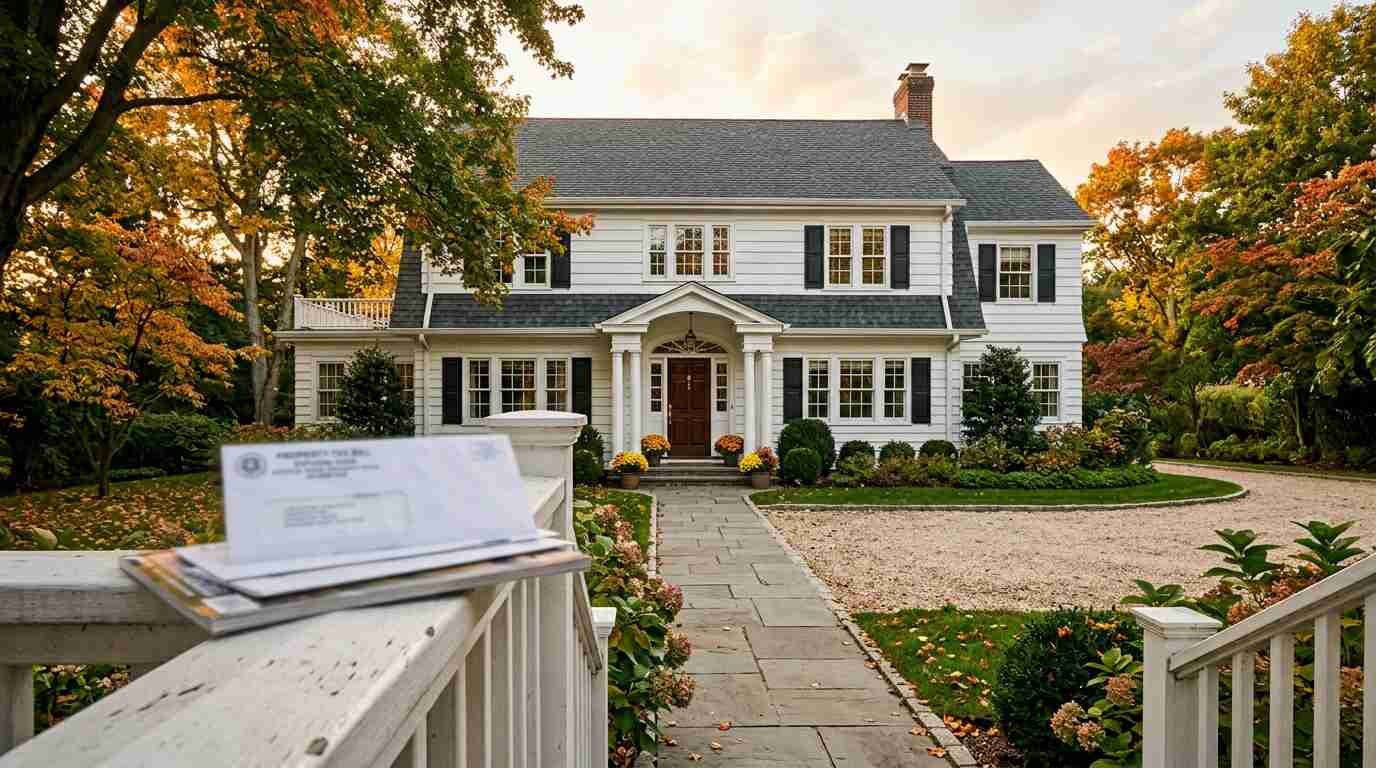
A school tax bill on Long Island rarely arrives as a pleasant surprise. Between Nassau and Suffolk County, homeowners carry some of the highest property tax burdens in the country, and the largest single line on that bill is almost always the local school district. New York’s School Tax Relief program — STAR — exists to soften that number. It has existed since 1997. What has changed, repeatedly and without much fanfare, is how homeowners actually receive the benefit.
STAR Credit Versus STAR Exemption: Two Different Deliveries
STAR no longer works the same way for every homeowner, and the distinction trips people up constantly.
The STAR credit arrives as a check or a direct deposit, sent by New York State, that a homeowner applies toward the school tax bill separately. This is the version nearly every new buyer on Long Island receives.
The STAR exemption is older and simpler on paper: a reduction applied directly to the tax bill itself, calculated by the local assessor before the bill is even printed. But the exemption is closed to new applicants. Only homeowners who have continuously received it on the same primary residence since 2015 can keep it. Buy a home today, and the credit is the only door open — the exemption is not something a new owner can request, no matter how long the previous owner held it.
For a buyer researching what a seller’s tax bill will look like after closing, this matters more than it seems. A listing’s current tax figure may reflect a STAR exemption the new owner cannot inherit.
Basic STAR: Who Qualifies
Basic STAR carries no age requirement. Any homeowner using the property as a primary residence can apply, subject to income limits that differ depending on which version applies:
- STAR credit: household income up to $500,000
- STAR exemption (existing recipients only): household income up to $250,000
Income, for STAR purposes, means federal adjusted gross income minus any taxable IRA distributions — and only the income of resident owners and their spouses counts. A non-resident co-owner’s income is excluded from the calculation.

Enhanced STAR: The Senior Benefit
Enhanced STAR raises the benefit substantially for homeowners 65 and older, though only one owner on the deed needs to meet the age threshold as of December 31 of the relevant year. Enhanced STAR carries its own, lower income ceiling — the state publishes an updated figure each year, so a homeowner nearing the threshold should confirm the current number with their local assessor or the New York State Department of Taxation and Finance rather than relying on last year’s figure. Proof of age and income is required, and unlike Basic STAR, Enhanced STAR generally must be reapplied for or reverified annually, either directly or through the state’s Income Verification Program.
How to Apply
New homeowners register for the STAR credit directly with the New York State Department of Taxation and Finance, not the local town assessor. Existing STAR exemption recipients renew or update Enhanced STAR eligibility through their local assessor’s office using Form RP-425, tied to the jurisdiction’s taxable status date — a date that varies by town, which is one more reason to confirm the deadline locally rather than assume it matches a neighboring municipality.
Homeowners who bought a house in the last several years and never registered should not assume they are automatically excluded from any benefit. The credit registration takes a few minutes online and, once approved, renews without a repeat application in most cases for Basic STAR.

Why This Matters More on the North Shore
Long Island’s North Shore carries some of the state’s higher assessed values, and school districts here — the Three Village district, Cold Spring Harbor, Smithtown among them — fund a meaningful share of local services through the property tax roll. A STAR benefit that shaves a percentage off an already large number produces real savings in dollar terms, even if the percentage itself looks modest on paper. Buyers evaluating a home’s true carrying cost should factor in what STAR will and will not do for them: it reduces the school tax line, not municipal or county tax lines, and it will not appear as a discount on the sale price — only on the bill that follows.
Homeowners who are still paying at the pre-STAR rate, whether because they never registered or because a refinance or deed change reset their exemption status, are leaving money on the table every single billing cycle. Confirming registration status takes considerably less effort than the savings are worth.
This article is for informational purposes only and does not constitute tax or legal advice. Property tax rules and income thresholds change from year to year; consult the New York State Department of Taxation and Finance or a licensed tax professional before making decisions based on STAR eligibility.
You Might Also Like
- The Tax That Keeps Long Island Homes Off the Market — and the Bill That Would Change It
- Five Percent Over: New York’s Estate Tax Cliff and the Long Island House
- The Assessed Value Is Not the Market Value: How Long Island’s Property Tax Grievance Process Can Reframe What a Seller Asks
Real estate markets change. For current listings and market data, contact Maison Pawli at maisonpawli.com/about/.