Why Long Island Home Sellers Are Leaving $30,000 on the Table With Traditional 6% Commissions
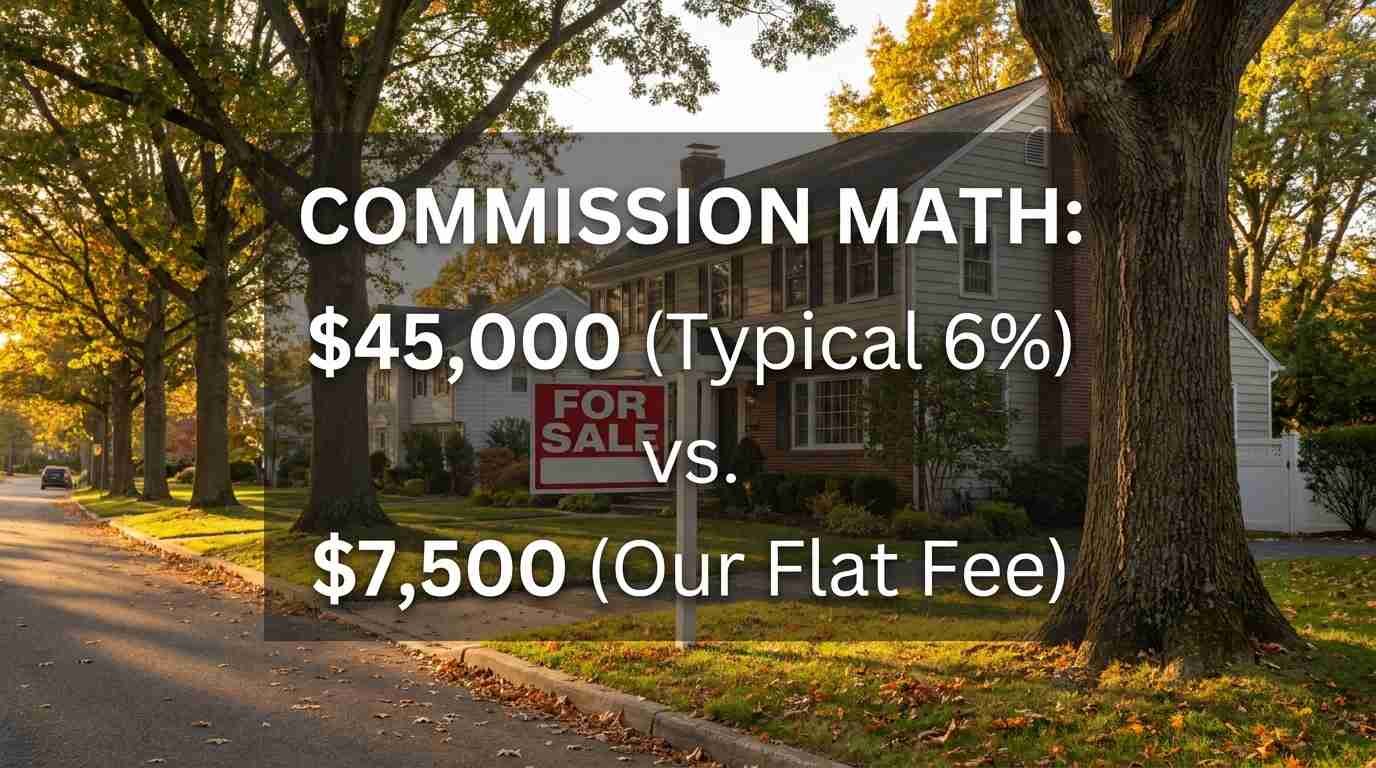
There’s a number I’ve been thinking about a lot lately, and it goes like this: on a $750,000 home on the North Shore — which, given where median prices have moved, is no longer a luxury transaction — a traditional 6% commission means $45,000 off the top before you’ve paid transfer taxes, attorney fees, or the movers. Forty-five thousand dollars. For many sellers, that’s a year of property taxes. That’s a kitchen renovation on the next house. That’s a meaningful addition to the down payment when you’re buying up.
The question I find myself asking sellers, the one I’ve been asking since I started Maison Pawli, is a simple one: what are you actually getting for that?
What 6% Commission Actually Costs Long Island Sellers in 2026
The math is not complicated, but it’s worth running at a few price points, because the numbers have a way of clarifying things that the conversation doesn’t.
According to LIBOR median sale price data, Long Island home values in 2025–2026 have held firmly in the $650,000–$800,000 range for mid-tier North Shore transactions, with North Shore and Nassau County premiums pushing many sales well above $900,000.
Here’s what a traditional 6% commission looks like across that range:
| Sale Price | 6% Commission | 5% Commission | 2% Commission | 1% Listing Fee |
|---|---|---|---|---|
| $550,000 | $33,000 | $27,500 | $11,000 | $5,500 |
| $650,000 | $39,000 | $32,500 | $13,000 | $6,500 |
| $750,000 | $45,000 | $37,500 | $15,000 | $7,500 |
| $900,000 | $54,000 | $45,000 | $18,000 | $9,000 |
| $1,100,000 | $66,000 | $55,000 | $22,000 | $11,000 |
The delta between a 6% commission and a 1% listing fee on a $750,000 sale is $37,500. On a $900,000 sale, it’s $45,000. These are not rounding errors. They are substantial sums of money that transfer from sellers to brokerages — and that transfer happens regardless of how many hours the listing agent spent on your file.
Breaking Down the Traditional Commission Model: What Are You Paying For?
The standard defense of the 6% commission is that it covers a lot: the listing agent’s time, the buyer’s agent compensation, marketing costs, photography, open houses, negotiation, and transaction management from contract to close.
That defense has always had soft spots, and the NAR settlement — finalized in 2024 — has exposed several of them.
Here’s how a traditional 6% commission has historically been structured: the listing brokerage takes approximately half (3%), and the buyer’s brokerage takes the other half (3%). Within each 3% slice, the individual agent receives a split that varies by firm but commonly runs 50–70% to the agent and the remainder to the brokerage for desk fees, training programs, franchise royalties, and overhead.
What does that mean in practice? On a $750,000 sale, your listing agent may have personally received $11,250–$15,750 of the $22,500 you paid their brokerage. The rest funded the company’s infrastructure, the franchise fee going to a national brand headquarters, and the administrative layer above your transaction.
The marketing budget allocated specifically to your listing? At most traditional brokerages, it is a line item — typically a few hundred dollars for MLS entry, syndication feeds, and a property brochure. Professional photography, video, 3D tours, and targeted digital advertising are either extras or depend entirely on the individual agent’s willingness to invest their own commission.
How Maison Pawli’s Commission Structure Changes the Math for Nassau and Suffolk Sellers
Maison Pawli approaches commission differently, and I want to be specific rather than vague about it, because vague talk about “lower fees” doesn’t help you evaluate anything.
Our commission tiers are publicly listed and straightforward.
Smart Seller: $500 flat + 0.5% of sale price. For sellers whose homes will move on the strength of the property itself — strong comps, desirable location, well-maintained condition — this tier delivers full MLS listing, professional photography, and transaction management at a fraction of traditional cost. On a $750,000 sale, total commission: $4,250.
Professional: 1% of sale price. Full-service listing with expanded marketing, open house strategy, and active buyer outreach. Designed for sellers who want high-touch service without high-commission pricing. On a $750,000 sale, total commission: $7,500.
Premier: 2% of sale price. White-glove service for complex sales, luxury properties, and transactions requiring intensive negotiation, staging consultation, and extended marketing campaigns. On a $750,000 sale, total commission: $15,000.
At every tier, the savings compared to traditional 5–6% commissions are significant. At the Smart Seller tier on a $750,000 home, a seller retains approximately $37,000–$40,000 more than they would under a traditional structure. At the Professional tier, the savings are $30,000–$33,000.
One note on buyer’s agent compensation: since the NAR settlement took effect in August 2024, sellers are no longer required to offer buyer’s agent compensation through the MLS. How you approach buyer-side compensation is now a negotiating decision, not a mandatory line item, and Maison Pawli will help you think through that strategically for your specific market and timeline.

Do Lower Commissions Mean Worse Marketing? The Data Says No
This is the objection I hear most often, and it deserves a direct answer.
The assumption behind it is that marketing quality scales with commission percentage — that a broker charging 6% is investing 6% worth of effort and resources into your listing, while one charging 1% is giving you 1% of the attention. That’s not how it works, and the data on sale outcomes doesn’t support it.
A 2021 study published in the Journal of Real Estate Research examining brokerage model and sale price outcomes found no statistically significant relationship between commission rate and final sale price relative to list price. What did correlate with better outcomes: listing quality (photography, description), accurate initial pricing, and days on market — all factors driven by agent skill and strategy, not commission percentage.
The Redfin Commission Study (2023) similarly found that homes listed through low-commission brokers that provided professional photography and MLS exposure sold within comparable time frames and at comparable price-to-list ratios to those listed through full-commission traditional firms.
What drives marketing quality at Maison Pawli is not the commission structure — it’s the fact that we’re a boutique operation where every listing receives direct attention. We don’t distribute listings across a roster of agents managing 20–30 files at once. When you list with us, I am your broker.
How to Calculate Your Net Proceeds Before You Sign a Listing Agreement
The net proceeds calculation is something every seller should run before they sign anything, and it’s not complicated. Here’s the structure:
Estimated Sale Price
− Listing agent commission (at whatever tier you’ve negotiated)
− Buyer’s agent compensation (if you’ve chosen to offer it)
− NY State transfer tax (0.4% of sale price)
− NYC mansion tax (if applicable: 1% on sales $1M+)
− Attorney fees (typically $2,000–$3,500 for a residential transaction)
− Outstanding mortgage balance + prepayment penalty (if any)
− Property tax proration (days owned in the closing month)
− Title search and survey costs (if seller-paid)
= Your Net Proceeds
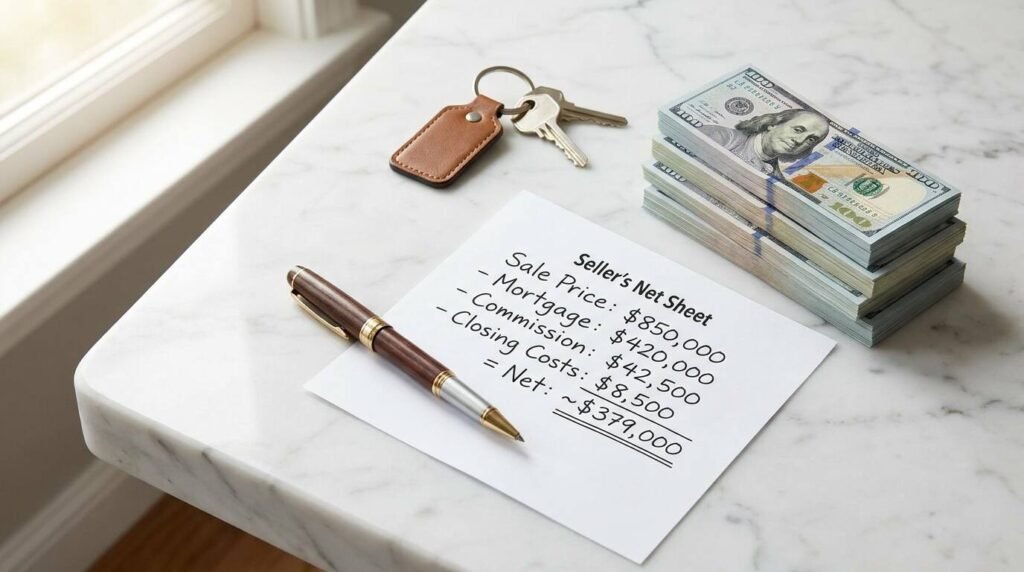
On a $750,000 sale with a 6% commission, your commission line alone is $45,000. On the same sale with Maison Pawli’s Professional tier (1%), it’s $7,500. That $37,500 difference is real money, and it belongs in your column, not ours.
I always recommend that sellers request a written Seller Net Sheet before signing a listing agreement — not as a legal guarantee, but as a tool for evaluating what you’re actually agreeing to. If an agent is unwilling to provide one, that tells you something.
Before you list, do the math. Then decide who’s working for you.
You Might Also Like
- What a Real Estate Commission Actually Costs You When You Sell on Long Island
- The Pre-Inspection Move: Why Long Island Sellers Who Inspect First Are Closing Faster
- Days on Market Is a Calculated Figure, Not a Raw Fact
Real estate markets change. For current listings and market data, contact Pawli at Maison Pawli.
This post is for informational purposes only and does not constitute legal or financial advice. Consult a licensed attorney or financial advisor for guidance specific to your situation.