Cherry Grove’s Cottages Are Getting a Second Life — And Buyers Are Fighting Over Them
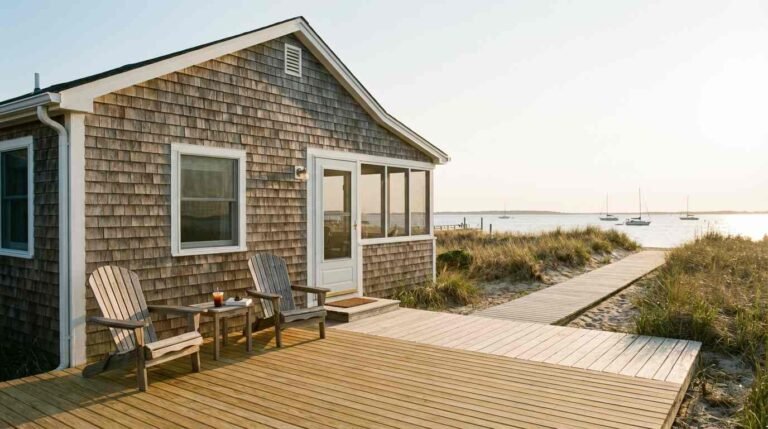
Somewhere between 400 and 500 square feet. That’s all. A sleeping loft, a galley kitchen, a deck barely wide enough for two chairs. And buyers are paying — and competing — for these properties at prices that would have seemed improbable a decade ago.
I’ve been watching the Cherry Grove market closely, and what’s happening there isn’t just a real estate story. It’s a cultural one. These cottages are being restored with a level of intentionality you don’t see often — not flipped, not gut-renovated into something unrecognizable, but carefully upgraded in ways that honor what these buildings mean, what this community represents, and what a Fire Island summer actually feels like when it’s done right.
The result is a micro-renovation movement that’s producing some of the most interesting residential work on Long Island right now.
What Cherry Grove Is
Some context for buyers who haven’t spent time here.
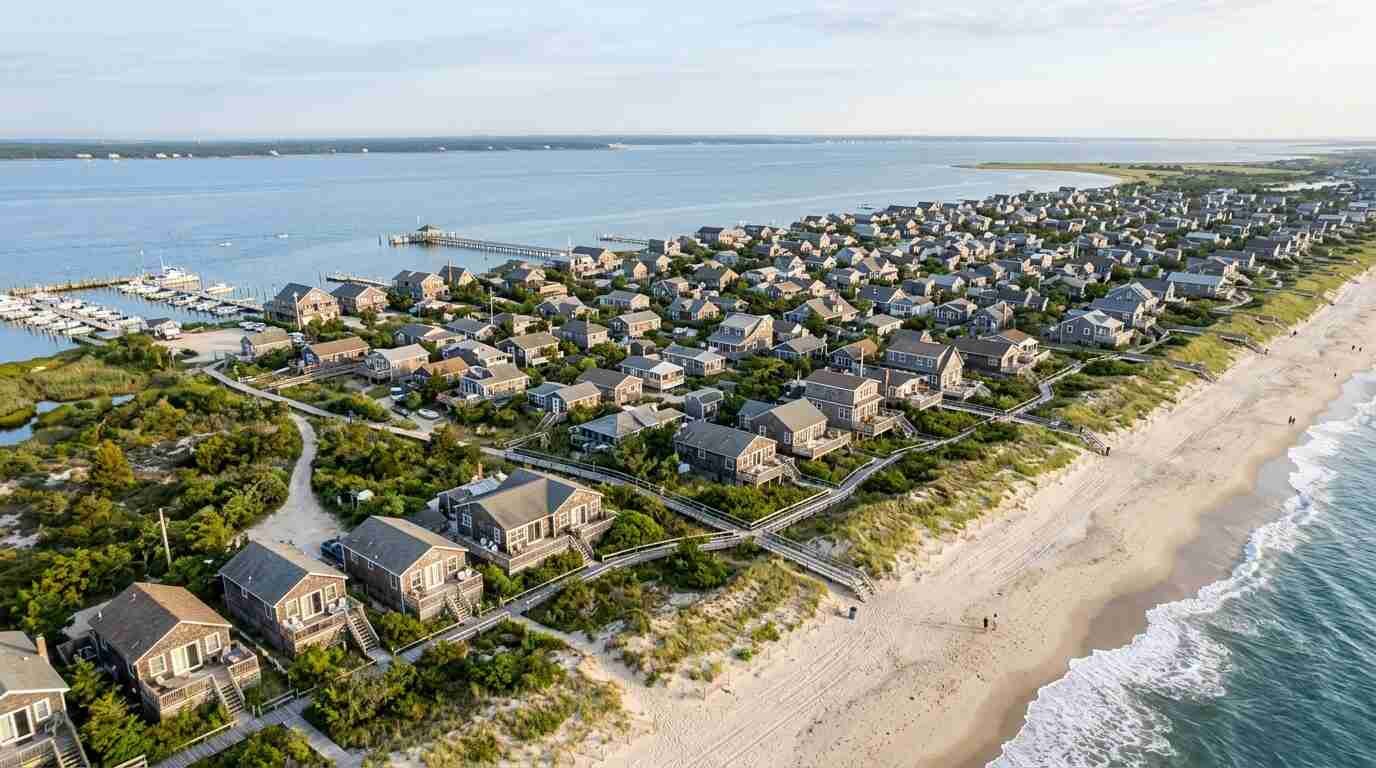
Cherry Grove is one of Fire Island’s most storied communities — a car-free hamlet accessible only by ferry from Sayville, tucked between the ocean and the Great South Bay. The community has been a gay and lesbian haven since the 1920s, when Manhattan’s theater crowd began escaping to the island’s remote shores during Prohibition. By the 1940s, gay residents had become the majority in Cherry Grove, making it what historians describe as America’s first gay and lesbian town.
That history is officially recognized. On June 4, 2013, the National Park Service designated the Cherry Grove Community House and Theatre for listing on the National Register of Historic Places — one of only a handful of LGBTQ+-specific sites to receive the designation in the country. The Cherry Grove Community House, originally constructed on Long Island and later floated across the Great South Bay to serve as the community house for the Cherry Grove Property Owners Association in 1944, remains an active civic center.
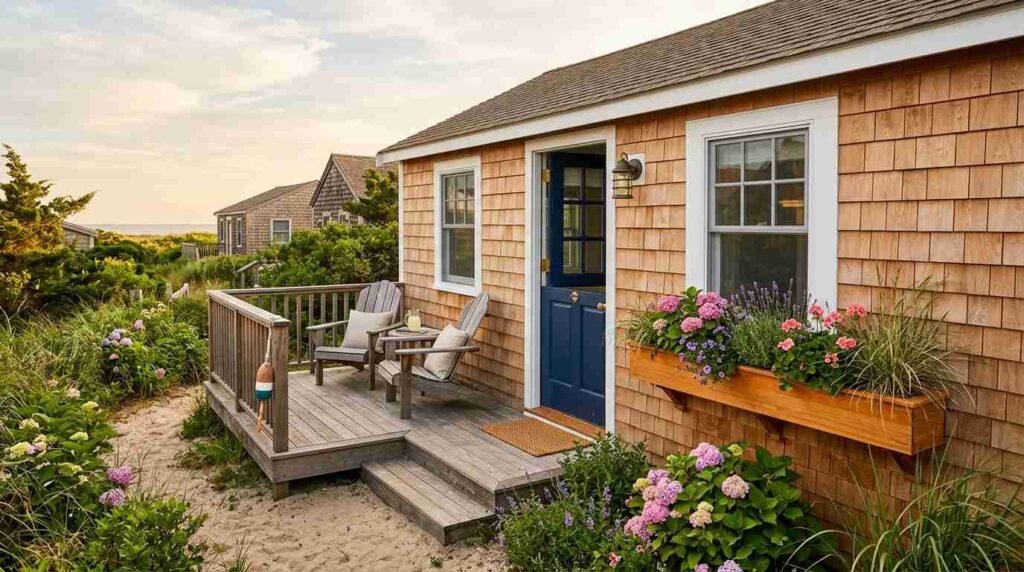
The physical fabric of the community reflects all of that history. The cottages are small by design — built in an era when beach retreats were about stripping life down to what mattered. They’re set on boardwalks, not roads. They’re shaded by dense foliage. And a significant number of them are now in the hands of buyers who understand exactly what they purchased.
The Renovation Challenge: Small Is Not Simple
Renovating a 400-square-foot cottage on Fire Island is genuinely difficult, and the buyers doing it well are approaching it as a design problem, not a cosmetic refresh.
The material constraint is the first reality: everything that touches the exterior needs to hold up to salt air, high humidity, and occasional storm exposure without requiring constant maintenance. Fiber cement siding resists salt air corrosion, while composite decking provides moisture and salt damage resistance with better slip resistance than traditional wood. Cedar remains the traditional and aesthetically preferred choice for exterior cladding — it weathers naturally to the silver-gray that defines Cherry Grove’s visual identity — but it requires treatment and eventual replacement. The material debate is ongoing in the community, and it’s worth having with your contractor before you commit.
The logistical constraint is equally real: no cars, no driveway access, no way to bring a lumber delivery truck down to a boardwalk. Every piece of material gets ferried across, carted by hand or dolly, and the labor rate reflects that reality. Ferry costs, special permits, and marine-grade materials all contribute to higher project costs. Budgets that would deliver a full renovation on the mainland need a 20–30% premium adjustment for Fire Island logistics.
The permit constraint adds a third layer. Fire Island falls within the boundaries of the Fire Island National Seashore, and any exterior work on these properties moves through a review process that can extend well beyond standard Suffolk County timelines. The permit process can take one to two weeks for standard projects, longer for complex renovations or new construction. Buyers doing this work successfully are budgeting for permit time and starting the approval process early in the planning cycle.
What the Smart Renovation Looks Like
The Cherry Grove cottages that are selling at premium prices share a set of renovation choices that are worth understanding before you start spending money.
Salt-air proofing from the inside out. The conversation starts with systems: new electrical (the older cottages often have wiring that hasn’t been touched since the 1970s), updated plumbing with marine-grade fittings throughout, and spray foam insulation in the walls if you’re planning to use the property beyond summer. These are not glamorous line items, but they’re the difference between a cottage that holds its value and one that becomes a maintenance problem within five years.
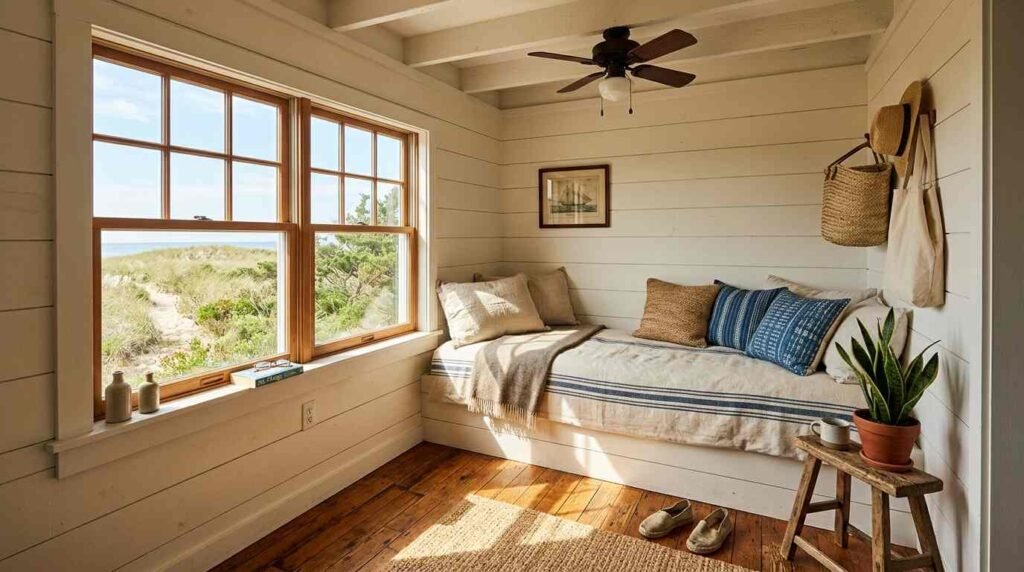
Space maximization that respects the bones. The design moves that work in Cherry Grove are not the same ones that work in a larger house. Murphy beds with integrated storage allow a sleeping area to become a second living space during the day. Built-in bench seating around the deck perimeter doubles as storage. A raised sleeping loft with a low-profile bed keeps the main floor open. What doesn’t work: trying to force a renovation that fights the footprint. The cottages that look best are the ones where the renovation accepted 400 square feet and figured out how to make it feel like enough — because for a beach retreat, it is.
Preserving the aesthetic identity. This is where Cherry Grove renovations get interesting from a design standpoint. The community has a visual language — cedar shake siding, outdoor showers framed by foliage, decks with teak or composite flooring, the indoor-outdoor flow that makes island living feel like island living. Renovations that impose mainland aesthetics — large-format tile everywhere, all-white interiors with no warmth, industrial hardware that belongs in a Brooklyn kitchen — tend to look incongruous and often land flat with buyers who know the market.
The renovations that resonate use natural materials throughout, lean into the painterly color choices that Cherry Grove has always embraced (a deep navy door, a terracotta accent wall, painted shiplap in a warm white), and treat the outdoor deck and shower as primary living spaces, not secondary ones. A well-designed Cherry Grove cottage renovation feels like the island made the decisions, not a contractor who’d never been there.
The outdoor shower. Non-negotiable at this price point. Cedar enclosure, two-head system, hot water, proper drainage. It’s the feature buyers ask about first and agents mention in the first sentence of listing copy. If yours is dated, fix it before you list.
The Numbers Worth Knowing
Cherry Grove’s sub-500-square-foot cottage segment has seen consistent appreciation over the past several years. Properties that sold in the mid-$300,000s five years ago are changing hands in the $500,000–$700,000 range now, with fully renovated examples pushing higher depending on lot position, deck size, and proximity to the ocean.
The renovation math, done right, works. A cottage acquired in need of work, with $80,000–$120,000 invested in a thoughtful renovation — systems, exterior, interior, outdoor shower, deck — is commanding prices that make the investment sensible. The buyers on the other side are not buying a house. They’re buying a season, a community, and a place with a history that you cannot replicate anywhere else on Long Island.
That last part matters more than most real estate analysis acknowledges. Cherry Grove has genuine cultural weight. The Cherry Grove Community House and Theatre, recognized on the National Register of Historic Places, provided a stage upon which queer men and women experienced an open community alongside their straight neighbors during the 1950s. Buyers who understand that history — and many of the buyers in this market do — are willing to pay for proximity to it.
What I’d Tell a Buyer Considering One of These
Do your systems due diligence before anything else. An enthusiastic seller and a beautiful deck can distract from electrical that’s a fire risk and a foundation that’s never been properly addressed. Get a thorough inspection. On a property this small, the systems work is often the largest line item, and you want to know what you’re inheriting.
Talk to a contractor who has actual Fire Island experience before you budget. The logistics premium is real, the permit timeline is real, and a contractor quoting you mainland prices on a Fire Island job is either going to get to the island and revise the number, or cut corners you can’t see.
And understand what you’re buying into. Cherry Grove is not a place you renovate to flip in eighteen months. The buyers who are doing this well are the ones who fell in love with it, wanted to be part of it, and decided to do the work that preserves what makes it worth loving. That’s a different motivation than a renovation ROI calculation — and it tends to produce better results.
This is for informational purposes only. For project-specific guidance, consult a licensed contractor familiar with Fire Island’s permit requirements and material constraints. Real estate markets change — verify current figures before making financial decisions.
For current listings and market data, contact Pawli at Maison Pawli.
Sources
- National Park Foundation — Fire Island National Seashore, LGBTQ heritage sites
- Senator Kirsten Gillibrand press release — Cherry Grove Community House & Theater designated on National Register of Historic Places
- Cherry Grove Archives Collection — Safe/Haven exhibit
- Corsino Construction Corp — Fire Island contractor, material guidance and permit timelines
- Out x Out: LGBTQ+ Guide to Fire Island 2026
- Dezeen: Six respectfully renovated modernist homes on Fire Island