Nissequogue, NY — The North Shore Neighborhood Guide
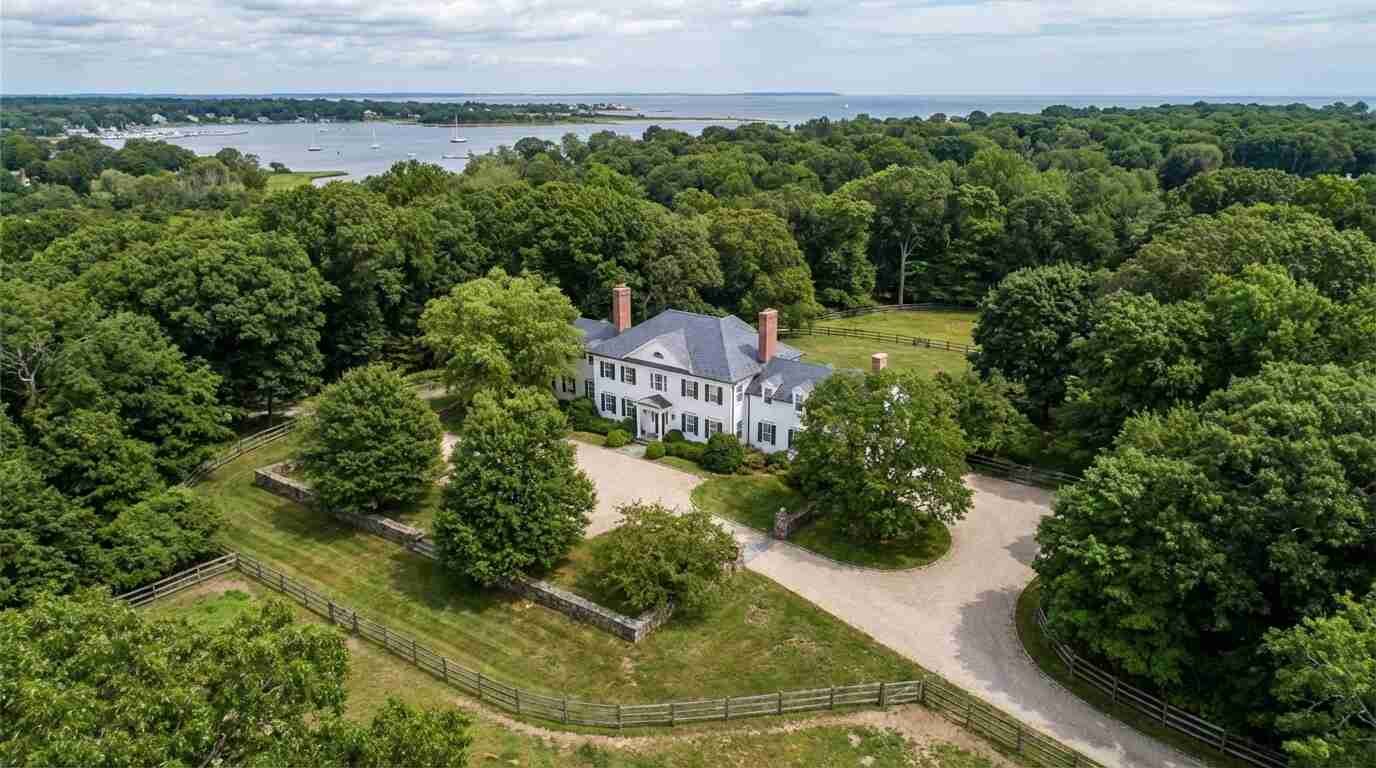
There is no commercial district in Nissequogue. There is no strip of storefronts, no gas station, no coffee shop you can walk to. What there is: the Nissequogue River on the western boundary, Long Island Sound on the north, Stony Brook Harbor on the east, equestrian trails running through the interior, a 125-acre nature preserve donated to The Nature Conservancy in parcels between 1969 and 1979, and a zoning code that requires a minimum of two acres for any property subdivision. The village has about 1,600 residents and 3.6 square miles of land. That math produces a very specific kind of place.
I show properties in Nissequogue a few times a year, and I have yet to meet a buyer who found it accidentally. You come to Nissequogue because you’ve been looking at the North Shore long enough to understand that the most private address on it isn’t the one with the best view — it’s the one with the most carefully constructed barrier between the property and everything beyond it. In Nissequogue, that barrier is the zoning code, the river, the Sound, and the accumulated preference of several generations of residents who wanted it this way and voted accordingly.
The Two-Acre Minimum and What It Actually Means
Nissequogue’s distinctive scenery is maintained by a two-acre minimum on property subdivisions and a prohibition on industrial or commercial real estate within the village’s boundaries. That second clause matters as much as the first. There is no pathway to commercial development in Nissequogue. What you see is what the village has committed — by code and by disposition — to remaining.
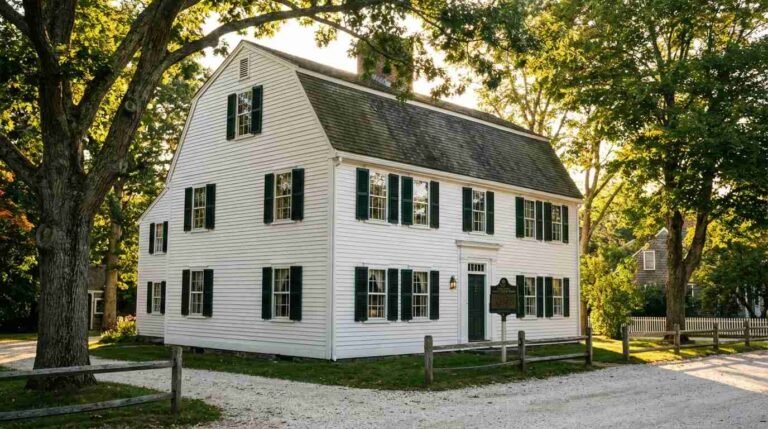
The practical consequence of the two-acre minimum is that the housing stock reads entirely differently from anything else on the North Shore at a comparable price point. A home in Nissequogue at $1.2 million — the approximate median — comes with property measured in acres, not fractions thereof. Many homes are zoned for horses. The relationship between the house and the land around it feels like an estate relationship, not a subdivision one. For buyers coming from a market where a “large lot” means a quarter-acre, the first drive through Nissequogue can be genuinely disorienting. That’s part of the appeal.
The village also sits within the Smithtown Central School District, which provides access to one of the North Shore’s most respected public school systems — the same district that serves St. James, Kings Park, and the broader Smithtown area. As I explored in The Best School Districts in Suffolk County and What They Do to Home Prices, district quality is structural to North Shore property values, and the Smithtown district has consistently delivered the metrics that make it a meaningful anchor for family buyers.
The Preserves and What They Protect
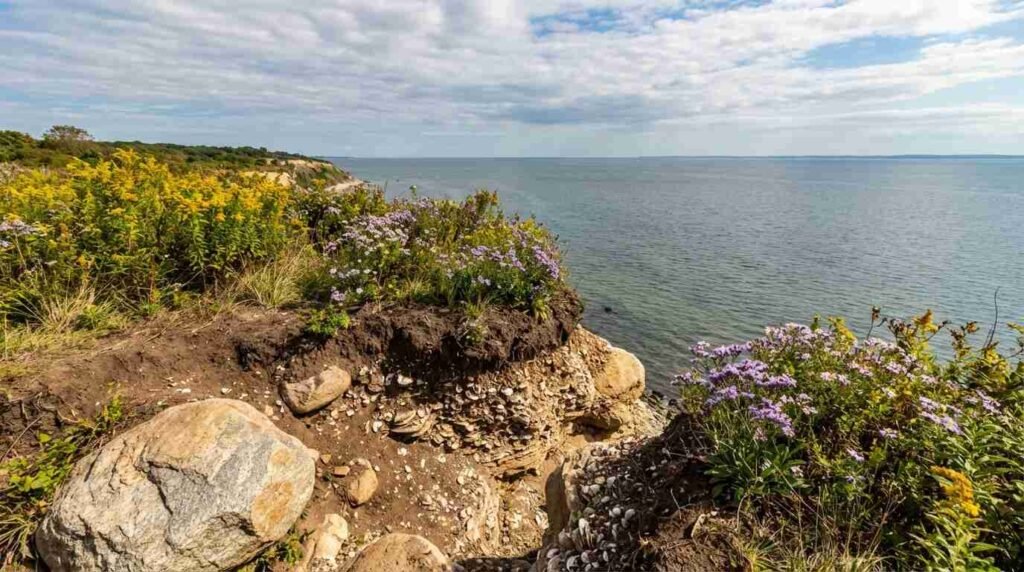
The David Weld Sanctuary is 125 acres of Nature Conservancy land along the Sound — donated in stages by David and Mary Weld between 1969 and his death in 1972, then expanded by neighbors who contributed adjacent parcels. The sanctuary features a 50-foot bluff above the Sound, a 60-foot glacial kettle hole, approximately 1,800 feet of beachfront, and a trail system that passes through tulip trees, red maples, and woodland dense enough to feel genuinely wild despite being ten minutes from Route 25A. Bank swallows nest in the bluff face in summer. Ospreys work the harbor edges. The parking lot holds six vehicles, which is not an accident.
The Delafield Woods and Butler Huntington Woods Conservancy provide additional trail corridors within the village boundaries. The Nissequogue River State Park presses against the western edge, adding kayaking and fishing access along the river basin. Short Beach is restricted to village residents. Long Beach Town Park, adjacent to the Smithtown Bay Yacht Club, is accessible to the broader public but remains far enough from suburban density to function as a genuine respite rather than a managed crowd.
This much preserved open space adjacent to residential land does something measurable to values: it reduces the downside scenario. Properties that back to conservation land or face preserves have a floor that properties in less-protected settings lack. No one is building on the David Weld Sanctuary. The view from a Nissequogue property oriented toward the Sound will be that view in twenty years. In a market where the price of privacy is high, having it encoded in deed restrictions and conservation easements rather than just proximity is meaningful.
Equestrian Life and the Properties That Support It
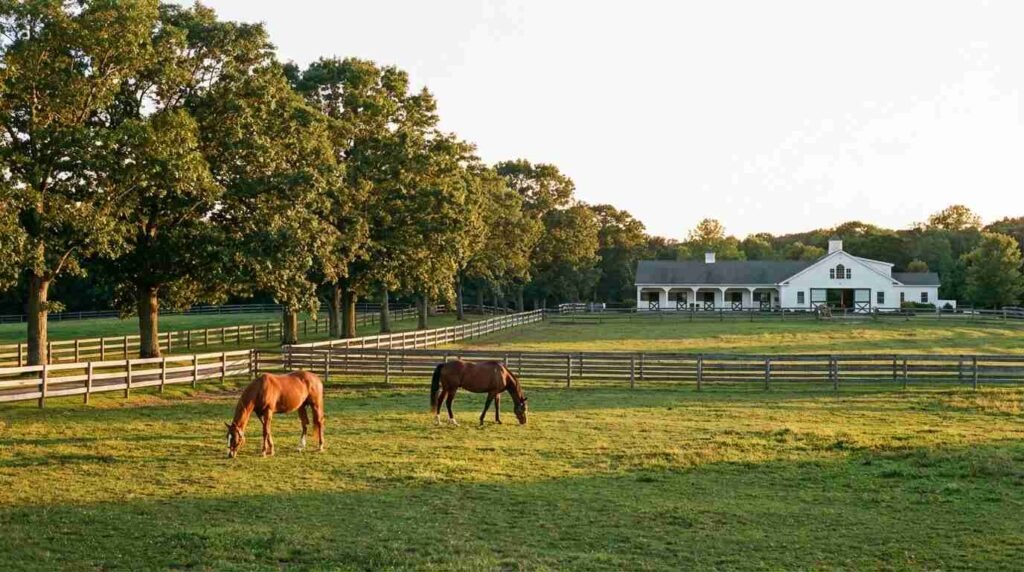
Equestrian properties appear with regularity in Nissequogue listings in a way that you won’t find in most other North Shore villages. The zoning permits agricultural and horticultural uses, and many two-acre-and-above properties are structured — legally and physically — to accommodate horses. Riding trails run through the interior of the village. The Nissequogue Golf Club provides a social anchor for residents who don’t keep horses but want the outdoor, grounds-oriented quality of life that defines the neighborhood’s character.
For buyers who have been looking at equestrian properties on the East End and finding that the price points have moved into a different stratosphere, Nissequogue offers an alternative that is less well-known but structurally similar in the things that matter: acreage, privacy, trail access, and a community that has chosen to protect its character through zoning rather than rely on distance alone.
The Market
Nissequogue is a thin market by definition. With approximately 570 housing units across 3.6 square miles, listings emerge slowly and move at a pace that reflects deliberate buyers and sellers who are not under pressure. Listings typically spend 90 to 120 days on market — longer than surrounding areas, but that figure is a function of pricing calibration and the specificity of the buyer pool rather than weakness in demand. When well-priced properties find the right buyer, they move.
Median list prices in recent data have tracked around $995,000 to $1.2 million, with significant variation based on acreage, water proximity, and condition. Waterfront and Sound-facing properties reach well beyond that range — the luxury tier of Nissequogue extends into the several millions, and the median luxury listing price has been reported near $4.4 million in recent data. The spread from entry-point to top-of-market is wider here than almost anywhere else on the North Shore, which reflects the range of properties that the two-acre minimum produces: a two-acre Colonial on a wooded interior lot versus a Sound-facing estate with private beach access occupy the same village but entirely different market tiers.
Commute and Practicalities
Nissequogue is served by the Smithtown and Stony Brook LIRR stations on the Port Jefferson Branch — neither is a walkable distance from most of the village, so a car is required to reach the train. The practical commute pattern for most residents is to drive to a station and rail into the city, with a total door-to-door time for Manhattan of roughly 90 minutes under normal conditions. For hybrid and remote workers, this is a non-issue. For five-days-a-week commuters, it requires a genuine commitment — which is part of why the buyer pool skews toward senior professionals, executives, and those who have some flexibility in their schedule.
Stony Brook University, Stony Brook University Hospital, and the constellation of research and medical facilities that have developed around them are a short drive east. For professionals in those institutions, Nissequogue represents a level of residential privacy that would be unavailable at anything close to a comparable price in the Hamptons or on the North Fork.
Who Comes Here and Why
Nissequogue draws buyers who have usually been looking for a while. They’ve been through the North Shore, they understand the market’s geography, and they have arrived at a specific conclusion: they want the most land, the most privacy, and the most nature that the North Shore can offer at a price that is high but not irrational. They tend to be patient in their search, because the inventory is thin enough that waiting for the right property is often the correct strategy.
The community is small and close. Block associations and village civic life matter here in the way they matter in any incorporated village of 1,600 people — decisions about the village budget and its character get made at meetings where the same faces appear repeatedly. Residents who chose Nissequogue chose it precisely because it is not a place that changes quickly, and most of them consider that a feature rather than a limitation.
Richard Smith — the founder of the Town of Smithtown — first settled on the land that became Nissequogue in 1665. The village was incorporated in 1926. It has taken every decade since as an opportunity to remain, as much as possible, what it already was. That is a rarer achievement on the North Shore than it sounds.
You Might Also Like
- North Shore Bluff Homes and the Erosion Question: What Buyers Need to Know
- Flood Insurance on Long Island’s North Shore: What FEMA Maps Don’t Tell You
- The Best School Districts in Suffolk County and What They Do to Home Prices
- How Property Taxes Work in Suffolk County
Real estate markets change. This post reflects conditions as of April 2026. For current listings and market data, contact Pawli at Maison Pawli.
Sources
- Village of Nissequogue — Official Website
- Nissequogue, New York — Wikipedia
- David Weld Sanctuary — The Nature Conservancy
- Nissequogue Preserve — Peconic Land Trust
- Nissequogue, NY Real Estate — Laffey Real Estate
- Nissequogue, NY Market Data — Rocket Homes, January 2025
- Nissequogue, NY Luxury Homes — Redfin
- Nissequogue, NY — NeighborhoodScout