The Adaptive Reuse of Oyster Bay’s Gilded Surplus: What Happens When a Carriage House Is Worth More Than the Estate It Served
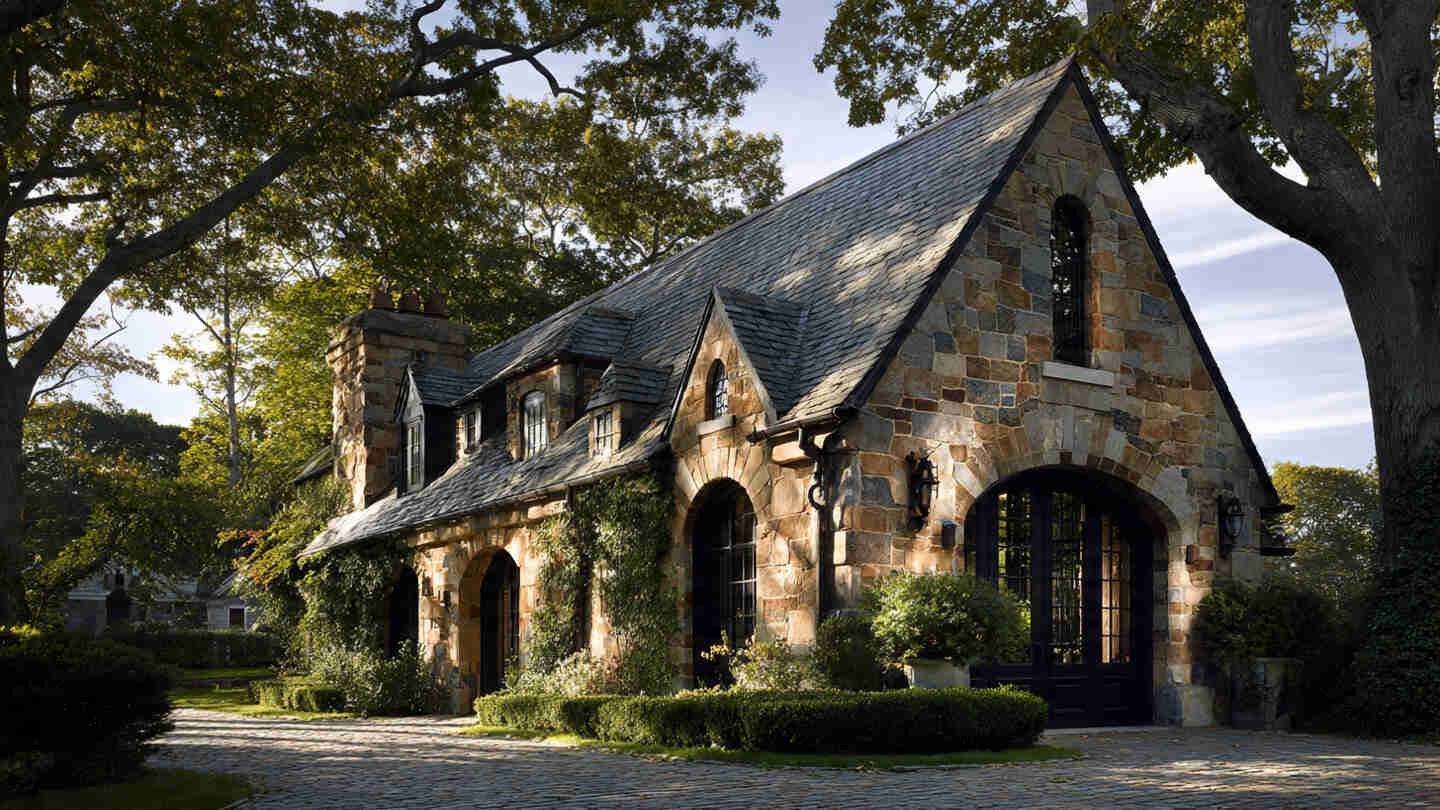
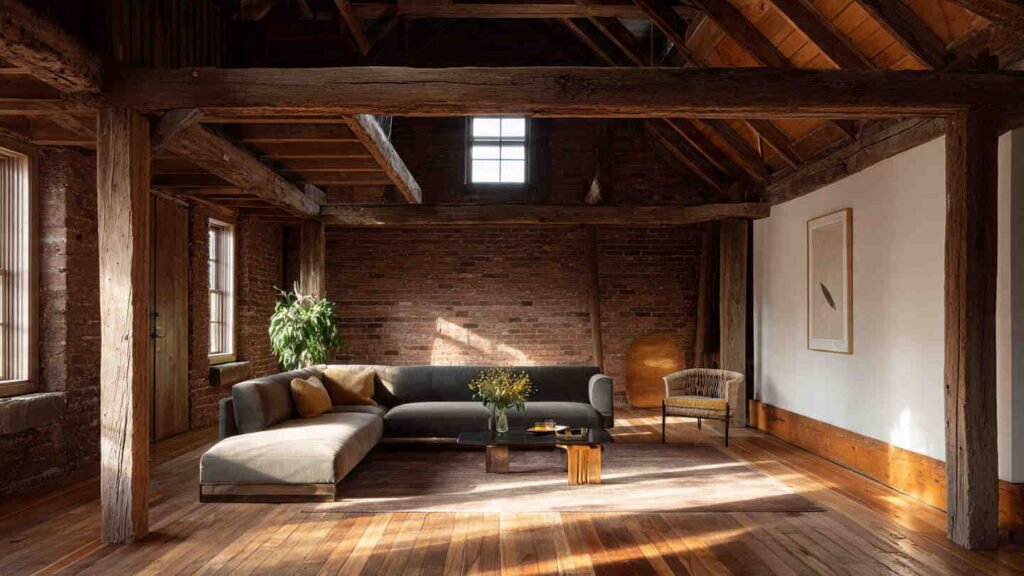
The carriage house at Planting Fields was built to stable the horses of William Robertson Coe — an English insurance magnate who commissioned one of the last great Gold Coast estates, a 65-room Tudor Revival mansion on 409 acres in Oyster Bay, designed by the firm Walker & Gillette and completed in 1922. The horses are long gone. The mansion is now a state historic park, open for self-guided tours from March through September. But the hay barn complex, with its stables, is still standing — today it houses the visitor center and a café.
That specific repurposing is instructive. The main house became a museum. The outbuildings became functional. This is not a reversal of hierarchy; it is a clarification of it. The carriage house was always, at some level, more honest than the mansion it served. It was built to do things, not to signify them.
The Economics of Survival
Across Oyster Bay and Laurel Hollow and the surrounding Gold Coast enclaves, the estate-era outbuildings have had a different relationship with time than the great houses did. The houses were expensive to heat, expensive to maintain, expensive to insure, and — once the families that built them had dispersed — expensive to justify. They required staff. They had rooms that served no purpose once formal entertaining ended. The land beneath them was worth more, in many cases, than anyone could recover from the building itself.
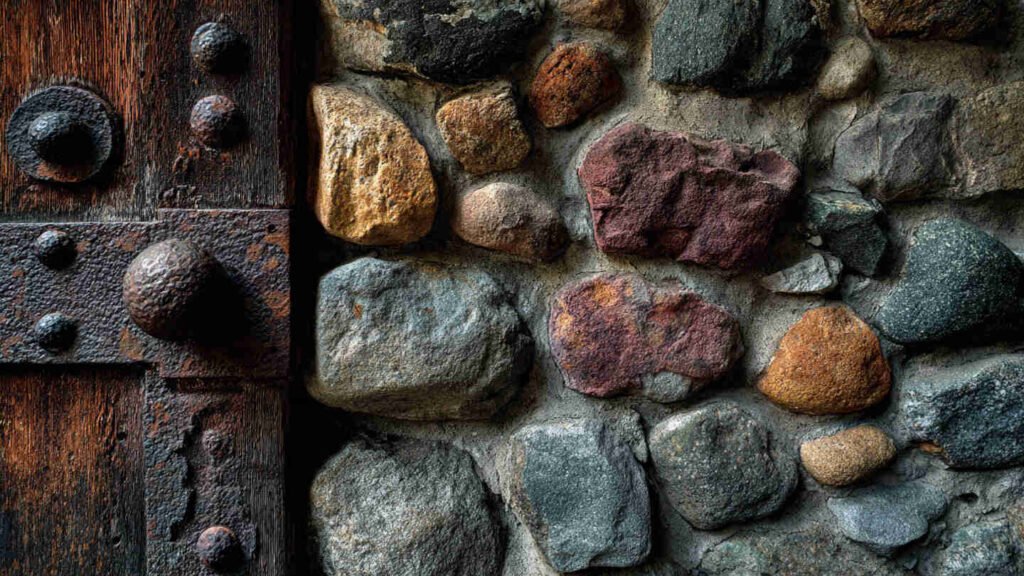
The carriage houses, the gardener’s cottages, the gate lodges, the icehouse, the laundry buildings — these were a different proposition. Their scale was human. Their floor plans were already organized around function rather than ceremony. A coachman’s apartment above the stall bay required the same conversion energy as any loft. Fieldstone walls and slate rooflines, built to accommodate the weight and heat of horses, proved equally suited to residential occupancy. The materials were honest in a way that estate ballrooms were not.
Preservation Long Island — which maintains the most comprehensive inventory of surviving Gold Coast outbuildings — has documented this pattern across Nassau and western Suffolk Counties. Of the roughly 1,000 large estates built on Long Island between the Civil War and 1940, just under 60 percent survive in some form today. The survival rates for outbuildings, particularly masonry outbuildings, exceed the survival rates for main houses, in part because they were cheaper to adapt and in part because their smaller footprint made them more compatible with the lot sizes that emerged from estate subdivision.
The result, over several decades of this process, is that the North Shore now has a small but meaningful inventory of residential properties that are architecturally more significant than anything being built new at comparable price points — properties where the construction quality, the material choices, and the spatial logic were all governed by the standards of a client class that did not compromise on craft.
What the Craftsmen Built
To understand why these buildings matter, you have to think about who built them.
The Gold Coast estates were constructed during the same decades — roughly 1880 to 1930 — when the Arts and Crafts movement was at its height, when the question of what American craftsmanship should look like was being answered in real time by a generation of builders and joiners who had absorbed both English tradition and American pragmatism. The carriage house at a significant Gold Coast estate was not built by the crew that built the surrounding subdivision. It was built by the same craftsmen who built the main house — men who knew how to lay a brick bond, who understood the relationship between slate pitch and water drainage, who could work stone and timber to standards that have not been reproducible at ordinary market cost since the Depression.
At Planting Fields, the hay barn and stable complex is documented as part of the Coe estate’s original construction between 1918 and 1921. The estate’s landscape was designed by the Olmsted Brothers, and the same attention to site that shaped the formal gardens shaped the placement and massing of the outbuildings — they were understood as part of a composed ensemble, not as afterthoughts. The wrought-iron gates that Coe imported from Carshalton Park in Sussex, England, in 1921 — built in 1712 — give some indication of the standard of material the estate set throughout.
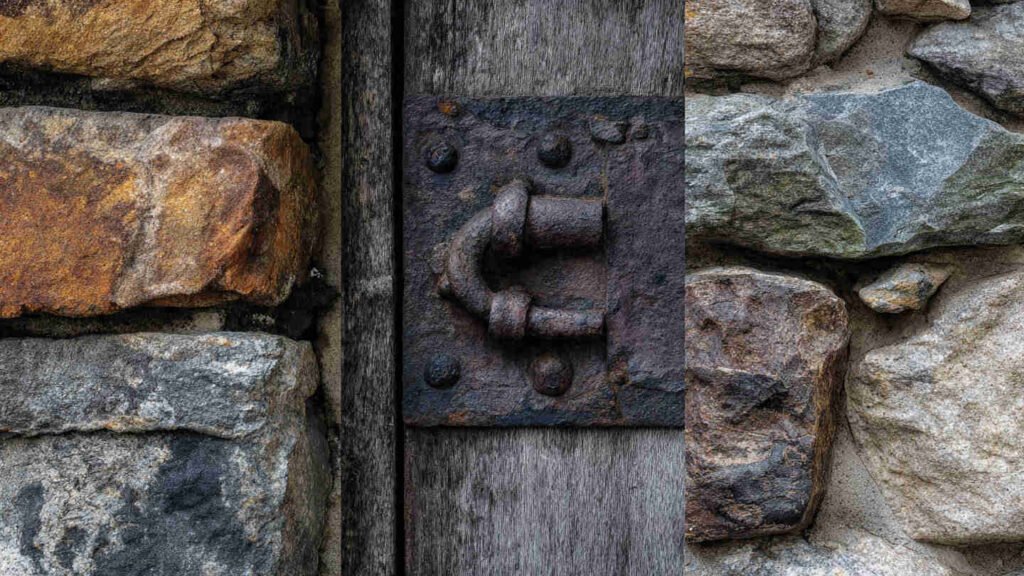
Not every carriage house on the North Shore reaches that standard. But the best of them — the ones built in the 1890s and early 1900s for estates like Sagamore Hill in Oyster Bay, where Theodore Roosevelt’s carriage house and outbuildings are documented in National Park Service records — share certain characteristics: load-bearing masonry construction, mortared fieldstone or kiln-fired brick, timber framing dimensioned for the actual loads of carriages and horses rather than the theoretical loads of residential code minimums, rooflines in slate or clay tile rather than asphalt. These are buildings that were engineered beyond their program.
The Contemporary Market for Gilded Surplus
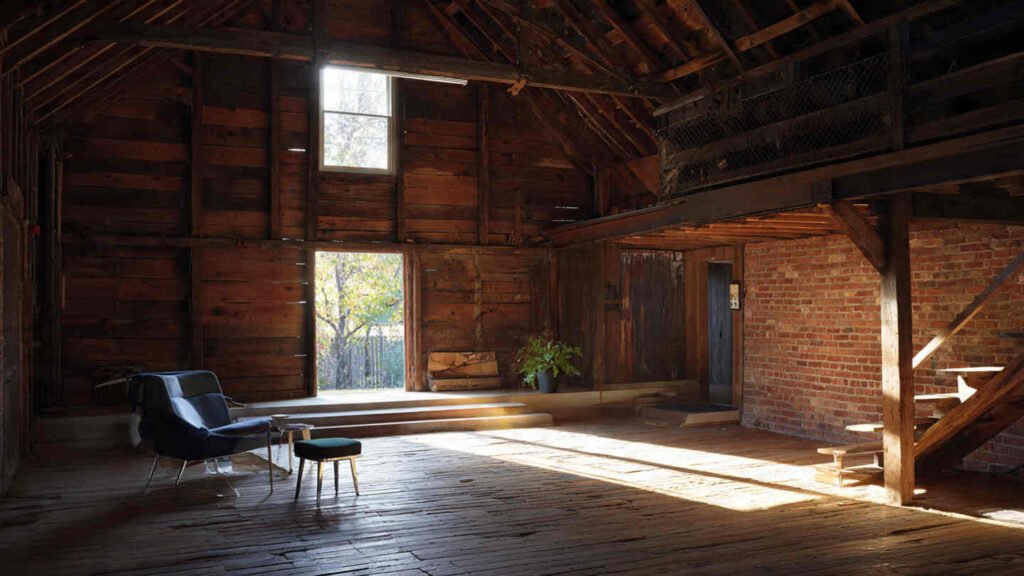
I’ve walked carriage houses in this part of the North Shore that stopped me mid-sentence. Not because of renovation quality — in some cases the renovation was minimal — but because of the bones. The stall bay heights. The way light came through a hay loft opening that was never meant to be a window but functions as one. The stone threshold, worn concave by a hundred years of horses and grooms and visiting riders. There is a texture to these buildings that no amount of specification in a new construction contract can replicate, because texture is the residue of use, and these buildings have been used.
The conversion challenge is real. Carriage houses were not designed for residential plumbing, and the floor plans do not always cooperate with modern living expectations. Ceiling heights in the stall bays can be extraordinary — fifteen, eighteen feet — which creates spatial drama but also thermal challenges. The hay loft, if it survives, becomes a mezzanine or a bedroom, but the stair access is invariably steep and often creative. The windows, designed to give light to horses rather than human occupants, tend toward the utilitarian: small, high-set, south-facing for warmth. Adding window area in a masonry structure requires a structural engineer and a mason who understands the original bond pattern.
None of this is insurmountable. And the payoff, when it’s done correctly, is a property that occupies a genuinely singular position in any competitive market: architecturally irreplaceable, materially differentiated, with a provenance that no new construction can claim. The buyers who understand this are a specific type — they are not looking for a move-in condition property, and they are not comparing square footage the way a conventional buyer does. They are comparing what a building is made of and what it remembers.
What I’ve observed — and I’ve been watching this particular corner of the North Shore market long enough to say it with some confidence — is that these properties, when correctly presented, attract buyers who are not price-sensitive in the ordinary sense. They are buying an argument about permanence. They are buying the argument that a building constructed by craftsmen in 1905 to house a client’s carriages is, in 2026, more architecturally significant than the spec house three blocks away at twice the price.
That argument, in my experience, holds.
What Buyers Should Know Before They Fall in Love
The due diligence on a carriage house conversion is different from the due diligence on a conventional residential purchase, and it is worth understanding that difference before falling too hard.
First: preservation easements. Properties in and around Oyster Bay’s historic enclaves — particularly those associated with estates listed on the National Register of Historic Places or subject to Preservation Long Island easements — may carry restrictions on exterior alterations, window replacements, roofing materials, and additions. These easements run with the land. A buyer who plans to add a dormer or replace the slate roof with asphalt should verify the restriction status before making an offer. The restrictions exist for good reason. They are also real constraints.
Second: the structural survey is not optional. Masonry buildings of this age can hide problems — mortar joint failure, water infiltration, foundation settlement in areas where the original builders were working with challenging North Shore soils. The glacial till that underlies much of the North Shore is not uniform, and buildings that have settled unevenly over a century can present structural issues that are not visible to the naked eye. Hire a structural engineer who has experience with historic masonry, not just a general home inspector.
Third: understand what “original” means and what it doesn’t. Many carriage houses have been partially converted, partially renovated, or partially demolished. The surviving building may be one bay of an original three-bay structure. The slate roof may have been replaced with asphalt in 1970. The hay loft may have been removed to create clearance. Ask for documentation — historic photographs, Sanborn maps, estate survey records — and understand what you are actually buying.
What you are buying, at best, is a connection to a building tradition that is genuinely irreplaceable. That is worth something. How much depends entirely on the specific structure.
This post is for informational purposes only and does not constitute legal or financial advice. Consult a licensed attorney and structural engineer before purchasing any historic property. Real estate markets change — for current listings and market data, contact Pawli at Maison Pawli.
You Might Also Like: What the Carriage House Knows | The Servant Stair and the Service Wing | Before You Touch the Bow Windows
Sources: Planting Fields Foundation, About Us | NYS Parks, Planting Fields Arboretum State Historic Park | Wikipedia, Planting Fields Arboretum State Historic Park | Gold Coast Library, William Robertson Coe and the Planting Fields Arboretum | Preservation Long Island
Part of the Gold Coast Series: This post is one of fifteen pieces in the Maison Pawli Gold Coast cluster. For the full guide — surviving estates, architectural history, legal sediment, and what buyers need to know — visit The Gold Coast of Long Island: Gilded Age Estates, Architectural Heritage, and What Survives.