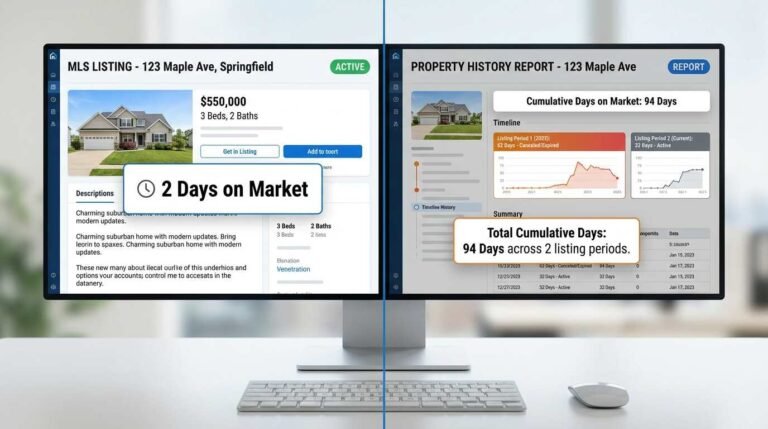
Buying a Long Island Home in Winter: Off-Season Edge

Housing activity follows the calendar. Buyers who shop between November and February meet a different market from the one that dominates headlines in May, and the differences can be measured. The figures below come from the National Association of Realtors (NAR), a Federal Reserve Bank of St. Louis data series for Suffolk County, and Redfin analysis published by NAR. Dates are noted throughout, since seasonal data ages quickly.
What the seasonal numbers show
An April 2024 NAR Economists’ Outlook post, “Navigating the Housing Market: A Seasonal Perspective”, lays out the pattern nationally. Median days on market ran 33 from April through June, 35 from July through September, 41 in October and November, and 49 from December through February. The post’s text describes winter as “nearly 50” days, up from about 30 at the seasonal peak, so the table and narrative differ slightly.
Prices follow a similar arc. According to the same post, homes are 16% more expensive in June than in December through February, and in October and November the typical home is about 5% less expensive than in June. These are national averages of different homes sold in different months, not the change in value of any single property. The post also describes fewer homes for sale in winter, and sales of existing homes averaged 11,380 per day from December through February against 16,530 in the April-through-June stretch.
Two things follow. Sellers who list in winter tend to be on the market longer, and fewer purchasers are in the field at the same time.
Suffolk County in the monthly data
For local direction, the Federal Reserve Bank of St. Louis publishes a Suffolk County, NY series on month-over-month change in median days on market. The series is reported in percent, not in day counts, so it shows momentum rather than a level. Even so, the shape is consistent across two winters. Median days on market rose 11.11% in November 2024 and 24.62% in December 2024, then fell 27.27% in March 2025. The next cycle repeated it: increases of 9.38% in November 2025, 14.29% in December, and 10.00% in January 2026, followed by declines of 25.00% in March 2026 and 28.79% in April.
The page does not break the figures into price ranges or property types, and a county average hides a lot of local variation. Readers who want a Long Island baseline expressed in days can compare it with the related post on seasonal days on market on Long Island.

Competition between buyers
Competition is harder to count than time on market, but Redfin tracks the share of its offers that face a bidding war. A December 2021 NAR article reporting Redfin data put that share at 59.5% for November 2021, the lowest in eleven months and down from a 74.6% peak in April of that year. In the article, Redfin’s chief economist described easing in winter as typical, linking it to holiday time off. The same piece cautioned that bidding wars remained common and that buyers should still expect them. The article is archived, and the figures describe the 2021 market, so they illustrate the seasonal pattern more than they predict current conditions.
That caution carries over to any season. The NAR report does not claim that winter removes competition, only that it recedes from its spring high. A property that is priced well and well presented can attract several offers in any month.
The same article carried results from NAR’s October 2021 REALTORS Confidence Index survey: buyers had averaged two prior unsuccessful offers, and 42% of offers were above list price, down from 55% in June. Each number reflects a historically intense market, so the lesson lies in the direction. Between June and the fall, both measures of competition moved lower, which is the seasonal pattern the later data also show.
Inspecting a house in cold weather
Winter conditions change what an inspection can reveal. RISMedia’s November 2024 piece on what to look for during a winter home inspection lists several items that cold weather puts on display:
- Heating performance, including efficiency, cleanliness, airflow, the humidifier, and the thermostat.
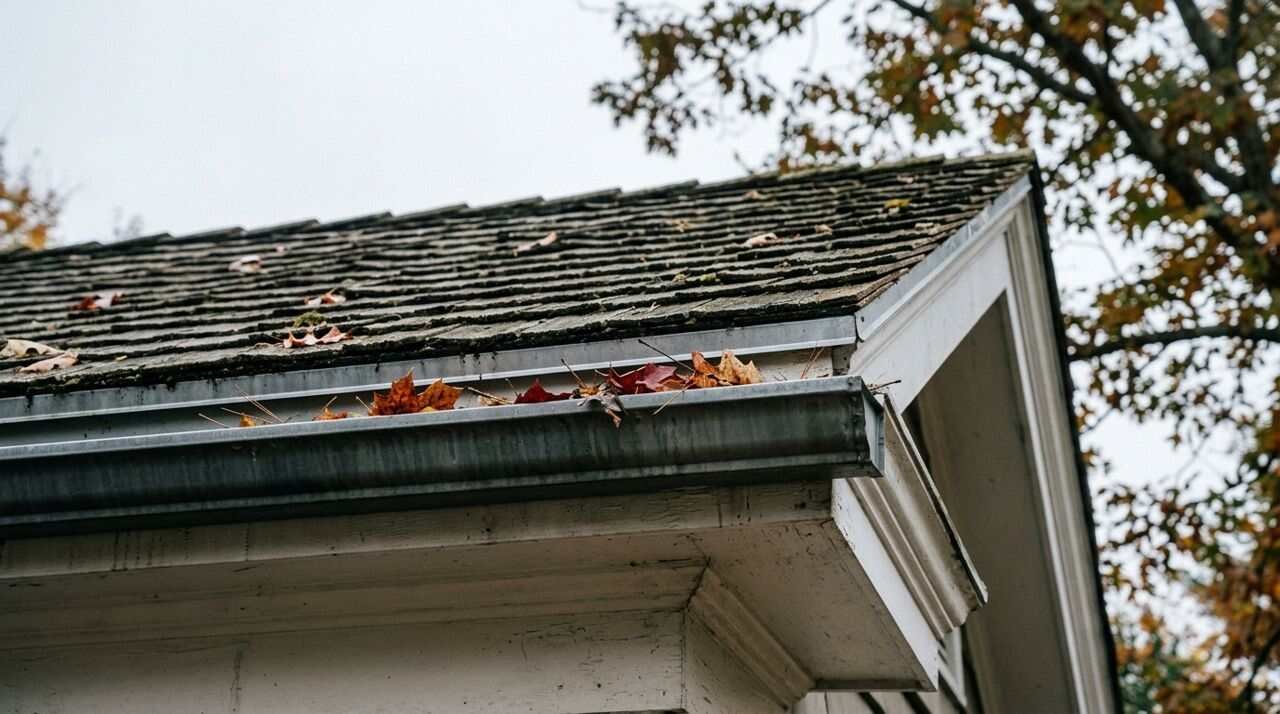
- Clogged gutters, which can cause ice dams.
- Roof condition, including missing or damaged shingles, drainage, and moisture damage from snow and ice.
- Drainage of snow and ice melt away from the foundation.
- Drafts around windows, doors, and exterior-wall outlets.
- Ductwork leaks, missing insulation, and heat loss.
- Plumbing: exposed pipes, exterior fixtures, leaks, and corrosion.
- Insulation in attics, crawlspaces, basements, and walls.
Some of these are easier to judge in January than in June. A furnace that is running hard shows what it can do. Other items work the opposite way, and snow cover can limit what is visible outdoors. The related posts on preparing for a home inspection in New York and walking a home inspection cover the process in more detail, and the post on oil tank discovery is relevant to older houses that rely on oil heat.
How a winter search fits the timeline
A search that begins in late October rarely ends in a week. Virginia Realtors’ December 2025 summary of NAR’s 2025 Profile of Home Buyers and Sellers, which covers transactions from July 2024 through June 2025, reports a median search of 10 weeks. A buyer who starts shopping in the last days of October would, on that median, still be looking in early January, after the weeks of the year when, according to the NAR seasonal data, days on market run longest.
Mortgage paperwork follows its own steps. The CFPB explains that a lender must provide a Loan Estimate within three business days of receiving an application, that the form runs three pages, and that every lender uses the same standard layout. It shows the estimated rate, monthly payment, and total closing costs. Because the format is identical, estimates from different lenders can be compared line by line. The Bureau’s page, What is a Loan Estimate?, was last reviewed in August 2024.
Disclosure, flood questions, and financing timelines
New York’s disclosure rules apply year-round. Since March 20, 2024, sellers of covered residential property must provide a completed Property Condition Disclosure Statement before a purchaser signs a contract; the earlier option of a $500 closing credit in place of the form ended, according to a February 2024 summary from a New York law firm. The revised form adds questions about flood history and flood insurance. Condominium and cooperative unit sales and certain other transactions remain exempt. Readers weighing the new flood questions can find background in the post on flood zones on Long Island.
Financing has its own calendar. The Consumer Financial Protection Bureau states that a borrower must receive a Closing Disclosure at least three business days before closing. The rule is brief, but it interacts with holiday schedules. A buyer targeting a closing near a holiday can ask the lender how the three-day window will be counted. The Bureau’s closing disclosure guidance, last reviewed in August 2024, is the official reference.
Forces other than the calendar
Seasonality is one influence among several. NAR’s 2025 Profile of Home Buyers and Sellers, announced on November 4, 2025, reports that all-cash buyers averaged 26% of purchases over the survey year, an all-time high, and that nearly one in three repeat buyers paid all cash. The median down payment was 19% overall, 10% for first-time buyers, and 23% for repeat buyers. Those figures describe the national market from July 2024 to June 2025, but they show that a buyer’s financing structure is part of what a seller weighs in any month.
In practice, a winter schedule does not change the need for a clear financing plan. Interest rates, lender requirements, and a household’s own budget all shape what a search can accomplish. The post on mortgage rates and New York homebuyers in fall 2026 places the current rate environment in context.

Using the numbers on a specific listing
National and county averages say little about an individual house. The most useful application of the seasonal data is as a backdrop, a reason to expect that fewer buyers are competing and that listings may sit longer than in spring. Details specific to the property still decide the outcome: its price relative to comparable sales, its condition, and the circumstances of the sale.
Several of those details are checkable through official channels. The Property Condition Disclosure Statement addresses known conditions. A home inspection, scheduled in cold weather, tests the heating and the building envelope. A Loan Estimate fixes the expected cost of financing, and the Closing Disclosure confirms it. Treating each document as its own checkpoint keeps the process orderly regardless of the month.
Trade-offs of buying in the off-season
Winter has costs. Fewer homes are for sale, so the number of houses that fit a given set of criteria is smaller, and the right property may simply not be listed in January. Seasonal slowdowns also do not guarantee a discount, since the NAR data describe averages across different homes. The data above also cannot say why any individual seller chose to list in winter.
The data favor buyers who have financing arranged in advance and room in their schedule to decide without a deadline. They favor less those whose needs are narrow or whose timeline is fixed, since a smaller pool of listings leaves fewer alternatives.
Put together, the evidence supports a modest conclusion. Winter tends to bring longer listing times, lower competition, and a smaller supply, and each of those facts cuts both ways depending on the buyer’s needs. The calendar is a variable to weigh, not a strategy by itself.
Related reading
- Days on market on Long Island: a seasonal baseline
- Open house etiquette for buyers
- Certificates of occupancy and unpermitted work at sale
This article is general information and is not legal or financial advice.
Rules, rates, fees and procedures change; confirm current details with the official sources linked above and with a licensed attorney or other qualified professional before making decisions.
Sources
- NAR Economists’ Outlook: Navigating the Housing Market, A Seasonal Perspective (Apr. 29, 2024)
- FRED: Housing Inventory, Median Days on Market Month-Over-Month in Suffolk County, NY
- NAR: Bidding Wars Drop to 11-Month Low but Remain Prevalent (Dec. 2021)
- RISMedia: What to look for during a winter home inspection (Nov. 13, 2024)
- CFPB: When do I get a Closing Disclosure?
- NAR: 2025 Profile of Home Buyers and Sellers reveals market extremes (Nov. 4, 2025)
- CFPB: What is a Loan Estimate?
- Virginia Realtors: Key takeaways from NAR’s 2025 Profile of Home Buyers and Sellers (Dec. 8, 2025)
- Belkin Burden Goldman LLP: Mandatory Property Condition Disclosure Statements Replace $500 Closing Credit Option (Feb. 21, 2024)