
The Oil Tank Discovery Protocol: What Happens When You Find One Mid-Renovation
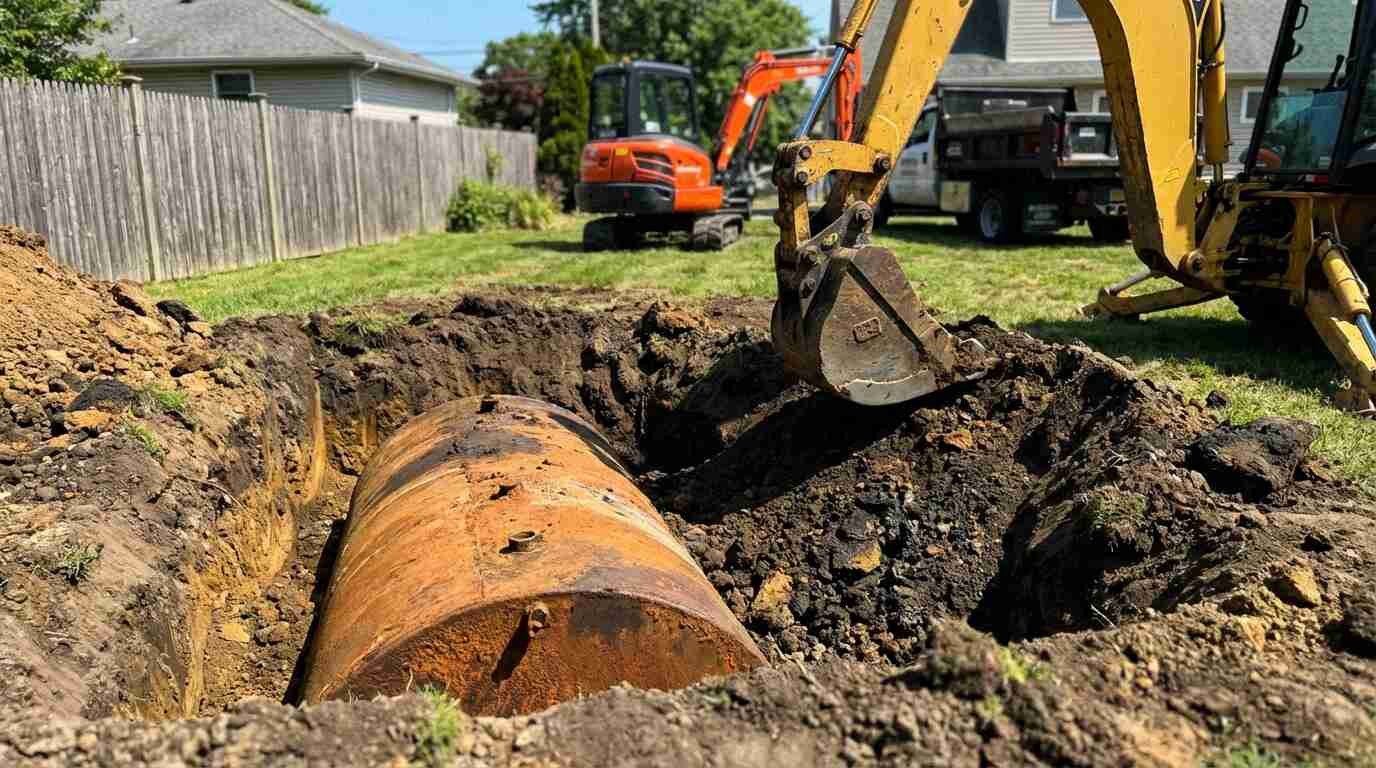
The call comes in on a Tuesday. A client who closed on a fixer-upper in Miller Place three months earlier — a 1958 ranch on a half-acre, good bones, everything exactly as described — is excavating for a foundation repair along the south wall when the backhoe hits something solid at about four feet down. The operator stops. They probe around it. It’s round. It’s metal. It’s not a boulder.
It’s a tank.
The first thing I told him: stop the excavation. The second thing I told him: don’t call me, call your attorney. And then I stayed on the phone with him for another twenty minutes while we worked through what comes next, because this is one of those situations where the order of operations matters enormously and getting it wrong doesn’t just cost money — it can create liability that follows the property for years.
If you’re renovating an older Long Island home and you discover a buried oil tank, here’s the protocol — and why it matters.
Stop. Document. Don’t Disturb.
The moment a buried tank is encountered during excavation, work stops at that location. The area around the tank should not be further disturbed — no more digging, no probing, no attempts to assess the condition by prying or hitting the tank surface. If soil in the excavation area has a petroleum odor — that sweet, chemical smell that’s unmistakable once you’ve encountered it — note it and do not re-enter the excavation.
Before any next steps, document everything you can from a safe distance: photos of the excavation area, the exposed portion of the tank, and any visible soil staining. If your contractor has a date-stamped site log, note the time and circumstances of discovery. This documentation matters later, both for regulatory purposes and for any claim you may have against the seller if the tank was not disclosed.
One thing many buyers don’t know: the seller’s disclosure form in New York specifically requires sellers to disclose the presence of any known underground storage tanks. If the seller marked that section “unknown” or “no” and you’ve just found a tank, your attorney needs to know about that discrepancy immediately. I wrote about why the buried oil tank problem is the seller’s responsibility to hunt before listing — that post covers the seller’s side of this; what follows is the buyer’s and renovator’s reality.
Who to Call First
Your real estate attorney. Before the DEC, before an environmental contractor, before the insurance company — call your attorney. The discovery of an underground storage tank triggers a set of legal and regulatory obligations, and you want to understand your position before you start generating official reports that may create obligations or affect your rights.
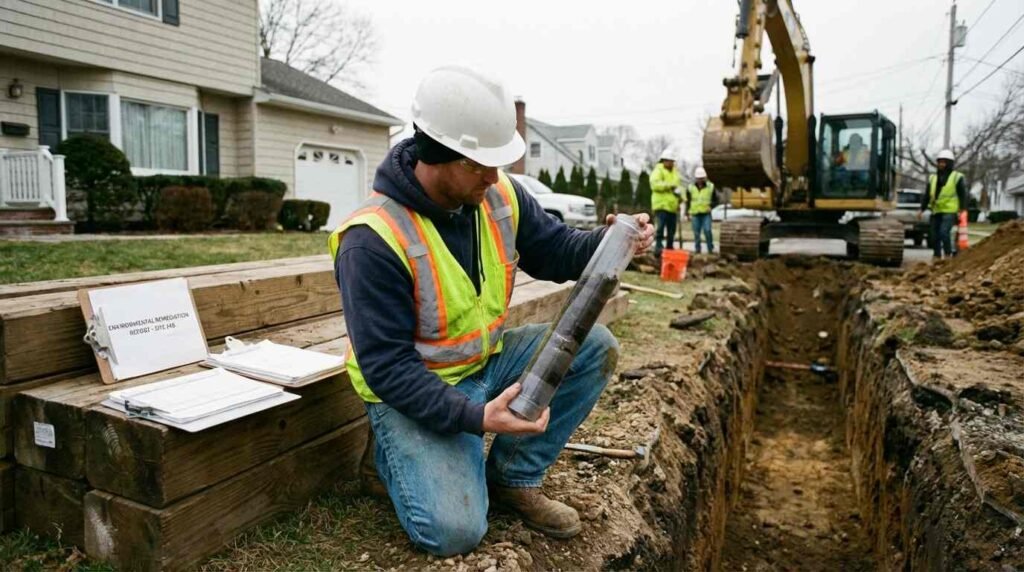
A licensed petroleum storage contractor. In New York State, any work associated with underground petroleum storage tanks — including removal, abandonment, and remediation — must be performed by a registered contractor under the NYS Department of Environmental Conservation’s Petroleum Bulk Storage program. A licensed environmental engineer or a petroleum storage contractor registered with the DEC is who you call for assessment and remediation. Do not call a general contractor to “dig it up.”
Your homeowner’s insurance carrier. Many homeowner’s policies include pollution or petroleum remediation coverage — or explicitly exclude it. You need to know which category your policy falls into before remediation costs begin accumulating. Some buyers also carry specific environmental insurance riders on older properties; if you purchased one, now is when it matters.
What the DEC Requires
New York State regulates underground petroleum storage tanks through the Petroleum Bulk Storage (PBS) program under the Environmental Conservation Law and 6 NYCRR Parts 612-614. [VERIFY: confirm current regulation citations before publishing] For residential tanks — which are typically smaller than 1,100 gallons and have different regulatory thresholds than commercial tanks — the requirements turn on whether there is a petroleum release.
If the tank is found intact with no evidence of leakage: You still have a decision to make. Abandoning a tank in place requires DEC notification and must be done following DEC procedures — typically filling the tank with an approved inert material and capping it. Removing the tank requires a licensed contractor, proper transport and disposal, and soil sampling at the excavation to confirm no release has occurred. In both cases, you need documentation that the work was completed properly, and that documentation needs to stay with the property.
If there is evidence of a release — soil staining, petroleum odor, visible product in the excavation: You are now in a different regulatory category. Under New York’s petroleum spill reporting requirements (ECL Section 17-1009), releases of petroleum to the environment must be reported to the DEC Spill Hotline at 800-457-7362 within two hours of discovery. [VERIFY: confirm current hotline number and reporting window] Failure to report is itself a violation. The reporting obligation falls on the property owner — which is you.
Once a spill is reported, the DEC assigns a spill number and the property enters the DEC’s petroleum spill registry. A remedial investigation follows: soil borings, potentially groundwater monitoring, and a site characterization that establishes the extent of contamination. Based on that characterization, a remediation scope is developed and must be executed under DEC oversight.
This is the scenario that concerns buyers most, and reasonably so. But it’s worth understanding that the DEC’s goal in residential petroleum spill remediation is achieving cleanup to protective standards — not punishing the property owner who discovered and reported the problem. Regulatory cooperation and prompt reporting generally produce better outcomes than discovery through enforcement.
What Remediation Actually Costs
The range here is genuinely wide, and I’ll give you an honest picture.
Tank removal, no contamination: A straightforward above-the-water-table, intact residential oil tank removal with soil sampling and DEC-compliant closure documentation typically runs $2,500–$5,000 for the removal itself, plus lab costs for soil samples (typically $500–$1,500). If the site is clear, you get a closure letter and the matter is resolved.
Tank removal with localized contamination: If soil sampling shows petroleum in the soil but contamination is limited in extent and doesn’t reach groundwater, remediation can often be accomplished by excavating contaminated soil and disposing of it as petroleum-contaminated waste. The cost for this type of remediation on a typical North Shore property typically runs $10,000–$40,000, depending on the volume of contaminated soil and disposal costs at the time.
Tank removal with groundwater contamination: If petroleum has reached the water table — which on Long Island’s shallow aquifer system can happen with surprisingly small releases — the remediation picture changes significantly. Groundwater monitoring wells, pump-and-treat systems or alternative remediation technologies, extended DEC oversight, and annual reporting requirements can push total remediation costs well above $100,000 in serious cases. These situations are less common in residential contexts, but they are not rare in areas of the North Shore where the water table is close to the surface.
Important caveat: these figures are general ranges based on market knowledge as of 2026. Get a site-specific estimate from a licensed environmental contractor before making any financial projections. Remediation costs depend heavily on site conditions, soil type, proximity to groundwater, and current disposal rates — all of which vary.
The glacial soils that underlie much of the North Shore — the tills and outwash sands I wrote about in the context of 1960s ranch renovation and foundation problems — are highly permeable, which means petroleum can migrate through them relatively quickly. This is a factor in both contamination extent and remediation complexity.
How It Affects Your Timeline
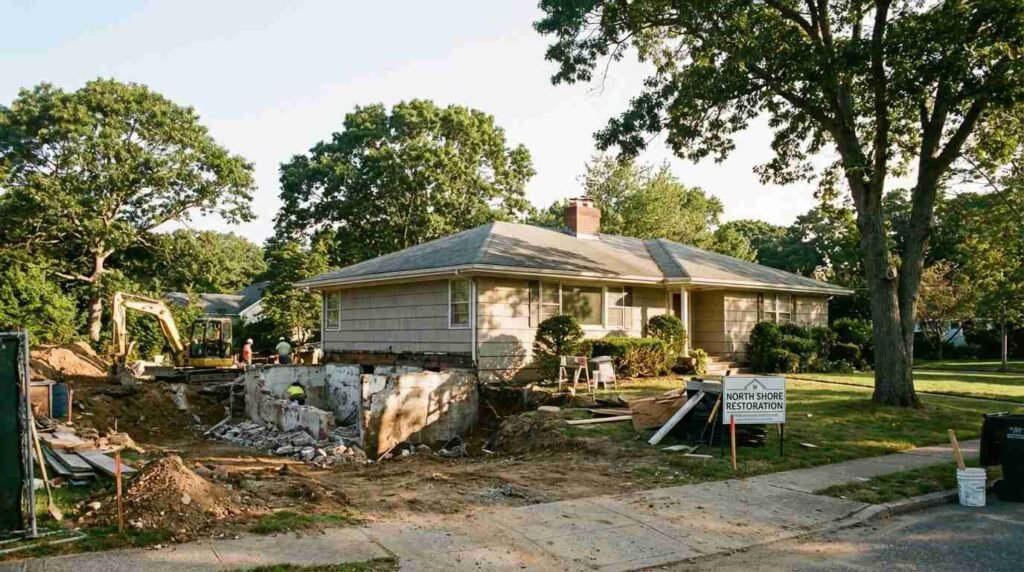
A tank discovery without contamination, handled promptly by a licensed contractor, adds two to six weeks to your project timeline under favorable conditions — time for the assessment, the removal, soil sampling, lab turnaround, and documentation.
A contaminated site enters DEC oversight and timelines shift to DEC timelines. Initial spill response and assessment typically takes three to six months. A remediation plan must be submitted to and approved by the DEC before active remediation begins. Depending on the scope of contamination, active remediation can run from several months to several years. DEC closure — the official document saying the site is clean — is the finish line, and it is the document that allows the property to be sold or refinanced without a cloud on title.
For a renovation project with a contractor already under contract, a tank discovery mid-project is a trigger event that requires renegotiating your contractor’s schedule. The contractor shortage I covered in why Long Island permits are taking 14 months already makes schedule recovery difficult; adding an environmental hold to a construction project creates a gap in the contractor’s schedule that may not be recoverable on the same terms.
Build the possibility of a tank discovery into your contingency planning before you start any excavation on a pre-1980s Long Island property. If your renovation plan includes any digging — foundation work, drainage improvements, installation of utilities, pool excavation — have a preliminary conversation with an environmental professional before the work starts. Many buyers do a tank scan (ground-penetrating radar or electromagnetic scan of the property) as part of pre-purchase due diligence on older properties specifically to identify this risk before closing. It costs a few hundred dollars. It is cheap information.
How It Affects Your Lender
If you’re carrying a mortgage on the property, a petroleum contamination discovery has implications for your lender that you need to understand.
Most lenders require environmental clearance before they will lend on contaminated property. A DEC spill number on a property can trigger an appraisal condition, a loan covenant requirement, or — in the worst cases — a loan called for environmental impairment. Your mortgage documents likely contain language about material environmental conditions; review those terms with your attorney.
For renovation financing specifically — an FHA 203(k) loan or a construction loan — environmental contamination during the renovation phase creates a compliance question that your lender and FHA (if applicable) will need to address. I covered the FHA 203(k) and how renovation financing works on Long Island for buyers planning acquisition-plus-renovation financing; if you’re in that structure, alert your lender the moment you have a confirmed tank discovery, not after the DEC spill report is filed.
A Word on Disclosure Going Forward
If you purchased the property without knowing about the tank — and the seller’s disclosure form indicated no knowledge of underground storage tanks — the discovery creates a potential claim against the seller for failure to disclose a known material defect. Whether and how to pursue that claim is a question for your attorney, who will look at what the seller actually knew, what was documented, and what your damages are in the context of whatever indemnification or hold-harmless language appears in your purchase contract.
What I want buyers to understand is that this happens, it happens regularly on Long Island’s North Shore because home heating oil was the dominant residential heating fuel throughout the 20th century and thousands of tanks were abandoned in place when properties converted to gas or newer fuel systems, and it does not have to be a catastrophic event if it’s handled correctly from the moment of discovery.
The buyers who get into real trouble are the ones who try to handle it quietly — who have a contractor “just take care of it” without proper permits and documentation, who don’t report a release because they’re hoping the contamination stays small, who don’t tell their lender. That path creates the kind of liability that follows a property into subsequent sales and creates disclosure obligations that don’t go away.
Transparency with regulators, your attorney, and your lender, and prompt engagement with licensed professionals, is the only way through this that doesn’t leave a tail.
Pawli’s Bottom Line
I’ve worked with buyers who found tanks. I’ve worked with sellers who had to disclose them. I’ve been in the conversation when a tank discovery happened mid-renovation, and I’ve watched good projects get badly derailed by the wrong initial response.
The protocol is not complicated. Stop. Document. Call your attorney. Call a licensed contractor. Report if required. Work through it in the right order, with the right professionals, and with transparency.
Long Island’s older housing stock is where the value is — the established neighborhoods, the good bones, the mature trees, the lots that no new subdivision can replicate. That stock comes with history, and history on Long Island sometimes means oil tanks. Knowing how to handle one, if you find one, is part of what it means to buy here with your eyes open.
This post is for informational purposes only and does not constitute legal, environmental, or financial advice. Consult a licensed real estate attorney and a DEC-registered environmental contractor for guidance specific to your situation.
Real estate markets change. For current listings and market data, contact Pawli at Maison Pawli.
You Might Also Like
- The Iron Ghost in the Yard: Why Sellers Need to Hunt Their Own Oil Tanks
- Why Your 1960s Ranch Renovation Is Fighting the Soil — The Glacial Till Problem
- The Contractor Shortage Nobody Warned You About: Why Long Island Permits Are Taking 14 Months
Sources
- New York State DEC Petroleum Bulk Storage Program: https://www.dec.ny.gov/chemical/8569.html
- NYS DEC Petroleum Spill Reporting — ECL Section 17-1009: https://www.dec.ny.gov/chemical/8428.html
- NYS DEC Spill Incidents Database: https://www.dec.ny.gov/chemical/8428.html [VERIFY: confirm direct link to spill search]
- Suffolk County Department of Health Services — Petroleum Spill Program: https://www.suffolkcountyny.gov/Departments/Health-Services/Environmental-Quality [VERIFY: confirm current URL and relevant program page]
- 6 NYCRR Parts 612-614 (Petroleum Bulk Storage regulations): https://www.dec.ny.gov/regulations/2612.html [VERIFY before publishing]