Stony Brook, NY — The North Shore Neighborhood Guide

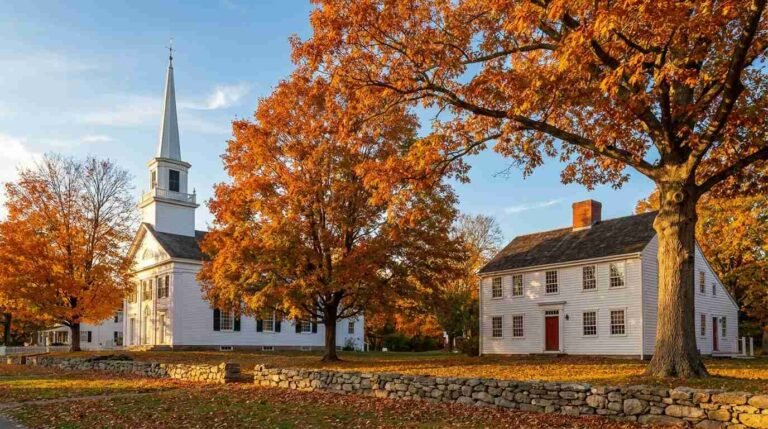
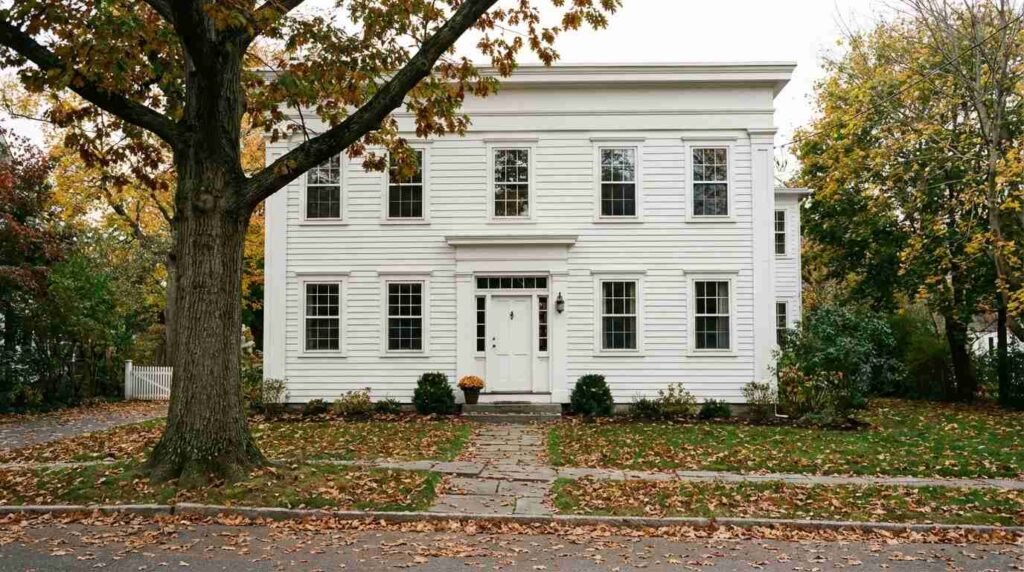
There’s a moment that happens to almost everyone who visits Stony Brook for the first time: they expect a college town and find something that reads, at its center, more like a village that has been quietly preserved from a different era of Long Island — the mill pond, the grist mill, the 18th-century Federal-style houses on Main Street, the smell of salt air drifting in from the harbor. The university is there, of course, dominating the northern edge of the zip code and shaping the character of the housing market in ways that run deeper than most buyers realize. But the village came first, and it still sets the tone.
I’ve shown houses in Stony Brook at every price point, and the buyers who thrive here are the ones who understand that they’re not just buying a house — they’re buying into a place with strong opinions about what it wants to be.
Character and Location
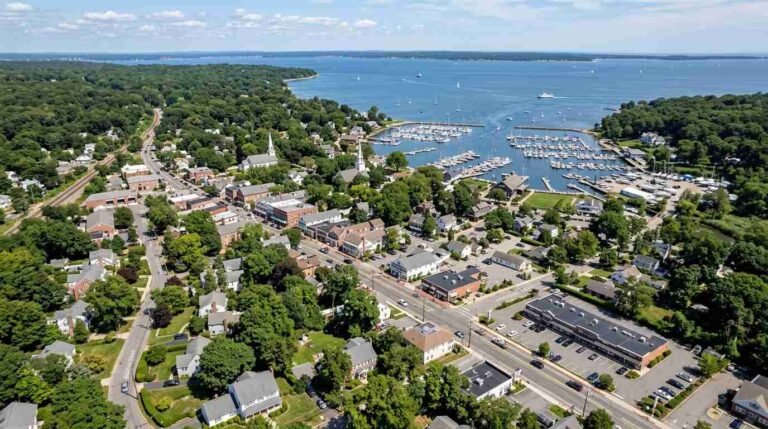
Stony Brook sits in the Town of Brookhaven, on the North Shore of Suffolk County, roughly 60 miles east of Manhattan. The hamlet takes its name from the brook that still feeds the mill pond — a body of water that researchers at Stony Brook University have studied as an archaeological artifact in its own right. Harbor Road and the streets that wind down toward Stony Brook Harbor form the village core, where the density of historic structures is high enough that walking the neighborhood feels genuinely different from almost anywhere else on Long Island.
North of the village, the campus of Stony Brook University occupies a large tract that was carved out of woodland in the 1950s — a fact that continues to shape the politics of development in the surrounding area. The medical district, anchored by Stony Brook University Hospital, sits at the campus edge and has generated a substantial concentration of medical and academic employment that makes the surrounding neighborhoods attractive to a very specific buyer profile: dual-income professional households, often with children, who want school-district quality and a reasonable commute without paying Huntington or Cold Spring Harbor prices.
Schools
The Three Village Central School District serves Stony Brook, along with Setauket, East Setauket, and Port Jefferson Station. It is consistently rated among the strongest public school districts in Suffolk County. The Best School Districts in Suffolk County and What They Do to Home Prices covers the district’s performance data in more detail — the short version is that Three Village’s numbers consistently rank it in the top tier of Suffolk County districts, and that ranking is reflected in price-per-square-foot data across the neighborhoods it serves.
Elementary and middle school configurations within the district assign students by neighborhood, so when I’m working with buyers in Stony Brook, we always confirm the specific school assignment for a property rather than relying on the district-level reputation alone. Worth knowing before you make an offer.
Commute and Access
The Stony Brook LIRR station puts Manhattan within commuting range — roughly 1 hour and 40 minutes to Penn Station on the Port Jefferson Branch, with service that is adequate rather than exceptional by Long Island commuter standards. Buyers who commute regularly to the city tend to weight this carefully; those who work locally at the university or hospital system find it largely irrelevant.
Route 25A is the primary north-south connector, running through the village and linking Stony Brook westward to Port Jefferson and Setauket and eastward toward Smithtown. Nicolls Road (Route 97) provides the main north-south axis through the interior. The geographic reality of the North Shore — the Sound to the north, limited bridge crossings, and the railroad running along a more southern alignment — means that driving patterns for Stony Brook residents tend to be somewhat circular rather than direct. It’s worth spending time in the car during your due diligence if commute times are a significant factor.
Notable Streets and Landmarks
The Village of Head of the Harbor, which borders Stony Brook to the west, is one of the most protected and architecturally coherent communities on the North Shore — and its housing stock, much of it Federal and Greek Revival in period, occasionally appears in the Stony Brook market. The distinction matters legally and for zoning purposes, but aesthetically these neighborhoods blend.
Harbor Road is the address most buyers ask about first. The houses closest to the harbor — with water views or deeded access to Stony Brook Harbor — command a premium that reflects the scarcity of this kind of access on the Sound shore. The mill pond and grist mill area, restored and maintained as a historic district, gives the central village its distinctive character; houses within walking distance of this core carry a small but real premium over comparables farther out.
Christian Avenue, the long north-south street that runs from the village toward the university campus, has seen steady appreciation as the medical district has grown. Sheep Pasture Road and the streets running east toward the Setauket border offer good inventory in the $650,000–$950,000 range for the current market, often in postwar Colonials and expanded Capes.
Stony Brook University’s campus is itself worth noting as a landmark for buyers: the Frank Melville Jr. Memorial Library, the Simons Center for Geometry and Physics, and the performing arts facilities at the Staller Center make the university a genuine cultural resource for residents — theater, film, concerts, and lectures that are consistently high-quality and often open to the public.
Market Snapshot
Stony Brook’s housing market is anchored by the university and hospital employment base in a way that provides meaningful stability through national market cycles. The research employment at Stony Brook — which includes substantial federal grant funding and major laboratory operations — is less exposed to local economic swings than markets driven primarily by private-sector employment.
The inventory profile is dominated by postwar single-family housing: Colonials, expanded Capes, and split-levels built in the 1950s through 1970s, along with a smaller stock of older historic homes in the village core and a modest supply of newer construction at the higher end. The mill pond area and harbor-adjacent addresses carry price premiums of 15–25% over comparable non-waterfront homes in the same zip code, depending on specifics.
The buried archaeological landscape beneath the Stony Brook Mill Pond is something I find myself thinking about in relation to the village real estate market — the millpond basin is a preserved landscape in the most literal sense, and the historic district protections around it have shaped development patterns in the immediate area for decades. It is genuinely part of why the village core looks the way it does.
And if you’re curious about the extraordinary institutional history buried on the northern edge of this neighborhood, the archaeology that preceded Stony Brook University Hospital’s expansion is one of the more remarkable stories we’ve told about how the land here carries its past.
Lifestyle
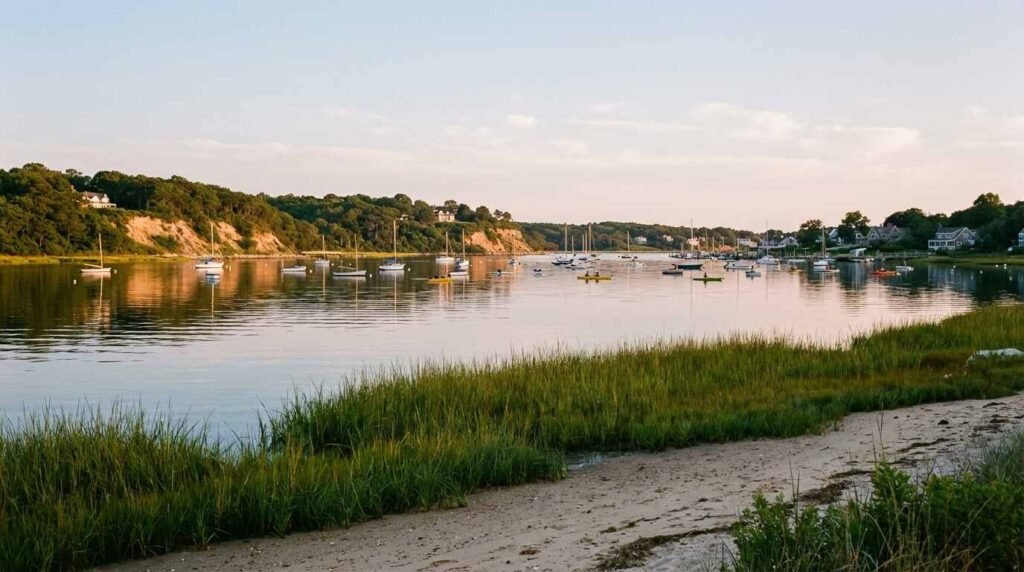
Stony Brook is a neighborhood for people who want more from their surroundings than a commuter-friendly suburb can offer. The harbor provides kayaking, canoeing, and small-craft sailing access. The beaches at West Meadow and Stony Brook Harbor are among the most beautiful on the Sound shore — quiet, relatively uncrowded, backed by bluffs and marshland rather than the resort infrastructure that characterizes the South Shore beaches.
The Stony Brook Village Center has evolved into a functional local retail and dining hub without the density of a true downtown. Residents looking for more extensive dining and cultural options generally head east to Port Jefferson or west toward Smithtown and Huntington.
The university’s presence brings energy and cultural programming that most comparable North Shore neighborhoods lack: visiting scholars, gallery exhibitions, international student and faculty populations that give the community a less insular quality than some of the more historically homogeneous North Shore hamlets.
Who Lives Here and Why
The buyer profile in Stony Brook skews toward dual-income professional households, with a significant concentration of academics, physicians, researchers, and affiliated university staff. There is also a meaningful contingent of buyers who grew up in the Three Village area, moved away for education and early career, and have returned specifically for the school district and the village character.
Stony Brook is not the North Shore neighborhood you buy to impress someone. It is the neighborhood you buy because you’ve thought carefully about what you want your daily life to look like, and the village, the harbor, the schools, and the institutional anchors add up to something that is difficult to find at this price point anywhere else on the Sound shore.
Real estate markets change. This post reflects conditions as of April 2026. For current listings and market data, contact Pawli at Maison Pawli.
You Might Also Like
- The Stony Brook Mill Pond’s Buried Shoreline: How University Geoarchaeologists Are Reconstructing a Pre-Colonial Landscape
- The Stony Brook University Hospital Site Before the Hospital: Reading the Archaeological Investigations
- Port Jefferson’s Second Act: How a Shipbuilding Ghost Town Became the North Shore’s Most Contested Real Estate Market
- The Best School Districts in Suffolk County and What They Do to Home Prices
Sources
- Three Village Central School District. https://www.threevil.org/
- New York State Education Department school accountability data. https://data.nysed.gov/
- Stony Brook University. https://www.stonybrook.edu/
- Village of Head of the Harbor. https://headoftheharbor.org/
- MTA Long Island Rail Road — Port Jefferson Branch schedule. https://new.mta.info/line/lirr/port-jefferson-branch
- Town of Brookhaven Planning Department. https://www.brookhavenny.gov/
- Stony Brook Village Center. https://www.stonybrookvillage.com/