Open House Etiquette for Buyers on Long Island

An open house is a short window in which a seller’s home is open to anyone who walks in, and the conventions that govern it are mostly unwritten. Knowing them in advance makes the visit more productive for the buyer and less disruptive for the seller. This guide covers preparation, arrival, what to examine inside, which questions suit an open house, and how New York’s disclosure rules fit in.
Preparing before the visit
Preparation starts with a short written list of criteria. HomeLight’s buyer guide advises setting a budget, a home type and a set of must-haves in advance so that homes which clearly will not fit can be skipped, such as a two-bedroom house for a household that needs four bedrooms. A similar checklist is recommended by New American Funding, which suggests recording items like the number of bathrooms, kitchen suitability and yard size, partly because staging and lighting can make a home look better in person than it will on an ordinary day.
Market context helps too. Typical prices, days on the market and property tax comparisons for the area give a visitor a way to judge what is on display. A pre-approval letter, if the buyer is serious, allows a quick response when a house suits; the process is covered in how to get pre-approved for a mortgage in New York.
Timing deserves a thought as well. Visitors are expected to arrive within the posted hours and not at the last minute. Redfin’s etiquette article, published in April 2026, notes that a late arrival can mean missing subtle damage or layout limits that photographs do not show. HomeLight adds a corollary: for an event running from 1 to 4 p.m., arriving at 12:50 or 3:50 is poor form.
Arriving, signing in and meeting the agent
Most open houses begin with a sign-in sheet. Signing it lets the listing agent follow up if the home remains available or if details change, according to Redfin. A short, polite introduction costs nothing.
Honesty about status is the usual advice. HomeLight recommends saying so when a visitor is only browsing or has no agent. A visitor who already works with a buyer’s agent can list that agent’s contact information on the sheet in place of personal details.
Visitors who have an agent often prefer to bring that agent along. New American Funding suggests that an agent can help spot red flags, and the listing agent’s role stays what it was: representing the seller. Anything said to the listing agent can reach the seller. The New York Department of State also posts a buyer and seller disclosure form on its broker forms page, in English and 12 other languages.

Moving through the home
The home belongs to the seller until closing, and the basic courtesy is to treat it that way. Redfin advises against touching personal belongings or opening private drawers, while noting that looking into closets and cabinets is acceptable when done carefully. HomeLight puts it more bluntly: look, but do not touch, and do not search through someone’s cabinets.
Floors and furnishings come next. Sellers sometimes ask visitors to wear shoe covers to protect flooring, and HomeLight says any such rule should be followed for the whole event. Wiping feet at the door and leaving food and drinks outside are small habits that Redfin lists among its tips. Pets stay home, according to HomeLight, and children raise a more nuanced point: if they may struggle to follow rules or stay quiet, a private showing can be a better fit, and a second adult helps with supervision if they do come.
Crowds change the dynamic. In a busy house, HomeLight suggests waiting for a room to empty instead of crowding other attendees, and following any posted health or cleanliness rules.
What to examine while inside
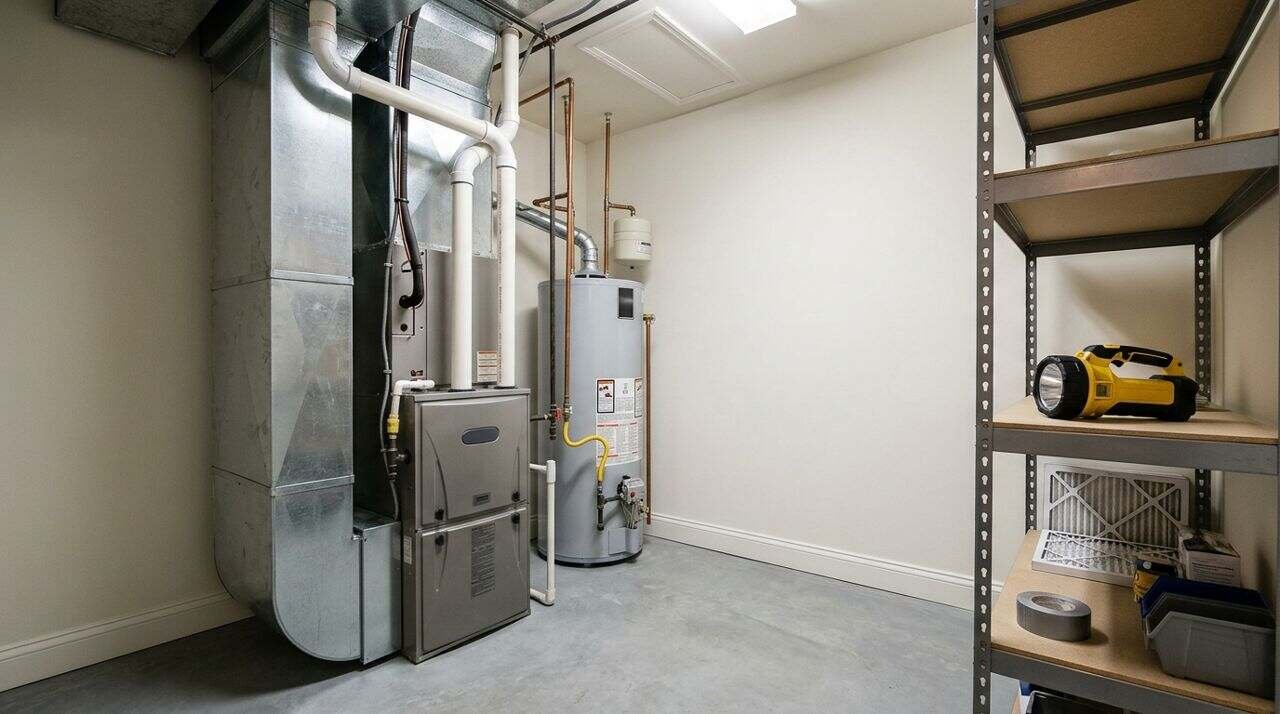
An open house is not an inspection, but a careful eye can gather useful information. HomeLight recommends opening closet doors and checking basements and storage spaces, and it points out that closet ceilings are worth a look for water stains because sellers often repaint only the main ceilings. The same article suggests checking the water heater and the furnace or air handler.
New American Funding lists cracks in walls, water stains on ceilings and signs of pests among the problems to watch for. Century 21’s collection of tips adds floors, windows and general wall and ceiling condition to the list, and mentions evaluating storage by looking into closets and cabinets without going through the owner’s possessions.
- Walls and ceilings: cracks, stains, and fresh patches of paint in isolated spots
- Basement and utility areas: moisture, the age and condition of the heating and hot water equipment
- Windows and doors: operation, seals and condition
- Storage: closet and cabinet capacity, judged without handling belongings
- Layout: whether traffic flow and room sizes match the written checklist
Cosmetic details deserve less weight than structure. HomeLight encourages visitors to keep an open mind and look past dated decor or furniture to the layout, location and potential. A professional inspection remains the real check; New American Funding recommends one, and the HomeLight guide cautions against waiving it to make an offer more competitive. For what a New York inspection covers, see walking a home inspection.

Questions that suit an open house
The listing agent has limited time and several visitors, so questions work best when they are specific and few. Redfin suggests waiting until the agent is free rather than interrupting, and lists topics such as homeowners association restrictions, any property tax appeal, and recent renovations or repairs. HomeLight adds whether there have been major recent repairs and what any association fees are.
Ongoing costs are another good subject. New American Funding recommends asking about monthly utilities and the age of major components such as the roof, then factoring in property taxes, insurance, association fees and maintenance. One agent quoted in that article says buyers should “make sure you factor in all the extras, so you don’t get caught off guard.” Insurance questions can be especially consequential on Long Island; homeowners insurance before an offer covers the topic in more detail.
HomeLight does caution against monopolizing the agent. A visitor who needs a long conversation can ask about a follow-up call or a private showing.
Photographs and notes
Taking photographs without permission is a common misstep. Redfin recommends skipping photos unless the agent agrees, and suggests asking for listing photos or additional images instead. Century 21’s list likewise says to get the homeowner’s permission first. HomeLight, which treats photos as a normal part of note-taking, still frames them as something to ask about, and recommends taking any listing sheets or brochures along.
Written notes fill the gap. A few words per room, recorded in the car afterward if not during the visit, are easier to compare across several homes than memory is.
Keeping reactions and finances private
Visitors are generally advised to guard two things: their opinions and their numbers. Redfin counsels against criticizing the decor or layout inside the home, since concerns can be raised later with a buyer’s own agent. Century 21 passes along advice not to show strong excitement or disappointment, which could weaken a bargaining position, and to save negative remarks until leaving because comments may be overheard.
Financial details follow the same logic. HomeLight recommends not discussing a timeline, finances, pre-qualification, employment or a current lease with the listing agent, since such details can hint at a budget. New American Funding says much the same: share thoughts after leaving the home.
The pressure of a crowded room is worth recognizing, too. New American Funding warns against decisions driven by fear of missing out and suggests returning to the written checklist and budget. Redfin’s article observes that average visits last roughly 15 to 30 minutes, and that sellers often return soon after the event ends, so lingering is discouraged.
What New York’s disclosure rules add
An open house is a good moment to ask about disclosure paperwork. HomeLight suggests that serious buyers request the property disclosure statement, which covers matters like foundation problems, water damage and material defects. In New York, the Department of State’s Property Condition Disclosure Statement page explains that sellers of one-to-four family residential property must deliver the statement to the buyer or the buyer’s agent before the buyer signs a binding contract of sale. The form states that it is not a warranty and not a substitute for inspections. Condominium units, cooperative apartments and certain association-owned property are excluded.
The rules have also changed. According to a Mann Report summary, legislation effective March 20, 2024 added eight water-related questions, including whether the property is in a FEMA-designated flood zone and whether a flood damage claim was ever filed, and ended the option of a $500 credit in place of the statement. The report notes uncertainty about how the cutoff applies to transactions already underway, and the Department of State page should be checked for the current form.
Another point of New York practice is easy to miss. Papers signed after an offer is accepted can bind a buyer. The New York State Bar Association’s consumer guide says any of the documents sometimes called a binder, receipt, purchase offer or purchase agreement may be a binding contract, and advises making anything signed subject to attorney review. A sign-in sheet at the door is only a visitor log, but any paper that mentions a deposit or price deserves an attorney’s attention first.
Leaving and following up
Departure is as important as arrival. Redfin recommends not overstaying, partly because other visitors may be waiting. A brief thank-you to the agent is customary. Afterward, the visitor can compare notes, review the disclosure statement if one was provided, and decide whether a private showing or a professional inspection makes sense.
Visitors who are interested can also look into how status labels work on listing sites. The post on contingent, pending and active listing statuses explains what those terms mean for a buyer who is considering a second visit.
Related reading
- How to make an offer on a house in New York
- Preparing for a home inspection in New York
- How sellers prepare a home for an open house on Long Island
This article is general information and not legal or financial advice.
Useful gear
- House hunting journal and checklist: a practical item related to this topic. See it on Amazon (affiliate link)
As an Amazon Associate I earn from qualifying purchases. A commission may be earned if you buy through this link, at no extra cost to you.
Rules, rates, fees and procedures change; confirm current details with the official sources linked above and with a licensed attorney or other qualified professional before making decisions.
Sources
- Redfin: 8 Open House Etiquette Tips Every Buyer Should Know
- HomeLight: The Homebuyer’s Definitive Guide to Open House Do’s and Don’ts
- New American Funding: Ready, Set, Open House
- Century 21: Open House Advice for Buyers
- NY Department of State: Property Condition Disclosure Statement
- Mann Report: New York forces sellers to disclose flooding
- NY Department of State: Real Estate Broker Forms
- NYSBA: Buying and Selling Real Estate (LegalEase)