The Insurance Quote Comes Before the Offer: What Long Island Buyers Should Check
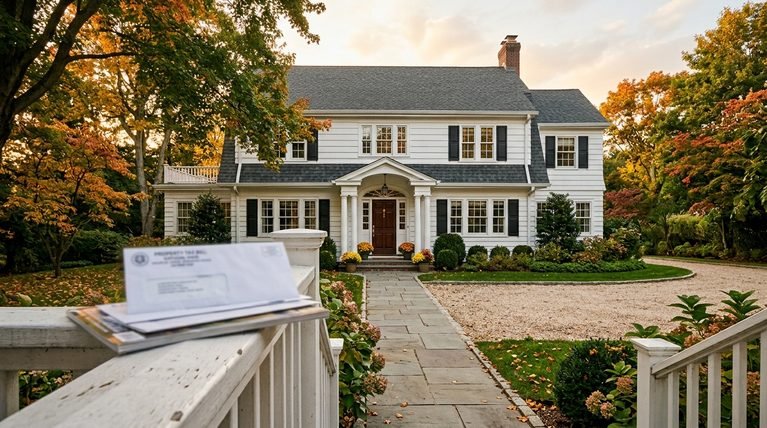
Most buyers treat homeowners insurance as a closing-week errand, something to arrange once the contract is signed and the mortgage commitment is in hand. On Long Island that order of operations can cost real money. By the time a buyer learns that the house carries a five-figure hurricane deductible, sits in a mapped flood zone, or has a water claim on its record that makes carriers hesitate, the down payment is in escrow and the leverage to renegotiate has mostly evaporated.
What follows is a practical sequence for buyers on the North Shore and across Nassau and Suffolk: what to request, what to read, and which questions belong in the conversation before an offer goes in rather than after.
This article is for informational purposes only and is not legal, insurance, or financial advice. Consult a licensed insurance professional and a real estate attorney about any specific property.
Why Insurance Has Moved Up the Buyer’s Checklist
Coverage has always been a condition of financing. A lender will not fund a mortgage on a house it cannot see insured, and that requirement typically continues for the life of the loan. What has changed is how much the answer varies from one address to the next.
New York regulators describe the underlying pressure plainly. According to the Department of Financial Services, homeowners’ insurers in the state have seen their exposure to storm damage rise steadily since Hurricane Andrew in 1992 and more recently Storm Sandy, as shorelines became more populated and property values climbed (NY DFS). Carriers have responded by shifting part of that risk back onto homeowners through wind and hurricane deductibles.
Premiums on Long Island also run well above the state average. One Long Island agency estimated in July 2026 that homeowners insurance averages roughly $2,882 a year for $300,000 of dwelling coverage, against a New York statewide average of about $1,683 (Vanderbeck Agency). Those are an agency’s modeled estimates rather than regulatory data, and any single property can land far from them in either direction. That spread is exactly why the quote belongs early.
Step One: Get a Real Quote on the Specific Address
A generic “what does insurance cost around here” answer is close to useless. Carriers price the individual structure: distance to the water, the rebuild cost of the house, the age of the roof, the claims history attached to the address, and the deductibles selected. The same agency lists distance to the coast, rebuild cost, roof age, claims history, and deductible choices as the factors that set a Long Island rate (Vanderbeck Agency).
A buyer who has a house in mind can usually get an indicative quote from an agent with nothing more than the address, the listing details, and basic information about the roof and systems. Asking for two or three quotes, including at least one from an independent agent who represents multiple carriers, gives a sense of whether the house is priced normally or whether underwriters see something the listing photographs do not show.
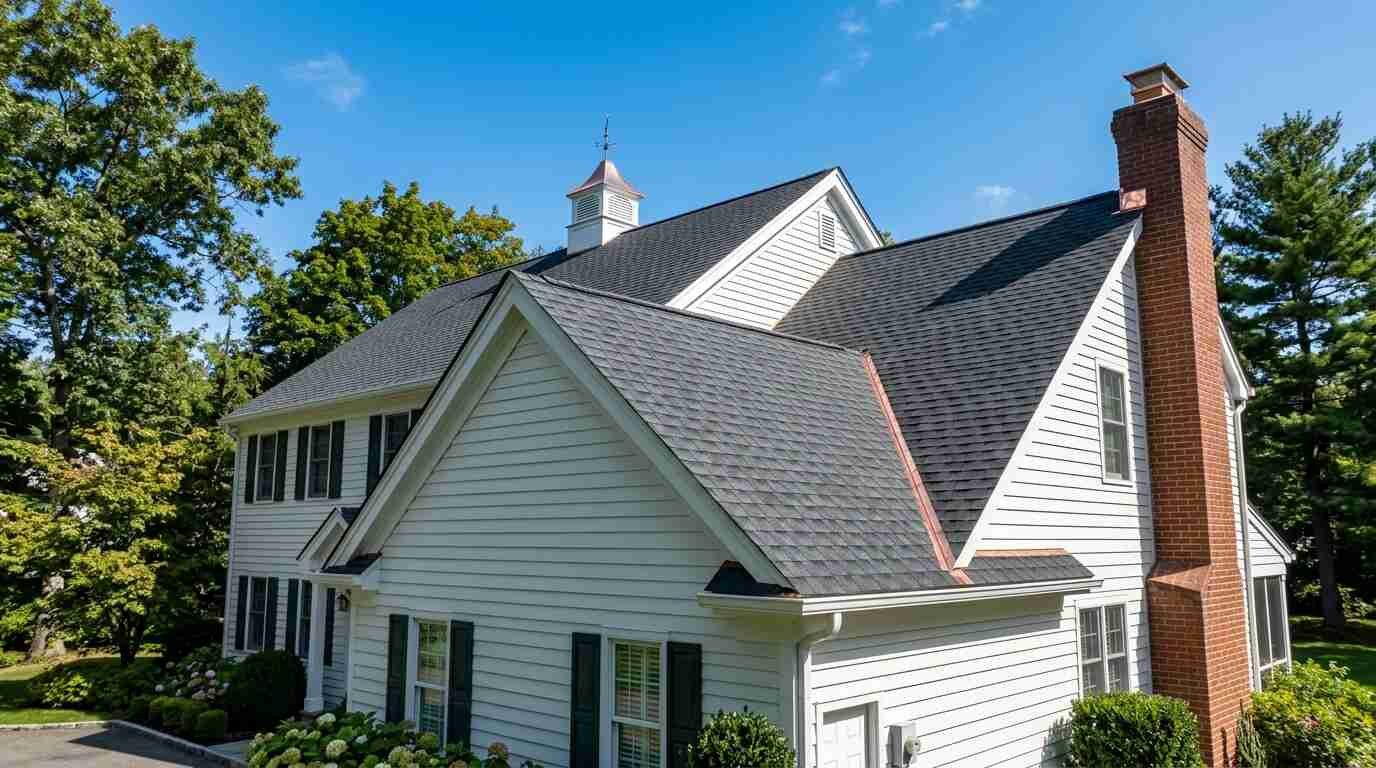
Roof age deserves particular attention. A recently replaced roof tends to help both insurability and pricing, which is part of why a documented reroof can matter to buyers well beyond curb appeal, as covered in an earlier Maison Pawli post on what a two-day reroof in East Setauket signals to buyers.
Step Two: Read the Hurricane Deductible, Not Just the Premium
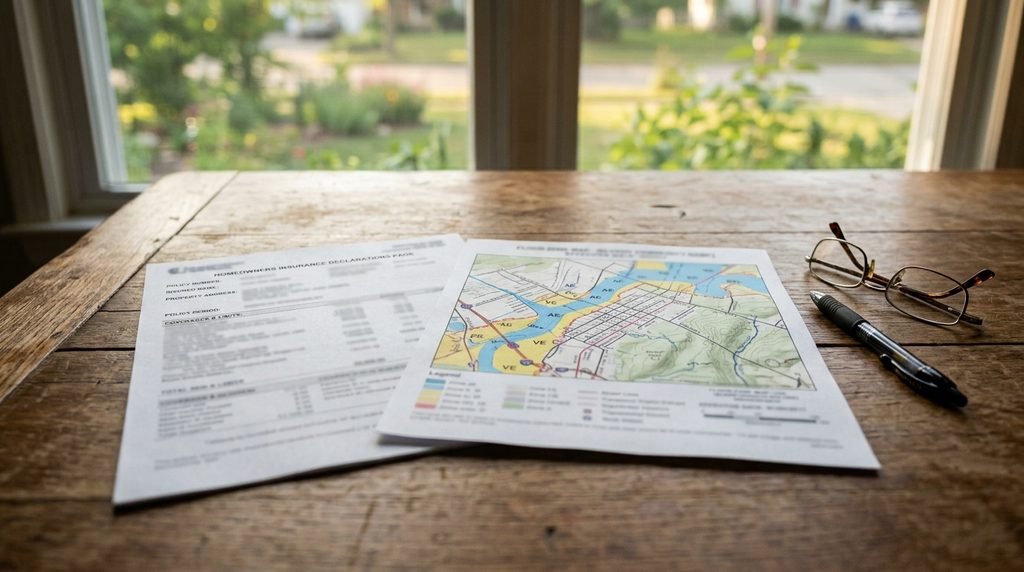
Here is where Long Island buyers are most often surprised. A standard homeowners policy carries a flat dollar deductible, such as the $1,000 figure local agencies use in their pricing examples. Many policies near the coast carry a second, separate deductible that applies only when damage is caused by a hurricane, and that one is usually calculated as a percentage.
The Department of Financial Services describes the hurricane deductible as typically 1% to 5% of either the value of the dwelling or the amount of insurance on the dwelling (NY DFS). On a house insured for $600,000, a 2% hurricane deductible means the owner pays the first $12,000 of covered hurricane damage. At 5%, that figure becomes $30,000. The premium might look competitive while the deductible quietly transfers a large share of storm risk to the buyer.
What Changed in 2026
New York rewrote the rules on when that deductible can be triggered. Under the third amendment to Insurance Regulation 159, which applies to policies issued or renewed on or after February 2, 2026, the state established uniform standards for the triggering event (NY DFS Circular Letter No. 1 (2026)).
Per DFS consumer guidance, a hurricane deductible now applies only to loss from winds during a defined window: beginning 12 hours before a specific hurricane makes landfall in New York and ending 12 hours after the last hurricane watch or warning for the state is cancelled (NY DFS). Wind damage from an ordinary thunderstorm or nor’easter outside that window falls under the standard deductible instead.
The same rulemaking broadened where the deductible can appear. Historically, insurers could request hurricane deductibles only for properties in the Bronx, Brooklyn, Queens, Staten Island, and Nassau, Suffolk, and Westchester counties. Beginning February 2, 2026, insurers may ask DFS to apply them to property anywhere in the state (Chartwell Law). For Long Island buyers the practical effect is that hurricane deductibles remain common, and every policy that includes one must come with a disclosure explaining how it works.
Questions to Ask the Agent
- Does this policy carry a hurricane or windstorm deductible, and what percentage?
- Is the percentage calculated on the dwelling limit or on some other value?
- Is a lower percentage available, and what does it add to the premium?
- What is the standard deductible for non-hurricane wind, such as a severe thunderstorm?
A buyer comparing two houses at similar prices may find that one carries a 1% hurricane deductible and the other 5%. That difference can be larger than a year of premium, and it rarely appears anywhere on a listing sheet.
Step Three: Separate Flood From Everything Else
A standard homeowners policy does not cover flood. DFS states directly that coverage for losses from floods or mudslides is not provided in standard homeowners policies and is available instead through a separate policy, typically from the National Flood Insurance Program (NY DFS). Storm surge counts as flood, which means the most destructive part of a coastal storm is often the part a homeowners policy excludes.
Buyers should find out early whether the property lies in a FEMA-designated Special Flood Hazard Area. If it does and the purchase is financed, the lender will generally require flood insurance, which becomes another recurring cost to budget alongside the homeowners premium. Maison Pawli has covered this terrain before, including what FEMA maps don’t tell North Shore buyers about Sound-facing properties and how Suffolk County’s 2026 flood zone remapping affects insurance.
The 30-Day Wait and the Closing Exception
NFIP policies generally carry a 30-day waiting period before coverage begins. There is an important exception for buyers: when flood coverage is purchased in connection with making, increasing, extending, or renewing a mortgage loan, the waiting period does not apply (ValuePenguin). That exception is why a lender’s flood requirement does not normally delay a closing by a month. It does not help a buyer who decides after closing that voluntary flood coverage would be wise, so the decision is better made during the contract period.
Step Four: Use the Seller’s Disclosure Statement
New York tightened the seller disclosure rules in 2024, and the changes are directly useful to a buyer researching insurance. Effective March 20, 2024, sellers of residential property can no longer give a $500 credit in place of completing the Property Condition Disclosure Statement, and the form now includes questions on flood risk, flood history, and flood insurance (NYSBA).
According to the New York State Bar Association, the new questions ask whether the property is in a FEMA-designated floodplain, whether it sits in the 100-year or 500-year floodplain, whether it is subject to a flood insurance requirement, and whether the seller has ever received FEMA, SBA, or other federal disaster assistance for flood damage. The Long Island Land Use and Zoning blog, published by the law firm Farrell Fritz, noted that “the amended PCDA statute also now encourages buyers to check public records concerning the property with respect to FEMA’s current Flood Insurance Rate Maps and Elevation Certificates” (Long Island Land Use and Zoning).
That form should arrive before the contract is signed, and it is worth reading line by line with the insurance question in mind. A “yes” on prior flood claims or disaster assistance is not necessarily a reason to walk away. It is a reason to ask what happened, what was repaired, and what carriers will now charge. The legal side of that document, including why sellers should treat it seriously, appears in an earlier post on the seller’s disclosure form as a legal document.
Step Five: Ask for the CLUE Report
Insurers share claims data through the Comprehensive Loss Underwriting Exchange, commonly called CLUE, a database maintained by LexisNexis. A CLUE report on a home shows the insurance claims history tied to the property, and the National Association of Realtors notes that payouts for water damage, foundation problems, or mold can cause buyers to reconsider, partly because of what those claims do to future premiums (NAR).
Only the owner can request the report on a property, so a buyer has to ask the seller to pull it. Under the Fair Credit Reporting Act, homeowners can obtain a copy of their own report free of charge (NAR). The report generally covers roughly seven years of claims (Insure.com). For a buyer, the value lies less in any single entry than in the pattern: one old wind claim followed by a new roof reads very differently from three water claims in four years.
Step Six: Know the Backstops If Standard Carriers Say No
Most Long Island houses can be insured in the ordinary market. Some coastal properties, homes with difficult claims histories, or houses with old systems draw declines, and New York has two programs that serve as backstops.
The Coastal Market Assistance Program, known as C-MAP, is a voluntary network of insurers and agents that helps New York homeowners in coastal areas find coverage, administered by the New York Property Insurance Underwriting Association (NY DFS). NYPIUA’s own program materials describe eligible North Shore properties as those within 2,500 feet of the shore and list new purchasers of property in those areas among eligible applicants (NYPIUA). Eligibility details can change, so buyers should confirm current terms directly with NYPIUA or an agent.
NYPIUA itself serves as the state’s FAIR Plan. DFS cautions that NYPIUA policies are generally written on an actual cash value basis, do not include liability, flood, or theft coverage, and cost more than voluntary-market coverage (NY DFS). A property owner may also buy coverage from an excess line insurer through a specially licensed broker, but only after at least three licensed insurers have declined the risk.
If an agent mentions any of these programs during a buyer’s quote request, the house is not necessarily a bad purchase. The buyer has simply learned that insurance will be a larger, more complicated line item than the listing suggested, and that knowledge belongs in the price conversation.
Putting the Findings Into the Offer
Everything above is information-gathering. The point is to turn it into negotiating position while there is still room to use it.
A buyer who learns that a house requires flood coverage, carries a 5% hurricane deductible, and has two water claims on its CLUE report has several legitimate options: adjust the offer price to reflect a higher carrying cost, ask the seller for a credit, request documentation of repairs, or decide the property is not the right fit. Buyers who discover the same facts two weeks before closing have far fewer choices.
Attorneys can also draft contract language addressing insurability, and the inspection period offers another window to evaluate roof, plumbing, and electrical systems that affect underwriting. The inspection report itself can function as a negotiating document when insurance concerns surface. Any contingency language should be written by the buyer’s attorney, since the specifics matter.
A Short Pre-Offer Checklist
- Indicative homeowners quotes from two or three sources on the specific address
- The hurricane deductible percentage and the value it is calculated on
- FEMA flood zone status and, if applicable, a flood insurance quote
- The completed Property Condition Disclosure Statement, including the flood questions
- The seller’s CLUE report
- Roof age and major system ages, as they affect underwriting
- A note of any mention of C-MAP, NYPIUA, or excess line coverage
Frequently Asked Questions
Is a hurricane deductible the same as a flood deductible?
No. A hurricane deductible applies to covered wind damage under a homeowners policy during the window defined by New York regulation. Flood is excluded from standard homeowners policies and is insured separately, usually through the NFIP, with its own deductible.
Can a buyer see a house’s insurance claims history?
Not directly. The CLUE report can be requested only by the owner, so the buyer must ask the seller to pull it and share it.
Does the 2026 rule change mean hurricane deductibles are going away?
No. The 2026 amendments standardized when a hurricane deductible is triggered and allowed insurers to request it anywhere in the state. They did not eliminate it.
When should the insurance quote happen?
Ideally before an offer is made, and certainly before the contract is signed, while the findings can still shape price and terms.
This article is for informational purposes only — consult a licensed attorney, insurance professional, or financial advisor about your specific situation. Insurance rules, rates, and program eligibility change; figures cited reflect sources available as of September 2026.
Real estate markets change. For current listings and market data, contact Maison Pawli at maisonpawli.com/about/.
You Might Also Like
- Dock Rights, Riparian Claims, and the Fine Print: What Waterfront Buyers on Long Island Sound Actually Own
- What Makes a Long Island Waterfront Listing Worth the Premium — And How to Tell If It Is
- What Closing Costs Actually Look Like on Long Island
- North Shore Bluff Homes and the Erosion Question: What Buyers Need to Know
Sources
- NY Department of Financial Services — Homeowners Insurance: Basic Coverage — https://www.dfs.ny.gov/consumers/help_for_homeowners/insurance/basic_coverage
- NY Department of Financial Services — Homeowners Insurance: Problems Obtaining Insurance — https://www.dfs.ny.gov/consumers/help_for_homeowners/insurance/problems_obtaining_insurance
- NY Department of Financial Services — Insurance Circular Letter No. 1 (2026) — https://www.dfs.ny.gov/industry-guidance/circular-letters/cl2026-01
- Chartwell Law — New York Finalizes Uniform Hurricane Deductible Regulations — https://www.chartwelllaw.com/resources/new-york-finalizes-uniform-hurricane-deductible-regulations
- New York State Bar Association — New Rules on Property Condition Disclosure and Flood Risk — https://nysba.org/breaking-news-new-rules-on-property-condition-disclosure-and-flood-risk-go-into-effect-today/
- Long Island Land Use and Zoning (Farrell Fritz) — Disclosure Revolution — https://www.lilanduseandzoning.com/2024/02/05/disclosure-revolution-legislation-makes-property-condition-disclosure-statements-mandatory-adding-flood-risks-and-waving-farewell-to-the-500-credit/
- National Association of Realtors — What Is a CLUE Report? — https://www.nar.realtor/homeowners-insurance/clue-report
- Insure.com — Guide to the Insurance Claims History Report (CLUE) — https://www.insure.com/home-insurance/past-claims.html
- ValuePenguin — How Long Is the Flood Insurance Waiting Period? — https://www.valuepenguin.com/flood-insurance-waiting-periods
- NYPIUA — Coastal Market Assistance Program — https://www.nypiua.com/insurance/c-map-program
- Vanderbeck Agency — How Much Is Homeowners Insurance on Long Island? 2026 Costs — https://vanderbeckagency.com/blog/how-much-is-homeowners-insurance-long-island/