
The Inspection Report as a Negotiating Document
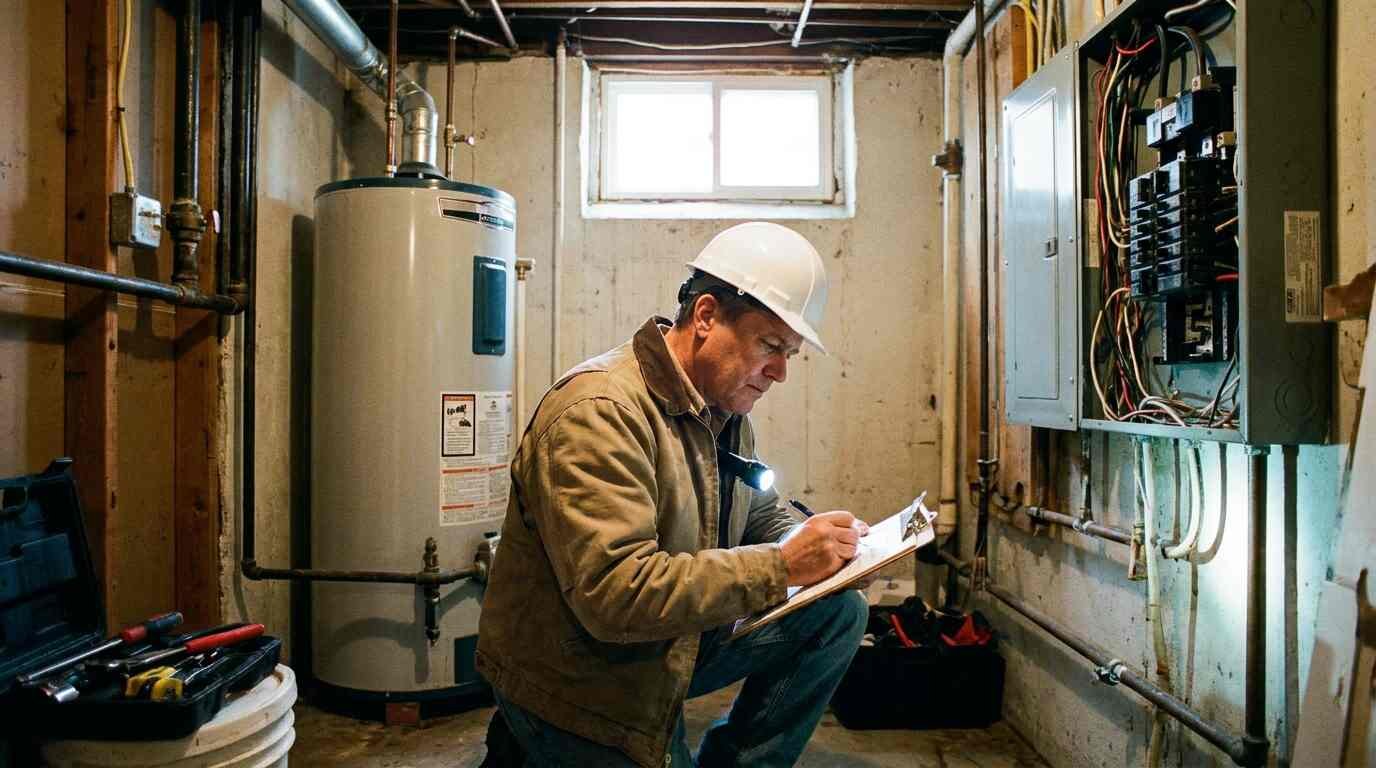
Most buyers approach the home inspection as a diagnostic. The inspector tours the property, documents the findings, and the buyer reads the report looking for deal-breakers. If nothing catastrophic turns up, the transaction moves forward. If something serious surfaces, the buyer either walks or asks for it to be fixed. That’s the mental model most people carry into the inspection phase, and it leaves a significant amount of negotiating leverage sitting untouched.
The inspection report is also a negotiating instrument. In the current Long Island market — where sellers are holding on price and buyers aren’t offering above ask — the inspection phase is often where real price discovery actually happens. Understanding how to use it strategically, rather than just reading it defensively, is one of the sharper distinctions between buyers who close well and buyers who either overpay or blow up transactions trying to get too much.
What the 2021–2022 Era Left Behind
During the frenzied seller’s market of 2021 and 2022, buyers routinely waived inspection contingencies to compete. Getting the deal mattered more than knowing the condition, and buyers who asked for contingencies often lost to buyers who didn’t. The practice was widespread enough that it rewired habits on both sides of the table.
That era is over. According to 2026 market analysis, inspections and concession negotiations are squarely back in play. But the habits it created persist: sellers in 2026 still sometimes have a psychological expectation of minimal post-inspection friction, based on what they observed in the market’s peak years. And buyers who went through that period without needing inspections occasionally carry a residual anxiety about asking for too much — as though a repair request is inherently aggressive rather than a normal part of the process.
In practice, the inspection negotiation in 2026 is not aggressive — it’s expected. According to AmeriSave’s 2026 home inspection data, 46% of buyers used inspection results to negotiate repairs or credits in 2025, with buyers negotiating an average of $14,000 off the sale price using inspection findings. That’s not a minority tactic. It’s standard transactional behavior.
What to Escalate and What to Absorb
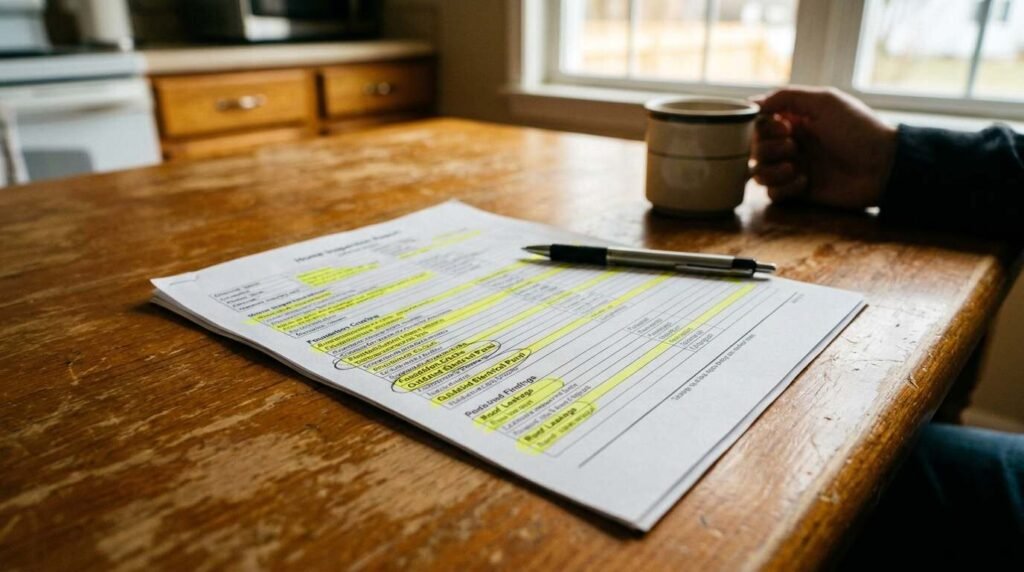
The inspection report will contain everything the inspector found, documented with the same level of detail whether it’s a missing GFCI outlet or a cracked foundation. Reading the whole report as a list of demands is a fast way to antagonize a seller and kill a deal. Reading it as a tool requires sorting items into categories before any conversation starts.
The category worth escalating includes issues that affect the property’s safety, its structural integrity, its systems (roof, HVAC, electrical, plumbing), and anything that creates liability or lender problems. Faulty wiring. Active moisture intrusion. A failing septic system. Roof at end of useful life. Unpermitted additions that can’t be insured. These items are not cosmetic and sellers understand that — even in competitive markets, they typically can’t be refused without consequence.
The category worth absorbing includes normal wear and deferred maintenance on a property that was priced reflecting its age and condition. Cosmetic scuffing, minor caulk gaps, a slow-draining sink, a worn weather strip — these are homeownership, not defects. Bringing a list of seventeen minor items to a seller signals that the buyer isn’t serious about closing, and sellers in a stalled market have been known to pull the plug rather than wade through a laundry list with a buyer who seems difficult.
The practical question is where any given item falls. An HVAC system that’s operational but at end of actuarial life sits between those two poles — worth negotiating, but in a measured way that acknowledges the uncertainty, not in a way that treats a functioning unit as a broken one.
Credits vs. Repairs: Why the Choice Matters
When escalating an item, the buyer’s next decision is whether to request a repair or a credit. This is not just a preference call — it has real transactional mechanics.
Requesting a repair puts the seller in charge of execution. The seller selects the contractor, manages the timeline, and controls the quality. In a pre-closing window, that often means rushed work from whoever was available. The buyer has no visibility into the process and may discover at the final walkthrough that the repair was done to the minimum standard possible. From a cost-certainty standpoint, repairs are also unpredictable: a seller who agrees to fix the roof might spend far less than the buyer assumed.
A credit at closing gives the buyer the money and the control. The buyer selects the contractor after closing, at their own pace, and gets the work done to their standard. HonestCasa’s 2026 seller concessions guide notes that credits give cost certainty — and that sellers, too, often prefer them because they remove the liability and logistics of managing contractors during escrow. In the current market’s negotiating psychology, credits have become the cleaner resolution on both sides.
There’s one important constraint: lender caps. Closing cost credits are subject to limits based on loan type and down payment. A buyer who asks for a $20,000 credit may find that their lender can only apply $12,000 of it to the transaction, effectively giving the seller a concession they didn’t need to make. Before asking for a large credit, the buyer’s lender should be in the loop on what their specific program allows.

How Sellers Are Responding in 2026
In a market where sellers are holding on list price but properties are sitting longer, the inspection window has become the pressure point where motivated sellers make their actual concessions. A seller who has been on the market for 60 or 90 days and received one offer isn’t in the same psychological position as a seller who listed three days ago and has three showings scheduled. The same repair request lands differently depending on which of those sellers receives it.
The experience of days on market is worth understanding before the inspection happens. A seller who has been sitting is more likely to respond constructively to a reasonable credit request than to reject it and go back to waiting. A seller who listed recently at a price they believe in may respond very differently. The strategy should adapt accordingly.
What doesn’t work in 2026’s flattened market is the approach that treats the inspection as an opportunity to renegotiate the purchase price wholesale. The goal of inspection negotiation is to have the buyer’s actual acquisition cost reflect the property’s actual condition — not to retroactively turn a negotiated price into a lower one. Sellers who accept a price based on the market and then face a $40,000 credit demand on items they weren’t expecting tend to terminate the deal. The buyer loses the property. In a market where good listings are scarce, that’s a costly outcome.
Long Island’s Older Housing Stock
One factor that makes inspection negotiation on Long Island’s North Shore more consequential than in newer markets is the age of the housing stock. A significant portion of the region’s residential inventory dates from the 1950s through the 1980s — well-built in many cases, but of an era when electrical panels, plumbing systems, and HVAC equipment had shorter useful lives than modern replacements. A 1960s ranch or a 1970s split-level that’s been nominally maintained will almost always generate an inspection report with substantive findings.
This is normal. It is not a reason to walk. But it is a reason to budget for the findings before the inspection rather than being surprised by them, and to treat the credit negotiation as an expected part of the process rather than an exceptional one. A buyer who goes into an older North Shore property with eyes open about what a home from that era typically presents will negotiate more effectively than one who expected a clean report and is reacting emotionally to finding otherwise.
The inspection is not the end of the purchase. It is the beginning of the final negotiation. The buyers who understand that, and who come to it with a sorted list, a clear sense of what they’ll escalate, and a specific ask calibrated to the property and the market moment — those are the buyers whose closings look clean from the outside. The work happened before the conversation started.
This is for informational purposes only — consult a licensed attorney or financial advisor for your specific situation.
Real estate markets change. For current listings and market data, contact Maison Pawli at maisonpawli.com/about/.
You Might Also Like
- The Inspection Contingency Is Not a Formality: What Buyers Waive When They Sign Without Reading
- The Home Inspection Red Flags That Matter Most on Long Island’s Older Housing Stock
- The Pre-Inspection Move: Why Long Island Sellers Who Inspect First Are Closing Faster and Cleaner
- When to Walk Away From an Offer on Long Island