Setauket Village Green: Churches, Rock and Layout
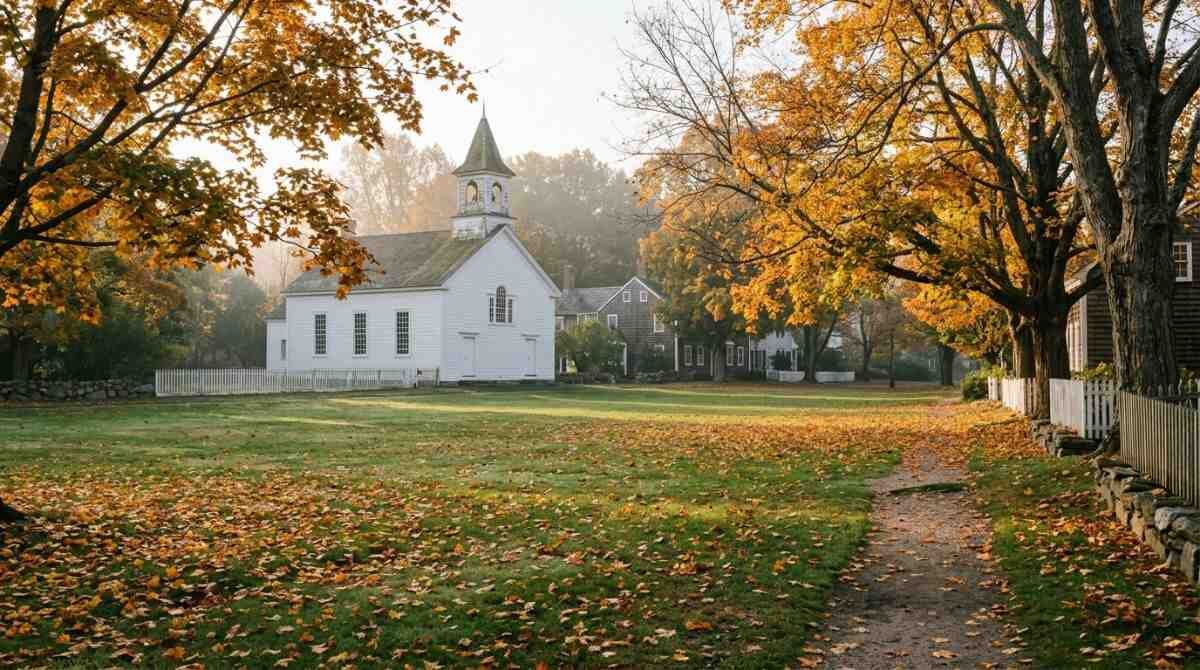
The Setauket Village Green is the oldest-looking corner of the Three Village area, and the arrangement of buildings around it explains much of how the community grew. A short walk covers two historic churches, a glacial boulder tied to a Revolutionary War skirmish, a mill pond and a century-old library. Most of what follows draws on the churches’ own websites, the library and the historical society, with outside sources noted where used.
The layout at a glance
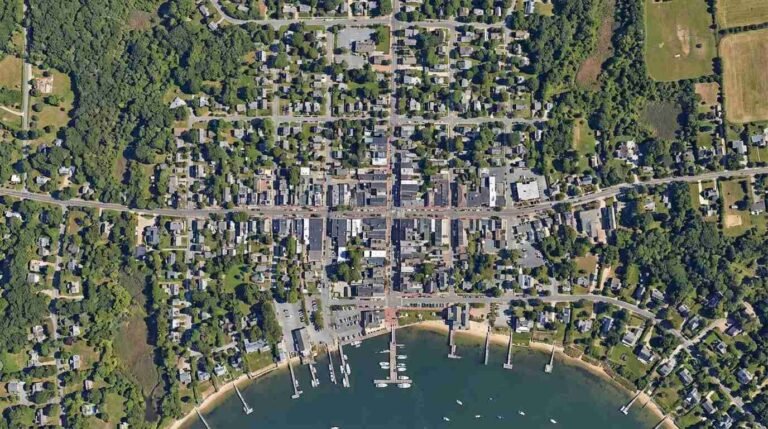
According to the Setauket entry on Wikipedia, Setauket was founded in 1655 as the first settlement in what became the Town of Brookhaven. The green keeps a New England-style plan: a mill pond and park, a small post office, the Caroline Church, the Setauket Presbyterian Church and the Emma S. Clark Memorial Library all face the open ground. The same entry notes that both churches continue to own the green itself, which is why the lawn reads more like a shared churchyard than a municipal park.
That ownership detail matters for visitors. Because the lawn remains church property, visitors can treat the churchyards, burial grounds and signage with the care due to any private site.
How the historic core developed
Religious life came first. The Wikipedia entry places the founding of the Presbyterian congregation in 1660, with a graveyard dating to the same decade. The Anglican parish followed later: the Caroline Church website states that the parish was organized in 1723 as Christ Church, then renamed Caroline Church of Brookhaven in honor of Queen Caroline of England, and that the wooden building was consecrated on January 25, 1729. Two congregations, two denominations and two sites within sight of one another produced the pairing that still defines the view.
The Revolutionary War left a mark on both. During the British occupation, the Wikipedia account says, residents held services at the Caroline Church while occupying troops used the Presbyterian building. In 1777, a Patriot force under General Samuel Holden Parsons crossed Long Island Sound and fought on the green for about three hours before withdrawing. The same source notes that Washington spent a night in Setauket during his 1790 tour of Long Island.
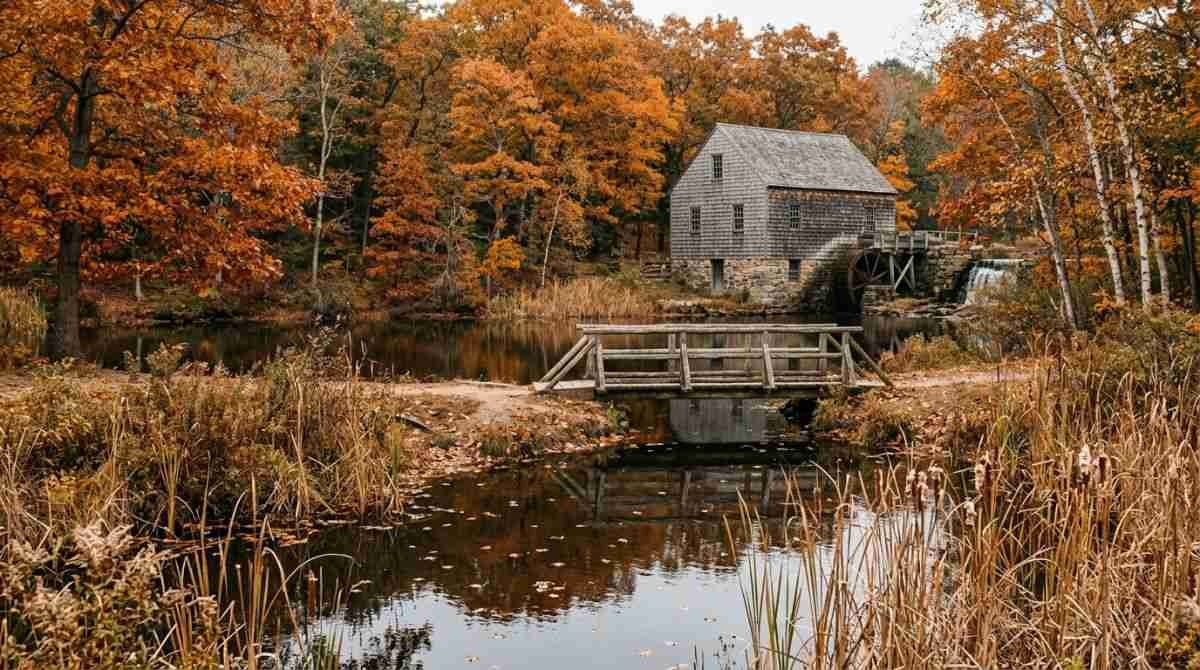
Water came second in the development of the core. Untapped New York reports that the Setauket Mill, built by Ward Melville in 1937, stands near the site of earlier mills dating to the 1660s, and that the 24-acre park around Melville Mill Pond was added to the National Register of Historic Places in 2010. The Wikipedia entry gives 1937 as the year Frank Melville Memorial Park was established to preserve much of the land around the pond.
The Setauket Presbyterian Church grounds
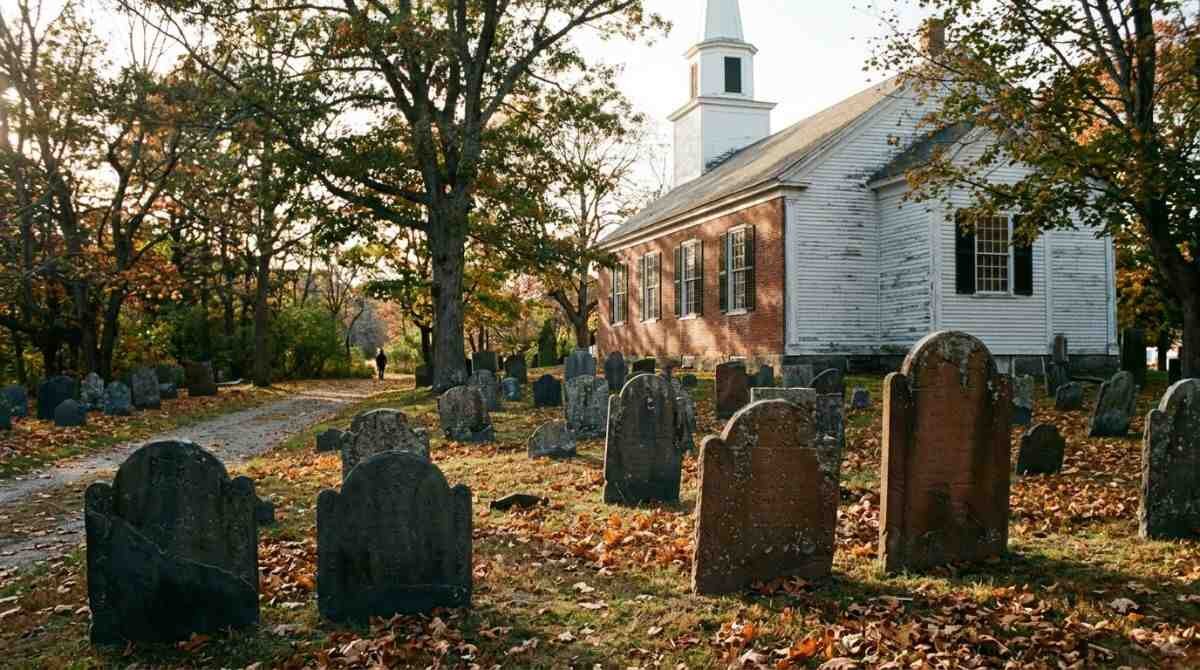
The Setauket Presbyterian Church site lists the address as 5 Caroline Avenue and describes the congregation as having roots in the 1600s. It also states that history visitors often walk the graveyard and tour the sanctuary, although it publishes no tour schedule, so a call or email to the church is the only way to confirm access to the interior.
The building on the site today is not the original. Untapped New York reports that the present structure dates to 1812, and the Wikipedia entry adds that lightning struck the earlier church that year and it was rebuilt. During the occupation, according to the same entry, Loyalists fortified the church as a stronghold, destroyed the pulpit and moved several gravestones as part of the works. A plaque placed in 1927 by the Mayflower Chapter of the Daughters of the Revolution commemorates the 1777 skirmish, as Untapped describes it.
The burial ground holds the graves of Abraham Woodhull and the early settler Richard Floyd, according to Untapped. Woodhull’s role in the Culper Spy Ring is covered in a separate article, Abraham Woodhull and the Culper spy ring in Setauket, and the stones themselves are examined in a piece on counting gravestones at the Setauket Presbyterian burial ground.
The Caroline Church grounds
The church sits at 1 Dyke Road, on its original site overlooking the green, according to the Caroline Church website. The site adds that the church and its cemetery were listed on the New York State and National Registers of Historic Places in 2001. Untapped gives a different year for the national listing, so the church’s own date is the one used here.
Untapped also records several details that reward a slow look at the exterior. A gallery was reportedly added in 1744 because the congregation had grown so large. Bullet holes remain in the belfry from the Battle of Setauket, when the building sheltered wounded Continental soldiers. A carriage shed on the property, once a one-room school, was stabilized after it was in danger of collapsing.
The churchyard has an interactive map on the church’s website, which makes it easier to read the stones before or after a visit. Services are held on Saturday evening and twice on Sunday morning, so weekend visitors who want to see the building without interrupting worship can check the posted schedule. The longer story of the building appears in Caroline Church of Brookhaven.
Patriots’ Rock
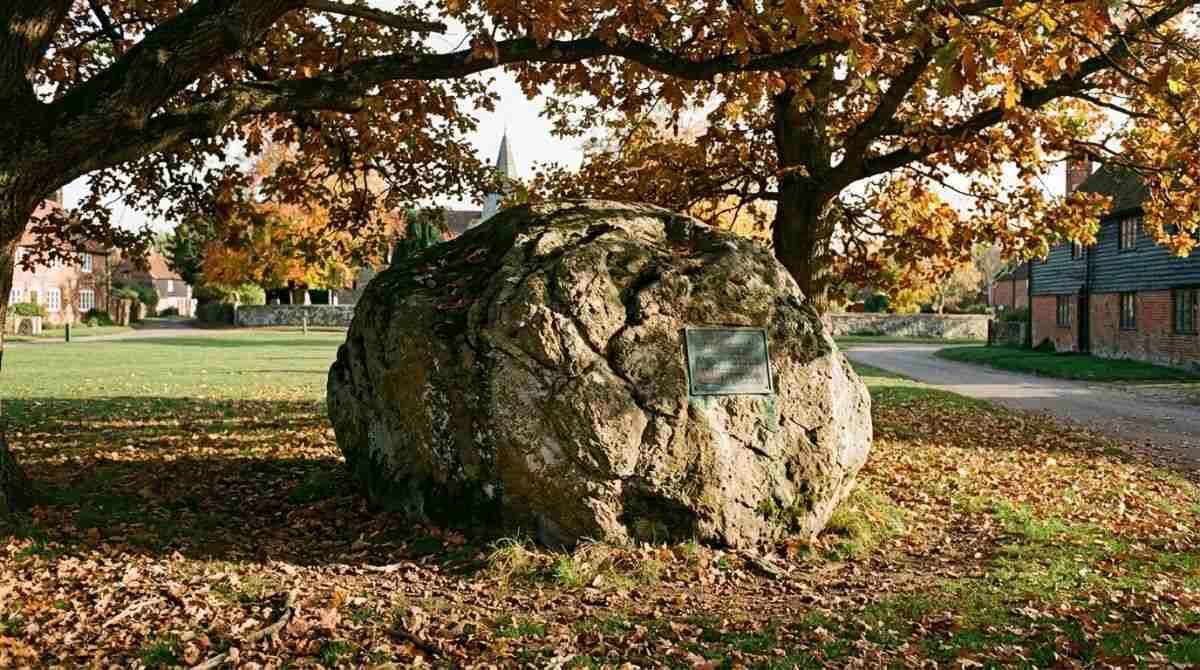
Patriots’ Rock is a large glacial boulder in the Old Setauket historic district, partly hidden by woods, according to Untapped. Patriot forces used it for cover during the Battle of Setauket, firing at British troops from behind it. The same source notes that the painter William Sidney Mount depicted the boulder in The Rock on the Green, a work that hangs at the Long Island Museum of Art in Stony Brook.
The Wikipedia entry describes the rock as sitting near the green with a commemorative plaque. Because the boulder is screened by trees, it is easy to walk past; on foot, the plaque is the cue to stop.
The library and the neighborhood house
Facing the green at 120 Main Street, the Emma S. Clark Memorial Library calls itself “Suffolk County’s oldest public library dating back to 1892.” The library lists weekday hours from 9:30 a.m. to 9 p.m., Saturday hours from 9 a.m. to 5 p.m. and Sunday hours from 10 a.m. to 5 p.m., and operates a cafe inside. For a walking tour, it also serves as a convenient place to start or finish.
A few steps away on the mill pond, the Setauket Neighborhood House is described by Untapped as a community building that hosts events and can be rented. The original home dates to the 1700s, the article says, and was moved to its present location in 1820. Dr. John Elderkin lived there, and the property later became Ye Old Elderkin Inn, serving a stagecoach line. Eversley and Minnie Childs bought it in 1918 and added a ballroom.
Adding the historical society
The Three Village Historical Society is not on the green itself. Its exhibit and gift shop are at 93 North Country Road in East Setauket, with listed hours of Thursday, Saturday and Sunday from noon to 4 p.m., and Friday from 3 to 6 p.m. The society’s site lists Tri-Spy Tours, historian-led tours and field trips, but it does not say whether any of these covers the green on foot, so anyone planning a guided walk should contact the society directly at the number on its website.
A suggested walking order
- Start at the library, then cross to the open ground of the green.
- Walk to Patriots’ Rock and read the plaque.
- Continue to the Caroline Church on Dyke Road, viewing the exterior and churchyard.
- Finish at the Presbyterian burial ground on Caroline Avenue, then follow the pond toward the mill and park.
The route is flat and short, but the pond side adds a little more distance. Daylight is the best time for it, since the gravestone inscriptions and the plaque are hard to read at dusk.
Related reading
Further context on the people and period appears in the Culper ring and the Three Village area, and orientation on the area’s overlapping names is in the difference between Setauket, East Setauket and South Setauket. This article is general information and not advice of any kind.
Further reading
- The Culper Ring: A Captivating Guide: a related title for this activity. See it on Amazon (affiliate link)
As an Amazon Associate I earn from qualifying purchases. A commission may be earned if you buy through this link, at no extra cost to you.
Hours, programs and prices change; confirm details with the official sources linked above before visiting.