New York’s Mansion Tax on Long Island: Who Pays, How It Is Calculated, and What Two Pending Bills Would Change
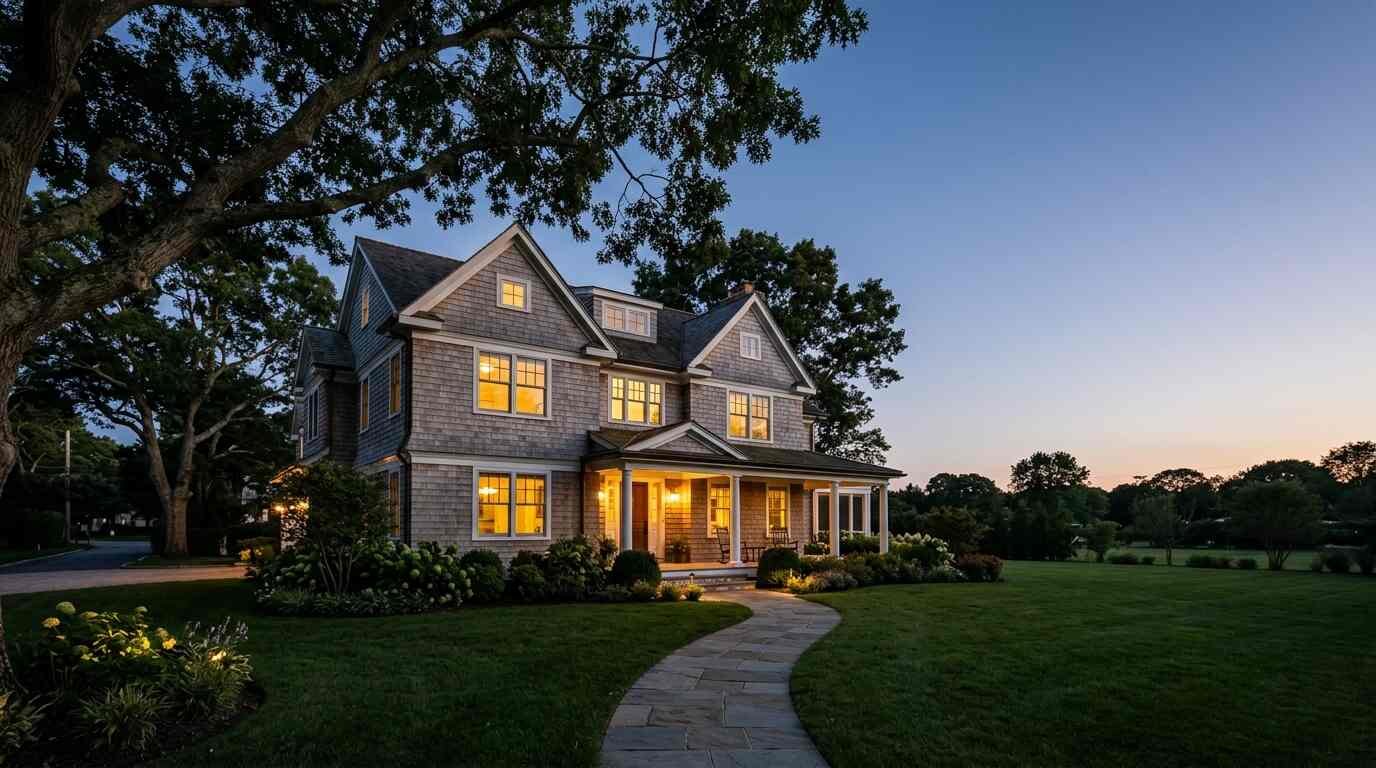
Between a purchase price of $999,999 and one of $1,000,000, a New York buyer’s closing bill rises by $10,000, because the state’s additional transfer tax, known as the mansion tax, applies to the whole price once it reaches the seven-figure mark.
The rule is easy to misread. It does not tax only the dollars above $1 million, and it is separate from the ordinary transfer tax that sellers pay on every sale. It also sits on a threshold set decades ago, which is why two bills now in Albany propose to move it. What follows lays out how the tax works on Long Island, what it costs at common price points, how the East End’s separate taxes fit in, and where the proposals stand.
The two taxes on a New York home sale
New York’s basic real estate transfer tax is two dollars for every $500 of consideration, or fraction of that, which works out to 0.4 percent. Under the Department of Taxation and Finance’s rules, the seller (the grantor) pays it, and the buyer becomes liable only if the seller does not.
The mansion tax is an additional 1 percent that applies when the consideration for the conveyance is $1 million or more and the property is residential. Here the roles reverse: the buyer (the grantee) pays, and the seller is liable only if the buyer fails to. The tax is one percent of the consideration attributable to the residential property, not one percent of the portion above the threshold.
The definition of residential covers more than single-family houses. The state’s form instructions include a one- to three-family house, an individual residential condominium unit, and a residential cooperative apartment, so a condo or co-op purchase at or above $1 million is covered too. The differences between those property types are laid out in Condo, Co-op, or Townhouse on Long Island. Filing is done on Form TP-584, which is due no later than the fifteenth day after the deed is delivered.
New York City has additional transfer taxes of its own at higher price levels, but the Department of Taxation describes them as applying to city properties. They do not apply on Long Island.

What it looks like at different prices
The figures below are calculated directly from the published rates. Actual bills depend on how the consideration is determined in a particular transaction.
| Purchase price | Mansion tax (buyer, 1%) | Base transfer tax (seller, $2 per $500) |
|---|---|---|
| $950,000 | $0 | $3,800 |
| $1,000,000 | $10,000 | $4,000 |
| $1,250,000 | $12,500 | $5,000 |
| $1,500,000 | $15,000 | $6,000 |
| $2,000,000 | $20,000 | $8,000 |
The jump at $1 million is the feature that draws attention. A buyer paying $950,000 owes no mansion tax, while a buyer paying $1,000,000 owes $10,000, and each of those amounts sits on top of the other costs described in What Closing Costs Actually Look Like on Long Island. Sellers see the other side of the same sale in The Real Cost of Selling a Home on Long Island.
How much of Long Island sits near the line
Current counts of sales by price band are best taken from OneKey MLS or a broker, and none were verified for this post. For rough context, News 12 reported, citing OneKey MLS, that the February 2025 median sale price was $795,000 in Nassau County and $680,000 in Suffolk County. Those figures are old, and median prices say nothing by themselves about how many homes sell above $1 million. Both bills below note that the mansion tax dates to 1989 and has not been adjusted for inflation since.
The two proposals in Albany
Two bills introduced in the 2025–26 legislative session would change the threshold, in different ways. As of early June 2026, the dates shown on the legislature’s own pages, neither had advanced beyond committee, so neither affects any closing today.
Senate bill S10652, sponsored by Senator Harckham, would raise the threshold from $1 million to $2 million for residential conveyances and adjust it annually for inflation using the Consumer Price Index beginning January 1, 2027. The rate would stay at 1 percent, and the bill makes no change to square footage or first-time buyer rules. The sponsor’s stated justification is that $1 million in 1989 equals roughly $2.23 million in today’s dollars, and that many properties now subject to the tax rarely qualify as mansions. The legislature’s page lists it as referred to the Senate Rules Committee on June 3, 2026, with Assembly bill A2626 shown as its companion.
Assembly bill A10812, sponsored by Assemblymember Blumencranz, takes a different route. It would apply the additional tax only to conveyances of $4.5 million or more involving a residence with 5,000 square feet or more of livable interior space, and it would exempt a first-time homebuyer who will occupy the property as a primary residence, defined as someone with no ownership interest in a residential dwelling during the prior three years. The dollar threshold would also be adjusted annually for inflation and rounded to the nearest ten thousand dollars. The legislature’s page shows it held in the Assembly Ways and Means Committee as of June 4, 2026.
Because the bills differ so much, a change in either direction could mean a very different tax picture for a $1.5 million North Shore house. Status can move, and the legislature’s website is the place to confirm where each bill stands.
A related legislative item, on capital gains for sellers, is covered in The Tax That Keeps Long Island Homes Off the Market, and another tax threshold that operates as a sharp line is described in Five Percent Over: New York’s Estate Tax Cliff and the Long Island House.
The East End has taxes of its own
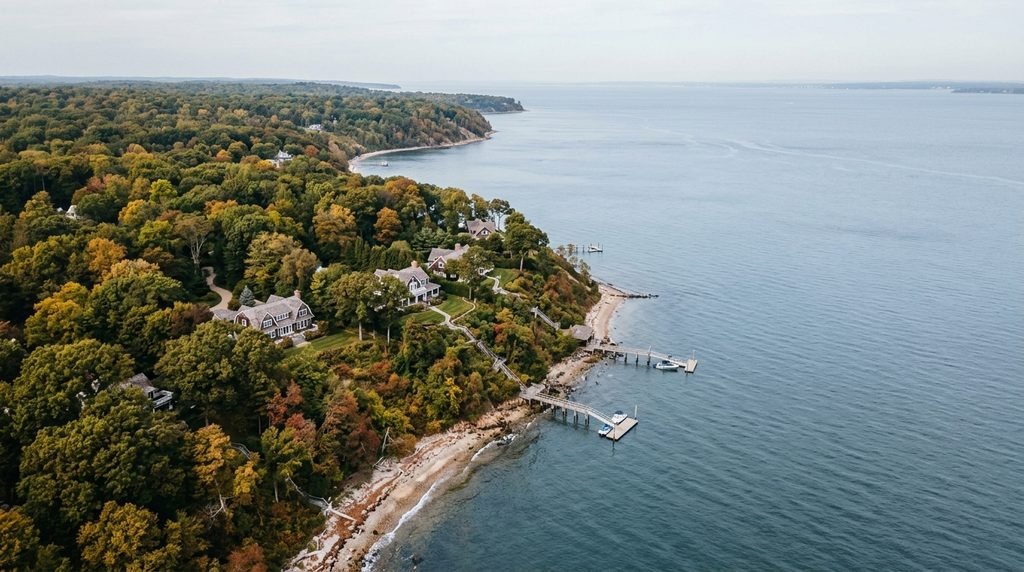
Five Suffolk County towns, East Hampton, Shelter Island, Southampton, Riverhead, and Southold, make up the Peconic Bay region, where purchasers also pay a transfer tax that funds land conservation and, since a 2021 law, community housing. According to a law firm summary and a title agency notice, the rate was 2 percent historically and rose to 2.5 percent in four of the towns on April 1, 2023, with Riverhead remaining at 2 percent. Each town has an exemption for part of the price:
- East Hampton, Shelter Island, and Southampton: $400,000 for improved property, $100,000 for vacant land
- Southold: $200,000 for improved property, $75,000 for vacant land
- Riverhead: $150,000 for improved property, $75,000 for vacant land
These rates and exemptions come from secondary sources, so confirm the current figures with the town or the closing attorney before relying on them. The North Shore towns discussed on this blog are outside the Peconic Bay region, which means the mansion tax is the main transfer-related add-on for a buyer there.
Questions to ask before signing
A closing attorney or title company can confirm how the consideration is calculated, whether the contract assigns the taxes differently than the statute does, and whether any regional tax applies to the town. This is for informational purposes only — consult a licensed attorney or financial advisor for your specific situation.
Questions people ask
Who pays the mansion tax in New York?
Under the Department of Taxation’s rules, the buyer pays, and the seller becomes liable only if the buyer does not.
Is it charged only on the amount over $1 million?
No. Once the consideration reaches $1 million, the tax is one percent of the consideration attributable to the residential property.
Does it apply to condos and co-ops?
Yes. The state’s form instructions define residential property to include an individual condominium unit and a cooperative apartment.
Do New York City’s higher rates apply on Long Island?
No. The Department of Taxation describes the additional city taxes as applying to New York City properties.
Has the threshold changed?
Not so far. Senate bill S10652 and Assembly bill A10812 would change it, but both were still in committee as of early June 2026.
Real estate markets change. For current listings and market data, contact Maison Pawli at maisonpawli.com/about/.

You Might Also Like
- Rent or Buy on Long Island in 2026: A Seven-Step Way to Run the Numbers
- Selling an Inherited House on Long Island: Probate, Taxes, and Timing
- The Hidden Costs of Selling Your Home That No One Tells You About
- Why Long Island Homeowners Insurance Keeps Climbing — Even Away From the Flood Zone
Sources
- New York State Department of Taxation and Finance, Real estate transfer tax
- New York State Department of Taxation and Finance, Instructions for Form TP-584 (PDF, revised 8/25)
- New York State Senate, Assembly Bill A10812 (2025) and bill text (PDF)
- New York State Senate, Senate Bill S10652 (2025)
- ALB Law Firm, Changes to the Peconic Bay Tax
- Abstracts Inc., Peconic Bay Region notice, April 1, 2023 (PDF)
- News 12 Long Island, House prices surge across Long Island, homes for sale drop (March 21, 2025)