The Real Cost of Selling a Home on Long Island in 2025: A Line-by-Line Breakdown

Every seller I sit down with has a number in their head. It’s the number on the listing — what the market says their house is worth, the figure their neighbor sold for, the price they’ve been casually tracking on Zillow for three years. That number feels like the endpoint of the transaction. It is not. Between the number on the listing and the wire transfer into their account, there is a gap — and on Long Island, that gap is larger than most sellers have planned for.
I don’t say this to be discouraging. I say it because planning for the actual costs of selling is the only way to price a home correctly and walk away satisfied. Sellers who discover the gap at the closing table are the ones who leave frustrated, not because the deal was bad, but because the expectations were wrong from the beginning.
Here is what selling a home on Long Island actually costs.
The Post-NAR Settlement Commission Landscape: What’s Actually Changed for Long Island Sellers
The August 2024 implementation of the NAR Sitzer/Burnett settlement restructured how real estate commissions are disclosed and negotiated nationally, and Long Island is no exception. The change is meaningful for sellers to understand — not because it necessarily changes what they pay, but because it changes how the negotiation now works.
Under the old framework, a listing broker and a buyer’s broker shared a commission that the seller paid — typically 5 to 6 percent of the sale price, split between the two sides. The buyer’s agent compensation was embedded in the seller’s closing costs almost invisibly. Under the settlement terms that took effect August 17, 2024, buyer’s agent compensation can no longer be advertised on MLS systems as a seller-offered concession. Buyers must now have written buyer agency agreements that specify how their agent will be compensated, and that compensation is negotiated separately. (For more on how that agreement works from the buyer’s side, see The New Buyer’s Agent Agreement: What Long Island Buyers Must Sign Before Their First Showing.)
In practice, what this means for Long Island sellers in 2025: the listing commission is still negotiable — and has always been negotiable. Ours at Maison Pawli is 1 percent to list. The buyer’s agent compensation is now a separate negotiation, often structured as a seller concession at closing. The total dollars flowing to agent compensation haven’t changed as dramatically as the headlines suggested, but the structure is different, and sellers now have a clearer view of each piece.
What to budget for commissions in 2025: listing side at 1 to 3 percent depending on your broker; buyer’s agent compensation at 2 to 3 percent, which you may or may not be asked to cover as a concession. Total commission exposure: 3 to 6 percent of the sale price. On a $700,000 home, that’s $21,000 to $42,000 — a range that depends heavily on the broker you choose and the offer you negotiate.

New York State and County Transfer Taxes: What You’ll Owe at the Closing Table
New York is one of the more expensive states for transfer taxes, and sellers — not buyers — bear the primary burden. Understanding what you owe before you price your home is not optional.
NYS Real Estate Transfer Tax: The baseline New York State transfer tax is $2 per $500 of consideration, or 0.4 percent of the sale price. On a $700,000 home, that’s $2,800. This applies to essentially all residential sales.
NYS Mansion Tax: For residential properties selling at $1 million or above, New York imposes an additional transfer tax — the Mansion Tax — that starts at 1 percent and scales upward for higher price points. Note that this is technically a buyer’s tax, but in negotiated transactions it can influence overall economics and sometimes appears as a negotiating point in how offers are structured.
Suffolk County: Suffolk County does not impose its own additional real estate transfer tax beyond the state obligation. Nassau County sellers should verify whether any municipal transfer tax applies to their specific jurisdiction.
NYS RP-5217 Filing Fee: Every residential sale in New York requires filing of Form RP-5217 with the county clerk. The filing fee is currently $125 for most residential transactions. Small but it appears at closing.
For a $700,000 North Shore sale, the transfer tax burden is approximately $2,925. For a $1.5 million sale, the state transfer tax is approximately $6,000. Always verify current transfer tax rates with your attorney before closing — rates and thresholds are subject to legislative change. For a fuller picture of how property taxes work on Long Island, see How Property Taxes Work in Suffolk County.
Pre-Listing Costs That Actually Move the Needle (and Which Ones Are a Waste)
Every dollar spent before listing should have a return. On Long Island’s older housing stock, the list of things you could do before listing is long. The list of things that actually change what a buyer will pay is shorter.
Pre-listing inspection ($400 to $700). Among the highest-ROI expenditures a seller can make. A pre-listing inspection surfaces defects before the buyer’s inspector does — which means you control how they’re disclosed, priced, and addressed, rather than reacting to them mid-negotiation. On Long Island’s older homes, surprises during buyer inspection are common and expensive to resolve under pressure.
Professional cleaning and de-cluttering ($500 to $2,500 depending on size). Consistently moves the needle in how quickly a home goes under contract. Buyers form impressions in the first eight seconds of an in-person showing. A house that reads clean and uncluttered photographs better and shows better.
Professional staging ($1,500 to $8,000+). Return varies significantly by property and market. For vacant homes, staging is often essential — empty rooms read small and cold in photos. For occupied homes, selective staging of key rooms combined with professional photography typically delivers better return than full-stage packages.
Professional photography and video ($400 to $1,500). Non-negotiable. Long Island buyers make shortlist decisions based on listing photos. Poor photography on a strong home is one of the clearest ways sellers leave money on the table. Verify that your broker includes professional photography — Maison Pawli does.
Cosmetic updates (highly variable). Fresh paint in neutral tones, updated fixtures, and minor landscaping often deliver positive return. Full kitchen and bathroom renovations before listing almost never do — the cost of the renovation rarely translates to equivalent price improvement in the listing time frame.
Oil tank testing and removal ($1,000 to $4,000+). If there’s a buried oil tank on the property, budget for testing and, if necessary, removal before listing. This is one of the most common deal-killers on Long Island. Getting ahead of it protects your price.
Attorney Fees, Title Costs, and the Line Items No One Warns You About
New York is an attorney state for real estate transactions. The seller’s attorney is not optional.
Seller’s Attorney Fee: Long Island real estate attorneys typically charge $1,500 to $3,500 for a residential closing, depending on complexity. Simpler transactions tend to be at the lower end. Complex transactions — estate sales, properties with easement or encumbrance issues — run higher. Get the fee in writing at engagement.
Satisfaction of Mortgage: If you have an outstanding mortgage, the payoff involves a satisfaction fee — the cost of having the lien formally satisfied and recorded. Lenders typically charge $50 to $150 for the satisfaction document; recording fees vary by county.
Outstanding Liens and Violations: Any open building permits, zoning violations, or tax liens must be resolved before or at closing. These are not closing costs per se, but they appear at the closing table and reduce net proceeds. A seller who has an unpermitted addition from 1997 may discover mid-transaction that resolving it costs $3,000 to $10,000.
Prorations: At closing, property taxes and homeowner association fees are prorated between buyer and seller as of the closing date. Depending on where you are in the tax year, you may owe the buyer a tax credit, or the reverse. This is a real number that should be estimated in advance.
It’s also worth noting that the seller net sheet — the document that lays out all of this in advance — is not a legally binding instrument. As I’ve written previously in The Seller Net Sheet Is Not a Legal Document, that omission has real consequences. It’s an estimate, not a guarantee, and understanding its limitations is part of reading it correctly.
How to Build a Net Proceeds Sheet Before You List
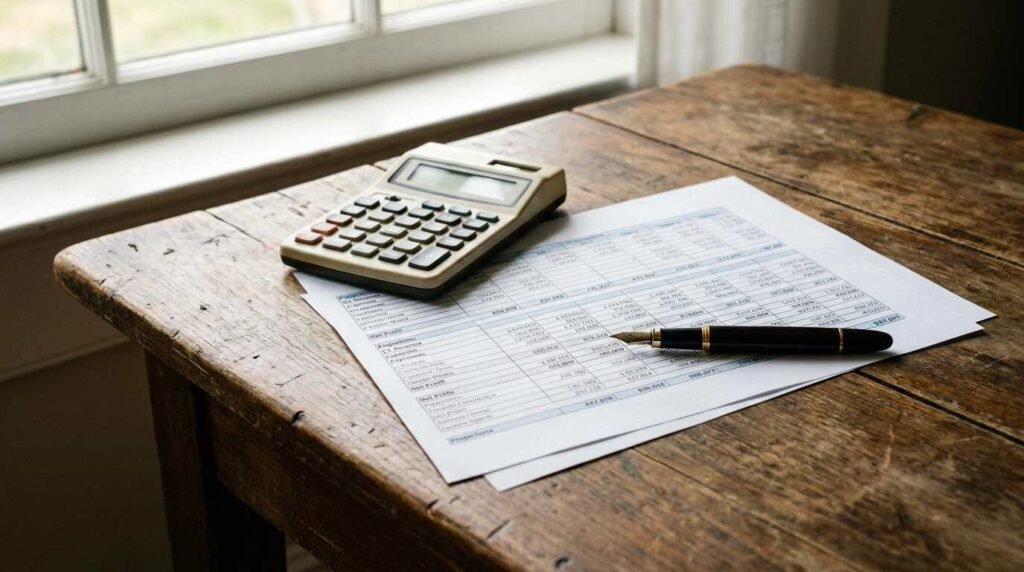
The net proceeds sheet is the document that translates the sale price into what you actually walk away with. I build one with every seller before we discuss listing price. It is the single most useful piece of paper in the pre-listing conversation.
| Item | Estimated Cost |
|---|---|
| Sale Price | $700,000 |
| Listing Commission (1%) | ($7,000) |
| Buyer’s Agent Concession (2.5%) | ($17,500) |
| NYS Transfer Tax (0.4%) | ($2,800) |
| NYS RP-5217 Filing Fee | ($125) |
| Seller’s Attorney | ($2,500) |
| Pre-Listing Inspection | ($600) |
| Professional Photography | ($750) |
| Mortgage Payoff | (varies) |
| Tax Proration | (varies) |
| Miscellaneous Closing Costs | ($1,500) |
| Estimated Net Before Mortgage Payoff | ~$667,225 |
The mortgage payoff is the variable that changes everything for most sellers. A seller with a $400,000 remaining balance walks away with approximately $267,000. A seller who is paid off walks away with the full net. Both sellers owned the same $700,000 house. What they walk away with is different by $400,000 — a number that drives very different decisions about what to do next.
The net proceeds sheet should be built before the listing price is set, not after. Pricing a home at $700,000 because the comparable sales support it, without knowing what the net looks like relative to what you owe or what you need for the next purchase, is working backward. I build the net sheet first. Then we discuss pricing strategy.
If your broker isn’t offering this conversation before you sign the listing agreement, ask for it. You are entitled to know what your home will cost you to sell before you commit to selling it.
This post is for informational purposes only and does not constitute legal or financial advice. Transfer tax rates, commission structures, and closing costs are subject to change. Consult a licensed New York real estate attorney and accountant for advice specific to your transaction.
Real estate markets change. For current listings and market data, contact Pawli at Maison Pawli.
You Might Also Like
The Seller Net Sheet Is Not a Legal Document — and That Omission Has Consequences
The 1 Percent Model: Why Maison Pawli Lists for 1% When Nobody Around Us Will Tell You What They Charge
The Seller’s Timeline: From Decision to Closing on the North Shore
Sources
NAR Sitzer/Burnett Settlement — Summary and Implementation Timeline
NYS Department of Taxation and Finance — Real Estate Transfer Tax
NYS RP-5217 Real Property Transfer Report
Suffolk County Clerk — Recording Fees
Long Island Board of Realtors