How to Weatherstrip an Exterior Door
Some links in this guide are Amazon affiliate links. As an Amazon Associate, Maison Pawli earns from qualifying purchases at no extra cost to you. This guide is general information, not professional advice. When a job touches electrical, gas, structural or permit questions, hire a licensed professional.
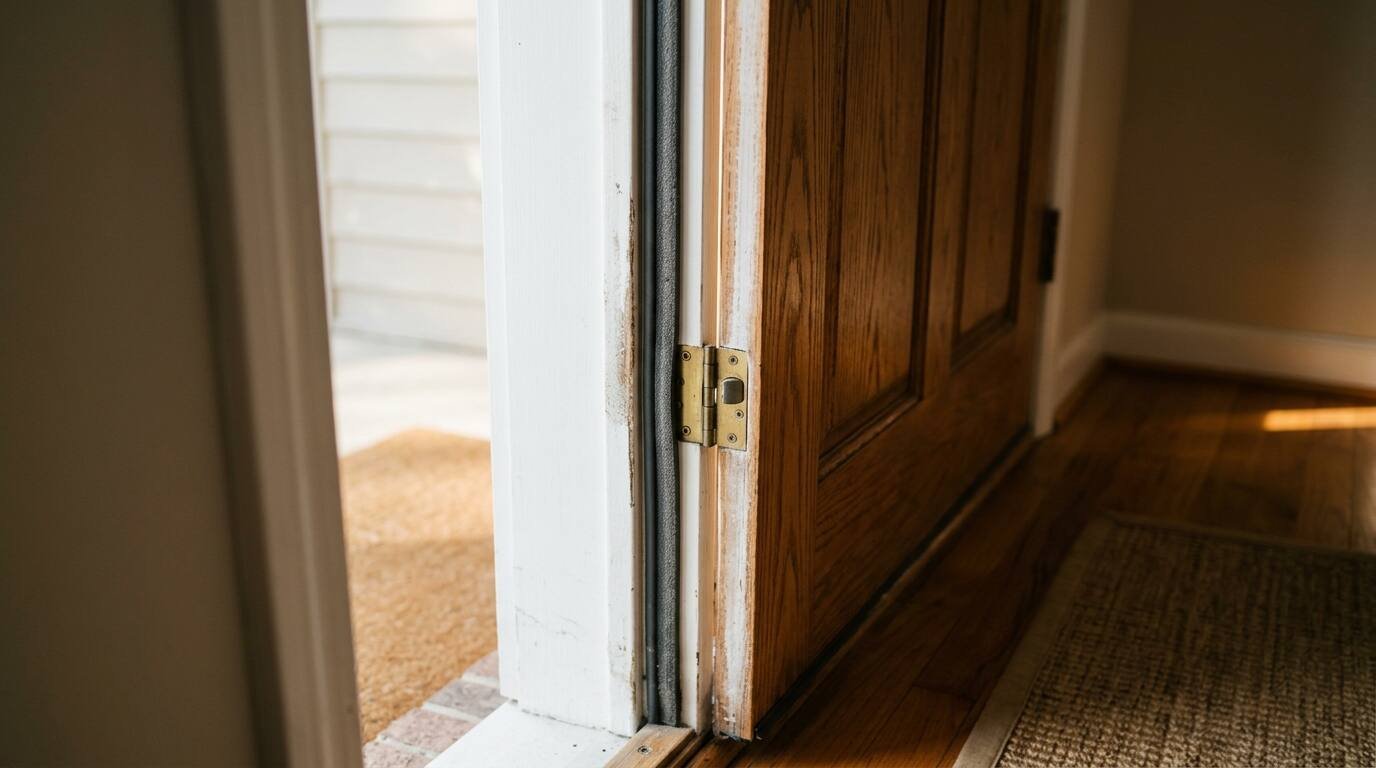
Stand by the front door on a windy November night and you will feel it: a thin, cold ribbon of air around the edge. That draft is paid-for heat leaving the house.
Weatherstripping is the classic answer. The US Department of Energy explains that it seals air leaks around parts that move, such as doors and operable windows, while caulk handles the gaps in things that do not.
Find the leaks
The DOE page does not prescribe a leak-hunting method, so here is the common homeowner rule of thumb rather than an official one. On a breezy day, run a hand around the door frame, or close the door on a strip of paper and tug it. If the paper slides out with no resistance, the seal is weak at that spot.
The DOE does add one caution worth heeding: in an existing home, detect air leaks and consider ventilation before you seal up, so indoor air quality stays adequate. For a proper assessment it points to RESNET or the Building Performance Institute.
Pick the right type
According to the DOE, tension seals made of vinyl or springy metal suit the top and sides of doors. Vinyl needs flat, smooth surfaces. Felt is cheap and easy but is the least effective and does poorly where moisture or friction is present.
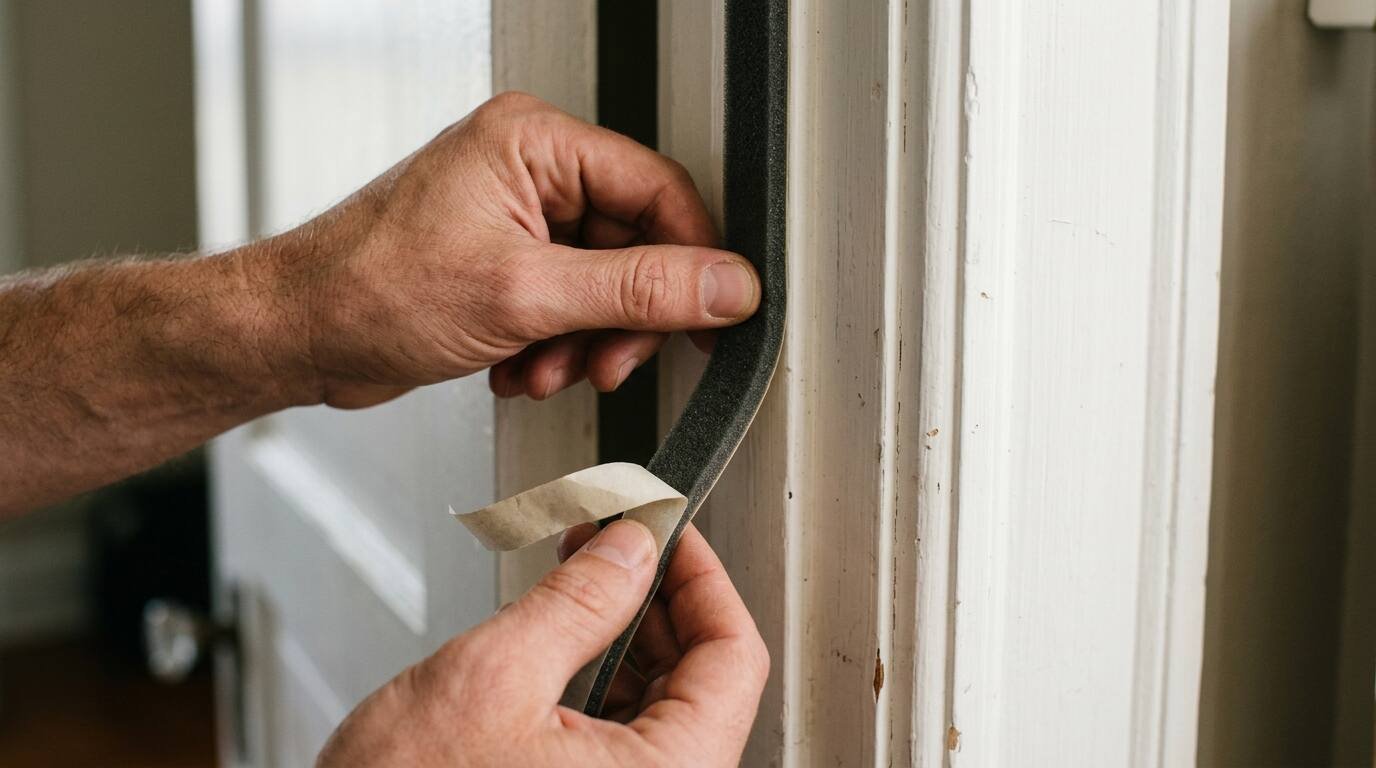
Reinforced foam and foam or rubber tape work well on door stops and door frames. Tape is inexpensive and simple to install, though less durable. Magnetic strips seal very well along the top and sides but cost more. Tubular rubber or vinyl works around doors, and the self-stick kind is harder to install than it looks.
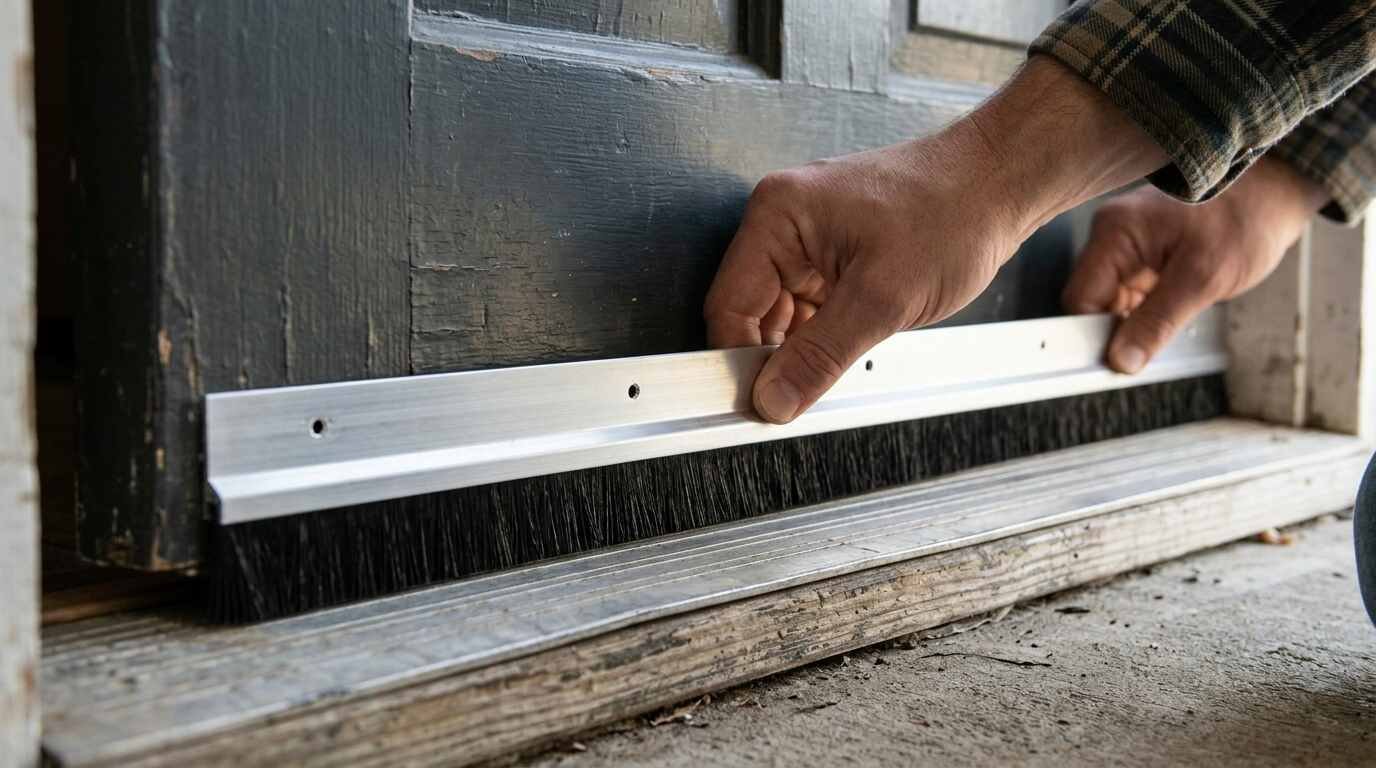
For the gap at the bottom, a door sweep or door shoe is the usual choice. The DOE says sweeps go on the bottom of the interior side of inward-swinging doors, or the exterior side of outward-swinging doors.
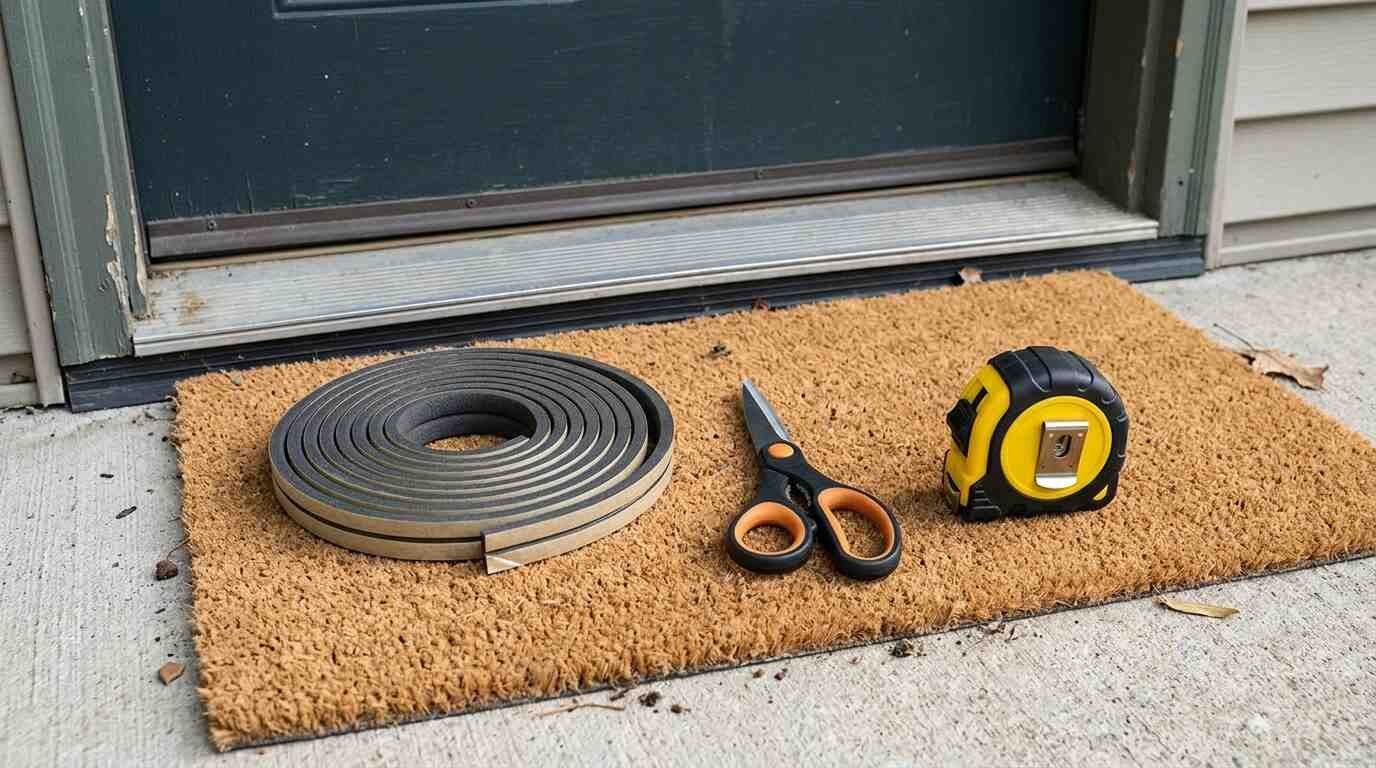
A few starting points for a typical door: foam weatherstripping tape, a V-strip tension seal, or an aluminum door sweep.
Measure and prepare
Clean the surfaces first, and let them dry. Adhesive does not grip dirt or damp wood. The DOE advises applying weatherstripping only to clean, dry surfaces, in temperatures above 20°F.
Add up the perimeter of every door you plan to seal, then buy an extra five to ten percent for waste. Check that the product’s width and depth suit the gap, and measure twice before you cut.
Install it
- Cut one continuous strip for each side of the jamb, so there are no seams for air to find.
- Peel the backing a few inches at a time and press the strip snugly against both surfaces.
- Make the corners meet tightly, since gaps at the joints undo the whole job.
- Fit the strip so it compresses when the door closes, but pick a thickness that still lets the door latch without a fight.
- Attach the sweep along the bottom edge, following the instructions in the package.
Close the door and test it. If you have to shoulder it shut, the strip is too thick; trim or swap it.
Before you buy more
Shop for the least expensive strip that matches your gap, not the one with the fanciest packaging. Combine materials where the door is irregular, as the DOE suggests, and follow the manufacturer’s instructions on each product.
A tip for the long run
Check the seals each fall. Compressed foam, cracked vinyl and brush sweeps worn flat all lose their grip over time, and replacing them takes minutes when you catch it early.