How to Test and Maintain Your Smoke and Carbon Monoxide Alarms
Some links in this guide are Amazon affiliate links. As an Amazon Associate, Maison Pawli earns from qualifying purchases at no extra cost to you. This guide is general information, not professional advice. When a job touches electrical, gas, structural or permit questions, hire a licensed professional.
The chirp comes at three in the morning, once every minute, from a ceiling you cannot reach without a ladder. Everyone in the house knows the sound, and everyone has been tempted to pull the battery and go back to bed.
Resist that. A few short checks through the year keep the alarms ready for the one night you need them.
Where alarms belong
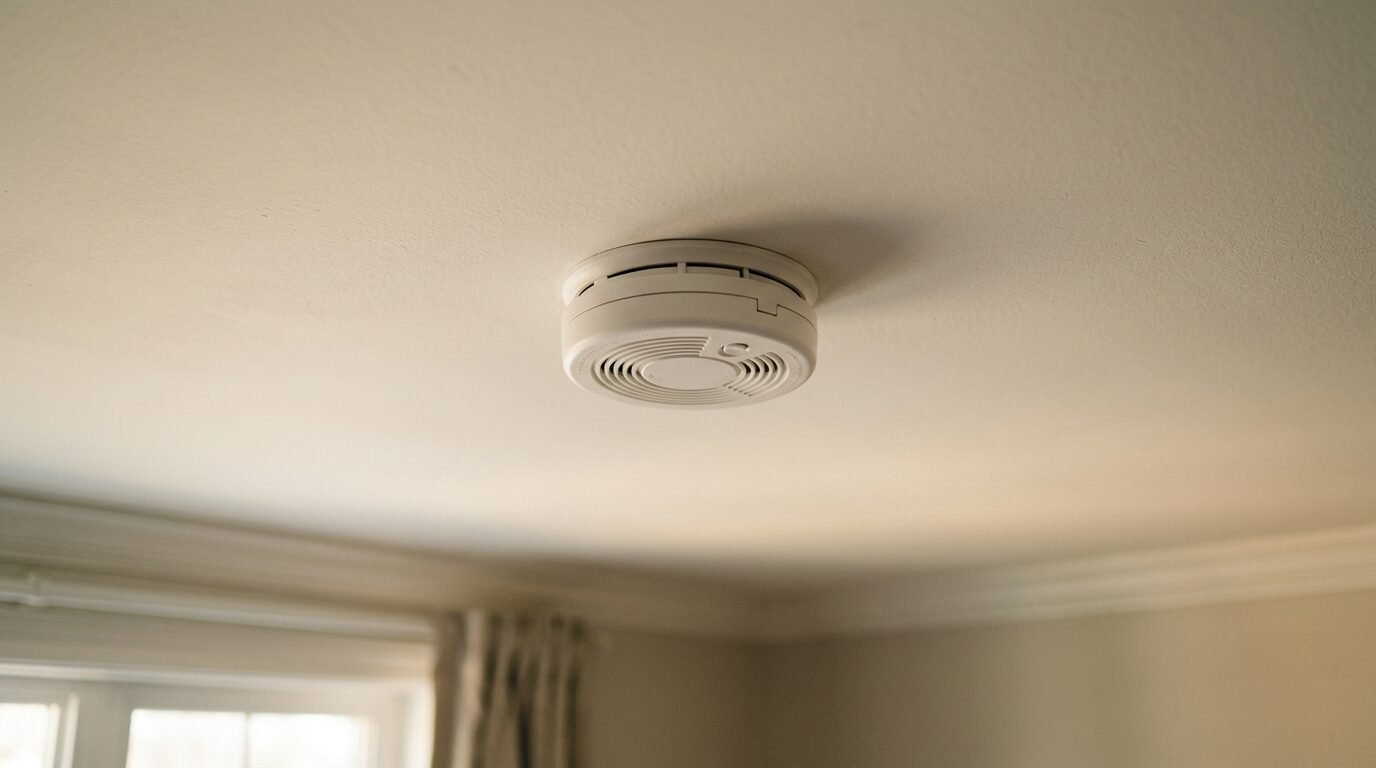
Guidance cited by the American Red Cross, drawing on NFPA 72, says new homes should have hard-wired, interconnected alarms with battery backup on every level, outside each sleeping area and inside each bedroom. In existing homes, the minimum is an alarm on every level and outside each sleeping area, and adding interconnected alarms in each bedroom gives better protection.
Those are national recommendations. Local code determines what your particular home needs, so ask your building department or fire marshal if you are unsure.
Test them monthly
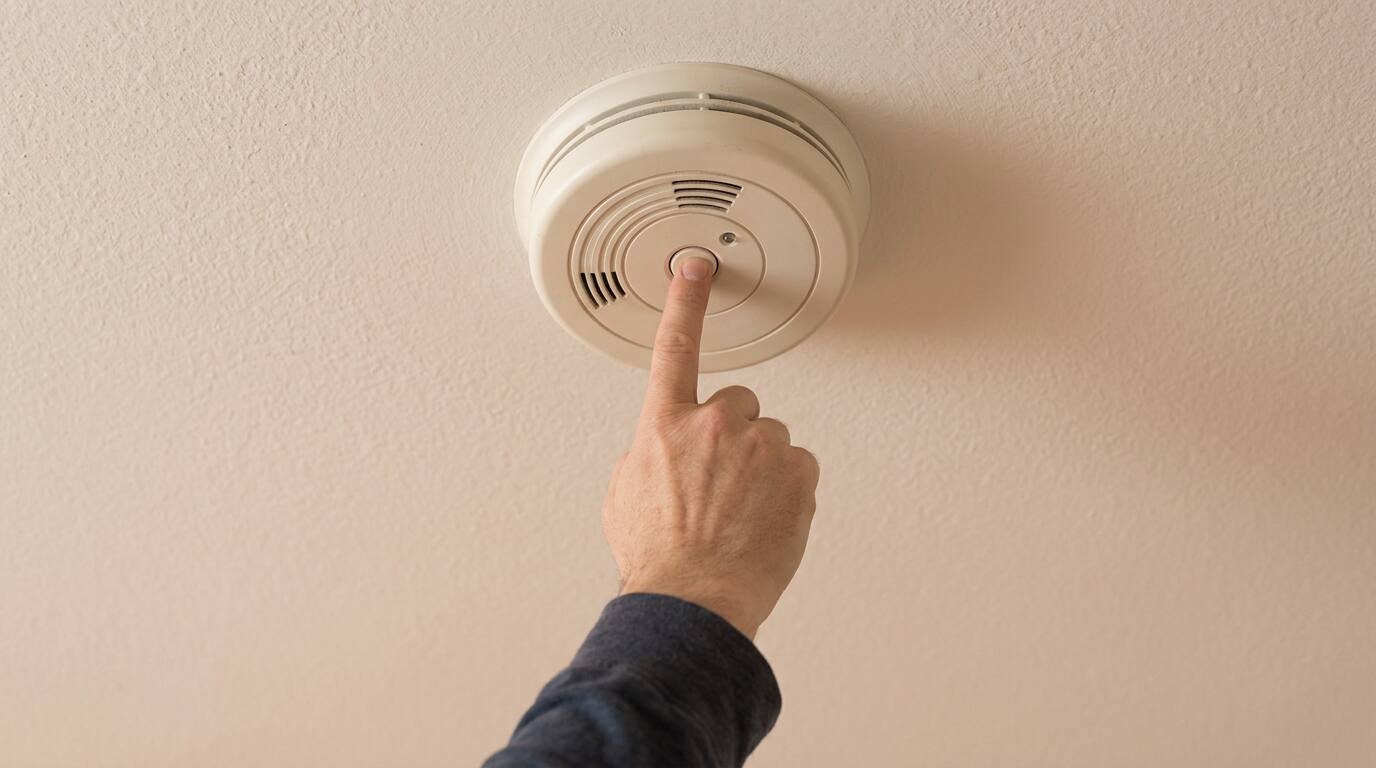
Press the test button at least once a month. Make it a ritual on the first of the month, and check every alarm, including the ones in the basement and the hallway.
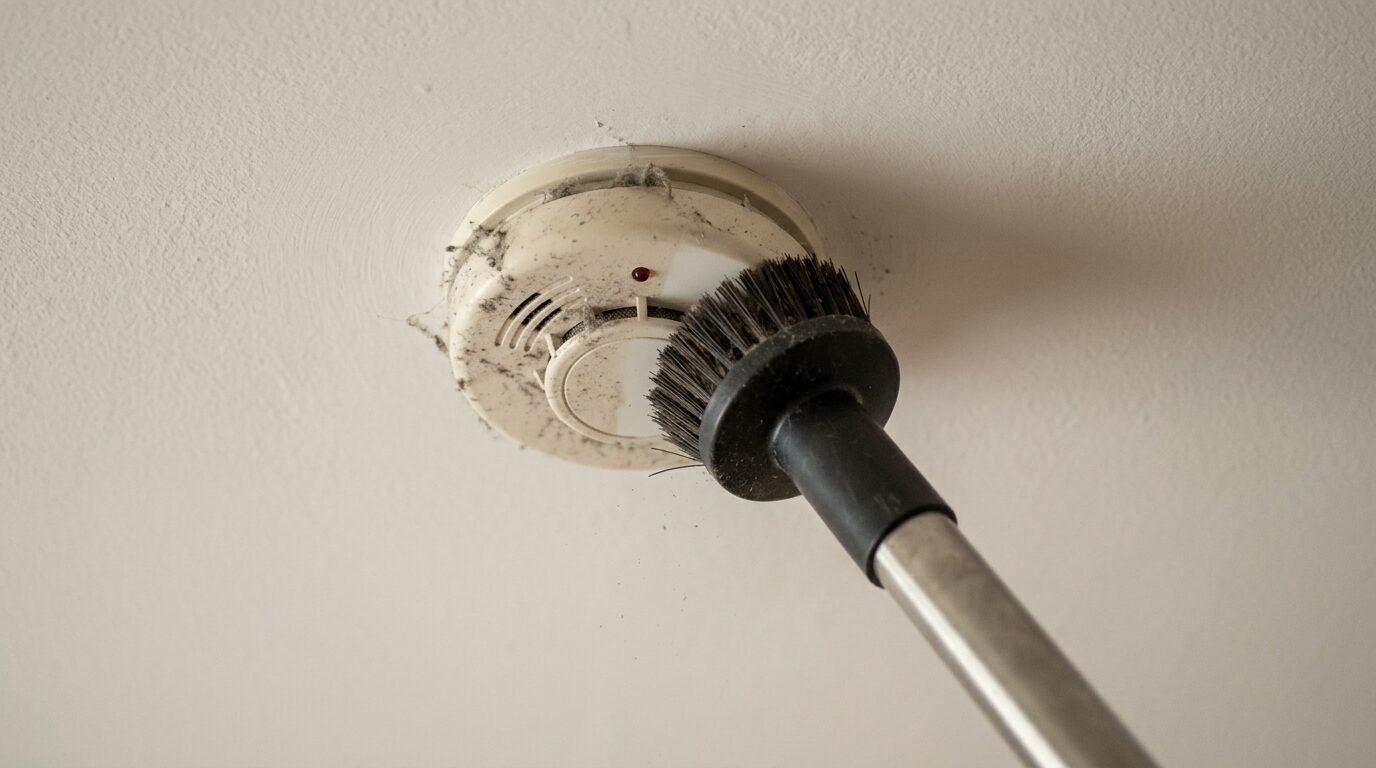
Vacuum cobwebs and dust off the alarms monthly as well, which reduces nuisance alarms. If an alarm sounds because of cooking, use the hush button rather than disabling the unit. A soft vacuum brush attachment and a sturdy step ladder make the job quick.
Change batteries on a schedule
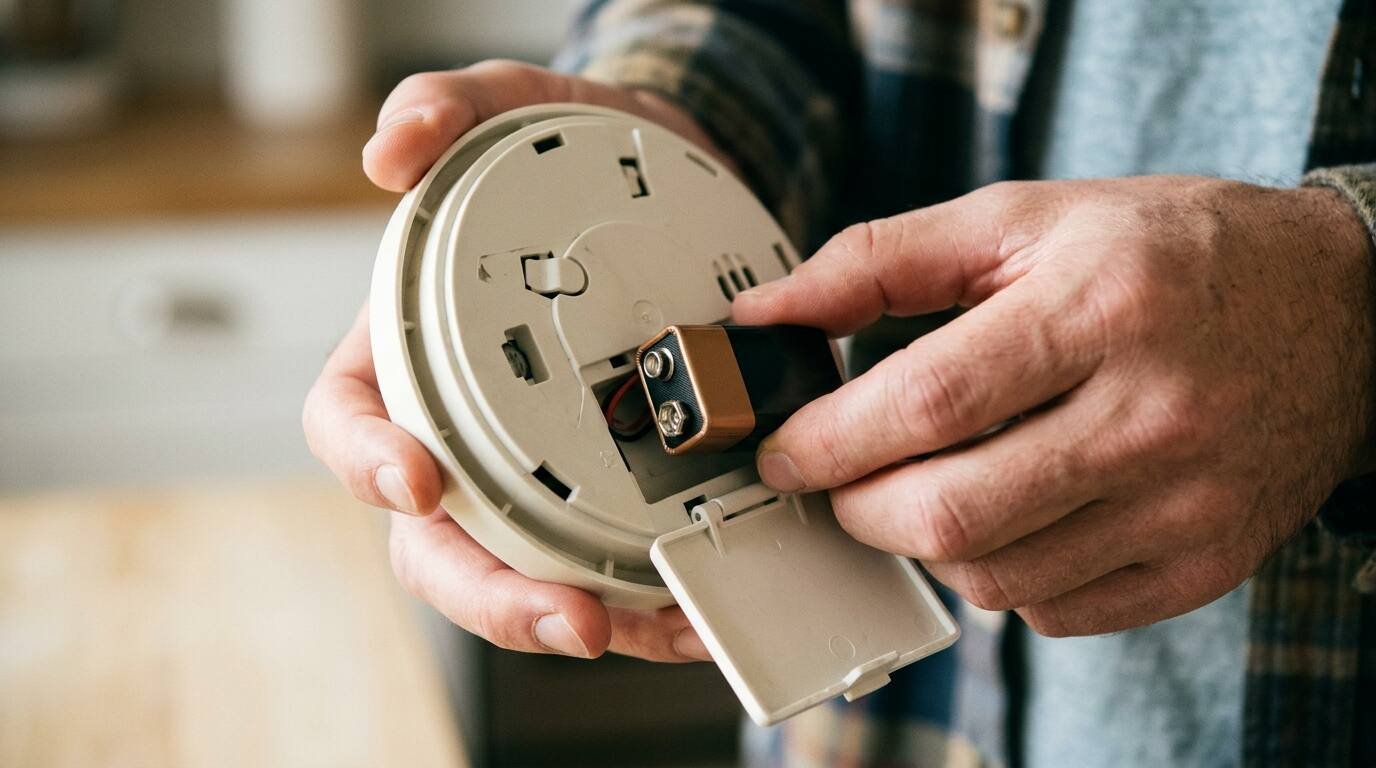
The Red Cross guidance says battery-powered alarms need new batteries at least once a year, and some agencies tie the change to daylight saving time. Fresh batteries typically last at least a year, so replace them sooner only if the alarm chirps. Swap carbon monoxide alarm batteries at the same time.
Keep a supply of the right type on hand; check the back of the alarm to see whether it takes a 9-volt battery or AA batteries. Some units use sealed long-life batteries, which cannot be replaced and signal the end of the whole unit’s life.
Replace smoke alarms every ten years
Per the same guidance, smoke alarms should be replaced every 10 years, per the NFPA and the Consumer Product Safety Commission, because they become less sensitive with age. Look for a manufacture date on the back of each alarm. If it is missing or older than a decade, replace it.
Sealed ten-year models like a 10-year sealed battery smoke alarm take the battery question off the list. A combination smoke and carbon monoxide alarm covers both hazards in one unit. Replacing a hard-wired alarm involves household wiring, so use a licensed electrician if you are not completely sure how to proceed.
What New York requires for carbon monoxide
Amanda’s Law, effective February 22, 2010, requires carbon monoxide alarms in new and existing one- and two-family homes, multifamily dwellings and rentals that have a fuel-burning appliance, system or attached garage, according to a memo from the state Homes and Community Renewal agency. Before the law, only homes built or bought after July 30, 2002, had to install them.
The memo says requirements differ for new and existing residences and refers readers to the Department of State for details on placement. I could not verify specific placement rules, so contact the Department of State or your local code office for them. If you are selling or renting a home, ask your attorney what is required for your situation.
When an alarm will not stop
If a carbon monoxide alarm sounds, treat it as real: get everyone outdoors into fresh air and call 911 from outside. If a smoke alarm keeps chirping after a battery change, replace the unit, since an end-of-life alarm cannot be fixed.