How to Set Up a Home Office That Could Qualify for the Deduction
Some links in this guide are Amazon affiliate links. As an Amazon Associate, Maison Pawli earns from qualifying purchases at no extra cost to you. This guide is general information, not professional advice. When a job touches electrical, gas, structural or permit questions, hire a licensed professional.
This is general information, not tax or legal advice. Tax rules change and depend on your situation. Speak with a CPA or tax professional before you claim any deduction.
The kitchen table worked for a month. Then the laptop started living there, the paperwork began migrating onto the counters, and dinner turned into an obstacle course.
A dedicated home office fixes that. For some self-employed people, it also carries a tax angle, so it helps to set the space up with the rules in mind.
What the IRS says about qualifying space
According to the IRS, you must use part of your home exclusively and on a regular basis for business, for example as your principal place of business or a place where you meet clients or customers. Exclusive use means the space is not also used for personal purposes. The IRS example is a den used for both work and personal activities, which would disqualify that room.
Your home must be your principal place of business, which depends on where you perform your most important activities and where you spend most of your business time. A portion of the home can also qualify if you use it for administrative or management work and have no other fixed location where you do substantial administrative or management work for the business.
The IRS treats storage of inventory or product samples, rental use and daycare under different rules, so those situations need their own check.
The simplified method
The IRS describes a simplified option: $5 per square foot of the business-use area, capped at 300 square feet, for a maximum of $1,500. Depreciation is treated as zero, and the deduction goes directly on Schedule C rather than on Form 8829. Home expenses you may deduct regardless of business use, such as mortgage interest and property taxes, go on Schedule A.
The simplified method has no carryover of unused expenses, but the IRS notes you can switch methods from year to year. The page I read speaks to self-employed taxpayers, farmers and partners, and does not address W-2 employees, so ask a professional where you fall.
Pick the spot
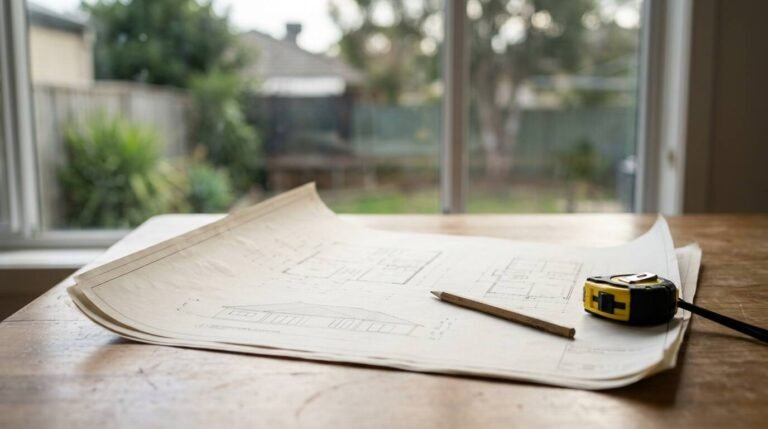
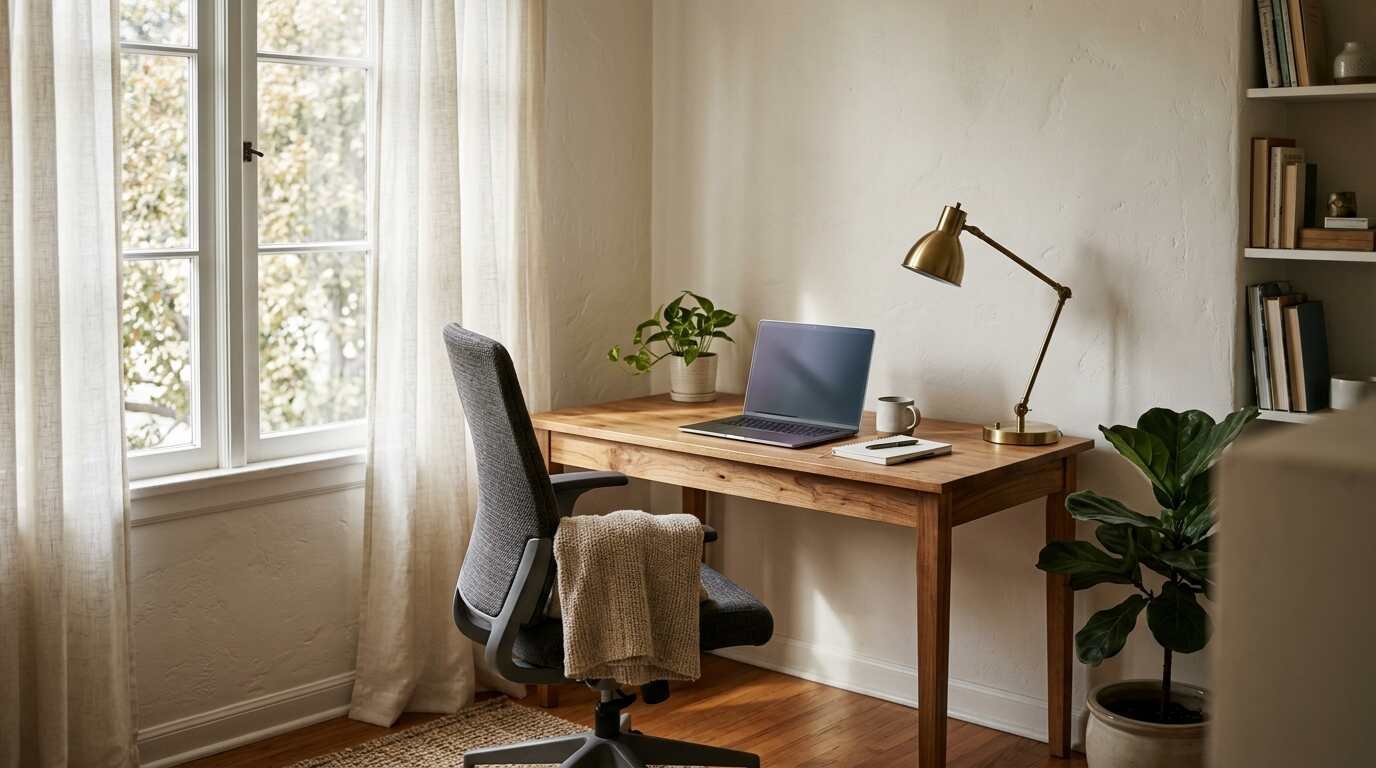
Choose a corner that you can truly dedicate. A spare room is ideal, but a partitioned section of a bedroom can work if nothing personal happens there. Measure the area with a tape and write the square footage in your records.
Photograph the space and keep the picture with your tax files. Records and a simple floor sketch help later if anyone asks questions.
Build in comfort
A desk that suits you beats a trendy one. Elbows should rest near ninety degrees when you type, and your screen should sit at about eye level. A supportive ergonomic office chair pays for itself in aching-back days avoided.
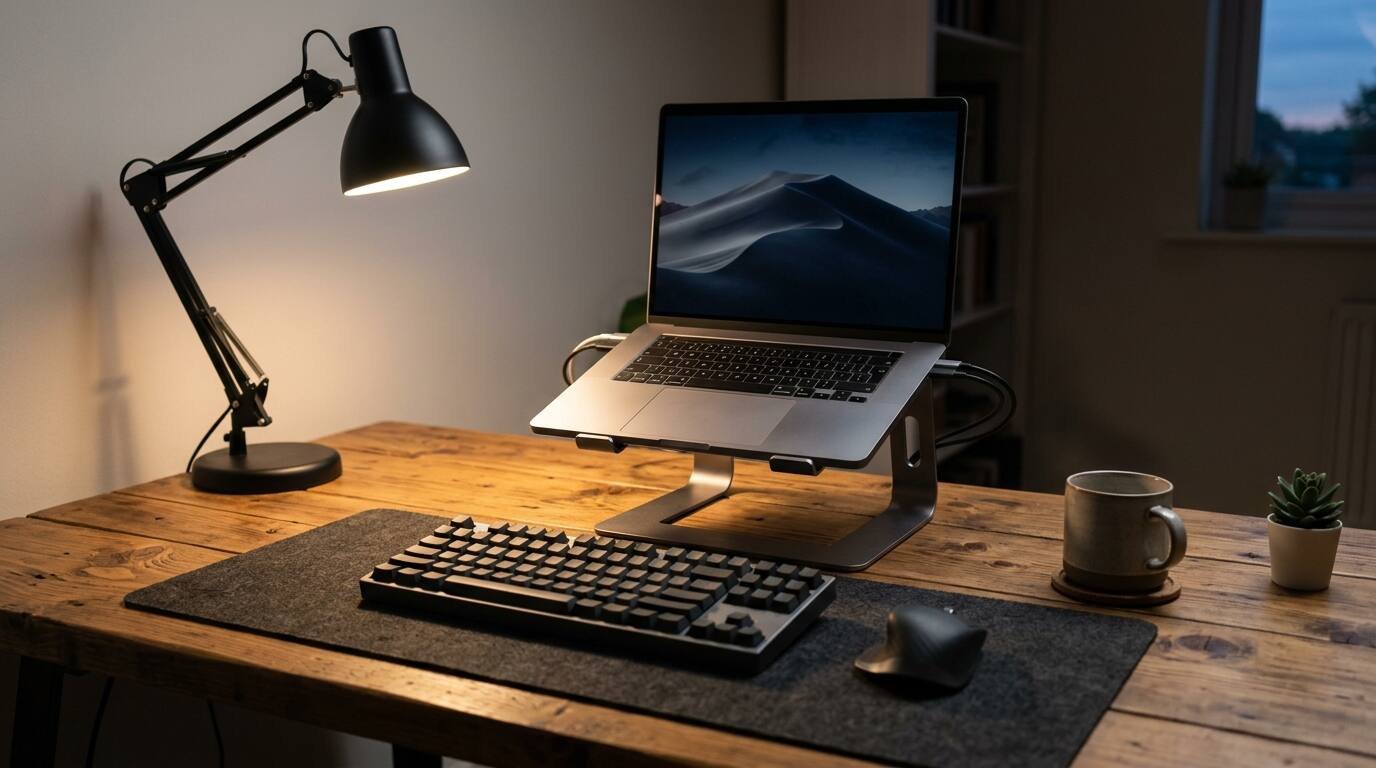
Raise the laptop onto a laptop stand and use a separate keyboard and mouse, so neither your neck nor your wrists take the strain. A desk lamp with adjustable brightness reduces eye fatigue, and the lighting guide on this site covers bulb choices.
Protect the equipment
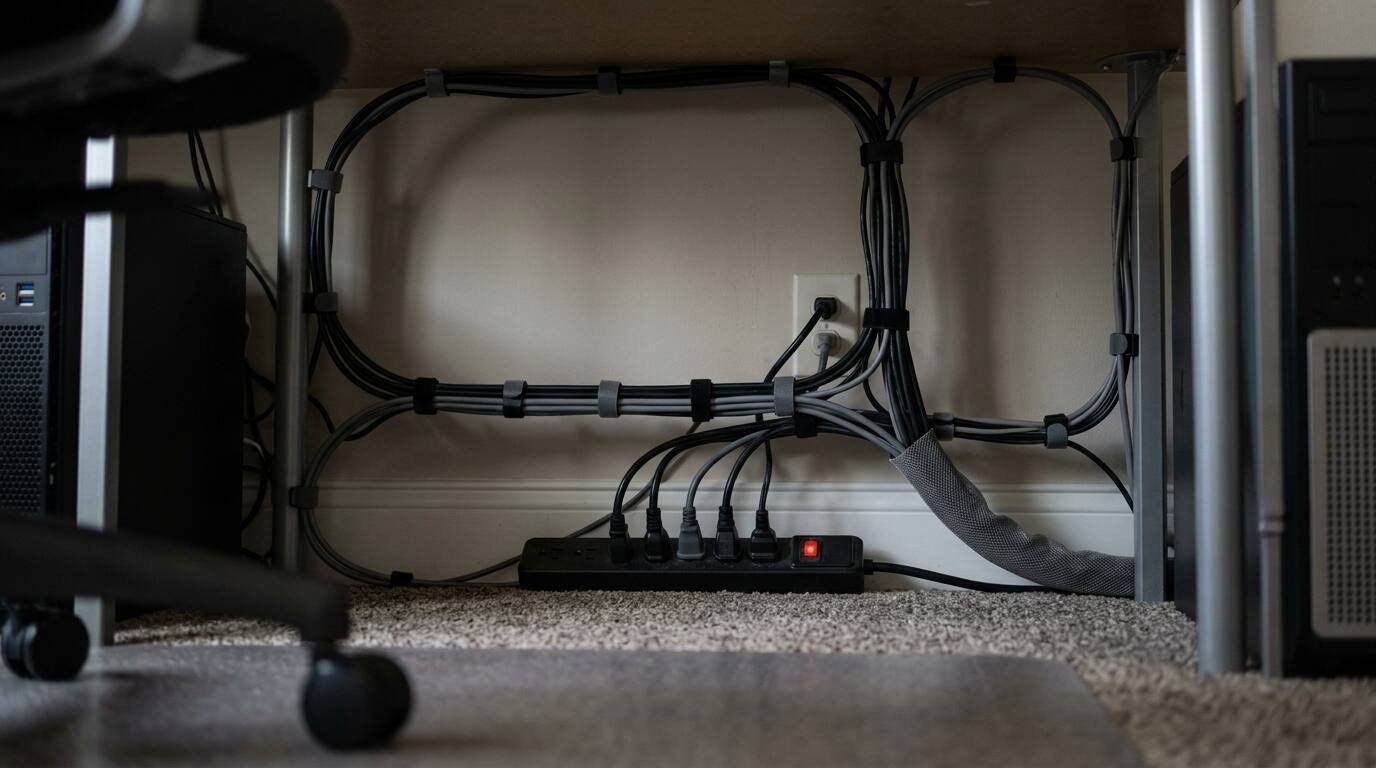
Plug computers and monitors into a surge protector power strip rather than straight into the wall. Do not daisy-chain strips together, and never run cords under rugs. If outlets are scarce or the circuit trips, bring in a licensed electrician rather than stretching extension cords across the floor.
Back up your work. A external hard drive for backups kept in a different spot from your computer is cheap insurance.
Keep records from day one
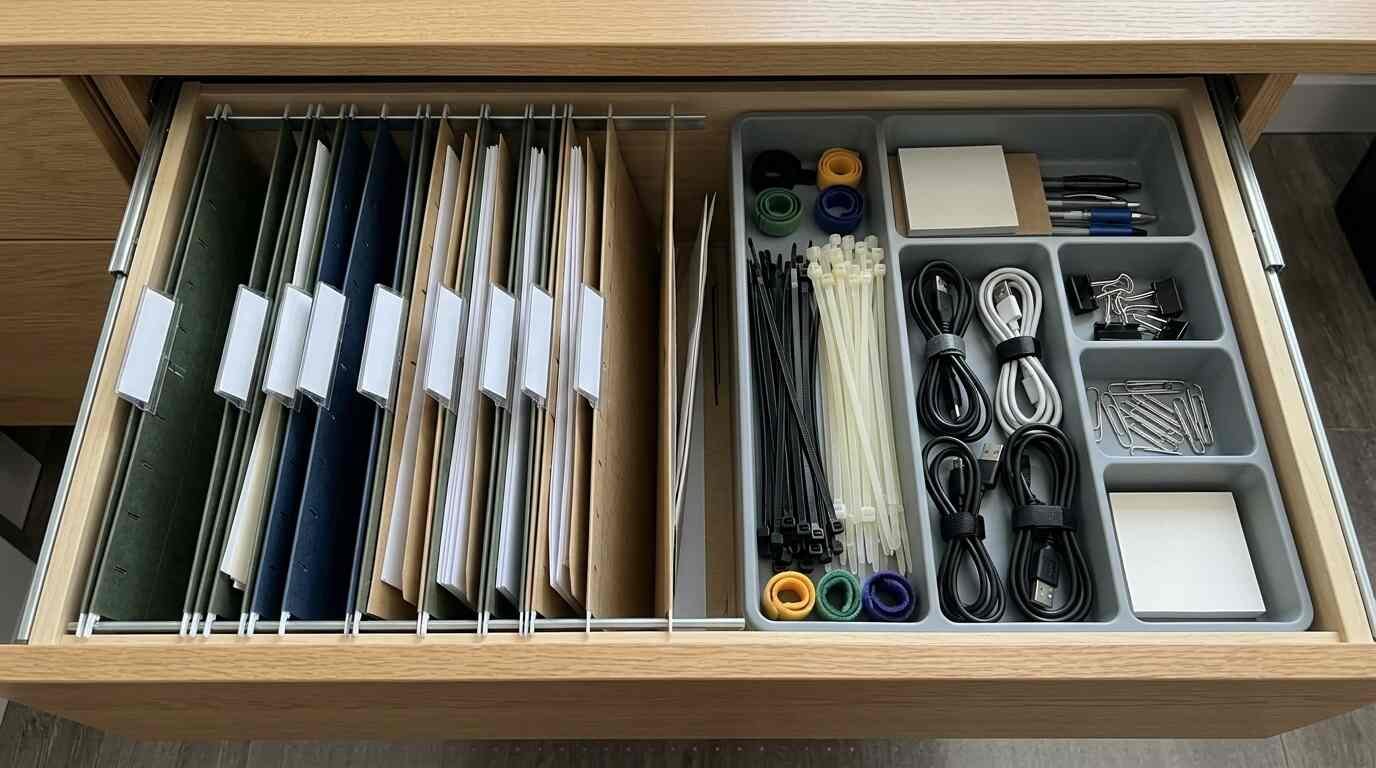
Save receipts, the square footage calculation and notes about how the space is used. A small fireproof document bag or a labeled digital folder keeps everything findable at tax time.
The goal is a workspace you actually enjoy. If it qualifies for a deduction, that is a bonus you confirm with a professional rather than an assumption you build the room around.