How to Fix a Running Toilet
Some links in this guide are Amazon affiliate links. As an Amazon Associate, Maison Pawli earns from qualifying purchases at no extra cost to you. This guide is general information, not professional advice. When a job touches electrical, gas, structural or permit questions, hire a licensed professional.
You hear it from the hallway at two in the morning: a faint trickle, then a hiss, then a gulp as the tank tops itself up. Nobody flushed. The toilet is running on its own, and it will keep doing that until somebody opens the tank.
Most of the time the fix is small. According to EPA material on leak detection, worn flappers rank among the most common household leak sources, and the average household’s leaks add up to nearly 10,000 gallons of wasted water a year. A ten-dollar part is worth the effort.
Run the dye test first
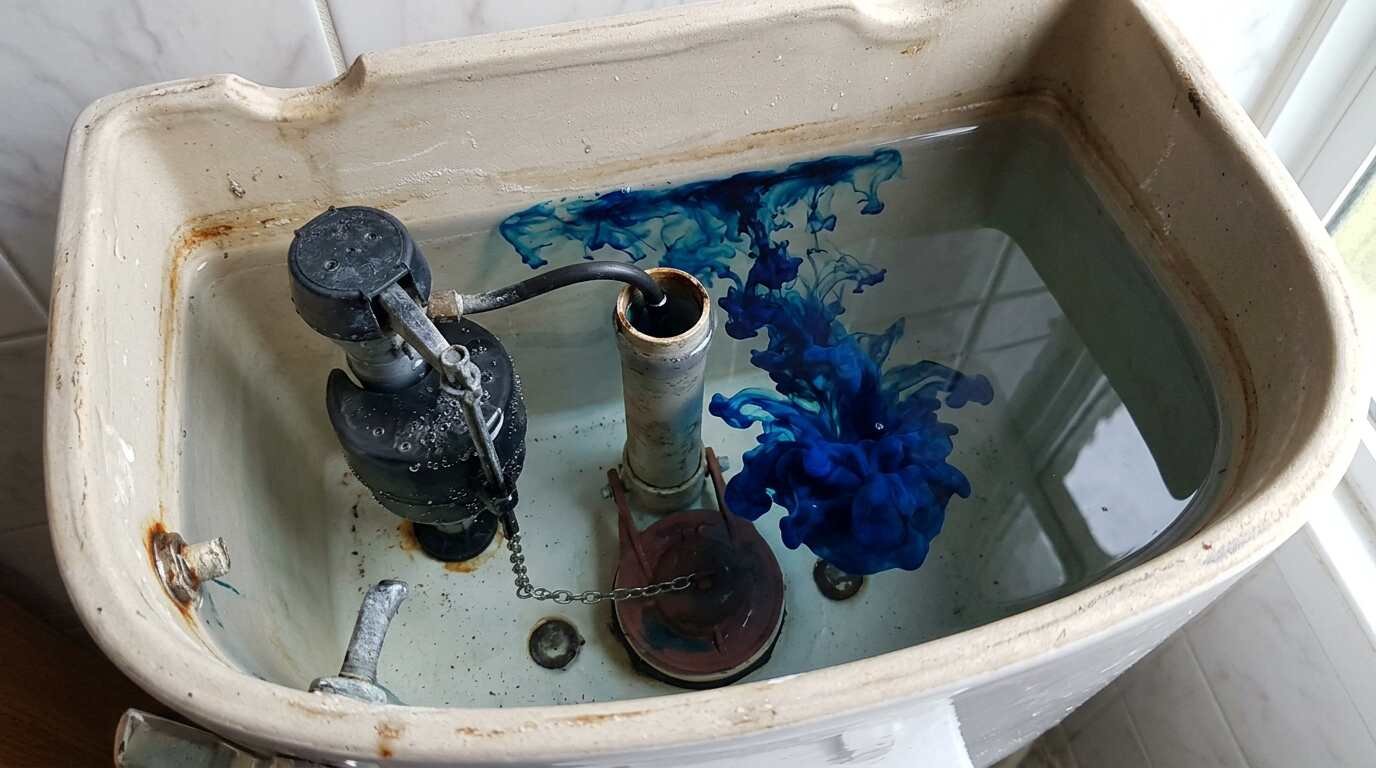
Guessing wastes time, so confirm the leak before touching anything. Drop a dye tablet or a few drops of food coloring into the tank. Then wait five to ten minutes without flushing.
If color appears in the bowl, water is slipping past the flapper or flush valve seal, and the flapper needs replacing. The EPA sheet advises flushing within that window anyway, since dye left sitting can stain the porcelain.
Check the easy things
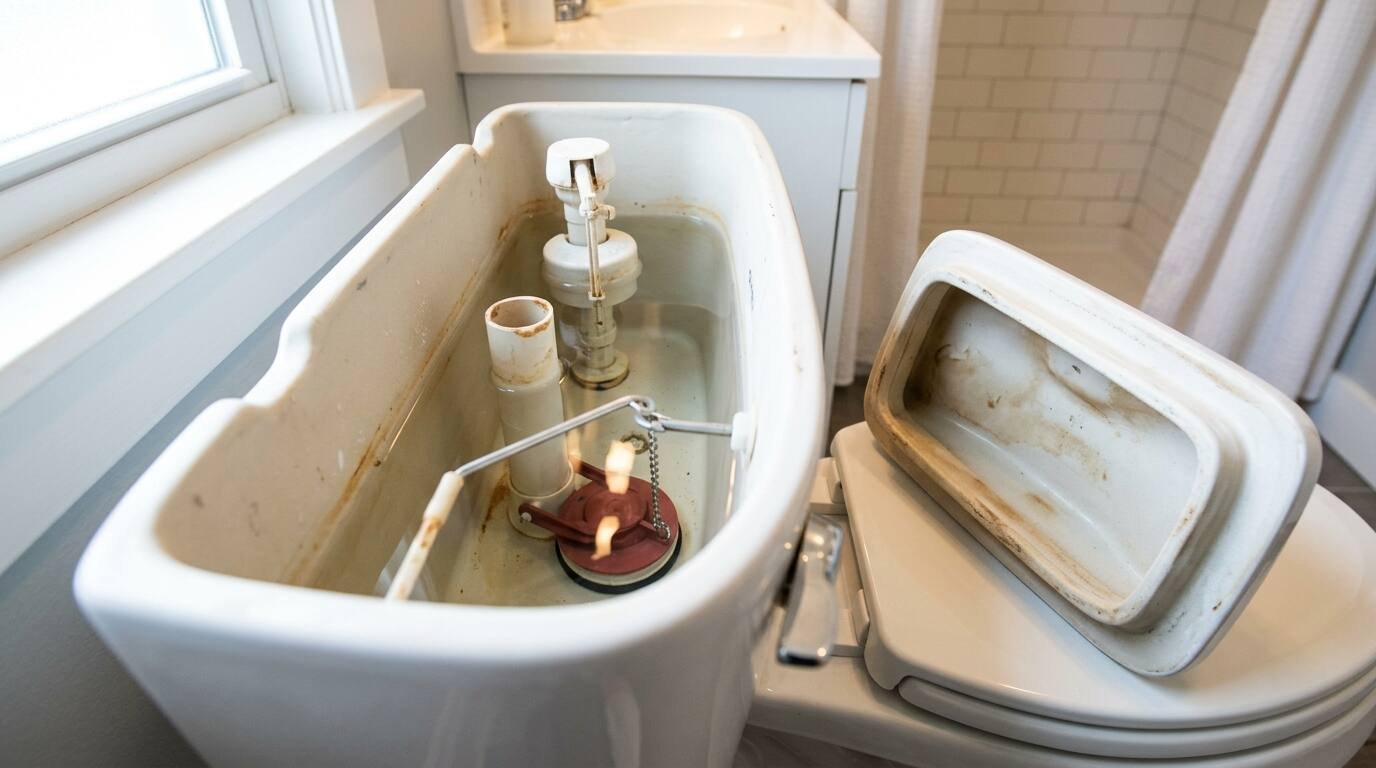
Lift the lid and watch a flush cycle. A chain that is too long can slip under the flapper and hold it open; one that is too short keeps it from seating. Aim for a small amount of slack, about a link or two.
Also look at the water level. If water climbs above the top of the overflow tube, it drains down the tube forever, and the fill valve or float needs adjusting. Most fill valves have a screw or clip that lowers the level.
Replace the flapper
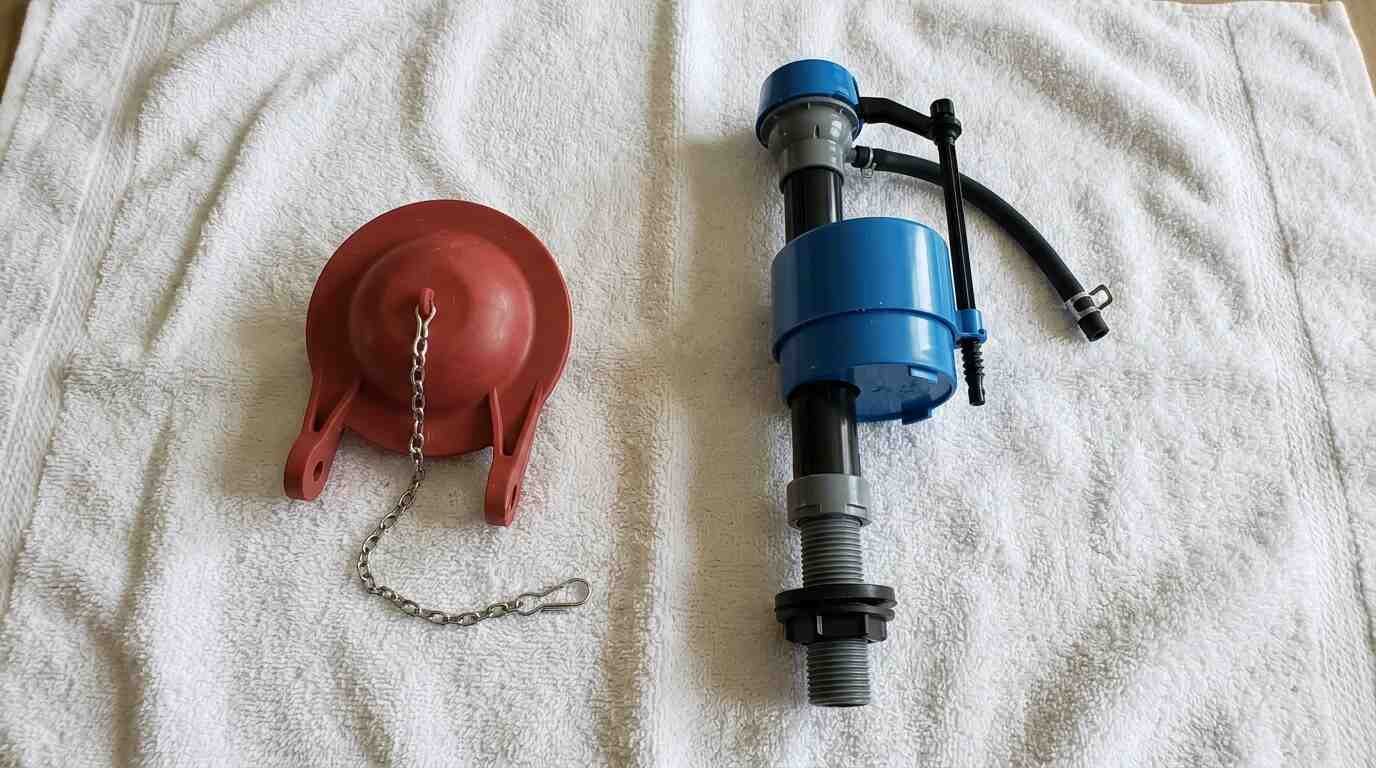
Gather the parts first. A universal toilet flapper fits many tanks, though sizes and styles vary, so take your old one to the store or compare it against the package. Keep a small sponge handy for the last bit of water in the tank.
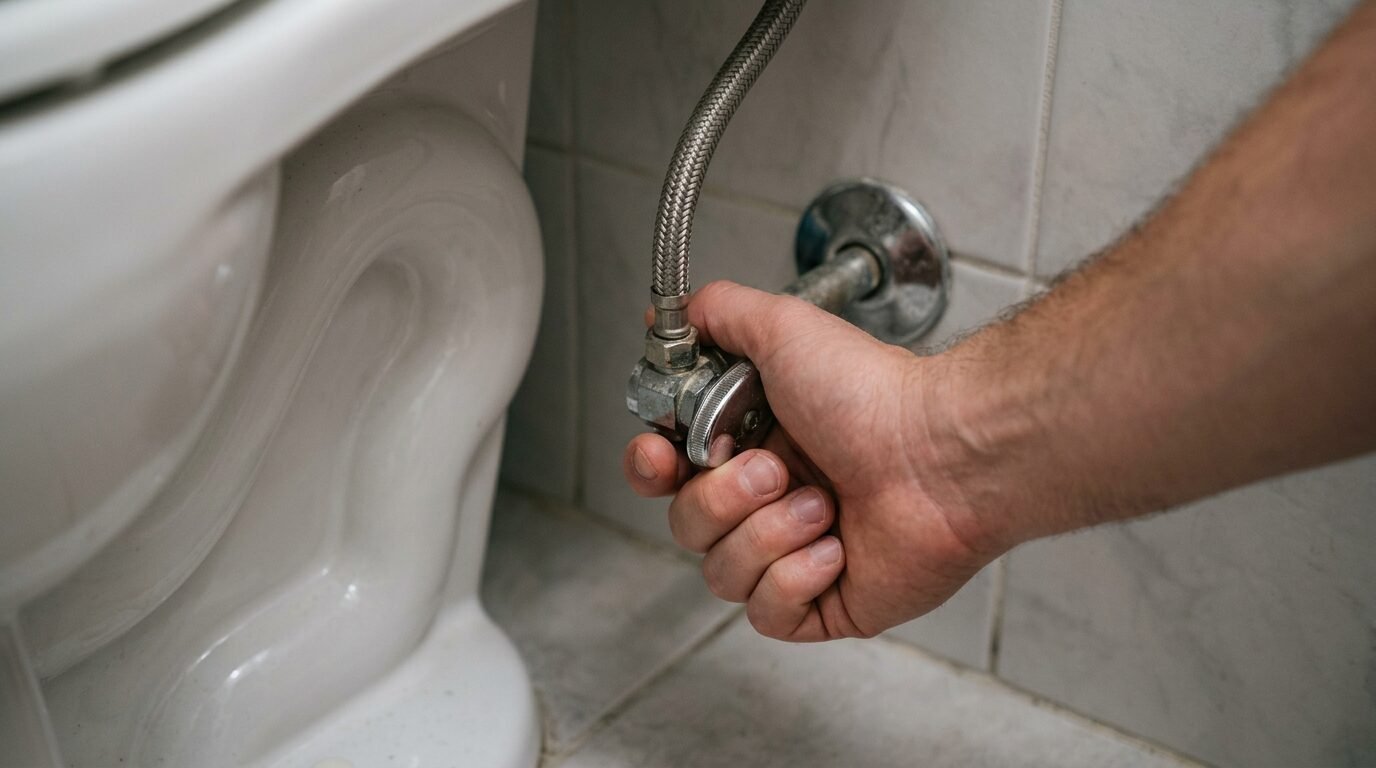
- Turn the shutoff valve behind the toilet clockwise until it stops.
- Flush to empty the tank, then sponge out what remains.
- Unhook the chain and slide the old flapper’s ears off the pegs on the overflow tube.
- Clean the rim of the flush valve opening with your fingers or a soft cloth, because grit stops a seal.
- Fit the new flapper onto the pegs, attach the chain with a little slack, and turn the water back on.
Run the dye test again once the tank refills. A clear bowl after ten minutes means you are done.
When the fill valve is the problem
If the water keeps running even with a good flapper, or the toilet refills slowly and noisily, the fill valve may be worn. An adjustable toilet fill valve replacement is a bit more work, and instructions come in the package. Take your time and photograph the connections before you disconnect anything.
Know when to call a plumber
Stop and bring in a licensed plumber if the shutoff valve will not close fully, if water seeps from the base of the toilet, or if you spot corrosion on the supply line. Those are not flapper problems, and forcing an old valve can create a bigger leak than the one you started with.
One more habit worth keeping
Drop the dye tablet in every toilet once a year. The EPA notes that a dye test in each toilet is part of verifying a WaterSense-labeled home, and it is a cheap way to catch slow leaks before the water bill does.