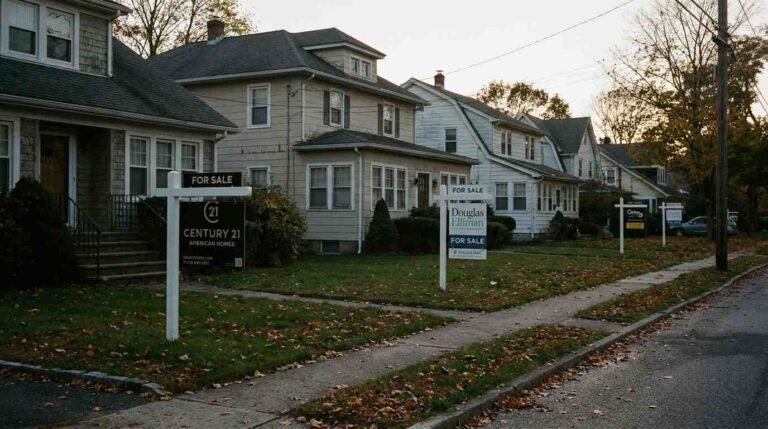
Staging a Long Island Home for Showings on a Budget: Four Spending Tiers

A bill now before the New York State Assembly would require disclosure when real estate listing photos have been digitally altered. The measure, A11635, is sponsored by Assemblymember Linda Rosenthal and aimed at AI-edited images. Her stated concern, as 6sqft reported on September 9, 2026, is that “the changes may also give viewers a false impression.”
The practical consequence for sellers is simple. A buyer who falls for a photograph and then walks into a different living room starts the showing at a disadvantage. Staging done in the actual house, with real furniture and real light, closes that gap, and most of it costs far less than a stager’s invoice.
This guide is organized by dollars rather than by room. Anyone who prefers a room-by-room sequence can pair it with the declutter sprint, and the scent and sound piece covers the senses a camera cannot capture.
What the Data Shows Buyers and Agents Respond To
The National Association of Realtors surveyed 1,266 members in February 2025 for its 2025 Profile of Home Staging. Only 21 percent of sellers’ agents said they staged all of their listings, and 51 percent did not stage but recommended that sellers declutter and make repairs. In other words, the cheap steps are the common ones.
| Step | Share of agents recommending it |
|---|---|
| Declutter | 91% |
| Clean the entire home | 88% |
| Improve curb appeal | 77% |
| Professional photographs | 76% |
| Minor repairs | 75% |
| Carpet cleaning | 74% |
| Depersonalize | 72% |
| Paint touch-ups | 67% |
Source: NAR, 2025 Profile of Home Staging (February 2025 survey).
Eighty-three percent of respondents said staging helps buyers visualize a home as their own. Among sellers’ agents, 49 percent reported at least some decrease in time on market from staging. The dollar-value findings were less dramatic: 30 percent of sellers’ agents saw no impact on offer price, while 19 percent saw an increase of 1 to 5 percent. The median staging cost was $1,500 when a service handled it and $500 when the listing agent did.
Jessica Lautz, NAR’s deputy chief economist and vice president of research, noted that “the typical home seller resides in their home for 10 years before selling.” A decade of accumulation explains why decluttering tops the list, and why it sits first in the plan below.
Tier One: Free
Time is the only currency here, and a weekend covers most of it.
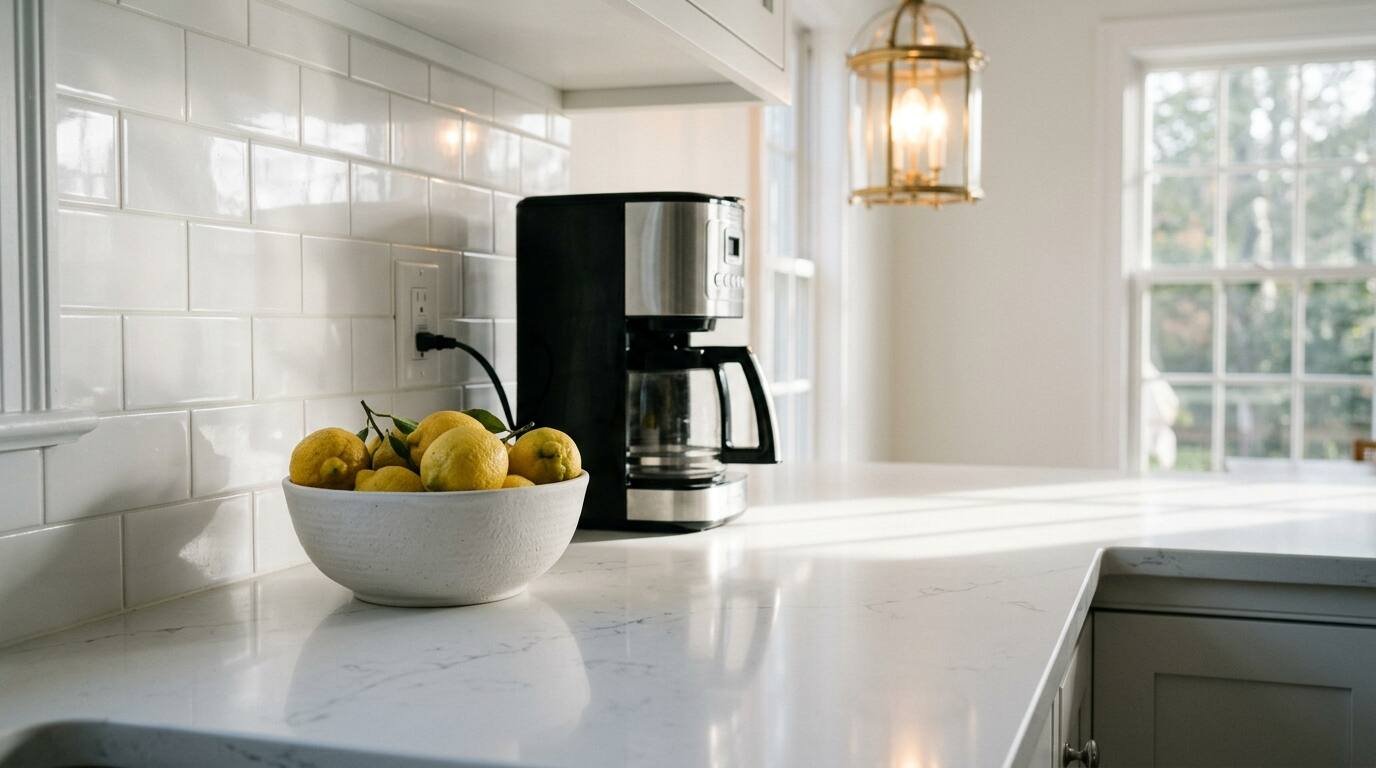
Clear kitchen counters down to a coffee maker and one bowl. Empty half of every closet, since buyers open them, and box the surplus. Take down family photographs, which accounts for much of the depersonalizing step that 72 percent of agents recommend. Rotate lamps and chairs between rooms until each space has a clear purpose, and pull furniture back from walls so walkways read as wide.
Windows, floors, and light fixtures come next. Clean glass changes how a room photographs and how it feels at a 5 p.m. showing. Outside, sweep the entry, clear leaves, and trim anything touching the house; the fall maintenance checklist covers the seasonal items that tend to show up on a buyer’s inspection list.
Tier Two: Under $100
This tier is about small defects that read as neglect. Scuffed baseboards, a yellowed caulk line, mismatched bulbs, and a worn doormat each cost very little to fix, and together they shape the first ninety seconds of a showing.
Replace every bulb in a room with the same warm white so the light looks consistent. Re-caulk tubs and sinks. Wipe down switch plates and door frames. Swap the front doormat. Minor repairs, recommended by 75 percent of agents in the NAR survey, belong here too: a dripping faucet or a sticking door gets fixed before it is mentioned.
Tier Three: Under $300
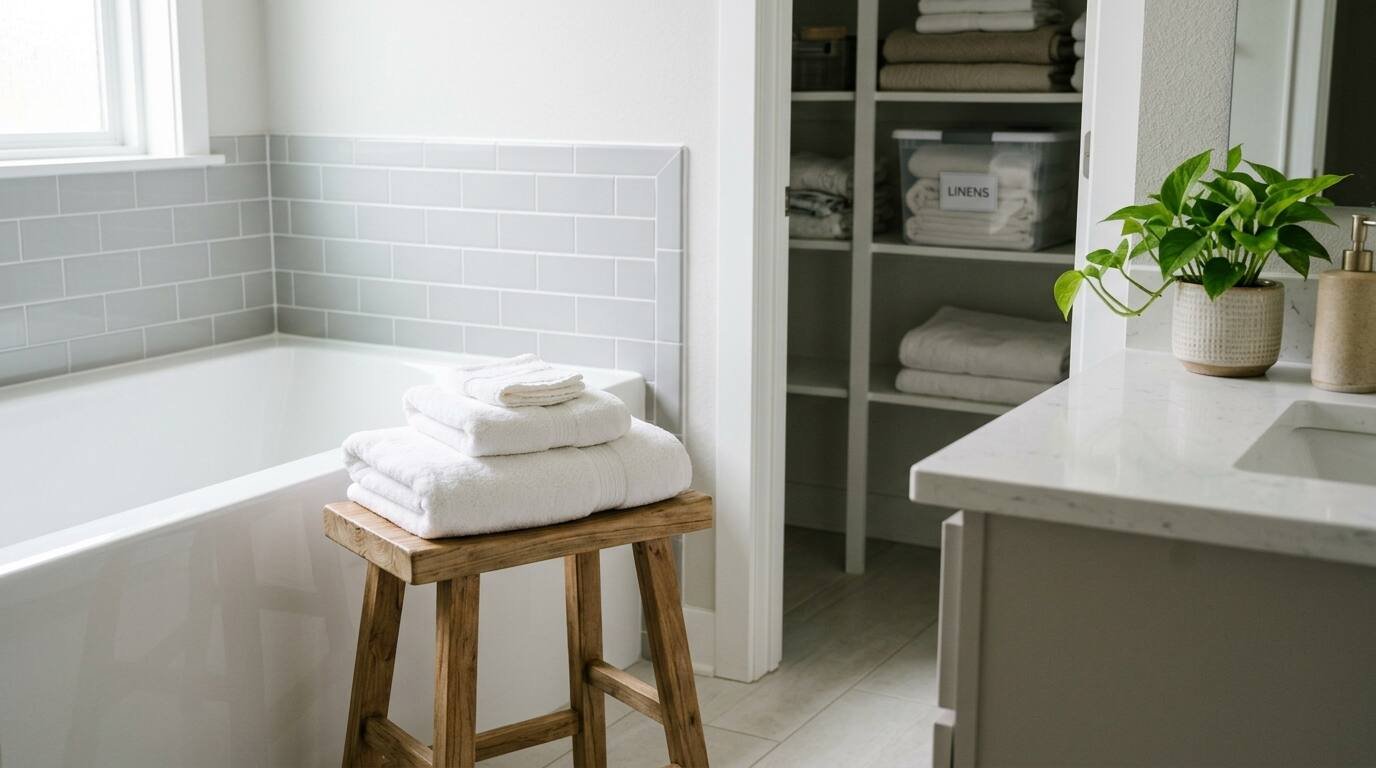
At this level, the goal is a coherent look rather than just a clean one. Neutral pillow covers can reset a sofa or bed without replacing it. One matched set of white towels per bathroom signals care. Clear storage bins give the boxed surplus from Tier One a tidy home in the garage.
Paint touch-ups (recommended by 67 percent of agents) fit here, as does carpet cleaning (74 percent). A rented carpet machine usually costs less than a service call, though heavily stained carpet is a job for a professional.
Tier Four: Around $500
NAR’s median of $500 for agent-staged homes offers a reasonable ceiling for sellers who want more than the basics. Spending at this level tends to go toward a fresh coat of paint in the entry or living room, a small storage rental for excess furniture, and professional photographs, which 76 percent of agents recommend.
Photography matters more now than it did two years ago. Photos of a home that has been physically prepared need little digital correction, and they match what buyers find at the door. The Close, in its June 25, 2026 coverage, reported that New York has no AI-specific listing photo law yet and that existing advertising rules apply. Its guidance reads: “Use AI to clean up the photo, not to make the home look different.”
Which Rooms Come First
Agents who stage tend to focus on the same spaces. NAR found that sellers’ agents staged the living room 91 percent of the time, the primary bedroom 83 percent, the dining room 69 percent, the kitchen 68 percent, and the bathroom 47 percent. Buyers’ agents named the living room (37 percent), primary bedroom (34 percent), and kitchen (23 percent) as the most important rooms.
For a limited budget, that ordering is a spending guide. Living room first, primary bedroom second, kitchen third.
Products That Fit the Plan
The items below correspond to the tiers above. Each is a consumer product available online; availability and specifications can change, so confirm details on the product page before buying.

- Mr. Clean Magic Eraser Pads (8 count) lift scuffs from baseboards, door frames, and switch plates without repainting. See it on Amazon (affiliate link)
- Amazon Basics A19 LED Bulbs (60W equivalent, 2700K, dimmable, 6-pack) give every lamp the same warm white light. See it on Amazon (affiliate link)
- GE Advanced Silicone Kitchen & Bath Sealant (white) refreshes cracked or yellowed caulk around tubs, sinks, and tile. See it on Amazon (affiliate link)
- MIULEE Neutral Boho Linen Decorative Pillow Covers (18×18, 4-pack) restyle a sofa or bed with a quieter palette. See it on Amazon (affiliate link)
- Rubbermaid Cleverstore Clear Storage Bins (95 qt, 4-pack) hold the surplus belongings that leave the house before showings. See it on Amazon (affiliate link)
- Amazon Basics White Bath Towels (6-pack, 100% cotton) supply one matched set for each staged bathroom. See it on Amazon (affiliate link)
- Juvale Coir Door Mat (30×17) replaces a worn mat at the front door. See it on Amazon (affiliate link)
The Showing-Day Routine
Staging that took a weekend can be undone by a rushed Tuesday morning. A repeatable thirty-minute reset keeps the house at its best for every appointment.
- Make the beds and straighten the pillows.
- Clear counters and empty the sink.
- Take out the trash and recycling, including the kitchen bin.
- Open blinds and turn on every light, day or night.
- Set the thermostat to a comfortable temperature.
- Check entries and walkways for leaves, salt residue, or puddles.
- Fold towels and close toilet lids.
- Remove pets if possible; 27 percent of agents in the NAR survey recommended it.
Neutral scent beats a strong one. Fresh air and a clean kitchen do more than a candle, as the sensory staging guide explains.
Where Presentation Ends and Concealment Begins
Staging covers cosmetics. It does not cover known defects. Fresh paint over a water stain, or a rug placed over damaged flooring, can move from presentation into misrepresentation, a line examined in Staging Is a Material Representation and Staged to Deceive. Sellers with questions about disclosure obligations should speak with a licensed New York attorney.
Anyone staging for a fall market can also see how timing affects buyers in Selling This Fall After the September Nor’easter.
Further Viewing
A general-audience video on staging tips from HGTV Handmade follows for readers who prefer to watch.
Frequently Asked Questions
Does staging have to cost money?
No. Half of sellers’ agents in NAR’s survey did not stage at all but recommended decluttering and repairs, both of which cost little or nothing. Tier One of this plan is entirely free.
Which rooms should get the budget first?
The living room, primary bedroom, and kitchen, in that order. These are the rooms NAR respondents most often staged and most often named as important to buyers.
Is virtual staging a cheaper alternative?
It can be, but digitally altered listing photos are drawing legislative attention in New York. Sellers considering virtual staging should ask the listing agent how images will be labeled and whether the result matches the home as buyers will see it.
How long should the staging last?
For as long as the home is on the market. The showing-day routine above is designed to be repeated before each appointment.
Does staging guarantee a higher price?
No. NAR’s data shows a range of outcomes, and 30 percent of sellers’ agents reported no price impact. Staging is better understood as a way to reduce friction and support buyer interest than as a guaranteed return.
This is for informational purposes only — consult a licensed attorney or financial advisor before making legal or financial decisions about selling a home.
Real estate markets change. For current listings and market data, contact Maison Pawli at maisonpawli.com/about/.
You Might Also Like
- The Hidden Costs of Selling Your Home That No One Tells You About
- Thirty Days on Market Means One Thing in March and Another in July
- The Broker Open vs. the Public Open House
- The North Shore Downsizing Playbook
Sources
- National Association of Realtors, 2025 Profile of Home Staging (May 6, 2025)
- National Association of Realtors, NAR report reveals home staging boosts sale prices and reduces time on market
- 6sqft, New York legislation would require disclosure for AI-edited real estate listings (September 9, 2026)
- The Close, AI listing photo disclosure (June 25, 2026)
As an Amazon Associate I earn from qualifying purchases. A commission may be earned if you buy through this link, at no extra cost to you.