Seller’s Market, Buyer’s Market, and the Third Thing Nobody Names
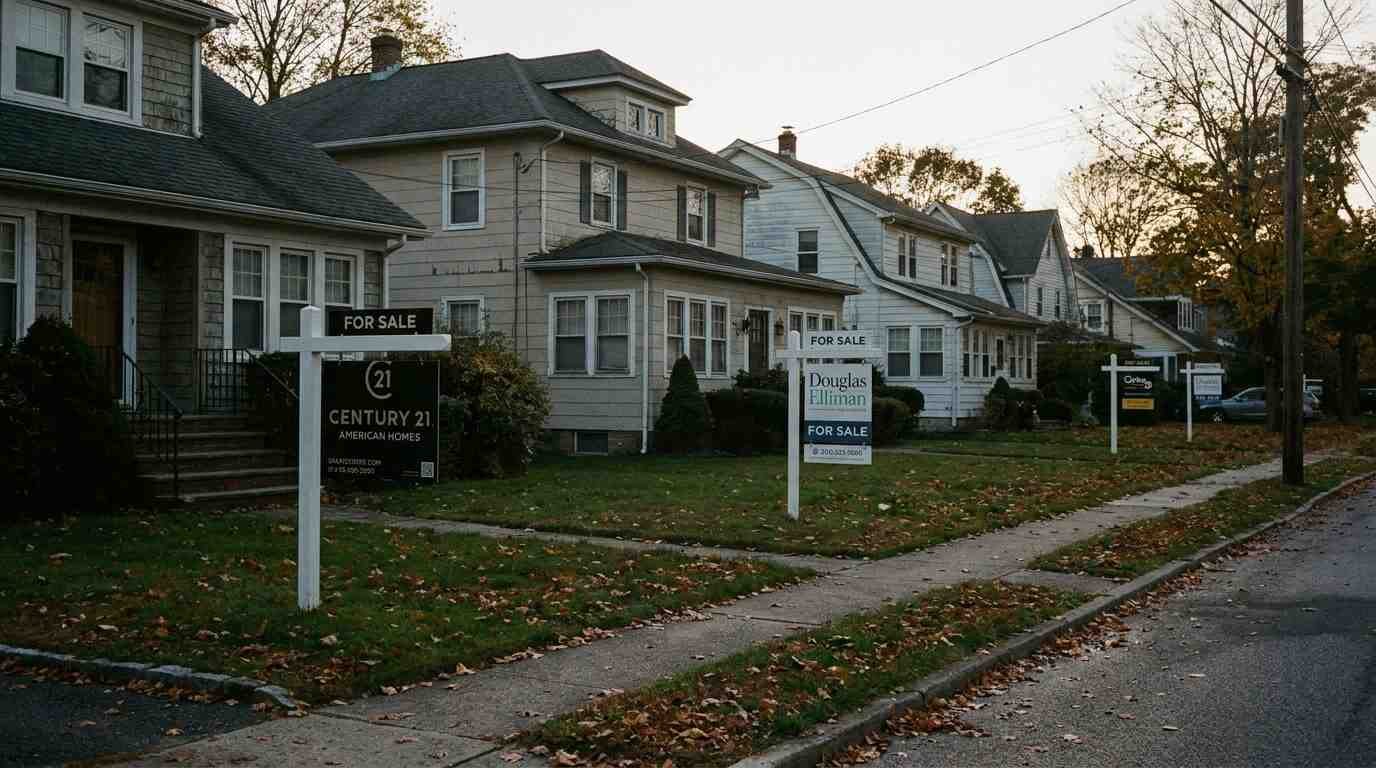
Every housing conversation eventually arrives at the same binary: is it a buyer’s market or a seller’s market? The question is useful shorthand. It is also, increasingly, the wrong question — because on Long Island in mid-2026, a number of neighborhoods don’t clearly fit either label, and the mismatch between the labels and the reality is causing real problems for people trying to make real decisions.
The condition that’s actually describing large swaths of the market right now has no standard name in consumer real estate coverage. Housing economists have been writing around it for two years. Fortune characterized it bluntly: “the U.S. housing market hasn’t been in decline, it’s been at a standstill.” HousingWire’s market analysis identified the specific mechanism in spring 2026 — inventory building while seller pricing stays anchored, producing a gap where negotiations are supposed to happen but largely aren’t.
Call it a stalled market, a frozen market, a locked market. The name is less important than understanding the mechanics — because they’re different from a buyer’s market and different from a seller’s market, and the decisions each condition calls for are different too.
What Makes This Condition Distinct
A seller’s market has too little inventory relative to demand. Prices rise. Homes sell quickly, often over ask. The buyer adjusts expectations or loses deals.
A buyer’s market has excess inventory relative to demand. Prices soften. Days on market climb. The seller either adjusts pricing or extends the listing.
A frozen market has something else: transaction volume collapses while prices don’t move much in either direction. Inventory exists. Buyers exist. But neither side is moving toward the other, and the bid-ask gap just sits there.
The underlying mechanism is the lock-in effect. Homeowners who bought or refinanced at rates below 4% are reluctant to move into a market where the going rate is roughly 6.25% to 6.5%, even when life circumstances — job changes, aging, family size shifts — would normally prompt a sale. According to Fortune’s April 2026 reporting on housing market dynamics, the share of homeowners holding rates below 3% is now approaching the share holding rates above 6%, a shift that may gradually ease the lock-in over time. But gradually is the operative word. For now, those sellers aren’t moving.
On the buyer side, the math is equally stubborn. Affordability improved for eight consecutive months through early 2026 as income growth outpaced price gains — but elevated rates still mean that a home priced at 2021 expectations requires a 2021 rate to pencil out. It doesn’t pencil out. So buyers wait, or shop selectively, or walk.
The result: volume. The number of closed transactions drops sharply, even as listed inventory and asking prices stay roughly flat. The market isn’t going up. It isn’t going down. It’s just grinding.
How This Plays Out on the North Shore
Long Island’s North Shore has the lock-in effect working particularly hard. The region attracted significant pandemic-era buying activity at historically low rates, with buyers stretching budgets on the assumption that those rates were the new normal. Many of those owners now sit on fixed-rate mortgages in the 2.75% to 3.5% range and face a real financial penalty for selling — not because the market has turned against them, but because trading up would mean absorbing roughly double the carrying cost on whatever they buy next.
At the same time, the buyers who should be buying now — move-up buyers, relocation buyers, life-change buyers — are often the same people. They want to buy but can’t afford to sell first.
The neighborhoods where this manifests most visibly are the ones with a concentration of 2020–2022 purchasers: established mid-tier communities where inventory was always reasonably thin and where sellers set expectations based on the frenzied market those buyers came from. When those expectations meet 2026 buyers who are doing their own rate math, the gap doesn’t close fast.
What the Labels Actually Get Wrong
The buyer/seller binary implies that someone has leverage. In a frozen market, the leverage question is harder to answer — and the answer tends to shift deal by deal, property by property.
A home priced accurately for current conditions still moves. According to HousingWire’s 2026 spring market tracking, buyers remain active but selective, and homes priced correctly and presented well are finding buyers even as overall transaction volume stays depressed. The market isn’t uniformly frozen; it’s frozen at the pricing layer that hasn’t recalibrated.
For sellers, this means that the comps from 2022 and 2023 are not reliable anchors. Days on market in a frozen market aren’t a sign of something wrong with the house — they’re a sign of a pricing expectation that hasn’t met the current market’s clearing price. The homes sitting longest are almost always priced to a different moment.
For buyers, a frozen market creates opportunity that a straightforward buyer’s market doesn’t. Sellers who are genuinely motivated — life circumstances, estate situations, job relocations — exist in any market. In a frozen market, those sellers are often more negotiable than they’d appear, because they’re surrounded by comparable listings that aren’t moving either. A well-prepared, pre-approved buyer who shows up with a clean offer and a realistic read on the property is a rare thing in a stalled market. That scarcity has value.
The Negotiating Logic Is Different
In a seller’s market, the buyer’s primary tool is speed and certainty. In a buyer’s market, the buyer’s primary tool is price pressure. In a frozen market, the tool is patience layered with precision.
Lowballing doesn’t work well here. Sellers in a locked market have typically already decided they’d rather not sell than capitulate to a price that feels like a loss — even if the rational analysis says they should move on. An aggressive offer triggers that psychology and often ends the conversation. A well-reasoned offer, anchored to specific comparable data and presented with a short explanation of the buyer’s logic, lands differently. It gives the seller something to respond to rather than something to reject.
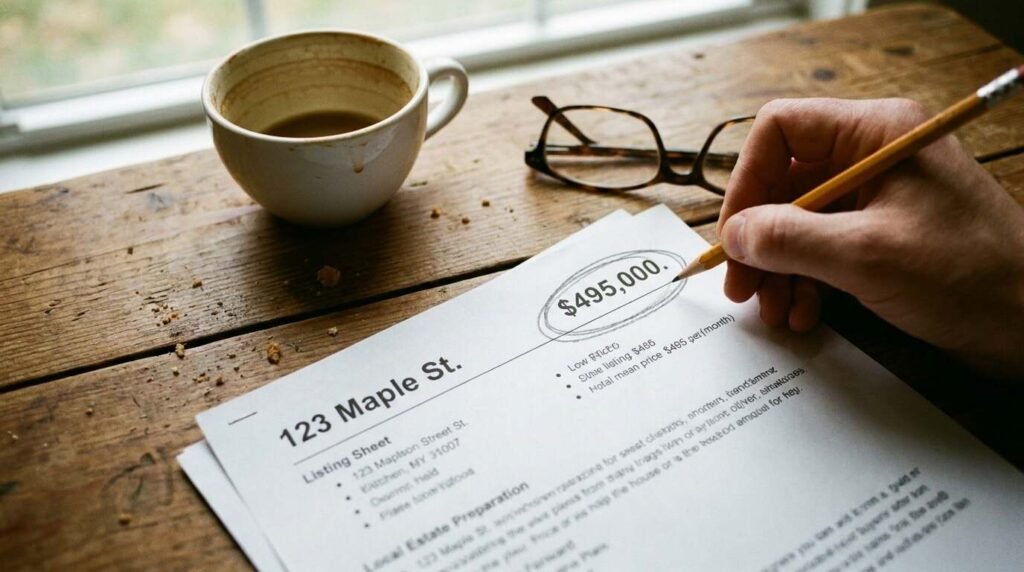
Credits and repairs take on more significance in a frozen market because they’re often the mechanism through which a realistic price is reached without either party having to publicly acknowledge it. A $15,000 repair credit after inspection effectively adjusts the price by $15,000 without touching the contract number — a face-saving structure that both sides have reason to accept.
For sellers, the strategic insight is simpler: in a frozen market, the listings that sell are almost always the listings that are priced where the buyer’s analysis lands, not where the seller’s memory says it should be. The gap between those two numbers is where deals die.
What “Wait It Out” Actually Means
The advice to wait tends to assume that waiting moves you from a disadvantaged position to a better one. In a frozen market, that assumption doesn’t always hold.
For sellers: waiting for rates to drop assumes rates will drop enough to change the buyer calculus significantly. That may happen. It may not, or may not happen on any predictable timeline. Meanwhile, carrying costs, maintenance, and opportunity cost accumulate. The National Association of Realtors revised its 2026 forecast to a more modest 4% price increase nationally, down from earlier projections, citing higher-than-expected rates. J.P. Morgan’s housing research projected prices essentially flat for 2026. A frozen market, by definition, doesn’t reward holding for appreciation that isn’t coming.
For buyers: waiting assumes that conditions will meaningfully improve. In supply-constrained markets like Long Island’s North Shore, inventory doesn’t typically flood in when rates ease — the lock-in sellers are rate-sensitive, meaning they emerge gradually, not all at once. The buyer who waits for a broader correction in a structurally undersupplied market often waits through an opportunity and arrives at a different problem.
The frozen market doesn’t favor one side. It requires both sides to be precise about what they actually want, what the current data supports, and whether the gap between those two things is bridgeable. That’s harder than winning a bidding war or grinding a seller down. But it’s what the third condition actually demands.
Real estate markets change. For current listings and market data, contact Maison Pawli at maisonpawli.com/about/.