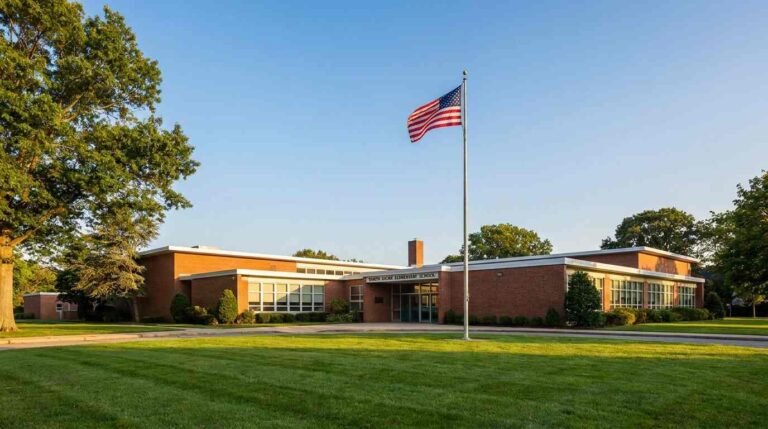
A Long Island School District Just Voted to Cut Its Arts Program Mid-Year — And the Community Response Was Immediate
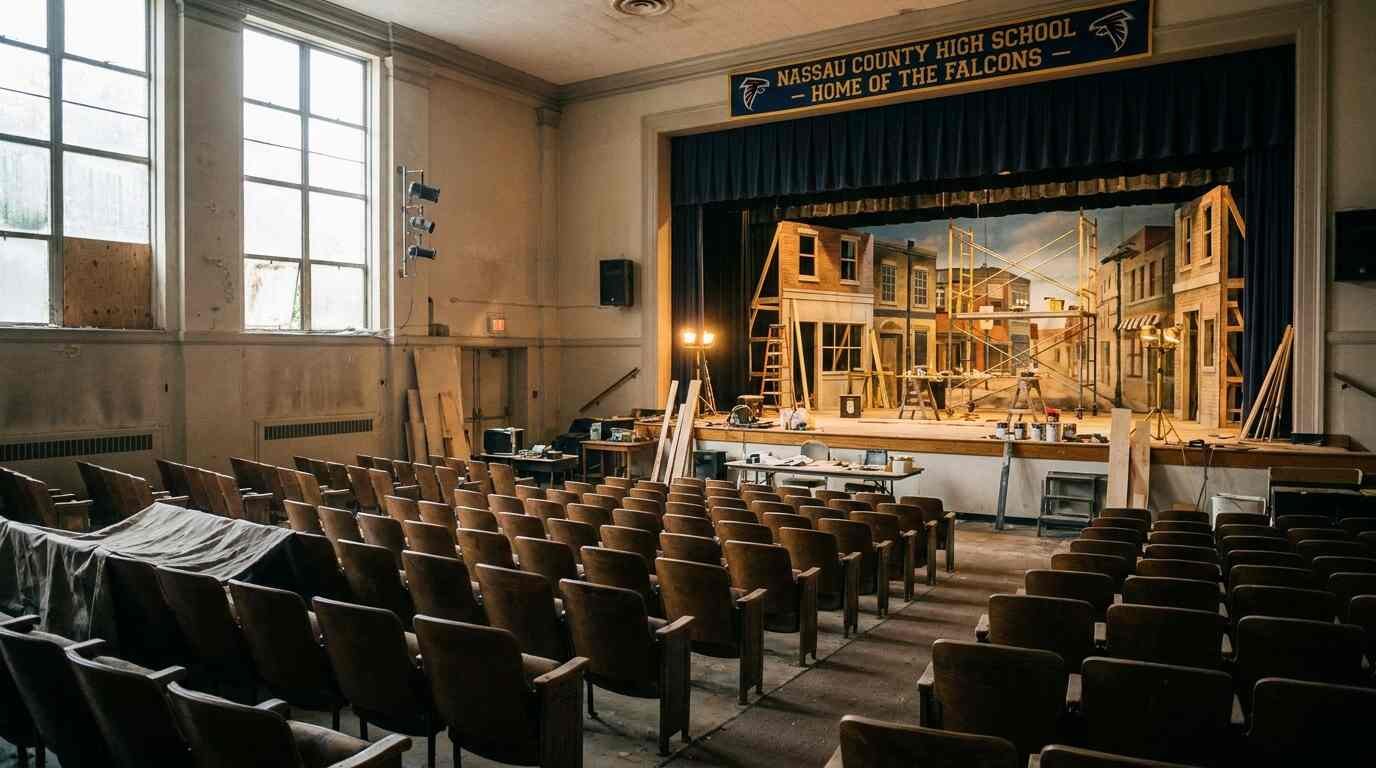
Budget math doesn’t lie. But it also doesn’t care about the kid who showed up to school for the first time all week because of play rehearsal.
Mid-year cuts have a different texture than budget-season cuts. When a district eliminates positions in June, the school year is over. The students have dispersed. The teachers have time to find something else. The board can use the summer as a buffer between the decision and its consequences. When a district votes to gut a program in the middle of the school year — after students have already enrolled, after teachers have already signed contracts, after a play is already in rehearsal — the damage is immediate and specific and falls on people who can see it happening.
A Long Island school district voted to eliminate or substantially reduce its arts programming mid-year in 2026. The vote passed. The community response was not gradual.
There is a pattern here worth understanding. It predates this district and it will outlast it.
What the Board Actually Voted On and What the Numbers Say
The specifics matter more than the abstraction. A district that eliminates one music teacher position is different from a district that shutters its entire visual arts curriculum. The dollar figure being saved matters. The number of students affected matters. The timeline matters — whether affected teachers receive proper notice, whether students mid-course get any transition path, whether the program is cut with the understanding that it can be reinstated or with the understanding that it can’t.
The Long Island school budget structure creates this situation reliably. New York’s tax cap regime limits how much districts can grow their levy each year. When state aid doesn’t keep pace with inflation — and the Nassau-Suffolk School Boards Association has said explicitly that it hasn’t — districts face a sequence of choices that always arrives at the same place: administrative overhead, which nobody will cut because it governs the people making the cuts, or programs, which are visible and thus cuttable. The arts are programs. The arts get cut.
School boards are not composed of people who hate art. That needs to be said. Most of them are parents. Most of them have kids who take the classes they’re eliminating. The vote is not about aesthetics. It is about what happens when you’ve deferred the structural fix long enough that there is no good option left on the table, only a set of bad ones, and you pick the one that you think the fewest people will hold against you at the next election.
They are usually wrong about that.

Who Showed Up to Fight It — and What They Said
The public comment period before a board vote on something like this tells you everything about a community that the demographic data won’t.
What you typically find at these meetings is a coalition that surprises the board by its breadth. The theater kids and their parents, expected. The orchestra parents with their instrument cases parked in the hallway, expected. The visual arts students who have never spoken at a board meeting in their lives, unexpected. The retired teacher who taught the art teacher now being eliminated, unexpected. The business owner on Main Street who says — directly, sometimes combatively — that the kids coming out of districts with arts programs are better employees, unexpected.
The argument that consistently lands hardest is the one about access. Private music lessons on Long Island cost money. After-school enrichment programs cost money. The private studios, the Saturday programs, the summer intensives — all of them cost money that not every family in every Long Island district has. The school arts program is, for many students, the only arts program. When it goes, it doesn’t get replaced by a private alternative for those kids. It just goes.
The counter-argument at these meetings is always the same: the district has a legal obligation to fund core academics, and arts, whatever their value, are not core in the way that math and reading are core. That argument is legally sound. It is also not a description of what education is for. The people making it know that. They make it anyway because there is nothing else to say when the money isn’t there.
How Mid-Year Cuts Differ From Budget Season Cuts
The contracts issue is the one that most people outside the field miss. Teachers are hired under agreements that specify the terms of their employment, including the duration. A mid-year cut can trigger a breach-of-contract claim if the district doesn’t handle the notice period correctly. In New York, the specific rules around teacher tenure and involuntary separation are complex enough that districts typically involve counsel before any mid-year reduction-in-force action.
For the students mid-course, there is no equivalent legal protection. A student in the middle of a semester-long studio art class or a full production rehearsal has no contractual claim to completion of the program. The district can stop the program. The student absorbs the disruption as a fact of institutional life, which is something students in well-funded districts rarely experience and students in underfunded ones experience regularly.
The psychological literature on program elimination mid-year is not extensive — this isn’t a widely studied phenomenon in the academic sense — but the anecdotal record from educators is consistent: the disruption registers differently than an end-of-year cut would. It communicates something to the students about what the institution thinks of them. Whether or not that was the board’s intent is beside the point. The communication happens.
What Happens to the Teachers and Students Affected Right Now
The teachers, if tenured, have procedural protections that make immediate termination difficult. Non-tenured teachers have less recourse. Either way, the practical reality of a mid-year cut in a specialized area like music or visual arts is that the job market for those positions doesn’t have a lot of openings in April or May. The neighboring districts are fully staffed. The private sector options for music teachers are limited. The pipeline between “arts teacher receives notice” and “arts teacher finds equivalent employment” is longer and harder than the board resolution makes it sound.
For students in the final stretch of a production — and it is always the final stretch, these cuts seem to land right before the performance — the situation is acute. The show doesn’t go up. The portfolio doesn’t get finished. The audition tape for a summer program doesn’t get made. None of those consequences appear in the financial analysis the board received when they voted. They only appear in the lives of the people affected, which is a different kind of ledger.
That’s Pawli’s observation as much as mine. She’s shown enough houses to families relocating to Long Island to know that the school district question is always one of the first ones asked. Not just the test scores. The whole picture — the extracurriculars, the arts programs, the sense of a school community that’s more than a test-prep machine. Families buying in these districts are buying into an implied social contract. Mid-year program eliminations are a signal about how that contract is being kept. I’ve written before about what school districts actually do to price per square foot in Suffolk County — the connection is real and buyers feel it before they can name it.
Why This District Won’t Be the Last One Having This Conversation This Year
The 2026 budget season across Long Island is running against the same constraints it has for the past several years: state aid that hasn’t kept pace with post-pandemic inflation, property tax caps that limit levy growth, and enrollment patterns that don’t match historical funding assumptions. The South Country School District, in a prior budget cycle, proposed eliminating 51 positions to stay cap-compliant. Elwood UFSD went to a revote after failing to pass its budget, cutting positions in security, clubs, and teaching staff through attrition. These are not anomalies. They are the recurring output of a structural mismatch between how New York funds its schools and what those schools actually cost to run.
Arts programs are consistently at the front of the line when positions need to be eliminated, for a reason that has nothing to do with their educational value and everything to do with how they’re classified. They’re electives. They’re specialist positions rather than core classroom assignments. They’re easier to eliminate without triggering state-mandated minimums. And they’re disproportionately concentrated in the districts that are most budget-constrained to begin with, because the districts that have money have found ways to protect them.
The communities that fight back at these board meetings are not wrong. They are also not always successful. The board has a fiduciary obligation and a legal framework and a set of numbers that say what they say. What the community brings to the mic is a different set of numbers — the ones that describe what school is actually for.
Both sets of numbers are real. Only one of them fits on a budget slide. That’s the problem.
Schools are where a kid finds out what she’s good at. Sometimes that’s algebra. Sometimes that’s the way she moves across a stage. The district that cuts the arts program mid-year didn’t decide she wasn’t worth it. They decided they’d run out of better options. The distinction matters, even if it doesn’t change what she loses.
flags unresolved.]
You Might Also Like
- Best School Districts in Suffolk County and What They Do to Price Per Square Foot
- Long Island School Districts: A Realistic Guide for Families Moving from NYC
- Why Cold Spring Harbor’s School District Is the Secret Engine Behind Its Real Estate Prices
Sources
- New York State School Boards Association — Budget Vote Tracking
- News 12 Long Island — Long Island district revotes (Elwood, Shelter Island)
- Long Island Press — Great Neck 2026-27 budget vote
–