What It Costs to Keep a Boat on Long Island’s North Shore
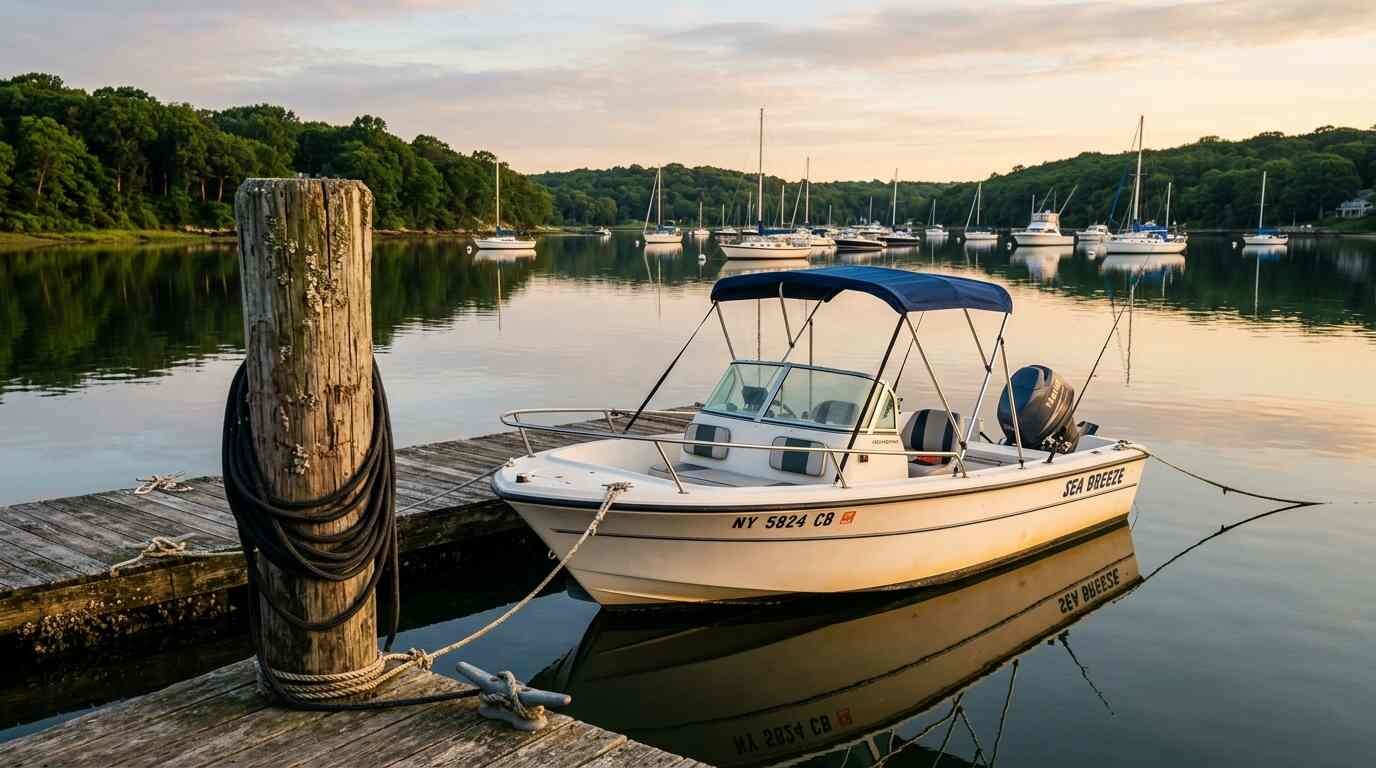
A seasonal berth at Brookhaven’s Port Jefferson Marina carries a posted resident rate of $130 per foot, with a minimum charge of $2,340, and in the worked example further down that single line turns out to be the largest recurring cost of keeping a boat on the North Shore.
Most of the figures that circulate online about the cost of owning a boat on Long Island come from national averages or from marinas on other coasts. The numbers here are drawn instead from the town, state and club pages that actually govern a boat kept in Port Jefferson, Mount Sinai or Huntington, with national insurance guides filling in where no local figure exists. Several municipal pages carry no posting date, so each price is treated as a snapshot as published during research on October 4, 2026, and the arithmetic is shown wherever a per-foot rate is multiplied by a length.
Town slips in Brookhaven and Huntington
Brookhaven’s Town Clerk issues seasonal slip leases at five Town marinas: Corey Creek in Blue Point, Forge River in Mastic, Mount Sinai at Cedar Beach, Port Jefferson, and Sandspit in Patchogue. Leases are open only to Town of Brookhaven residents. The boating season starts on the second Saturday of May and ends on the first Sunday in November, and boats may not stay in the marina after that Sunday. Current leaseholders have until February 1 to renew; miss it and the lease is forfeited, which sends the boater back to the waitlist. The Clerk’s FAQ adds that the Town requires New York State registration, and that a boat over 40 feet cannot be leased a slip without written permission from the Parks Commissioner.
At Port Jefferson Marina, the Town’s facility page lists the seasonal berth at $130 per foot for residents, with a $2,340 minimum (the equivalent of an 18-foot boat), and $164 per foot for commercial users. Resident transient rates run $7 per foot per day for boats up to 49 feet, with weekly flat rates from $360 to $825 depending on length; non-residents pay $7.50 per foot per day. The page carries no date, so the rate should be confirmed with the Town Clerk before a budget is built on it.
Huntington operates three marinas, Halesite, Mill Dam and Woodbine, although the Town’s boating page lists Woodbine as out of service. Annual slip fees are $120 per foot for boats 20 feet and under and $130 per foot for boats 21 feet and longer. Joining the waitlist means appearing in person at the Harbormaster’s Office in Halesite with a New York driver’s license and the boat registration, paying a non-refundable $100, and owning a boat; applications from non-owners are no longer accepted. The page says waits depend on the marina and slip size: boats under 20 feet are typically placed within a couple of months to a year, while waits for larger boats currently average five to six years. For a 24-foot boat that points away from a town slip in the first few seasons, which makes the mooring and private-marina options below more than an afterthought.
Multiplied out, an 18-foot boat at Brookhaven’s rate comes to $2,340, a 24-foot boat to $3,120 and a 30-foot boat to $3,900. Huntington’s schedule produces $2,400 for a 20-footer, $3,120 for 24 feet and $3,900 for 30 feet. Those are arithmetic from posted rates, not quotes, and they leave out electric, parking and any fee the pages do not itemize. Brookhaven’s FAQ notes that everyone using the marina lots must buy the Town’s virtual parking pass.
The legal difference between a dock, a slip and a mooring, and what each one means when a waterfront house changes hands, is covered in Dock Rights, Mooring Rights, and the Difference.
Moorings: cheaper permit, more work for the owner
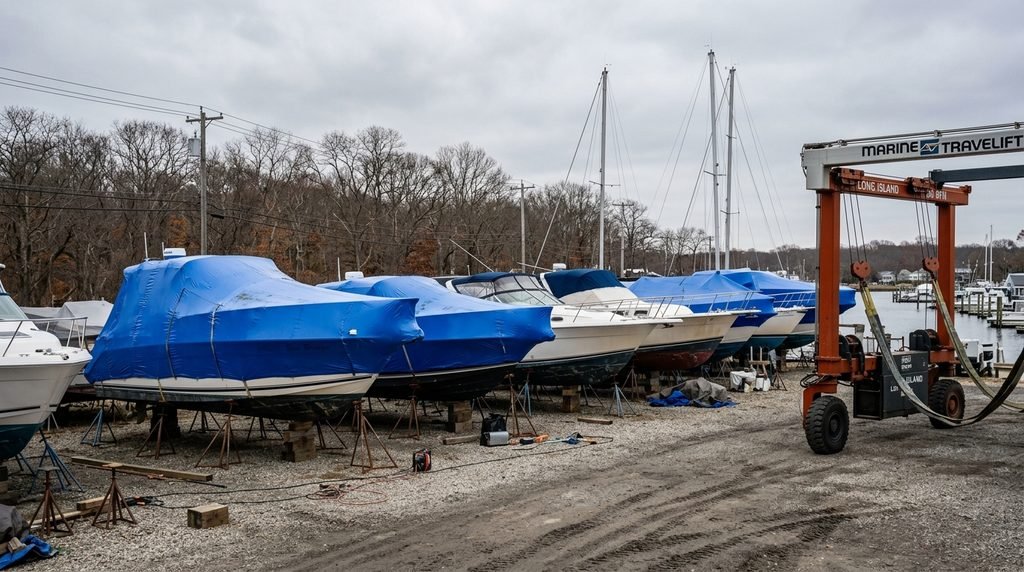
On paper a mooring costs a fraction of a slip. Brookhaven sells recreational mooring permits for Mount Sinai and Port Jefferson Harbors at $246 for residents and $575 for non-residents, with a $360 commercial permit, a $329 gap between the two recreational tiers. The Mount Sinai Harbor season runs from March 1, or the date of issue, through November 30; Port Jefferson Harbor’s runs through December 15. Permits go to new applicants first come, first served, and online sales for the 2026 season opened in February.
The permit covers the right to place a mooring and nothing more. Boaters buy their own tackle, which must meet Town specifications and pass inspection before it goes into the harbor, and the Town’s page names local firms that sell new or used gear. A boat sitting off the shore also needs a launch to reach it, and the same page lists fee-based launch services in Mount Sinai Harbor, Port Jefferson Harbor and Setauket Harbor. None of those prices appear there. The $246 resident permit is therefore $2,874 below the 24-foot slip figure above, but the real gap is narrower by an amount the public pages do not reveal.
Rules differ by town, and some exist because of what happened to abandoned vessels. Huntington’s Town Board approved a mooring permit program in June 2019 after the Town spent $50,000 removing derelict and abandoned boats in 2018, as reported by the Times Beacon Record. The stated purpose was to “prevent irresponsible boat ownership and irresponsible boating,” and permit revenue was earmarked for a database that would let the Town identify the owners of abandoned boats and hold them responsible. The fee amounts reported then are seven years old and should not be read as current.
Boat insurance: national ranges, no local figure
No Long Island boat insurance figure turned up in the research, so the ranges below are national. GEICO’s boat insurance guide puts averages at around $300 a year in low-cost states, about $400 in mid-cost states and roughly $650 in high-cost states, and its FAQ gives a general span of $300 to $600. Ramsey Solutions cites $200 to $500 a year for typical boats, rising to roughly 1 to 5 percent of value for a big, powerful or expensive one. GEICO names boat type, value, age and horsepower, along with how and where the boat is used, as the main drivers of the rate.
The choice with the largest effect on a claim is the valuation basis. An agreed value policy pays a figure set at the start if the boat is totaled, usually at a higher premium, while an actual cash value policy costs less but reimburses only the depreciated market value at the time of loss, per GEICO. Ramsey Solutions calls liability the most important coverage type. Lenders bring their own requirements as well; one boat-storage company’s guide says most require at least comprehensive physical damage coverage and some specify agreed value.
What a given policy says about wreck removal, navigation limits or winter storage is a question for the insurer, and general guides like these cannot settle it.
Registration, titling and the safety certificate
New York requires registration for any boat with a motor, electric or fuel-driven, regardless of the size of the boat or the motor. Boats without a motor are exempt. Registrations last three years, and the DMV’s fee depends on length:
| Boat length | 3-year fee | Annual equivalent |
|---|---|---|
| Under 16 feet | $22.50 | $7.50 |
| 16 feet to under 26 feet | $45.00 | $15.00 |
| 26 feet or longer | $75.00 | $25.00 |
A $50 title fee may also apply, depending on the boat’s age, size and whether it was registered in New York before. The DMV issues titles for boats of model year 1987 or newer that are at least 14 feet long and registered in New York State; boats documented with the U.S. Coast Guard do not receive a state title. Beginning in 2025, every motorboat operator in New York, regardless of age, needs a boating safety certificate from an approved course.
Winter storage
Because Brookhaven’s town marinas empty out after the first Sunday in November, a boat on a town slip needs somewhere else to spend the winter. One published North Shore data point comes from the boatyard at Seawanhaka Corinthian Yacht Club, a Nassau County club, whose 2026/2027 winter storage sign-up lists per-foot rates by membership class. Club and winter members pay $56.51 per foot if they sign up by September 15 and $59.91 after that date. Boatyard members pay $66.29 per foot before September 15 and $69.79 afterward, plus $150 in annual boatyard dues. A winter membership costs $900 for the season. With the September deadline now past, a 24-foot boat works out to about $1,438 at the member rate, or about $1,675 at the boatyard-member rate plus the $150 dues, for roughly $1,825.
The sign-up form does not say what the per-foot rate includes or how length is measured, and a yacht club’s schedule is not a market average. It shows the order of magnitude a North Shore boatyard publishes, and little more.
Covers are a separate line. One boat-marketplace guide estimates winter shrink wrap at $17 to $19 per foot at regional shops, which for 24 feet would be $408 to $456, and the same guide notes BoatUS’s caution that shrink wrap limits airflow below deck. That estimate is not specific to Long Island. How the type of water a boat sits in changes maintenance spending is examined in Sound vs. Bay vs. Harbor.
A worked example: a 24-foot boat on a Brookhaven town slip
The table below adds the published figures for a hypothetical 24-foot motorboat owned by a Brookhaven resident and kept at Port Jefferson Marina, assuming a slip is actually available. It is arithmetic from the rates described above, not a quote, and every line has the caveats already given.
| Line item | Published figure | 24-foot result |
|---|---|---|
| Seasonal slip, Port Jefferson Marina | $130 per foot | $3,120 |
| State registration (16 to under 26 feet) | $45 every 3 years | $15 per year |
| Insurance, national guide ranges | $300 to $600 per year | $300 to $600 |
| Winter storage, yacht club boatyard (after Sept. 15) | $59.91 per foot, or $69.79 plus $150 dues | $1,438 to $1,825 |
| Total | about $4,900 to $5,600 per year |
Swapping the slip for a $246 Mount Sinai or Port Jefferson mooring permit lowers the first line, but tackle, inspection and launch service would be added back at prices the Town does not publish.
What the example leaves out
The total above covers four lines of a much longer ledger. It does not include the purchase price or sales tax, financing interest, fuel, engine service, winterization labor, haul-out and launch charges where they are not bundled into storage, shrink wrap, a trailer, parking passes, pump-out or electric charges, or depreciation. Any one of those can rival a line in the table, and the purchase price and loan terms usually outweigh all of them combined in a boat’s first year.
Questions to settle before buying
- Which marina, town lease or mooring will hold the boat, and what is the realistic wait?
- Does the lender require agreed value or replacement cost coverage, and what does the policy say about wreck removal and navigation area?
- Does the boat need a New York registration, a title, or both, and has the operator completed an approved safety course?
- Where will the boat spend the winter, and what does the yard’s rate actually include?
- Which figures in the budget are posted prices and which are estimates from guides that are not specific to Long Island?
Frequently asked questions
Do all boats need to be registered in New York? Boats with a motor must be registered regardless of size. Boats without a motor are not required to be, according to the DMV.
How long does a New York boat registration last? Three years. The fee ranges from $22.50 to $75 depending on length.
Can non-residents lease a Brookhaven town slip? Seasonal leases are limited to Town of Brookhaven residents. Transient slips are available to residents and non-residents.
When do boats have to leave Brookhaven’s town marinas? After the first Sunday in November.
What does a mooring permit cost in Mount Sinai or Port Jefferson Harbor? The Town lists $246 for residents and $575 for non-residents, plus the cost of the owner’s own mooring tackle.
Is agreed value or actual cash value coverage cheaper? Actual cash value is generally cheaper, but it pays only the depreciated value of the boat at the time of loss, according to GEICO.
This is for informational purposes only — consult a licensed attorney or financial advisor for your specific situation.
Real estate markets change. For current listings and market data, contact Maison Pawli at maisonpawli.com/about/.
You Might Also Like
- Dock Rights, Riparian Claims, and the Fine Print: What Waterfront Buyers on Long Island Sound Actually Own
- Holding Back the Sound: The Brutal Economics of North Shore Bulkheads
- What Makes a Long Island Waterfront Listing Worth the Premium — And How to Tell If It Is
- Flood Insurance on Long Island’s North Shore: What FEMA Maps Don’t Tell You About Sound-Facing Properties
Sources
- Town of Brookhaven, Seasonal Boat Slips: https://www.brookhavenny.gov/1196/Seasonal-Boat-Slips
- Town of Brookhaven, Port Jefferson Marina rates: https://www.brookhavenny.gov/Facilities/Facility/Details/Port-Jefferson-Marina-14
- Town of Brookhaven, Mooring Permits: https://www.brookhavenny.gov/825/Mooring-Permits
- Town of Brookhaven, Town Clerk Marina Boat Slips FAQ: https://www.brookhavenny.gov/Faq.aspx?TID=24
- Town of Huntington, Boating (marina slip fees and waitlist): https://www.huntingtonny.gov/content/13749/16439/16577/16581/default.aspx
- New York State DMV, Register a Boat: https://dmv.ny.gov/registration/register-a-boat
- GEICO, How Much Does Boat Insurance Cost?: https://www.geico.com/living/how-much-does-boat-insurance-cost/
- Ramsey Solutions, Boat Insurance Cost Guide: https://www.ramseysolutions.com/insurance/boat-insurance-cost-guide
- RecNation Storage, How Much Does Boat Insurance Cost?: https://www.recnationstorage.com/blog/how-much-does-boat-insurance-cost/
- Seawanhaka Corinthian Yacht Club, 2026/2027 Boatyard Winter Storage Early Sign-Up: https://form.jotform.com/262244204893154
- Boatzon, Boat Wrap Cost in 2026: https://boatzon.com/blog/?p=20089
- Times Beacon Record, New mooring rules in Huntington take effect: https://tbrnewsmedia.com/?p=98221