What Holiday Lights Cost on a PSEG Long Island Bill This December

A house that switches on its holiday lights at 4:30 in the afternoon on a December weekday starts them in the most expensive electricity of the day. PSEG Long Island’s standard residential rate, Rate 194, charges a higher price for every kilowatt-hour used from 3 p.m. to 7 p.m. on weekdays, except federal holidays, so lights switched on at 4:30 p.m. on a weekday start inside that window. Using the rates in force for November 2026, a kilowatt-hour during the peak costs about 2.3 times what the same kilowatt-hour costs after 7 p.m., and that ratio, after the choice of bulb, sets the size of a holiday lighting bill.
Long Island’s Standard Residential Rate
Rate 194 splits the day in two, and December’s dusk falls on the expensive side
PSEG Long Island’s 2026 residential rate booklet describes Rate 194, the “Time-of-Day, Off-Peak” rate, as its standard residential electric rate. A bill on that rate has two parts that change by the hour. The delivery charge, set in the booklet, runs $0.1885 per kilowatt-hour during peak hours from October through May and $0.0929 off-peak. The power supply charge, the cost of the electricity itself, is published monthly by the Long Island Power Authority and multiplied by a factor for each period.
LIPA’s Statement No. 119, effective November 1, 2026, sets the Rate 194 winter power supply charge at 30.4961 cents per kilowatt-hour during peak hours and 11.8612 cents off-peak. Added together, the two parts come to about 49.4 cents per kilowatt-hour on the peak and about 21.2 cents off it. Those figures leave out the daily service charge, taxes and the various adjustments that appear on a bill, so a real bill runs somewhat higher, but the ratio between the two periods is the useful number, and it holds at roughly 2.3 to 1.
The flat alternative, Rate 180, charges a single delivery rate of $0.1064 per kilowatt-hour in the winter months plus 100 percent of the monthly power supply charge, which LIPA’s November statement puts at 14.2906 cents. That comes to about 24.9 cents per kilowatt-hour regardless of the hour.
How Many Watts a Display Draws
Watts per bulb, from a federal fact sheet
The wattage figures below come from a 2013 holiday lights fact sheet published by the Western Area Power Administration and reproduced by Cornell Cooperative Extension. The sheet lists 6.0 watts for a standard incandescent C7 bulb, 0.48 watts for an incandescent mini-light and 0.08 watts for an LED C7 bulb, and a string of 280 LED mini-ice lights at 13 watts. Individual products vary, and the wattage printed on the box is the figure to trust for any particular string, but the fact sheet’s numbers are close enough to show the scale.
Three sample displays, using the fact sheet’s mini-ice figure for the LED minis:
- A modest LED display: 2,000 LED mini-lights and 125 LED C7 bulbs, about 103 watts in total
- The same display in incandescent: 2,000 incandescent minis and 125 incandescent C7 bulbs, about 1,710 watts
- A large incandescent display: 10,000 incandescent minis and 500 C7 bulbs, about 7,800 watts
The gap between the first two is roughly 17 to 1 for the same number of bulbs. The C7 bulbs account for most of it: 125 incandescent C7s draw 750 watts on their own, more than seven times the entire LED display.
The Season, Hour by Hour
Thirty-six nights, twenty-four of them with a weekday peak
The calculation runs from the Friday after Thanksgiving, November 27, 2026, through New Year’s Day, 36 nights. Twenty-four of those are weekdays that are not federal holidays, which are the days on which PSEG’s peak period applies. Christmas Day and New Year’s Day both fall on Fridays this year and are excluded from the peak by the rate’s own terms.
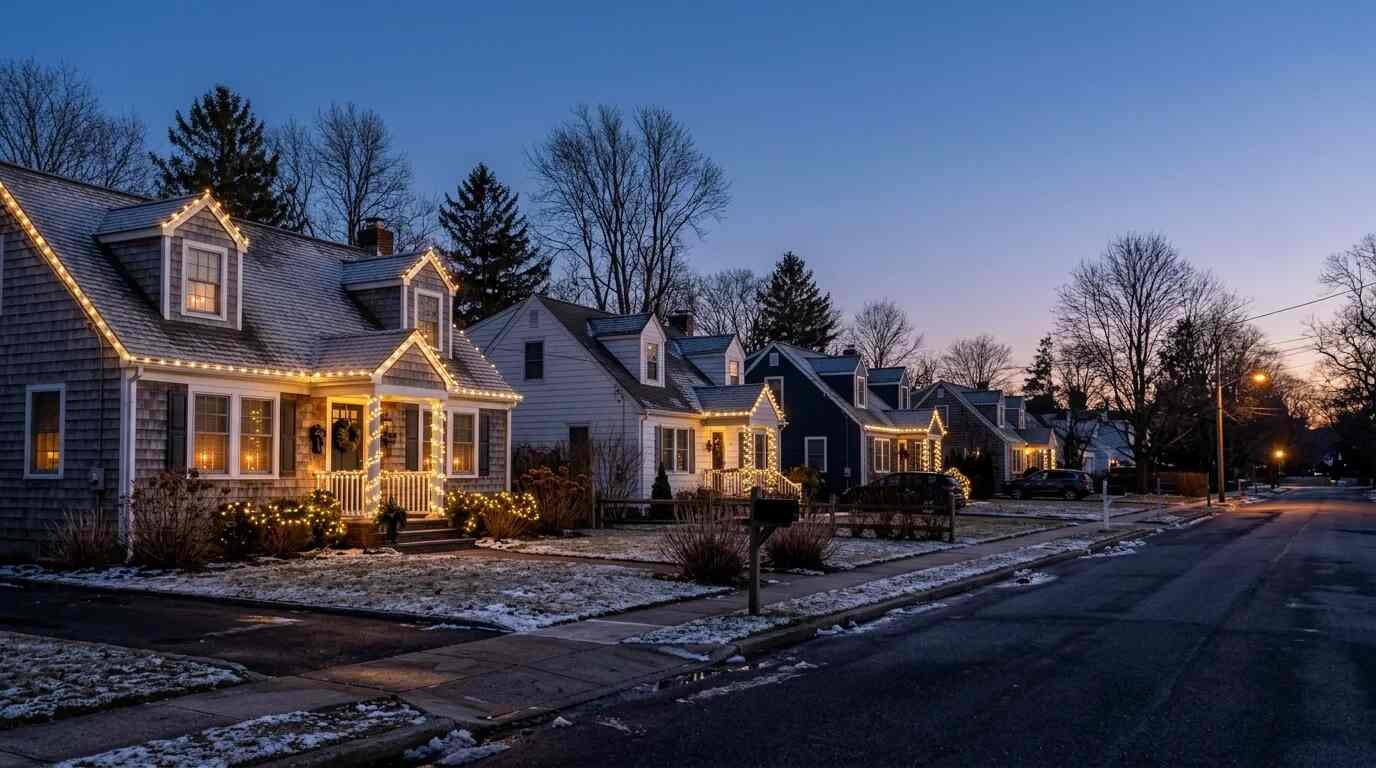
Two schedules make the comparison. In the first, the lights come on at 4:30 p.m. and go off at 11 p.m., six and a half hours a night, with two and a half of those hours falling in the peak on weekdays. In the second, a timer holds the lights until 7 p.m. and turns them off at 11 p.m., four hours a night, all off-peak.
Run through the November 2026 Rate 194 prices, the season’s electricity for each display comes out as follows, before taxes, adjustments and the fixed daily service charge:
- Modest LED display: about $6.83 lit at dusk, about $3.13 with a 7 p.m. timer
- Same display, incandescent: about $113.56 lit at dusk, about $52.08 with a 7 p.m. timer
- Large incandescent display: about $518 lit at dusk, about $238 with a 7 p.m. timer
In the dusk schedule, the peak hours account for about a quarter of the electricity and about 45 percent of the cost. Moving the start time to 7 p.m. cuts two and a half hours a night and moves every remaining hour to the cheaper rate, which together take the bill down by more than half.
The Flat-Rate Comparison
For a dusk-to-eleven display, the time-of-day rate costs more, but not by much
On the flat Rate 180 price of about 24.9 cents, the same 4:30-to-11 schedule would cost about $6.00 for the LED display, about $99.76 for the incandescent version and about $455 for the large display. Lit at dusk, the holiday lights cost roughly 14 percent more on Rate 194 than they would on a flat rate.
That gap is not a case for switching rates. A household’s whole bill depends on when it uses everything else, from the dryer to the dishwasher to an electric vehicle charger, and the off-peak price on Rate 194 runs well below the flat rate for every hour outside the weekday afternoon window. The holiday-lighting point is narrower: on the time-of-day rate, the hours between dusk and 7 p.m. are the expensive ones, and a display that waits for 7 p.m. avoids them entirely.
Taxes, Fixed Charges and Bulb Prices
Taxes, adjustments and the bulbs themselves
The figures above are the energy portion of the bill only. PSEG Long Island’s rate booklet notes that its listed rates do not include various adjustments, and sales tax is shown separately on the bill. The daily service charge, $0.56 a day on Rate 194, is the same whether the lights are on or off.
Nor does the arithmetic include the cost of the lights. An LED display costs more to buy than an incandescent one with the same bulb count, and a household weighing a replacement can set the energy difference, roughly $107 a season between the two dusk-schedule versions of the modest display, against the price of new strings. The weekend nights are another variable. On Saturdays and Sundays there is no peak period on Rate 194, so a display lit at dusk on a weekend pays the off-peak price for every hour.
For buyers and owners looking at the house itself, energy costs have been part of earlier Maison Pawli coverage, including winterizing a Long Island home before the first hard freeze and the questions to ask about an oil-to-gas heat conversion.
A Timer and a Label
The two cheapest moves are reading the box and setting the clock
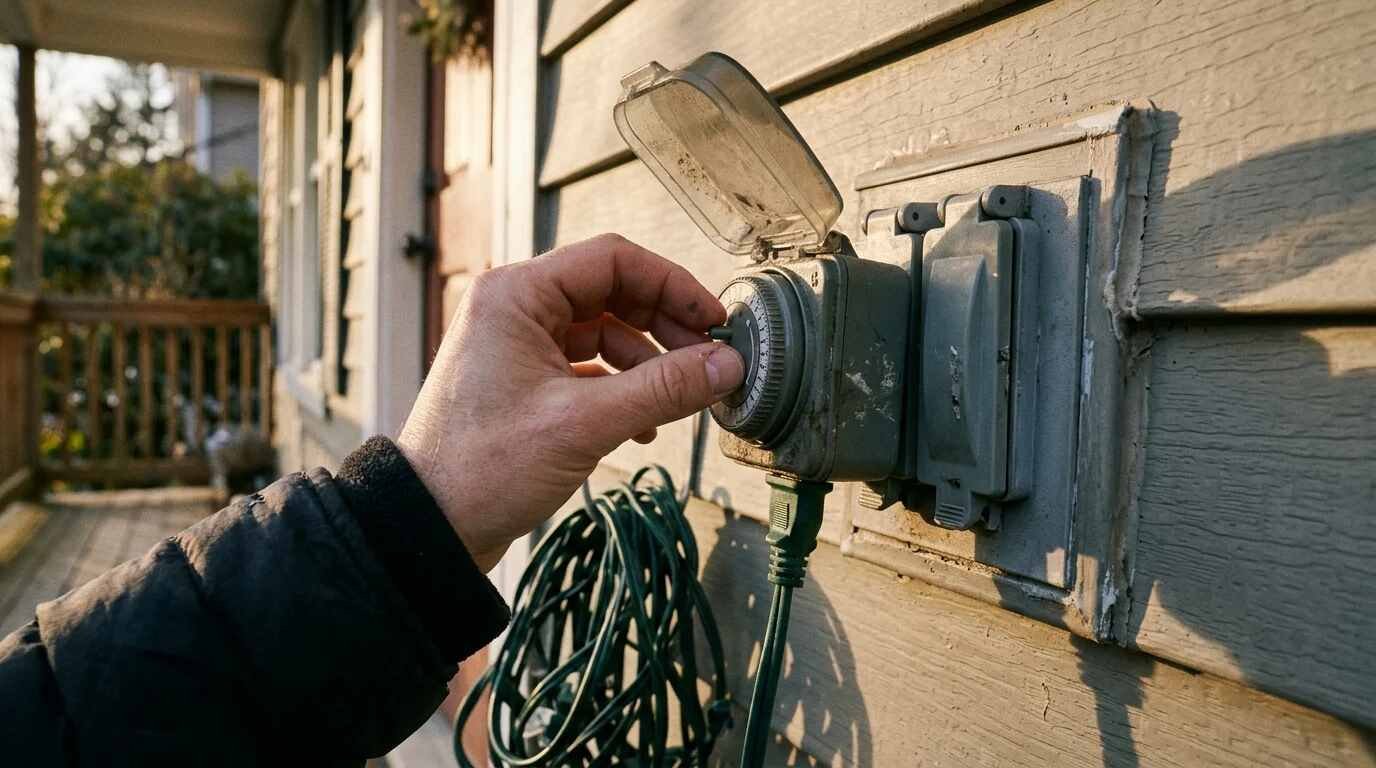
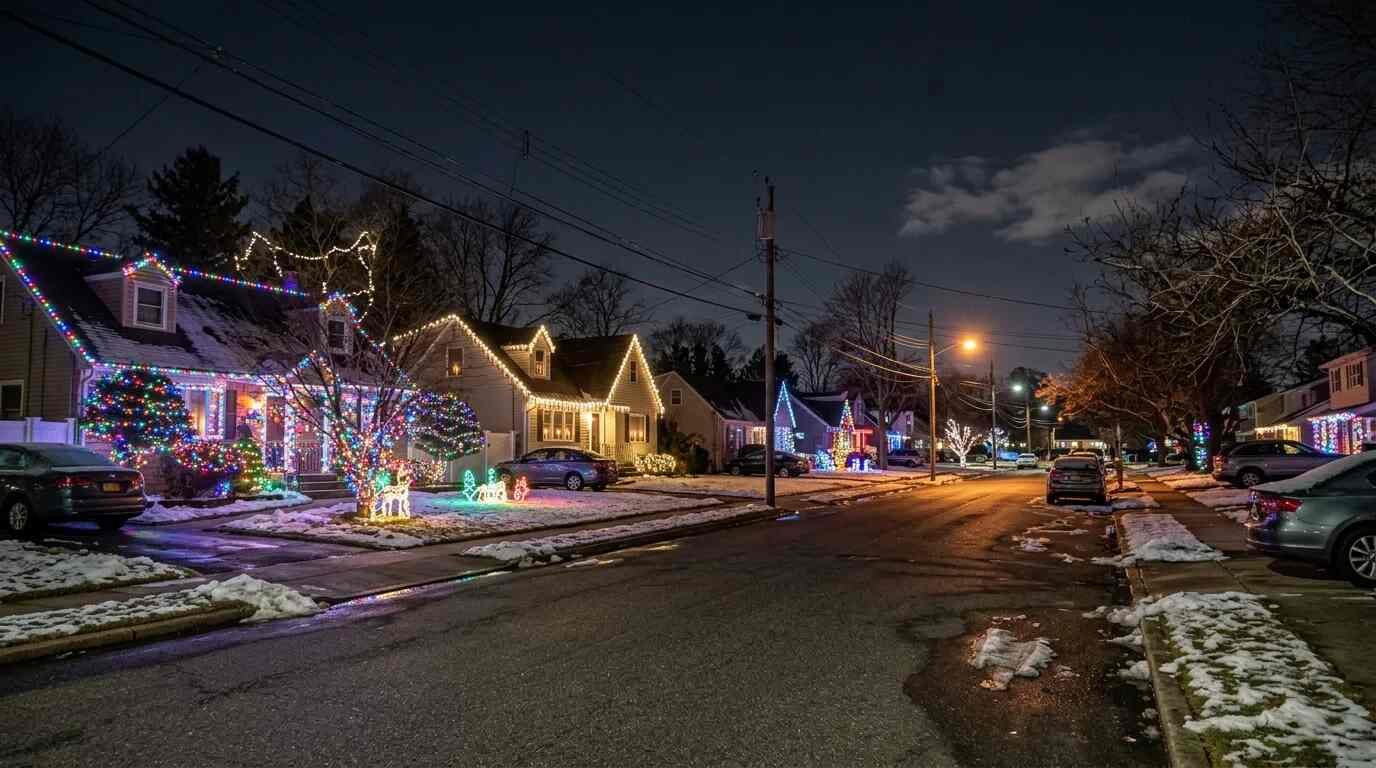
The first step is reading the wattage on each string before it goes up, because the difference between bulb types is the largest variable in the calculation. The second is a timer set to 7 p.m. on weekdays, which on Rate 194 moves the whole display off the peak price.
A display that comes on at 7 p.m. still runs four hours of December darkness every night. The neighbors walking the street after dinner, the cars coming home from the late train and the children who get taken out to look at lights after the dishes are done all see the same house.
You Might Also Like
- Ice Dams on Long Island Roofs: Prevention Before the Snow
- Gutters, Drains, and Grading: A Fall Water Checklist
- Holiday Season in Stony Brook Village and Setauket
Sources
- PSEG Long Island: Common Residential Electric Rates 2026 (rate booklet)
- Long Island Power Authority: Statement of Power Supply Charge No. 119, effective November 1, 2026
- Long Island Power Authority: Power Supply Charge statements
- Cornell Cooperative Extension Monroe County: Holiday Lights Fact Sheet (Western Area Power Administration)
This article is for general informational purposes only. Cost figures are estimates calculated from published PSEG Long Island delivery charges and LIPA’s November 2026 power supply charge; they exclude taxes, adjustments and fixed charges, and the power supply charge changes monthly. Actual costs depend on the specific lights, schedule and rate on a given account. For informational purposes only — consult a licensed attorney or financial advisor.