Inside The Hamlet Estates at St. James: The North Shore’s Only Guard-Gated Address
Most people hear “the Hamlet” and picture a golf course. That assumption misses what makes this particular community unusual. The Hamlet Estates at St. James was never built around eighteen holes. It was built around the gate.
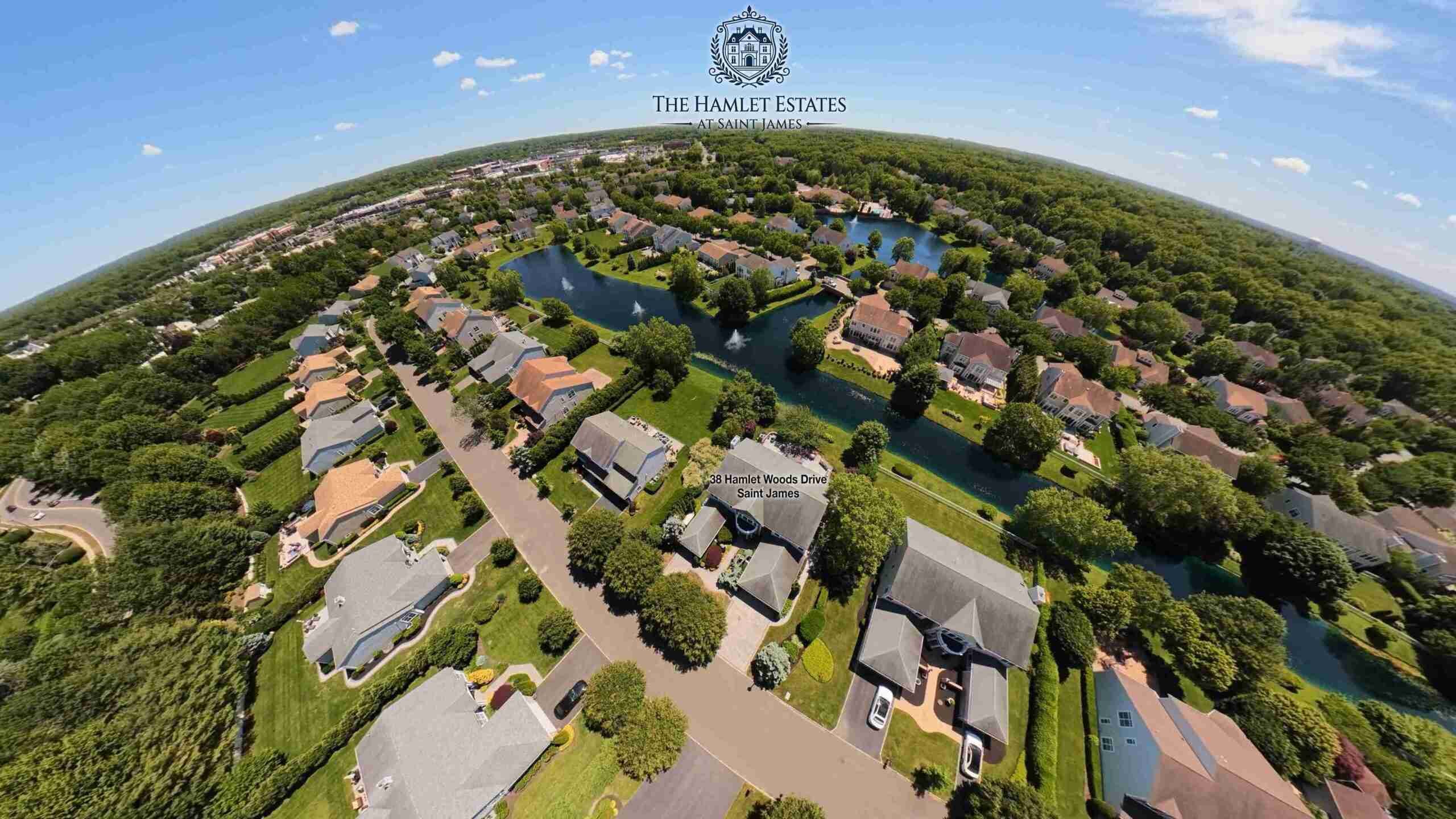
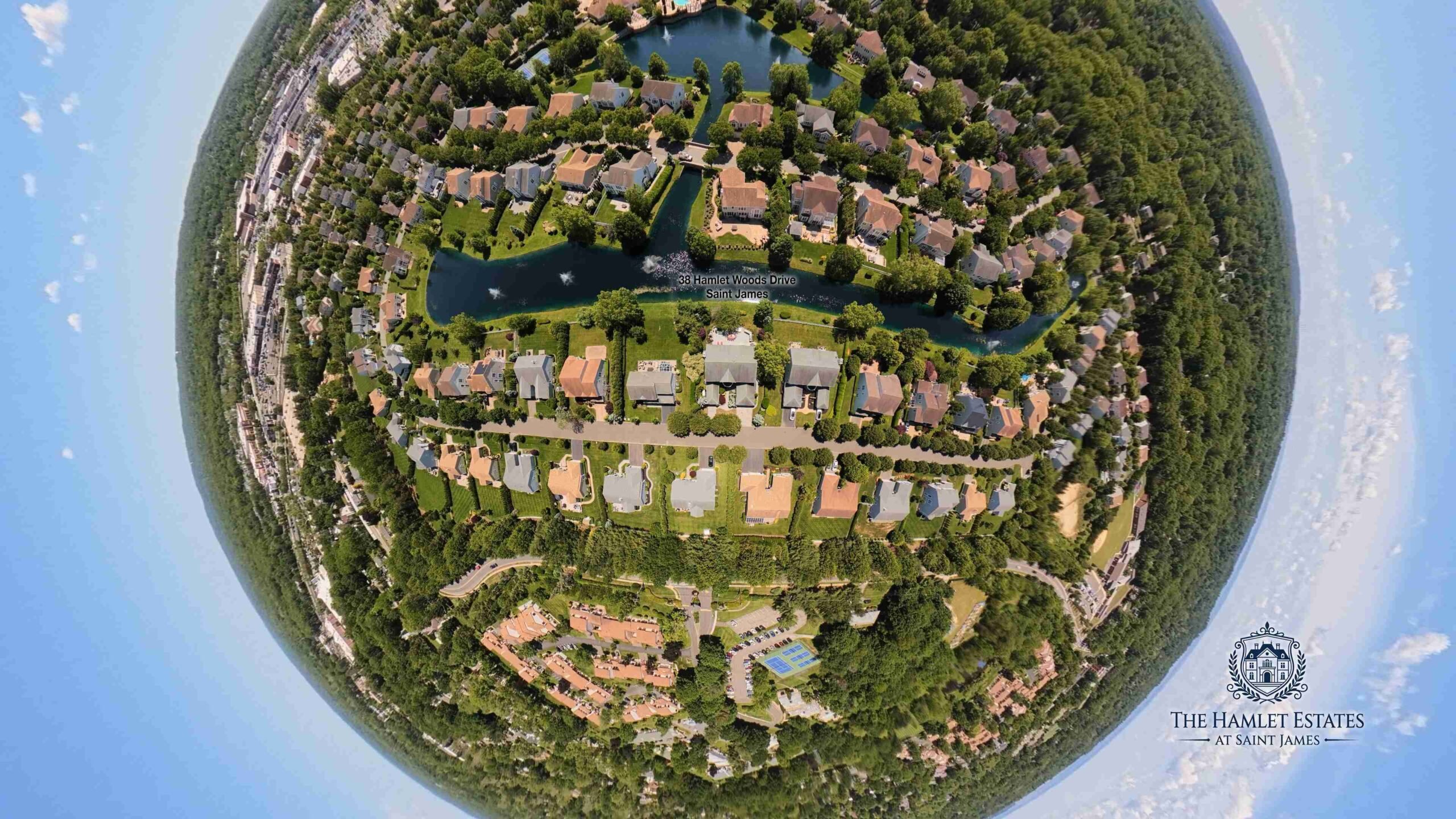
Tucked off Route 347 in the Town of Smithtown, the community occupies 149 acres that engineers carved into a clustered subdivision of 126 single-family lots, each running between a third and a half acre. The plan came from the Holiday Organization, the developer behind the broader Hamlet brand, and the technical work was handled by the firm Nelson + Pope, whose project records still describe the internal roadway system, the self-contained stormwater collection, and the individual sanitary systems that let the development sit as its own contained world inside an otherwise ordinary stretch of suburban Suffolk County. Construction began around 2008. Homes went up through roughly 2015.
What residents bought into was not a fairway. It was privacy with a staffed entrance, and on the North Shore that combination is rarer than it sounds.
The only guard-gated neighborhood in St. James
Gated communities exist across Long Island, but a guard at the gate — an actual person, around the clock — is a different tier, and area agents who work the Smithtown market describe The Hamlet Estates as the only guard-gated neighborhood in St. James. That distinction does a lot of quiet work. It shapes who looks here, what they expect, and how the homes hold their position in a town where most inventory is classic North Shore Colonials on open streets.
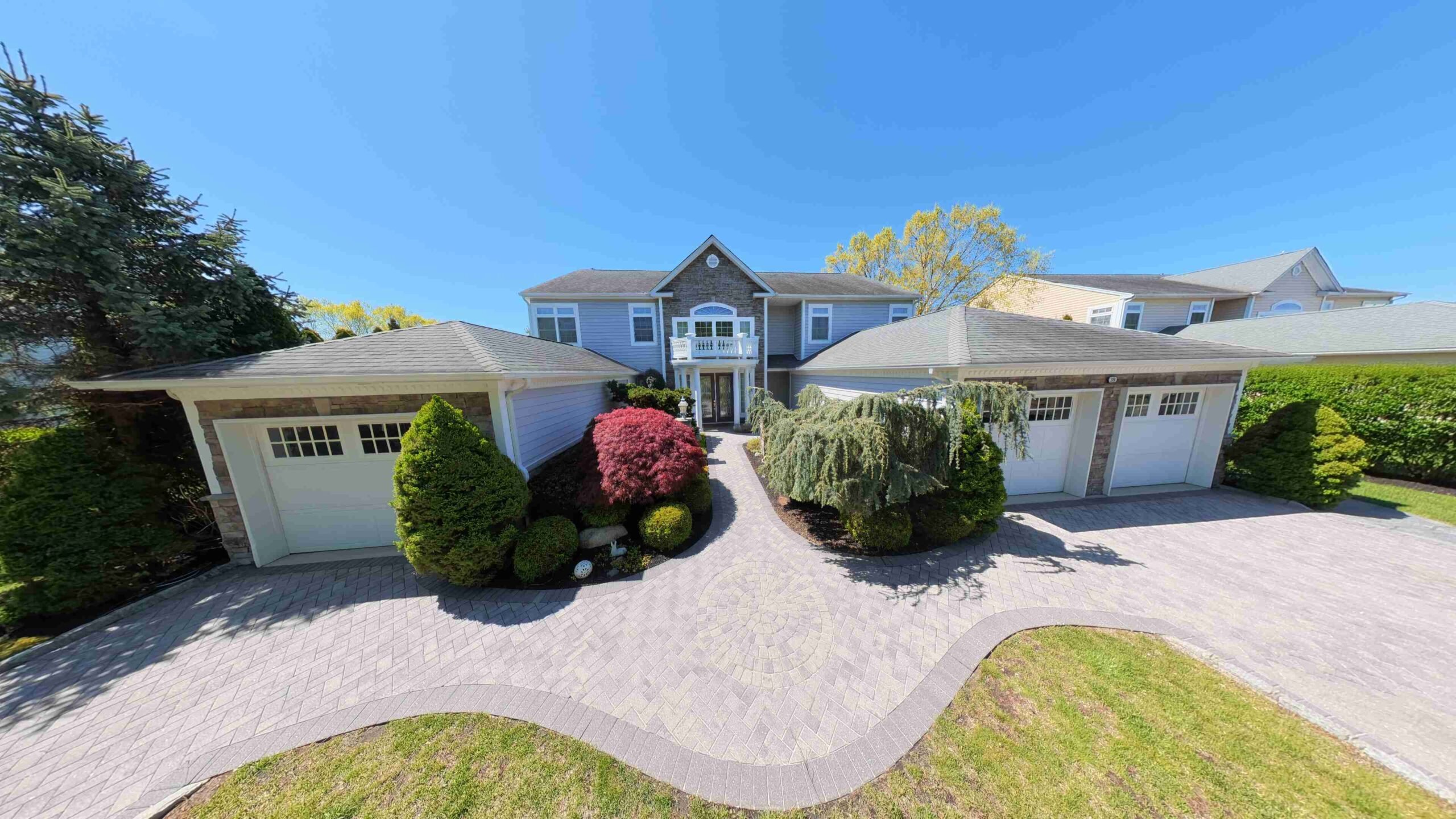
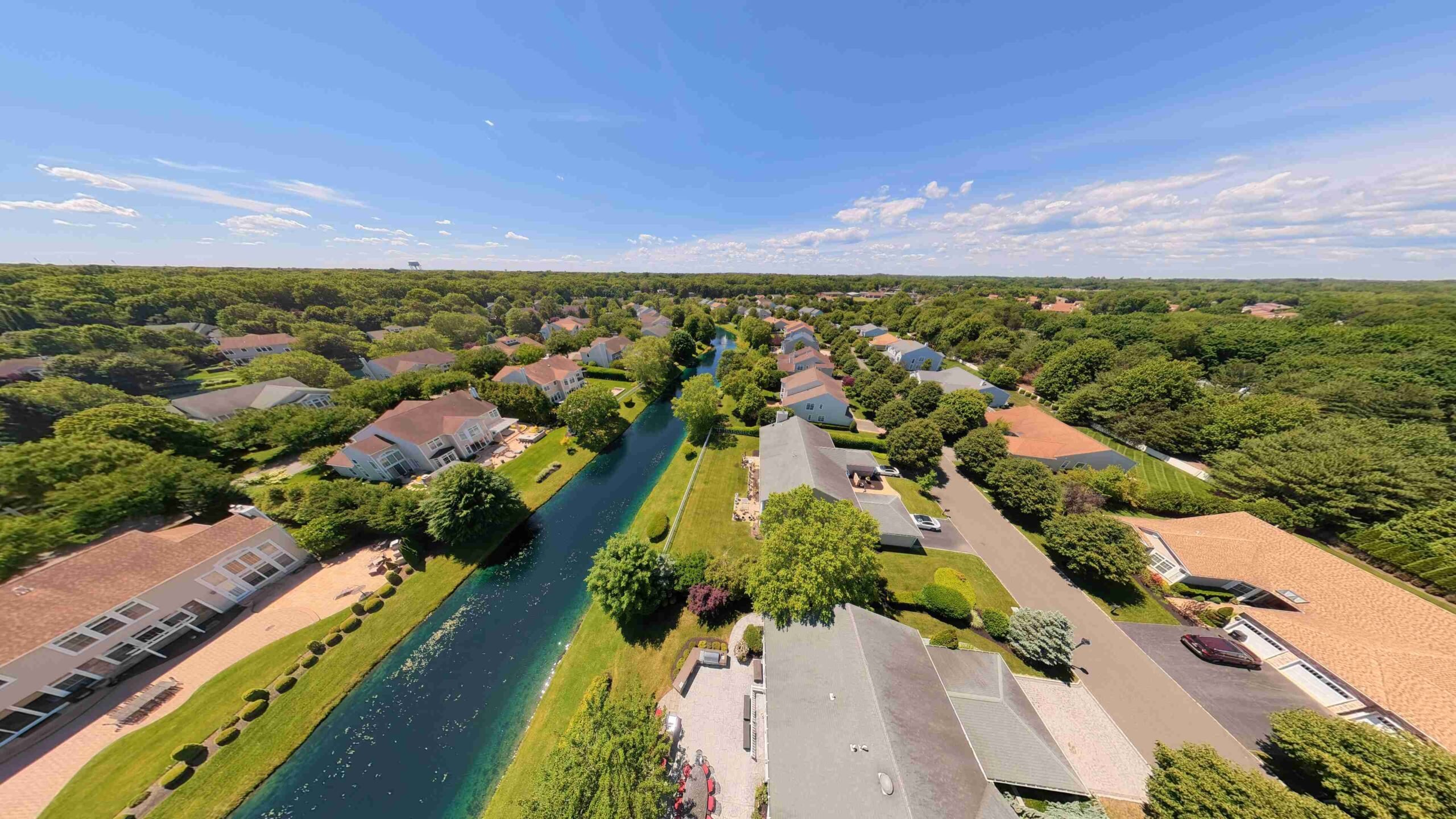
The homes themselves lean large and post-modern. Two-story entries, vaulted ceilings, first-floor primary suites in many models, finished or finishable basements. Some back up to the community’s ponds. Some carry fireplaces. The architecture is cohesive without being identical, the result of a master plan rather than a street that filled in house by house over decades.
Lots in the third-to-half-acre range give the homes room without the maintenance burden of an estate parcel. That is the trade the whole community is built around: space and presence, minus the part where you spend your weekend running a small grounds operation.
What the HOA actually covers
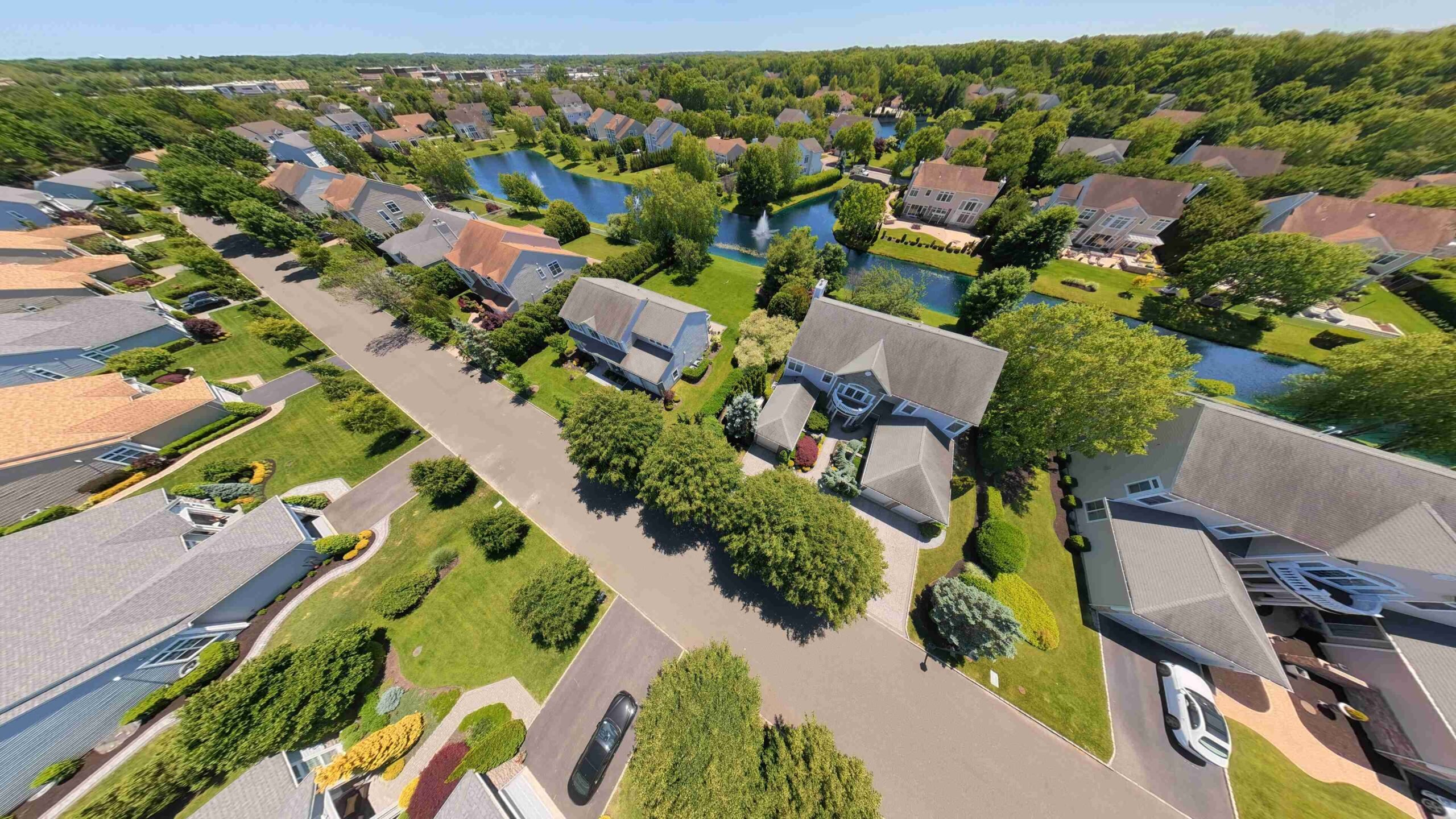
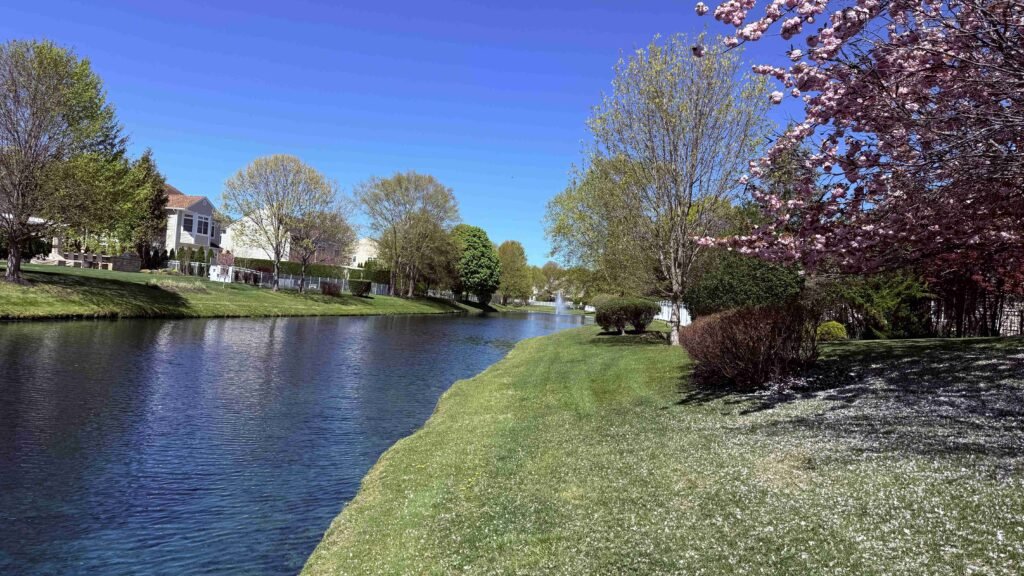
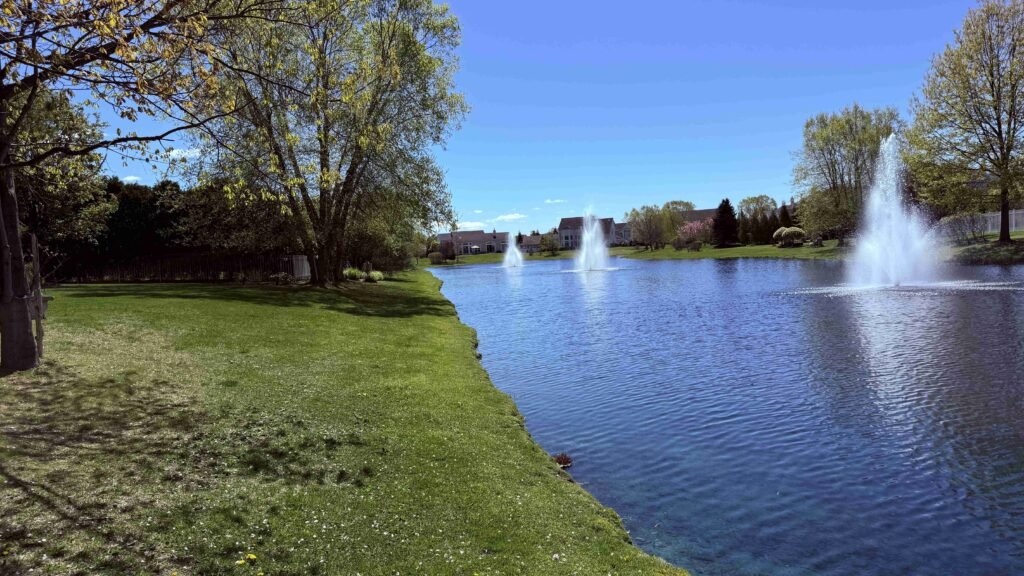
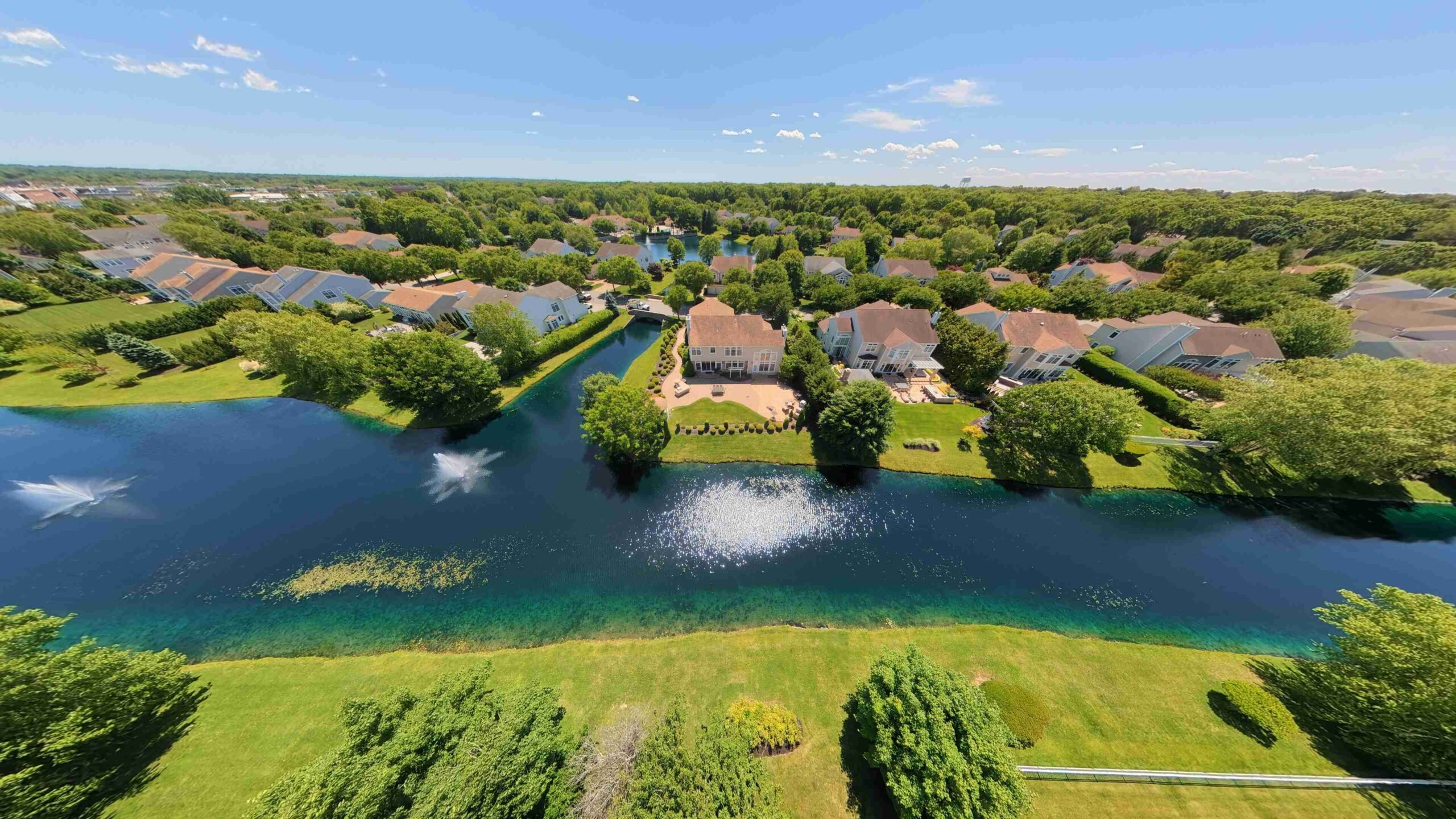
The amenity set here is the resort-style package the Hamlet name is known for, delivered without a golf course attached. A clubhouse anchors it. Around that sit a pool and a kiddie pool, a spa, lighted tennis courts, a fitness center, a basketball court, bocce, a playground, a putting green, and two lakes with paddle boats. The two lakes are not decorative afterthoughts — they were part of the original site design, and the homes that face them carry views the rest of the community does not.
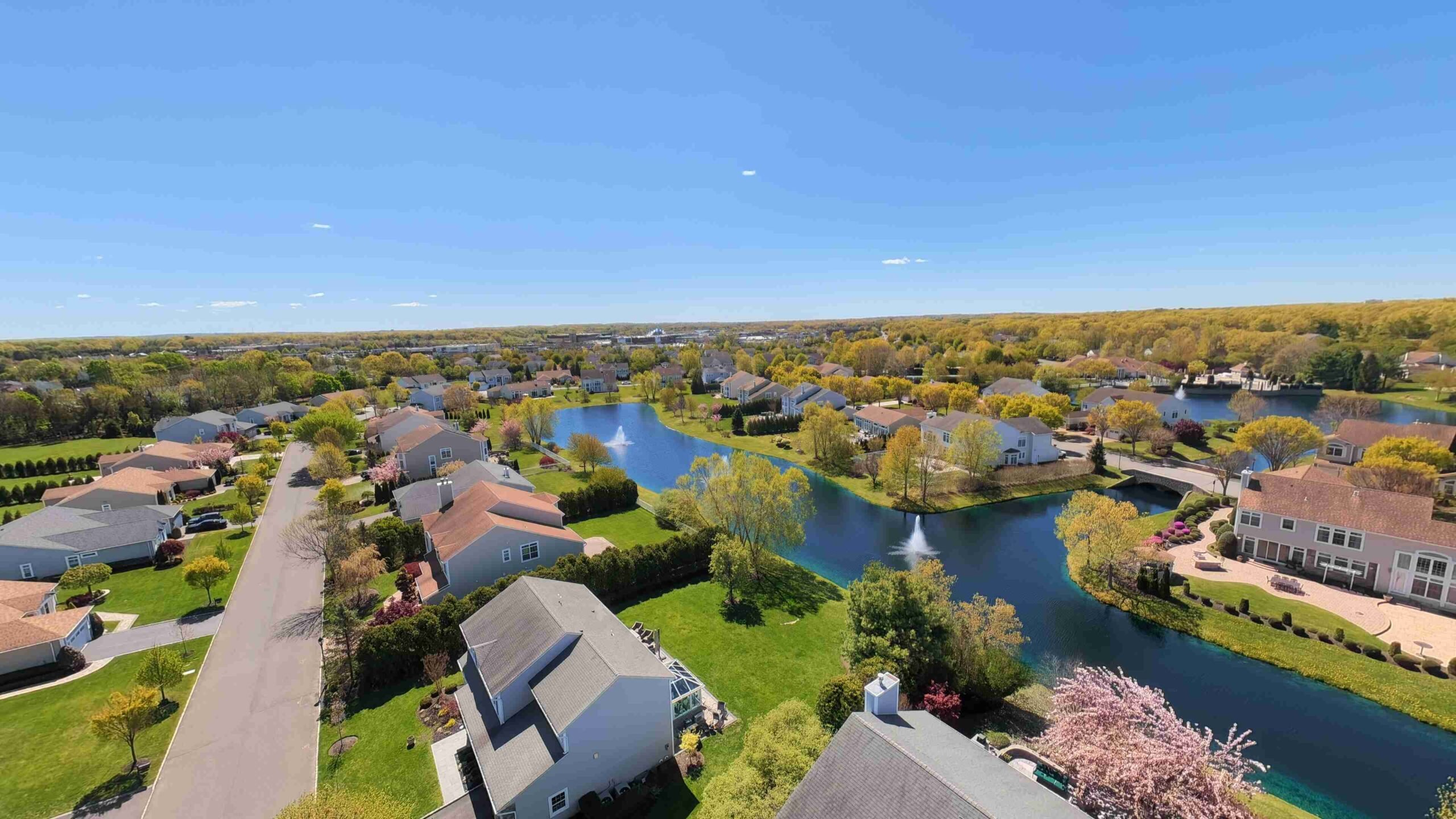
The Homeowners Association maintains the common areas, the amenities, and the shared infrastructure. That is the practical meaning of the monthly common charge: lawns and facilities stay handled, and the staffed gate stays staffed. Fee structures at communities like this change over time and are set by the association, so anyone weighing a purchase should confirm the current monthly charge and exactly what it includes directly with the HOA rather than relying on a number from an old listing.
One detail worth knowing going in: at some points in the community’s history, snow removal on individual driveways has fallen to the homeowner rather than the association. Common-charge inclusions get adjusted, so this is precisely the kind of line item to verify in writing before closing.
Schools, location, and the daily-life math
Children living in The Hamlet Estates attend the Smithtown Central School District, one of the reasons the address draws families who want a gated setting without sacrificing a strong public-school assignment. St. James Elementary, Nesaquake Middle, and Smithtown High School East serve the broader area.
The location is the other half of the appeal. The community sits minutes from the Smith Haven Mall, from Costco and the surrounding shopping corridor, and from the restaurants and local shops of downtown St. James and Smithtown. The North Shore beaches are close. So is the Nissequogue River, which draws kayakers and canoers through the warm months. Route 347 puts the rest of Suffolk County within easy reach, and the Northern State Parkway feeds the commute west.
For a buyer relocating from the city, the pitch writes itself: a staffed gate, a low-maintenance lifestyle, Smithtown schools, and a ten-minute radius that covers nearly every errand. For a North Shore buyer trading down from a high-maintenance older home, the appeal is the inverse — keep the space, lose the upkeep.
Who lives here, and why it holds value
The Hamlet Estates attracts buyers who place a premium on security and predictability. Empty nesters who want a right-sized luxury home without a lawn-care contract. Families who want their children inside the gate and inside Smithtown schools. Professionals who travel and want to lock the door behind a guarded entrance without a second thought.
That buyer profile is part of why the community tends to perform as its own micro-market. A guard-gated address in a town that has exactly one of them is not directly comparable to the open-street Colonials a mile away, which means the homes here often trade on their own terms rather than tracking the surrounding Smithtown averages move for move.
Current pricing, recent sales, and days-on-market figures shift constantly and are best pulled fresh. For an accurate read on where the community stands today, the right move is current MLS data rather than any figure that has been sitting on a real estate page for a year.
You Might Also Like
- Mount Sinai, NY — The North Shore Hamlet That Earned Its Quiet
- St. James, NY — The North Shore Neighborhood Guide
- The Covenant in the Deed: How Restrictive Covenants Shaped Long Island Neighborhoods
Real estate markets change. For current listings and market data, contact Maison Pawli at maisonpawli.com/about/.