Mount Sinai, NY — The North Shore Hamlet That Earned Its Quiet
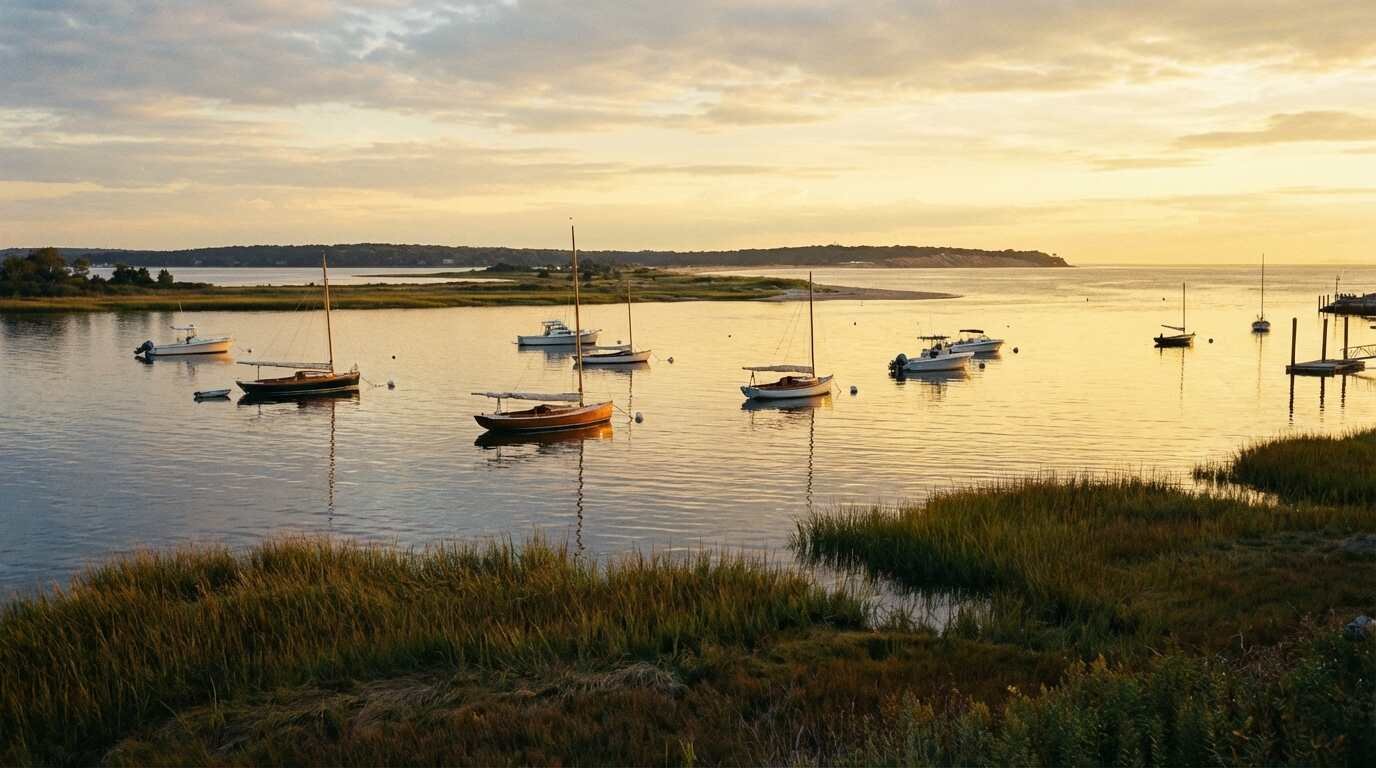
The first time I drove a client through Mount Sinai, she rolled down the window on Shore Road and said nothing for about thirty seconds. We had just come from a showing in Port Jefferson — good house, tight lot, neighbors close enough to share a conversation through kitchen windows. Here, the trees opened up, the harbor appeared on the left, and the road narrowed the way roads do when a place hasn’t been designed to move traffic quickly. She turned to me and said, “Why didn’t you show me this first?”
I hear some version of that question constantly. Mount Sinai is not a town that markets itself. It doesn’t have a village center with boutiques and a ferry terminal like Port Jefferson. It doesn’t have the Ivy League adjacency of Stony Brook. What it has is something harder to replicate: a harbor that has been in continuous community use since 1664, a school district that consistently outperforms its budget class, and a housing stock that rewards people who know how to look past the first impression.
This is my home territory — Maison Pawli’s base of operations. I know which streets flood after a nor’easter, which blocks have the best morning light, and which corners of Cedar Beach you can still walk in August without stepping over a beach towel. So let me walk you through it the way I’d walk a serious buyer.
A Place Named by a Knitting Needle
Mount Sinai was originally called Old Mans — a colonial-era name of uncertain origin, likely tied to a land swindle involving a seventeenth-century English investor named Major John Gotherson who got fleeced in a fraudulent deal. The Seatocot people who lived here first called the area Nonowatuck, meaning “the stream that dries up,” a reference to the tidal creek that ran south from the harbor. European settlers from Setauket purchased the land in 1664, and the hamlet operated under that odd name for nearly two centuries until 1840, when the local postmaster — or possibly his wife — is said to have pointed a knitting needle at an open Bible and landed on Mount Sinai. The name stuck.
That kind of accidental character is still part of the place. Mount Sinai didn’t plan to be charming. It just kept being itself while everything around it changed.
The Harbor Is the Centerpiece
Mount Sinai Harbor is a 455-acre embayment — one of the last large, relatively undeveloped harbors on Long Island’s North Shore. It is a glacial remnant, carved by ice-age rivers and sediment deposits, protected by a two-mile sandy barrier peninsula that now holds Cedar Beach on the east side and the Mount Sinai Yacht Club on the west.
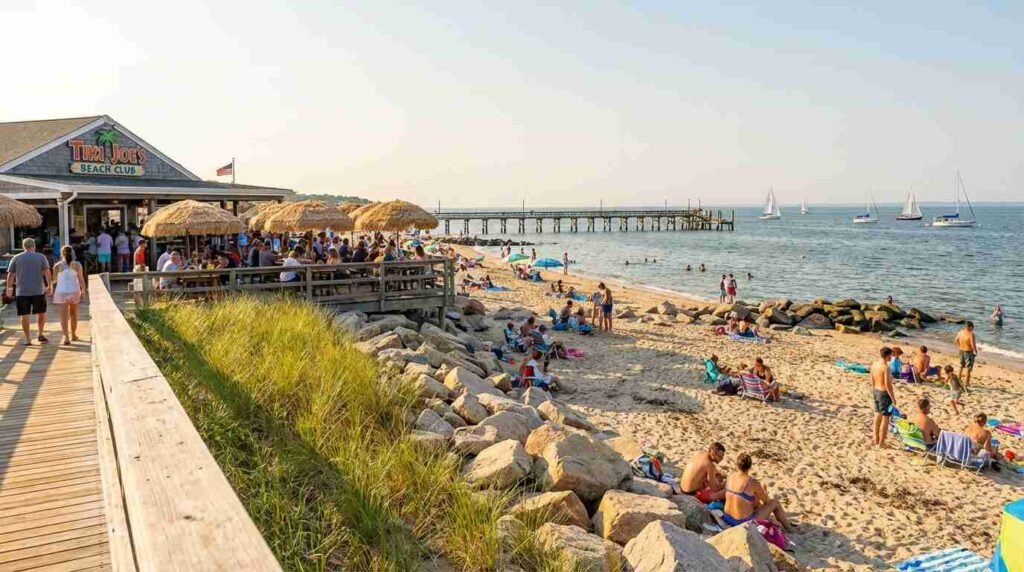
Cedar Beach is the largest North Shore beach in the Town of Brookhaven. It includes two swimming areas (Cedar Beach Main and Cedar Beach West), a fishing pier, a town marina with boat launch ramps, basketball courts, the Marine Environmental Stewardship Center with touch tanks and aquariums, and Tiki Joe’s Beach Club — a seasonal restaurant and live-music venue right on the sand. There is a 700-foot boardwalk through the dunes and a nature preserve connecting the beach sections.
The harbor itself still supports commercial shellfishing. At low tide, you will find clammers working the flats the way people have worked them here for three and a half centuries. The harbor is designated as a New York State Significant Coastal Fish and Wildlife Habitat and falls within the National Coastal Barrier Resources System. This is not a decorative amenity. It is a working harbor with a living ecology. I wrote about the eroding bluffs on the harbor’s south side and the accidental archaeological record they’ve exposed — if you want to understand what the land itself is telling us, that post is the place to start.
The Schools
The Mount Sinai Union Free School District serves approximately 2,300 students across three schools: Mount Sinai Elementary (K–4), Mount Sinai Middle (5–8), and Mount Sinai High School (9–12), all located on a single campus along North Country Road. The high school holds a 9/10 GreatSchools rating and earns an A from Niche, with a student-teacher ratio of roughly 12:1. The middle school carries an A- and an 11:1 ratio.
This is a district where seventy-five percent of teachers hold a master’s degree plus thirty additional credit hours or a doctorate. Teacher turnover is low — around six percent — which matters more than most buyers realize. Consistent faculty translates to consistent programming, and consistent programming is what drives the test scores and college placement outcomes that ultimately support property values.
For families weighing school district quality against affordability, Mount Sinai hits an unusual sweet spot. You’re getting a top-tier district without the tax premium of some western Suffolk and Nassau County equivalents.
What the Housing Stock Looks Like
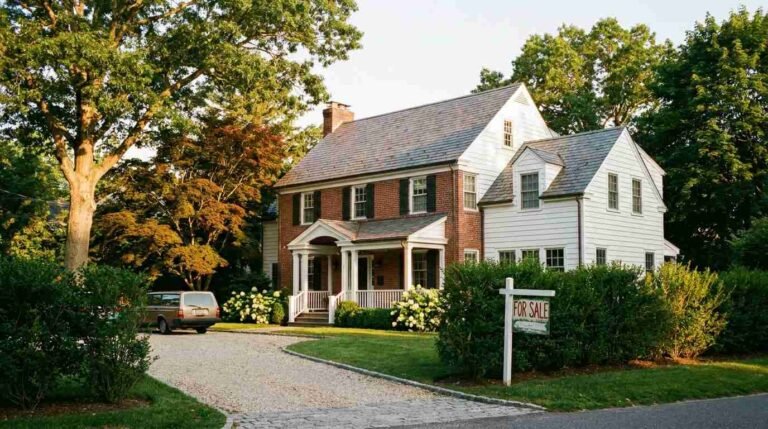
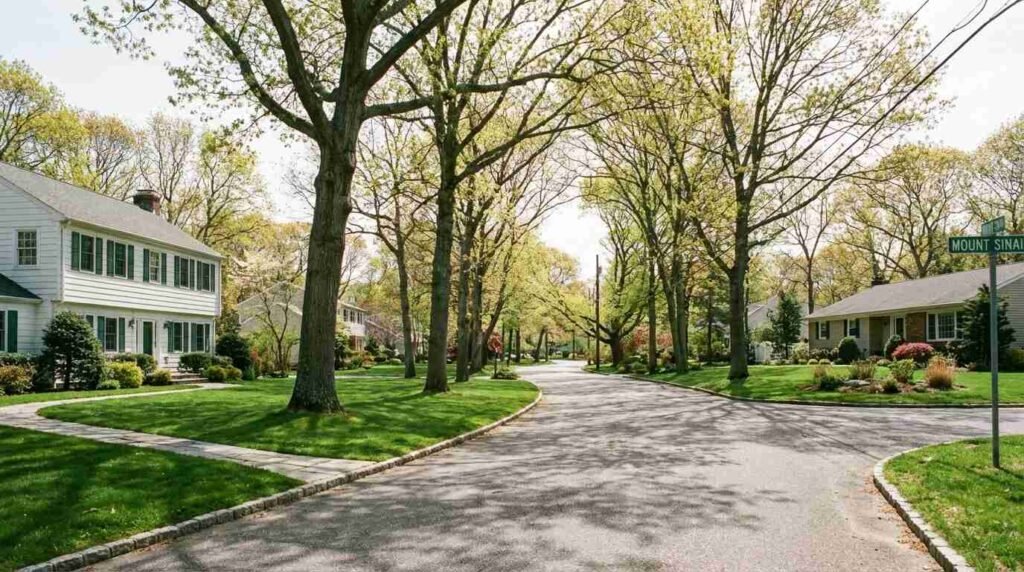
The median home sale price in Mount Sinai currently sits near $700,000, with price per square foot averaging around $320. Homes spend roughly forty to fifty days on market. The housing stock is predominantly single-family — ranches, colonials, and 1980s contemporaries on lots that typically run a third of an acre to a full acre. Newer developments like Island Estates and The Hamlet at Willow Creek offer gated-community options, while the Crystal Brook Park section — established in 1892 as a private residential community — remains one of the oldest continuously occupied enclaves on the North Shore.
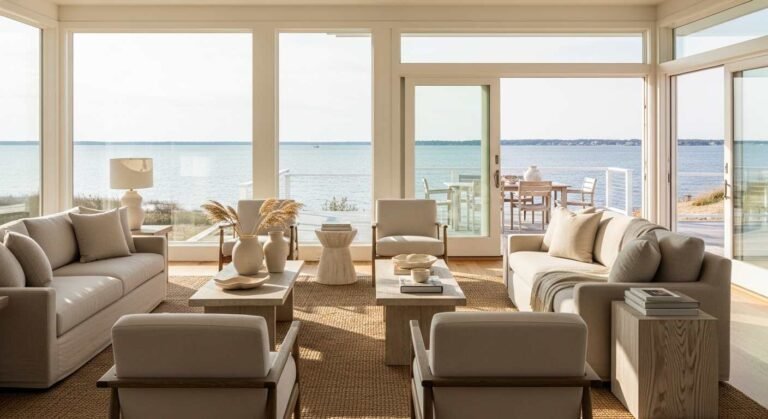
Inland properties in the $500,000 to $700,000 range tend to be your entry point: older ranches and capes that need cosmetic work but sit on generous lots. Updated colonials in the middle neighborhoods typically trade between $700,000 and $1 million. Harbor-front and beach-adjacent homes start around $675,000 for smaller, unrenovated properties and can climb past $2 million for fully updated waterfront estates on Shore Road or Harbor Beach Road.
If you’re buying a fixer-upper here, read my piece on why North Shore ranch renovations fight the soil — Mount Sinai sits squarely on glacial till, and every foundation decision flows from that geology.
Commute and Access
Route 25A runs east-west through the hamlet. NY 347 connects to the Long Island Expressway at Mount Sinai’s western edge, and CR 83 (Patchogue-Mount Sinai Road) runs north-south. The nearest LIRR station is in Port Jefferson, roughly two miles west — a train that reaches Penn Station in about two hours. Stony Brook University and Brookhaven National Laboratory are both within a short drive, and a significant number of residents work at one or the other.
Mount Sinai briefly had its own railroad — the LIRR extended through the hamlet from 1895 to 1938, running east to Wading River. The old rail bed now forms the spine of the North Shore Rail Trail, a paved 10.5-mile path from Mount Sinai east through Miller Place, Rocky Point, and Shoreham to Wading River. It is one of the best cycling and running paths on the North Shore.
The Character You Can’t Fake
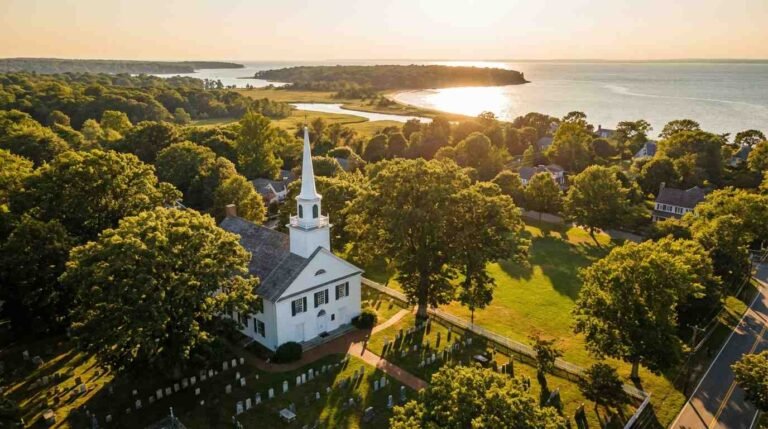
What makes Mount Sinai different from comparable hamlets is what hasn’t happened to it. The commercial district along 25A is modest — a few restaurants, a Stop & Shop, some small businesses — but it hasn’t been overdeveloped into a strip-mall corridor. The harbor hasn’t been dredged into a deep-water marina district. The school campus hasn’t been fragmented across the town. The Congregational Church, built in 1807, still holds services. The Davis Peach Farm on 25A — 404 acres that supplied the hamlet’s famous roadside peach stand for generations — was eventually developed, but the memory of what it was still shapes how people here think about land.
Arthur Miller and Marilyn Monroe spent time here in the 1950s, renting at the Chandler Estate near the harbor. Norman Rosten and Dawn Powell rented homes in town. None of them came for the nightlife. They came because Mount Sinai was the kind of place where you could hear the harbor from your porch.
It still is.
Real estate markets change. This post reflects conditions as of April 2026. For current listings and market data, contact Pawli at Maison Pawli.
You Might Also Like
- Cedar Beach’s Eroding Bluffs as Open Archive
- Port Jefferson’s Second Act: How a Shipbuilding Ghost Town Became the North Shore’s Most Contested Real Estate Market
- Why Your 1960s Ranch Renovation Is Fighting the Soil