Winterizing a Long Island Home Before the First Hard Freeze
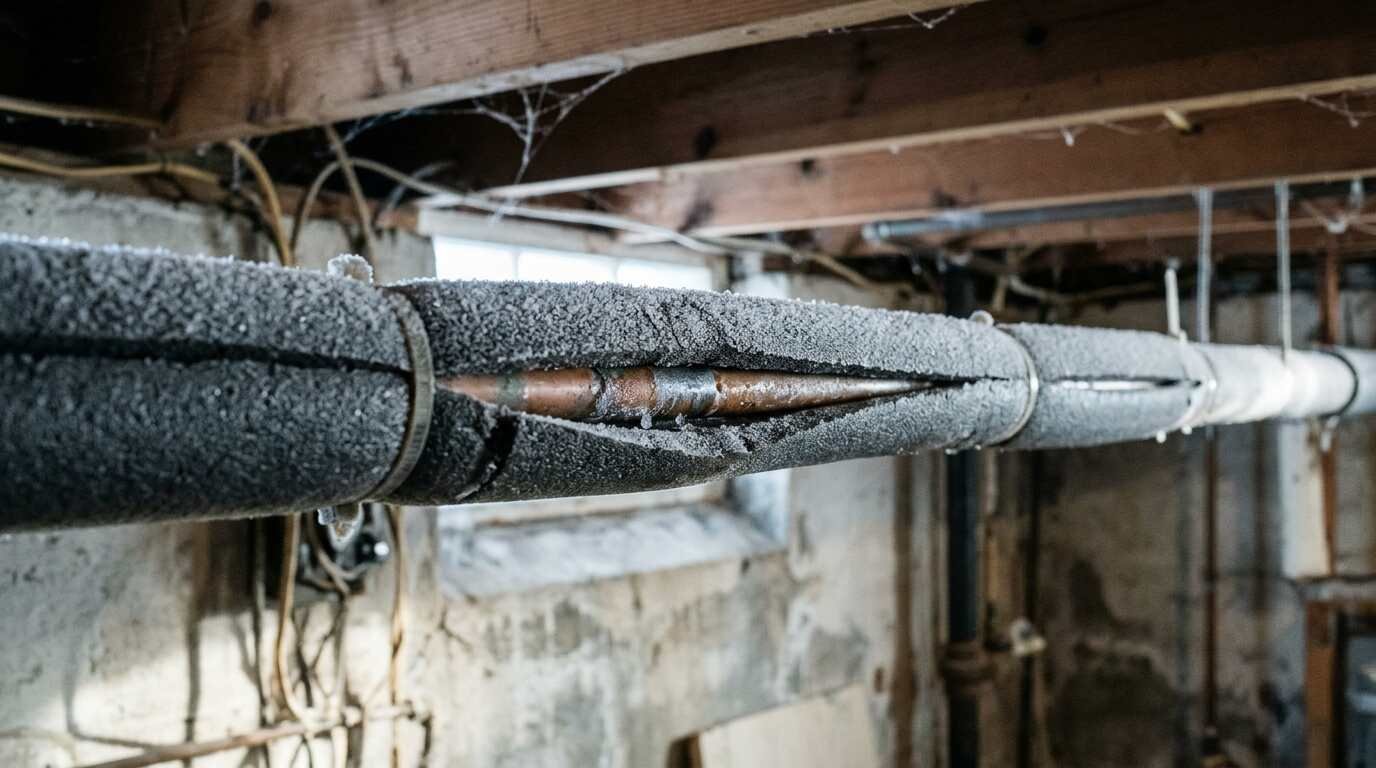
Burst pipes are the leading cause of property damage from winter weather, according to the Insurance Institute for Business and Home Safety, and State Farm reported handling more than 20,000 winter water-damage claims between 2024 and mid-2025, with payouts above $628 million, as summarized by Fox 5. The average payment topped $30,000 in that set, which frames the stakes for any Long Island household with plumbing in a garage, a crawl space, or an exterior wall before the first hard freeze arrives.
What a Freeze Costs
The Insurance Information Institute puts the average homeowner claim for water damage and freezing at roughly $13,954, a figure reproduced by Farmers Insurance, and Kiplinger reports that about one in 60 insured homes files a property damage claim tied to water damage or freezing in a given year. The two numbers sit in a different register from the cost of prevention. A foam sleeve costs a few dollars per length of pipe; a ruptured supply line inside a finished wall can reach into the five-figure range before drying, drywall, and flooring are counted.
Temperature matters in a specific way. The Insurance Institute for Business & Home Safety, as cited by Mercury Insurance, places the point at which pipes can begin to freeze at around 20 degrees or below, which is colder than the freezing point of water because moving water and ambient heat from the house delay the process. Unheated garages, crawl spaces, attics, and the stretch of pipe directly behind an exterior wall reach that threshold first.
Pipes: Insulation, Exposed Runs, and Outdoor Spigots
Start with the runs that touch cold air
Insulating exposed pipes sits at the top of nearly every insurer’s list. Westfield Insurance notes that autumn is the best time to complete this work, before winter weather sets in, and the Red Cross, quoted in the Fox 5 report above, adds that insulation in attics and crawl spaces keeps the surrounding air warmer, while sleeves or wrap materials protect the pipe directly.

The pipes worth checking first are the ones in unconditioned space: along a garage wall, under a kitchen or bathroom on an exterior wall, in a crawl space, and in the basement near rim joists. Gaps around penetrations, where a line enters the house, are common weak points, and Kiplinger recommends sealing cracks and openings with caulk so cold air does not reach the plumbing.
Outdoor faucets and hoses
Hoses left attached trap water that can freeze and split the connection back into the wall. Webster First advises shutting off the valves that feed outdoor faucets so no water reaches them, with the hose itself detached and drained so nothing remains to expand inside the fitting.
Heat Settings, Open Cabinets, and Dripping Faucets
The Insurance Information Institute suggests, per Westfield, that a home stay heated to at least 65 degrees even during travel. Other carriers publish lower floors; Webster First recommends no lower than 55°F while away, and AAA notes that a landlord may require a minimum such as 60°F. The practical reading is that the lower the setting, the more the plumbing depends on the building envelope and on the weather staying mild.
During a forecast freeze, two small habits carry weight. Cabinet doors under sinks on exterior walls can be left open so house heat reaches the pipes, an old State Farm recommendation recorded by Insurance Journal. A thin trickle from faucets served by exposed pipes also helps; as AAA explains, a trickle relieves the pressure that builds between the faucet and an ice blockage, which is the actual mechanism behind most ruptures. Ice alone does not split a pipe. Pressure trapped downstream of the ice does.
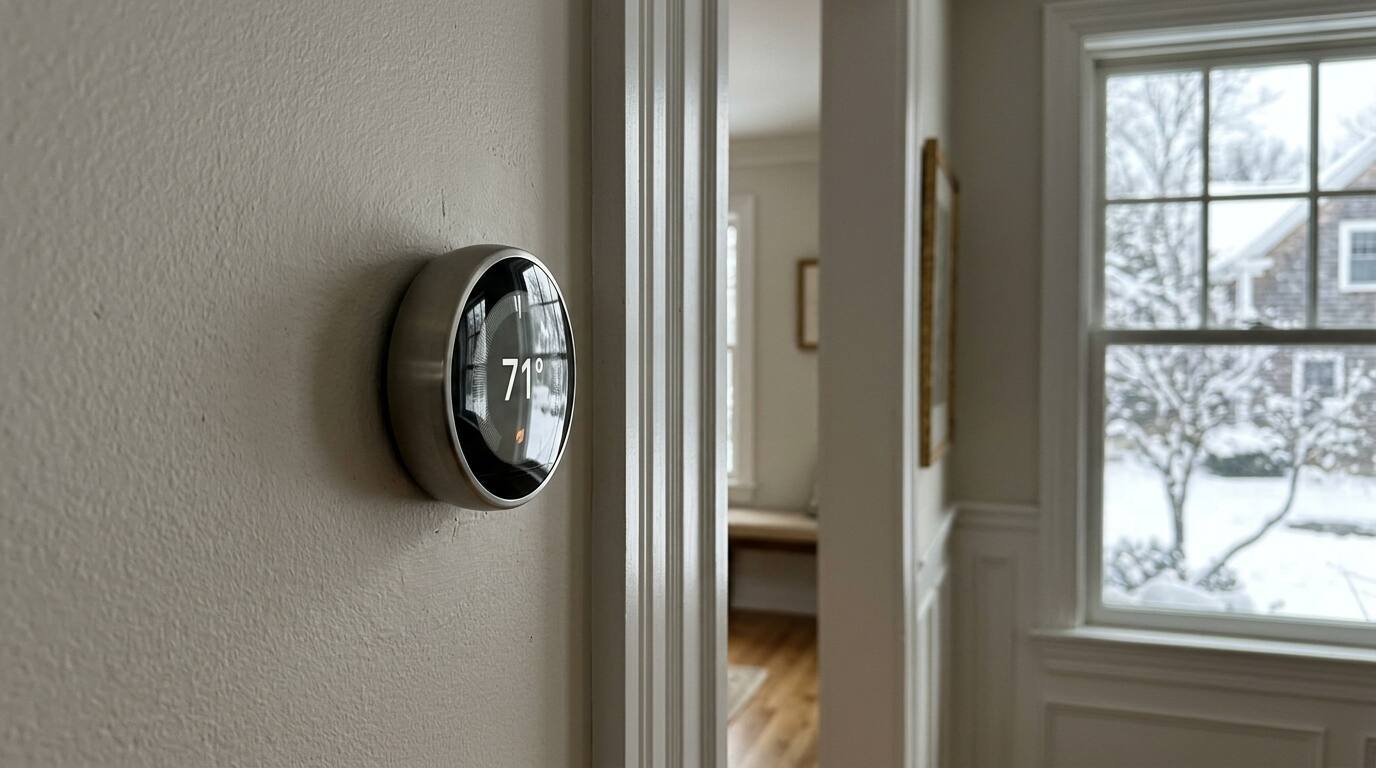
A steady thermostat setting day and night, rather than a deep overnight setback, keeps warm air moving through the house; AAA acknowledges this may raise the heating bill but treats it as the cheaper of the two outcomes.
Signs of a Frozen Pipe and How to Thaw One
Cold spots on a pipe, a faucet that produces no water, and gurgling in the lines are the signs Webster First lists. Thawing is slow work. A hair dryer or a heating pad on a low setting applied to the frozen section is the approved method, and the same guidance is unambiguous that a torch or any open flame stays out of the process. If a pipe has already split, the water main shutoff location should be known before the day it is needed, and the insurer should be called promptly so an adjuster can inspect the damage.
Power Outages and Generators
Winter outages create a second route to frozen plumbing. The New York State Department of Public Service advises turning on water faucets slightly during a winter outage to avoid frozen or burst pipes, and having a portable generator or another alternative source of power available along with knowledge of the safety rules for its use.
Those rules are stated plainly by PSEG Long Island: generators stay outdoors, the manufacturer’s instructions are followed, and a generator is never connected to a home’s electrical system, as its post-storm safety page says. Outages can be reported by texting OUT to 773454 or by calling the utility’s 24-hour electric service line at 800-490-0075, according to PSEG Long Island’s storm communications.

Insurance and Documentation
Standard homeowners policies typically respond to a sudden burst-pipe loss, Westfield notes, though coverage depends on the policy and its wording. AAA flags one condition worth reading before a trip: an insurer may deny a claim when negligence is involved, such as turning off the heat while away. After a loss, Mercury Insurance advises giving the claims representative photographs and video of the damage.
A dated set of photographs of the basement, crawl space, and utility room taken now, with the main shutoff and any water-heater valves visible, takes ten minutes and gives a baseline that makes a later claim conversation simpler. Sellers preparing a home for the market in winter face a related issue, because a buyer’s inspection will look at the same pipes, and a documented insulation and maintenance record supports the home’s condition at the negotiating table.
Where This Fits in a Homeownership Calendar
Winterizing sits alongside other seasonal systems that Long Island homeowners already track. Homes on heating oil face a separate decision set, laid out in the Maison Pawli guide to oil-to-gas heat conversion, and coastal properties carry their own exposure, covered in the post on the Suffolk County flood zone remap and insurance.
For informational purposes only. This article offers general information and does not replace advice from a licensed plumber, insurance professional, or attorney.
Sources
- Fox 5: Frozen pipes can cause major damage
- Farmers Insurance: How to keep pipes from freezing
- Kiplinger: How to prevent pipes from freezing this winter
- Mercury Insurance: How to prevent frozen pipes
- Westfield Insurance: How to wrap your pipes and winterize them safely
- Webster First: Homeowner tips to prevent frozen pipes
- AAA: How to prevent frozen pipes
- Insurance Journal: Frozen pipe damage can be prevented
- New York State Department of Public Service: Utility service interruptions
- PSEG Long Island: After a storm
- PSEG Long Island: Storm press release