Fine Art Insurance: What a Long Island Homeowners Policy Covers and Where It Stops

A painting over the fireplace, a framed print in a finished basement, a canvas wrapped in a moving blanket and loaded onto a truck: each is an ordinary household decision, and each one runs into insurance rules that most owners have never had reason to read.
Standard homeowners policies do cover art and collectibles, but with dollar limits that apply when something is stolen, and with flood excluded entirely. For a few framed posters that arrangement is fine. For a collection with real value it leaves gaps that are cheaper to close before a loss than after one. The figures below come from Triple-I, the New York State Department of Financial Services, FEMA, and the Smithsonian’s conservation institute, and they are meant to show where the questions for an insurance agent should begin.

What a standard policy does with art
The personal property section of a homeowners policy is usually set as a share of the coverage on the house itself. Triple-I puts it at 50 to 70 percent of the structure amount, while the Department of Financial Services describes it as typically 50 percent for belongings on the premises and only 10 percent for belongings kept off the premises. Both agencies note that expensive categories are treated differently. Triple-I says high-value items such as jewelry, furs, art, and collectibles are covered, though dollar limits usually apply if they are stolen.
The state’s published examples are for other kinds of valuables, not paintings: jewelry and furs capped at $1,500 for theft, silverware and guns at $2,500, money at $200. Neither source gives a figure for art, which varies by policy, so the number worth getting is the one in the specific policy, in writing.
| Feature | Figure | Source |
|---|---|---|
| Personal property limit, usual range | 50% to 70% of the dwelling amount (Triple-I); 50% (state guidance) | Triple-I; NYS DFS |
| Property kept off the premises | typically 10% of the dwelling amount | NYS DFS |
| Theft of jewelry and furs | $1,500 | NYS DFS |
| Theft of silverware and guns | $2,500 | NYS DFS |
| Flood damage | excluded from standard policies | Triple-I |
| Federal flood policy, maximum contents coverage | $100,000 | FEMA FloodSmart |
| Federal flood policy, art and similar valuables | up to $2,500 | FEMA FloodSmart |
Where flood coverage stops
Standard homeowners policies leave flood out, and Long Island owners have had recent reasons to think about it, from the new Suffolk County flood zone maps to the claims described in A Week After the Nor’easter, Long Island Homeowners Are Sorting Out Claims and Cleanup. Waterfront and Sound-facing properties raise the question further, and the specifics for the North Shore are laid out in Flood Insurance on Long Island’s North Shore.
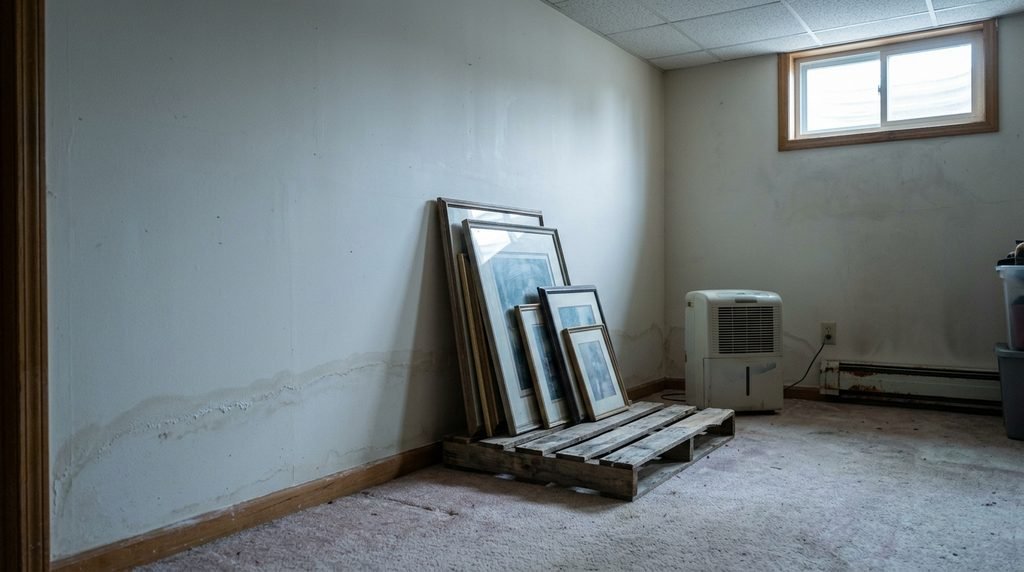
Contents coverage under the federal flood program is optional and bought separately. According to FEMA’s FloodSmart site, art and similar valuables are covered up to $2,500, and personal property kept in a basement is generally not covered, apart from a short list of items such as washers, dryers, and freezers. In a house where the finished basement doubles as a storage room or a hanging space, that matters. An insurance agent can say whether any private flood or high-value policy fills the gap.
Scheduling a collection with a floater
When a piece or a group of pieces exceeds the standard limits, the usual answer is a personal property endorsement or a separate floater. The state recommends considering one for antiques and collectibles, and Triple-I says a floater can pay for a wide range of losses, including accidental damage that a standard policy would not touch. It costs more than the standard coverage. Triple-I also states that a professional appraisal is required before a floater is purchased, and that an insurance professional can recommend appraisal firms.
Questions worth putting to an agent before buying: how the item will be valued at the time of a loss, whether the coverage follows the art when it leaves the house, and what documentation the insurer will want on file.
Choosing an appraiser
The American Society of Appraisers says it is unprofessional and unethical for an appraiser to contract to work for a fixed percentage of the value, and it also prohibits contingent fees, on the reasoning that a fee tied to the result invites suspicion that the valuation was biased. Asking how a fee is calculated, and passing on any percentage arrangement, follows from that position. Fees vary, and no current Long Island fee schedule was verified for this post, so quotes from more than one qualified appraiser are the practical check.
Documenting what is on the walls
A claim is easier to settle when the record already exists. Triple-I’s home inventory guidance calls for a description of each item, where it was bought, what was paid, and any other detail that would matter in a claim, along with photographs of individual items and of whole rooms. A narrated video walkthrough works as well, and apps exist for the purpose. For art and collectibles, the same guidance says to keep receipts, purchase contracts, and professional appraisals alongside the inventory.
Where the record lives matters too. Triple-I suggests paper copies in a safe deposit box or with trusted contacts and digital backups on an external drive or in cloud storage, with new purchases added while the details are fresh. A record kept only on a laptop in the same house as the art does not survive the same event.
Where art hangs, and why that is also an insurance question
The Smithsonian’s Museum Conservation Institute offers guidance that doubles as a decorating checklist. It advises against hanging paintings over fireplaces because of heat, soot, and smoke, and recommends walls with studs, away from heat sources and direct sunlight, where humidity stays relatively stable. Ultraviolet light fades paint, heat can soften it, and swings in humidity are especially hard on wooden panels, with very low humidity making paint brittle and high humidity encouraging mold. The institute gives no numeric humidity target, so a conservator is the right call for anything valuable.
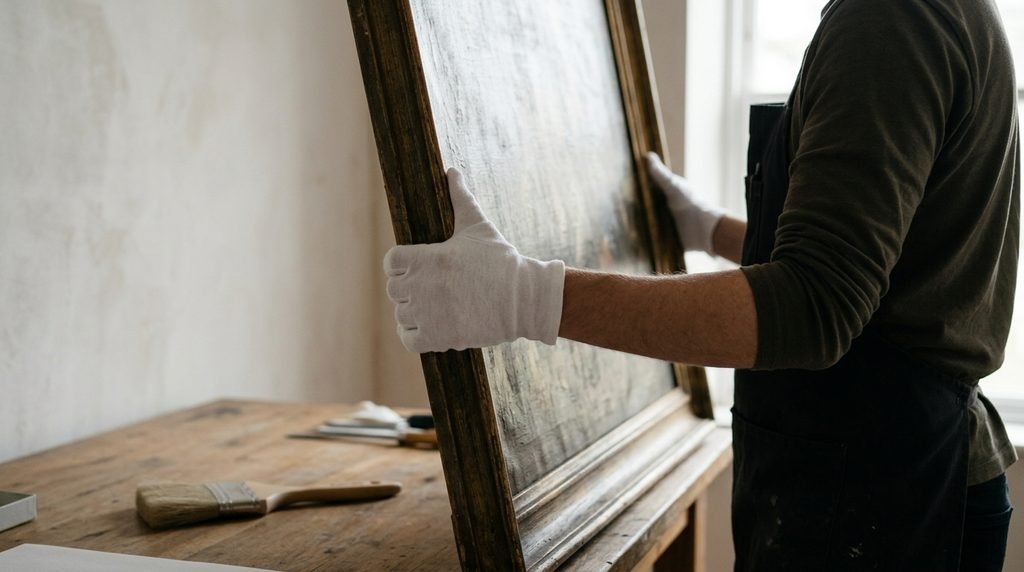
Handling advice is just as practical: move one painting at a time, use clean cotton gloves, carry a work by the sides of the frame and never the top, and dust only with a soft natural-hair artist’s brush rather than a cloth or feather duster. Hanging hardware also wears, so hooks, wire, and cord deserve an occasional check.
A room redesigned for more daylight, like the ones described in Borrowed Light, changes where a canvas can safely go. Hanging decisions and insurance decisions tend to reach the same conclusion: keep valuable pieces away from sun, heat, and basements.
Moves, sales, and estates
Property that leaves the house for a storage unit or a temporary rental falls under the smaller off-premises percentage that the state describes, and transit by a moving company is a separate question for the mover and the insurer. The costs and rules around hiring movers are covered in What Moving Really Costs on Long Island. Sellers clearing a house before listing, as in Declutter Like You Mean It, and owners scaling down, as in The North Shore Downsizing Playbook, both involve moving belongings, which is when the off-premises limit comes into play. Heirs sorting a house and its contents face a related set of questions, covered from the real estate side in Selling an Inherited House on Long Island.
Buyers have a related checkpoint. Insurance quotes are worth getting before an offer, a point made in The Insurance Quote Comes Before the Offer, and anyone bringing a collection to a new house can add the art limit to the questions asked.
This is for informational purposes only — consult a licensed attorney or financial advisor for your specific situation. Policy terms vary by insurer, and an insurance agent can confirm the limits and exclusions in any particular policy.
Questions homeowners ask
Does homeowners insurance cover art?
Generally yes, as personal property, though Triple-I notes that dollar limits usually apply to theft of high-value items such as art and collectibles. The limit that applies is in the policy itself.
Does flood insurance cover art kept in a basement?
According to FEMA’s FloodSmart site, federal flood contents coverage includes art and similar valuables only up to $2,500, and personal property in a basement is generally not covered apart from a few listed appliances.
Does a floater require an appraisal?
Triple-I states that a professional appraisal is required before a floater is purchased, and that an insurance professional can recommend firms.
Can an appraiser charge a percentage of the value?
The American Society of Appraisers considers percentage-based and contingent fees unethical for appraisers, so the fee should not depend on the appraised value.
Real estate markets change. For current listings and market data, contact Maison Pawli at maisonpawli.com/about/.
You Might Also Like
- Why Long Island Homeowners Insurance Keeps Climbing — Even Away From the Flood Zone
- Lynette Yiadom-Boakye Paints People Who Don’t Exist. The Absence Is Entirely the Point.
- The Huntington Arts District’s Invisible Infrastructure
- Reserve, Withdrawn, Bought In: The Hidden Language of Failure at Long Island’s Estate Auctions
Sources
- Triple-I, Special coverage for jewelry and other valuables
- Triple-I, What is covered by standard homeowners insurance?
- Triple-I, How to create a home inventory
- New York State Department of Financial Services, Homeowners Insurance: Basic Coverage and Adding Coverage
- FEMA FloodSmart, What Is Covered by a Flood Insurance Policy for Homeowners?
- FEMA, NFIP Basement Flooding Fact Sheet (PDF)
- American Society of Appraisers, Prohibited Appraisal Fees (PDF)
- Smithsonian Museum Conservation Institute, Caring for Your Paintings