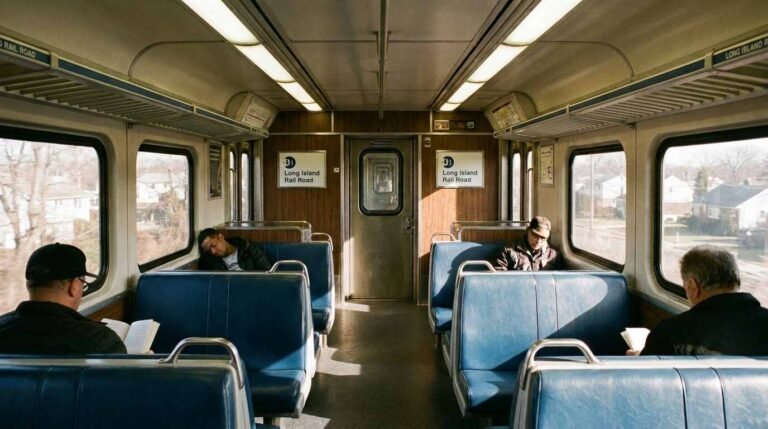
LIRR Commute from Long Island to NYC: What You Actually Need to Know
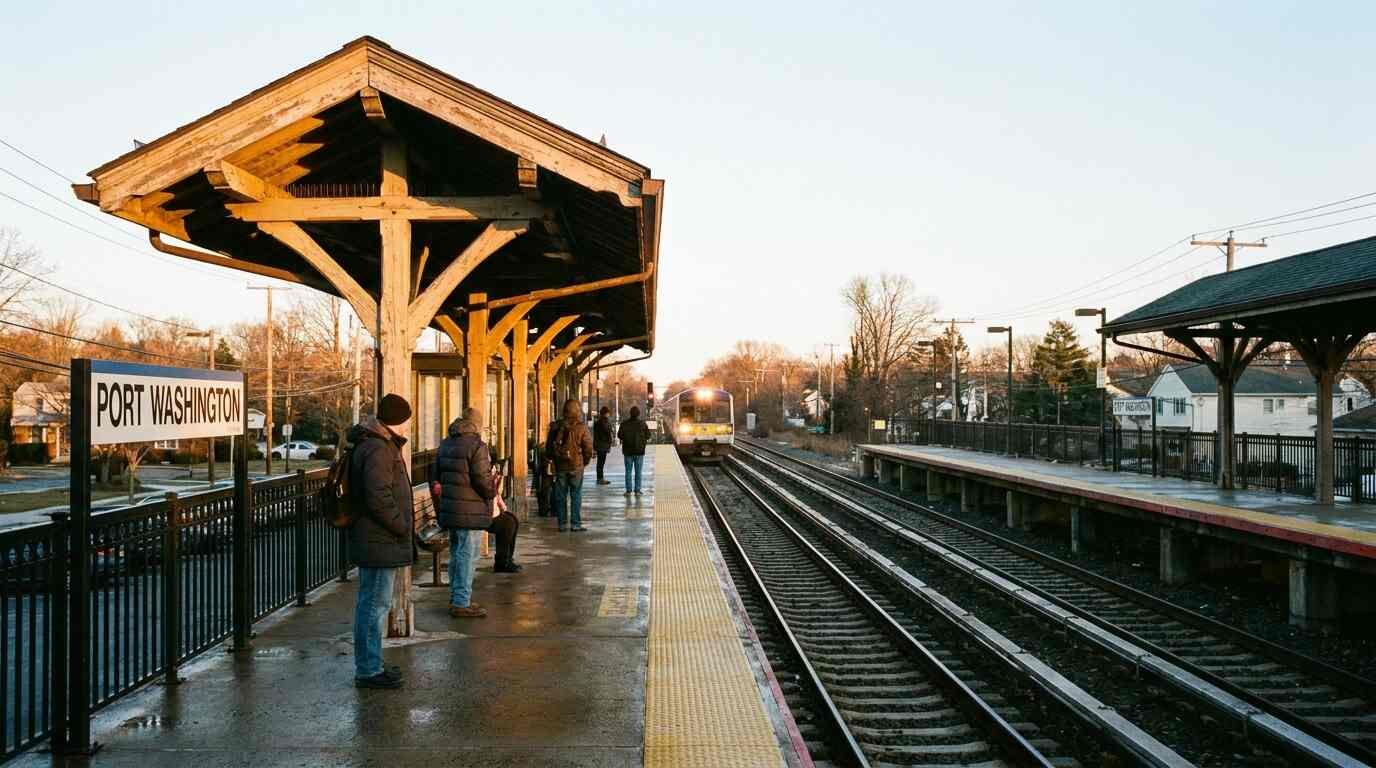
LIRR Commute from Long Island to NYC: What You Actually Need to Know
Before we talk about neighborhoods or school districts or waterfront versus inland, I want to talk about the train. Not because the train is the most exciting part of buying a home on Long Island — it isn’t — but because it shapes almost everything else. Where you buy, what you can afford, what your daily life looks like, how much buffer you need in your schedule on the days the Babylon Branch runs 40 minutes late. The commute math comes first. Then the house.
The LIRR is not what its reputation sometimes suggests. For buyers coming from New York City who have internalized a certain skepticism about the railroad — earned through years of delays, overcrowded cars, and the occasional fire at Jamaica — the reality of daily life on the commuter rail is both better and more complicated than the narrative. Here’s the honest version.
The LIRR Is Better Than You Think (and Sometimes Worse)
The Long Island Rail Road carries roughly 300,000 daily riders and runs on a schedule that, on its better lines and during its better years, is genuinely competitive with anything in the Northeast Corridor. The Port Jefferson Branch and the Oyster Bay Branch serve the North Shore communities I work most closely with; both are clean, relatively uncrowded compared to the Penn Station mainlines, and run with reasonable consistency during off-peak hours.
During peak hours — the 7 to 9 a.m. inbound push and the 5 to 7 p.m. outbound — the experience varies considerably by branch. The Port Washington Branch is one of the most reliable on the system. The Babylon Branch, which carries some of the highest ridership volumes, is also the one that draws the most complaints. The Oyster Bay Branch, which serves the eastern North Shore including Cold Spring Harbor, Syosset, and Locust Valley, tends to run with less congestion and better on-time performance because of its lower ridership relative to the mainline branches.
The practical advice: before you commit to a town, ride the train from that town’s station to your office during your actual commute hours. Not on a Saturday. Not from the schedule on your phone. Get on the 7:42 and see what the platform looks like, how crowded the car is, and whether the air conditioning is working in July. The commute is the thing you do every day. It deserves a test drive.
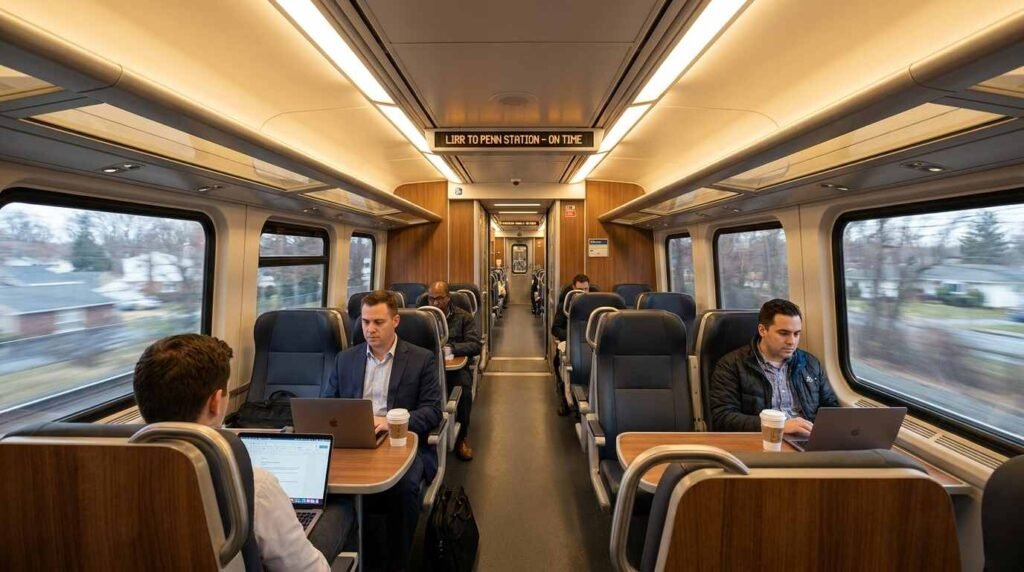
Commute Times by Branch: A Realistic Reference Guide
Times below are from MTA LIRR timetables and reflect scheduled service. Actual travel time adds platform transfer time at Jamaica (where applicable) and real-world delay factors that vary by branch and season. All times are to Penn Station unless noted; Grand Central Madison times follow in the next section.
Port Jefferson Branch (North Shore):
- Stony Brook → Penn Station: approximately 75–85 minutes
- Port Jefferson → Penn Station: approximately 95–105 minutes
- St. James / Smithtown → Penn Station: approximately 70–80 minutes
- Huntington → Penn Station: approximately 55–65 minutes (some direct; some via Jamaica)
Oyster Bay Branch (Mid-North Shore):
- Cold Spring Harbor → Penn Station: approximately 50–60 minutes
- Oyster Bay → Penn Station: approximately 65–75 minutes
- Syosset → Penn Station: approximately 50–60 minutes
Port Washington Branch (Nassau North Shore):
- Port Washington → Penn Station: approximately 45–55 minutes (direct — no Jamaica transfer, one of the LIRR’s cleanest commutes)
- Great Neck → Penn Station: approximately 35–45 minutes
Babylon Branch (South Shore, for reference):
- Babylon → Penn Station: approximately 55–65 minutes
One factor that consistently matters more than raw travel time: the Jamaica transfer. Many North Shore stations require a change at Jamaica, which adds 10–15 minutes and introduces the primary source of cascading delays on the system. Branches that run direct — Port Washington being the most notable — tend to have significantly lower anxiety-per-commute ratios than comparable travel-time branches that route through Jamaica.
Monthly Pass Costs by Zone: Budget This Before You Fall in Love with a House
LIRR fares are structured by zone, with Zone 1 covering inner Nassau County stations closest to the city and zones increasing outward. Verify current pricing through the MTA fare calculator at new.mta.info before budgeting — fares are subject to periodic adjustments.
As a general framework based on recent fare structures:
- Zone 3 (Great Neck, Port Washington): approximately $220–$240/month
- Zone 5 (Huntington, Cold Spring Harbor, Syosset): approximately $270–$310/month
- Zone 7 (Stony Brook, St. James): approximately $310–$340/month
- Zone 9 (Port Jefferson): approximately $340–$370/month
These figures are approximate and should be confirmed against current MTA pricing. For a household with two commuters, double these numbers — that’s real money, and it belongs in your monthly housing cost calculation alongside taxes, mortgage, and insurance.
The pass cost also changes depending on whether your employer offers a pre-tax commuter benefit program (many New York City employers do), which can reduce your effective out-of-pocket cost meaningfully. If your company offers a commuter benefits card, the federal limit for pre-tax transit contributions is currently $315/month (verify current limits with your HR department). That can cover a substantial portion of your monthly pass.
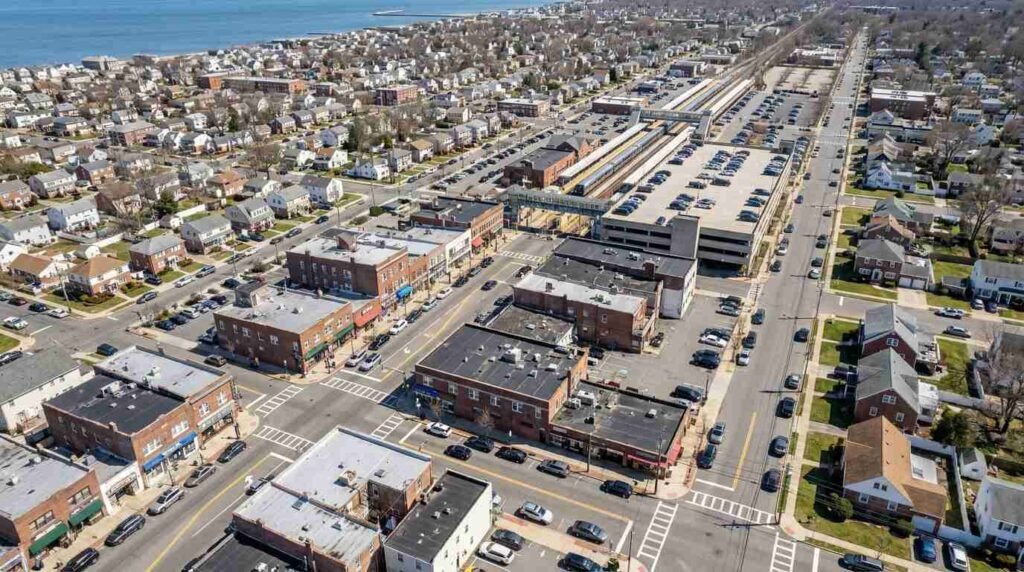
Grand Central Madison Changed Everything — Here’s How
When Grand Central Madison opened in January 2023, it was the most significant infrastructure change on the LIRR in generations. For buyers, it’s not just a new station — it’s a new geography of value.
Grand Central Madison provides direct LIRR service to Grand Central Terminal via a deep-bore tunnel under Midtown, with eight tracks and no at-grade street conflicts. For commuters whose offices are on the East Side of Manhattan, it eliminates the crosstown transfer from Penn Station — a walk or subway ride that could add 20 to 30 minutes each way to the effective commute.
The practical impact: communities that were already reasonable LIRR commutes to Penn Station became materially better commutes to Midtown East, the Upper East Side, and the 42nd Street corridor. That shift has been absorbed gradually into pricing in some markets, though it’s not uniform.
Branches that currently serve Grand Central Madison include most of the mainline LIRR branches. The Port Jefferson Branch, which serves the North Shore communities I work with most closely, now offers Grand Central Madison service — though not all trains run directly, and transfers remain part of some schedules. Again: check the actual timetables for your specific origin station.
If your office is in Midtown West or below 34th Street, Penn Station remains your more direct destination. If you’re east of Lexington, Grand Central Madison changes the calculus.
Park-and-Ride vs. Walking Distance to the Station
Station proximity carries a measurable premium in Long Island real estate. Properties within walking distance of a well-served LIRR station — loosely defined as under a half-mile — consistently trade at a premium over comparable homes that require a car to reach the platform.
This matters for a few reasons beyond the obvious convenience:
One car instead of two. For households where both partners commute but on different schedules, having the LIRR station walkable changes the transportation math entirely. You may be able to operate with a single car, which saves $800 to $1,200 a month in payments, insurance, and maintenance. That’s a meaningful offset against the station-proximity premium.
Parking availability and cost at stations that require driving is a real constraint. LIRR parking lots at major stations often have waiting lists of years, not months. Daily parking rates at station lots vary by station and can run $5 to $12 per day — which adds up. Before buying near a station you’d need to drive to, check the parking situation specifically.
Port Jefferson, Huntington, Stony Brook, and Cold Spring Harbor all have walkable downtown cores with active retail near their stations — which adds quality-of-life value beyond the commute itself. Communities like St. James or Smithtown, where the station is more isolated from the town center, require driving to the platform for most buyers.
Hybrid Work and the Long Island Commute: The New Math
The three-day office week changed the financial calculus for LIRR commuting in ways that aren’t yet fully reflected in how buyers approach commute-related buying decisions.
If you’re commuting three days a week, the monthly pass math shifts. Depending on your fare zone, it may be cheaper to buy peak single-ride or off-peak tickets for three days a week than to carry a monthly pass — particularly in higher zones. Run the numbers for your specific situation before defaulting to a monthly pass.
The hybrid work shift also changed which towns became more viable. Communities that felt aggressive on commute time when daily office trips were the norm — the Port Jefferson–area towns on the far end of the branch, for example — are now within acceptable range for buyers who are in the city two or three days a week and want the space, the schools, and the waterfront proximity that the deeper North Shore offers.
I think about this when I’m advising buyers about where their sweet spot is. The town that fits a five-day commute is a different town than the one that fits a three-day commute. The range expands substantially when the office is a deliberate destination rather than a daily default.
For a full picture of what the North Shore has to offer across that range of distances, North Shore vs. South Shore: What Relocating Buyers Actually Need to Know and the neighborhood guide series — Stony Brook, Setauket and East Setauket, Sound Beach — give you the community detail alongside the commute context.
The Towns With the Best LIRR Access Right Now
For buyers prioritizing commute efficiency above other variables, these are the North Shore towns and villages that offer the strongest combination of station quality, train frequency, travel time, and walkable station areas:
Huntington is the strongest overall LIRR town on the North Shore by most commute metrics — multiple trains per hour during peak, a walkable village adjacent to the station, and solid travel times. The real estate market reflects this; it’s competitive.
Cold Spring Harbor offers excellent access on the Oyster Bay Branch with a quieter platform and a scenic station area. Direct trains are not always available, but the branch performs well. The town itself is exceptional.
Syosset is a strong mid-Nassau option for buyers who want proximity to top-tier school districts and reliable Port Jefferson Branch service, with some trains running direct.
Port Washington (Nassau County, not the North Shore I primarily cover, but relevant for buyers casting a wider net) has the cleanest commute on the entire LIRR system — direct service, no Jamaica transfer, Port Washington Branch reliability. The premium for it is real.
Stony Brook offers good access for buyers who are willing to accept longer travel times in exchange for the specific community — the university presence, the harbor, the neighborhood character. With a hybrid schedule, the 75-to-85-minute run becomes entirely manageable.
What to Do on Delay Days (Because They Will Happen)
No honest guide to the LIRR leaves this out.
The system does delay. Track signal problems, switch failures, weather events, and the occasional service interruption are part of the reality of commuter rail. The subway has its version of this. The LIRR has its version. Neither is uniquely reliable.
The habits that help: sign up for MTA LIRR service alerts by text for your specific branch. Keep the MyMTA app on your phone and check it before you leave the house. Build 15 minutes of buffer into your morning schedule on days when you have an immovable obligation — a board meeting, a closing, a presentation. Build relationships with the off-peak train schedule for mornings when you can afford a slightly later start.
Most LIRR delays resolve or reroute through Jamaica within 20 to 30 minutes. The genuinely bad days — hours-long shutdowns, major weather events — are relatively rare and are the same days the highways and tunnels are impassable anyway.
The mental model that helps: the LIRR is a reliable commute with unreliable edges. Plan for the middle, build buffer for the edges, and stop expecting airport-level precision from a commuter railroad that has been operating since 1834.
The train is the infrastructure that makes the whole trade-off work. Get the commute right and the rest of the North Shore story — the schools, the waterfront, the space, the communities that hold their value over decades — all follows. Get it wrong and you’ll be recalculating every morning by 8:15.
Do the commute math first. Then fall in love with the house.
Real estate markets change. For current listings and market data, contact Pawli at Maison Pawli.
You Might Also Like
- North Shore vs. South Shore: What Relocating Buyers Actually Need to Know
- Mount Sinai, NY — The North Shore Hamlet That Earned Its Quiet
- How to Choose the Right Real Estate Agent on Long Island
Sources
- MTA LIRR Timetables and Fare Calculator
- Grand Central Madison — MTA
- LIRR Parking — MTA
- IRS Commuter Benefit Limits — IRS Publication 15-B