The Wrecking Ball Came to Inisfada: How an 87-Room Gold Coast Mansion Became 46 Homes
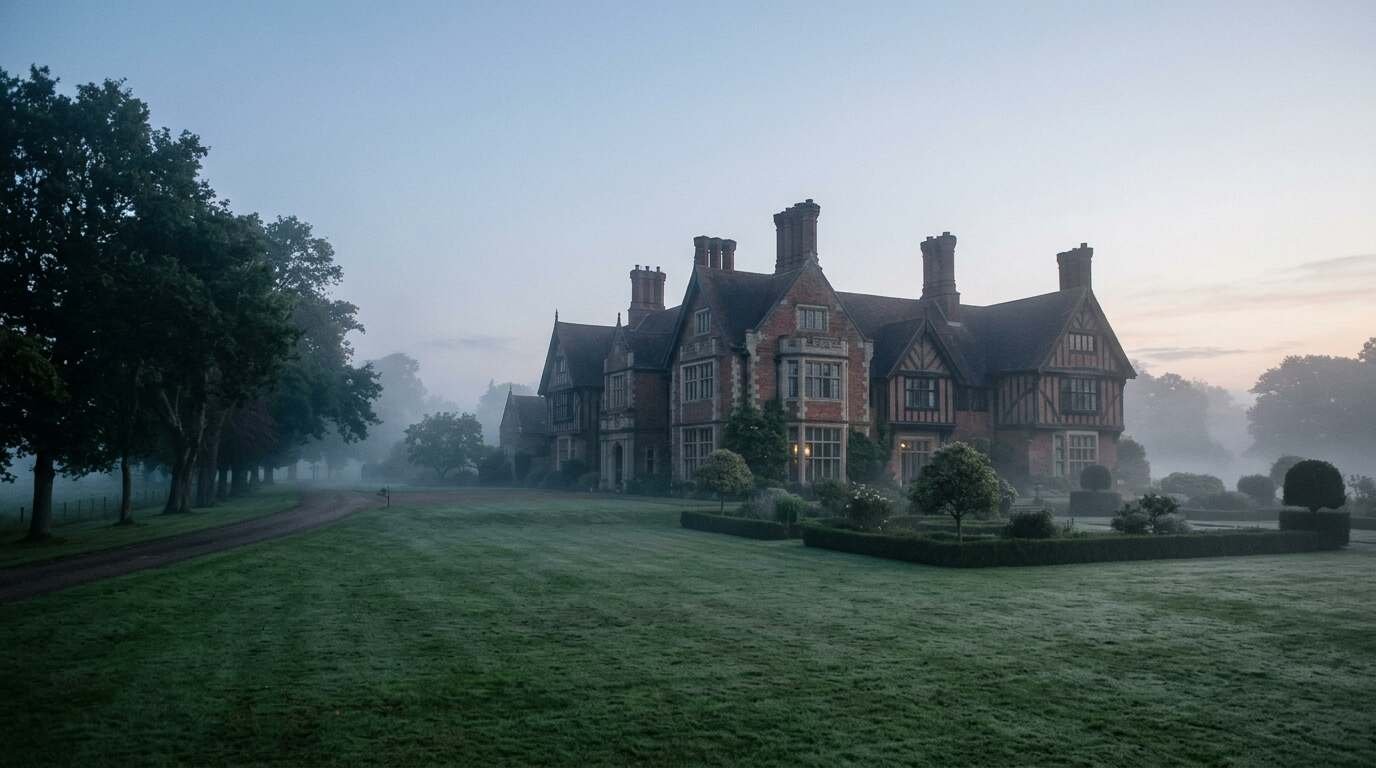
Fog sat over Searingtown Road on the morning of Thursday, December 5, 2013, and somewhere behind a fenced entrance in North Hills a wrecking ball began working on the solarium. The Long Island Press reported rubble where the side porches had stood, and Newsday reported the next day that almost half of the mansion was already gone. Inisfada, a Tudor Revival house of 87 rooms completed in 1920, had been listed as a development site for more than a year. The village had declined to landmark it, and nothing stood in the way.
What followed is a compact case study in how a Gold Coast estate disappears: a donor family, a religious order that could no longer pay the upkeep, an unlandmarked parcel, a sale to a developer, and a subdivision plan. The sections below follow that sequence using news coverage, preservation records and the auction house now offering pieces of the building. Where the published sources disagree on a number, the disagreement is shown instead of resolved by guesswork.
Inisfada at a glance
| Detail | What the sources say |
|---|---|
| Address | 251 Searingtown Road, North Hills (Nassau County) |
| Built | 1916 to 1920 |
| Architect | John T. Windrim of Philadelphia |
| Built for | Nicholas and Genevieve Brady |
| Later use | Jesuit seminary, then St. Ignatius Retreat House |
| Retreat house closed | June 2013 |
| Sold | 2013, to the Manhasset Bay Group, for about $36 million to $36.5 million |
| Demolition began | December 5, 2013 |
| Site today | Manhasset Crest, a 46-home gated community by Toll Brothers |
A house built by a convert
Nicholas Brady, a convert from Episcopalianism to Catholicism, built the house as a family residence, and Preservation Long Island describes the estate as the country home of Nicholas and Genevieve Brady and the only known New York example of Windrim’s work. The name is Irish for Long Island. According to Wikipedia’s summary of New York Times and Newsday coverage, the house hosted visiting Catholic dignitaries, including Eugenio Pacelli, the future Pope Pius XII, during his 1936 visit as a Vatican diplomat.
The Bradys had no children. Preservation Long Island says Mrs. Brady donated the estate to the Jesuit order in 1937, a date that several other sources repeat, though some accounts place the bequest in 1938. The order used it first as a seminary and, from 1963, as a retreat house. The estate shrank along the way. Preservation Long Island puts the site at 33 of an original 122 acres by the time of the sale, while other accounts describe an original estate of 300 acres or more, and the discrepancy is listed in the table near the end of this article.
Why the Jesuits sold
In June 2012, the New York Province of the Society of Jesus announced that Inisfada and Mount Manresa on Staten Island would close, with the order saying the retreat-house model was no longer financially viable, as quoted in the National Catholic Reporter and summarized on Wikipedia. The Manhasset Press reported that the Jesuits then listed the house and its remaining 33 acres at $49 million, advertised as a prime development site. The listing sat for well over a year, the Long Island Press noted, before a buyer appeared.
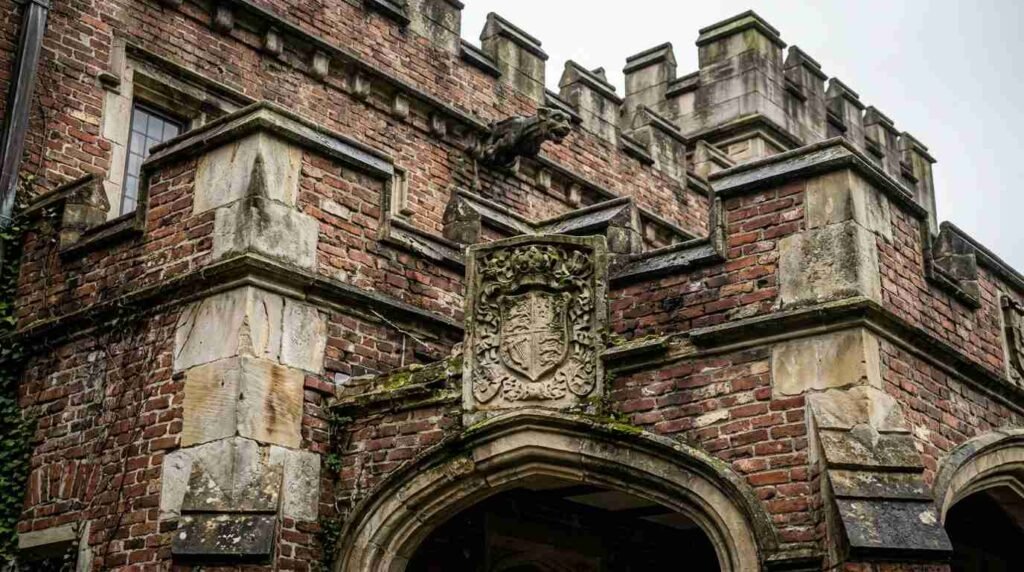
The last Mass at the retreat center was said on June 2, 2013, and Untapped Cities reported that the doors closed the next day.
The fight over a house with no landmark status
Preservation Long Island had already named the property a Watch Property, and its reasoning was structural: a large site with no landmark designation could be demolished and redeveloped as a subdivision. That is what happened. The Council of Greater Manhasset Civic Associations and other groups campaigned to save the building, Wikipedia’s account records, including an attempt to line up an alternative buyer, a Queens-based nonprofit health organization. A landmark application was pursued in July 2013. None of it succeeded.
Howard Kroplick, the Town of North Hempstead historian, told the Long Island Press on the day demolition began that it was “another sad day for preserving Long Island’s history.” Preservation Long Island’s own entry on the property is blunter about the mechanism, recording that village officials showed no interest in finding alternative uses.
A short editorial from the Catholic Thing, published December 11, 2013, took a different angle, arguing that the Jesuits did not relocate historically important objects to Catholic institutions and instead auctioned century-old antiques, including a cathedral chair associated with Cardinal Pacelli, with about $50,000 in proceeds going to Fordham. A real estate blog’s contemporaneous account puts the auction total at roughly $51,000, so the figure is approximate.
The sale, the salvage, and the last morning
The property went under contract in May 2013 and closed in August, the Long Island Press reported, calling it one of the larger Long Island real estate transactions of the year. The reported price is $36.5 million in most sources and $36 million in the Press. The buyer was the Manhasset Bay Group, described in Wikipedia’s summary of local coverage as a consortium of four Hong Kong-based development companies.
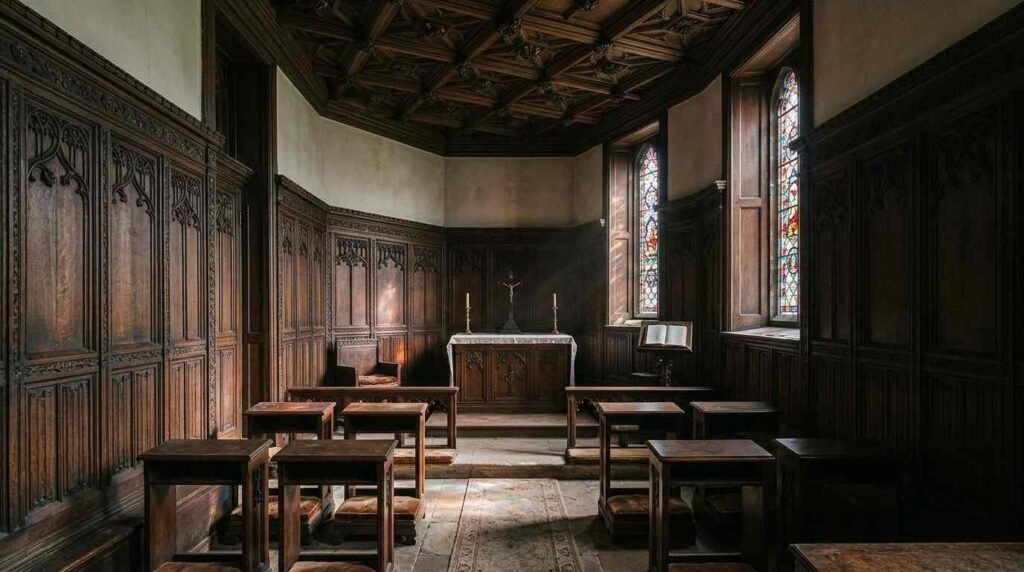
Before the wrecking ball, a contractor was hired to take parts of the house apart. Nevcon Builders lists the job on its portfolio page as the dismantling, salvage and preservation of historical woodwork, millwork and stonework across the 87-room estate, with work running October through November 2013 on 71,800 square feet. The Saint Genevieve chapel, which sat on the second floor and was done in carved oak, was among the pieces saved and went to Fordham University. Fordham’s Monsignor Joseph Quinn told The Fordham Ram at the time that “ultimately, we hope it will be used as a chapel.”
Then came December 5. Wikipedia, citing the Manhasset Press and Newsday, dates the start of demolition to that day, and the Long Island Press described a wrecking ball working through fog while the developer, reportedly from Hong Kong, stayed silent about plans.
What stands on the site now
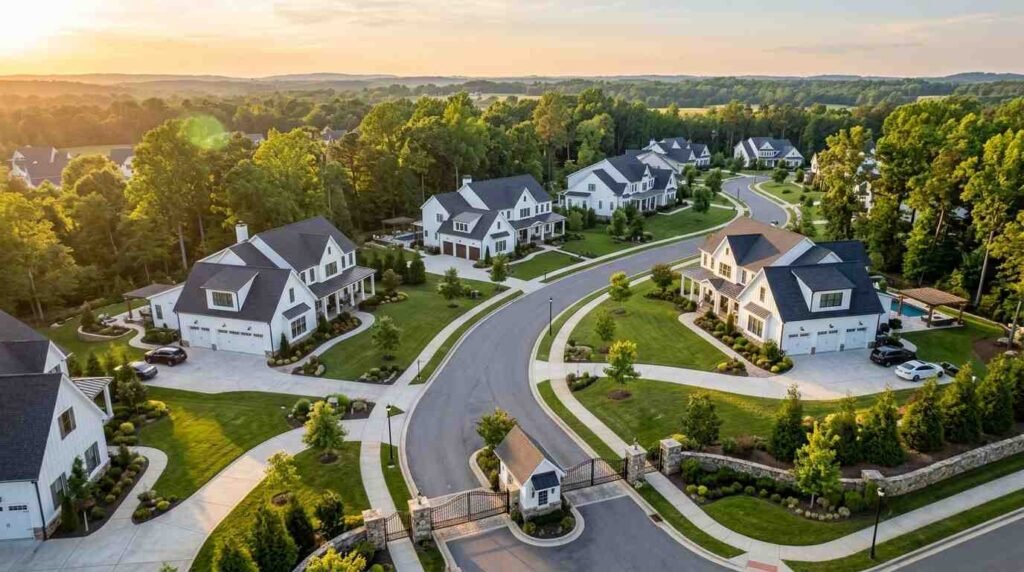
The plan for the land took years to settle. A draft environmental impact study heard by the North Hills planning board described a 30.46-acre subdivision with 46 single-family homes arranged around a ring road, a single entrance from Searingtown Road, and a community building of about 3,000 square feet, according to The Island Now. Residents’ questions at that hearing centered on traffic and tree removal.
In 2019 the property was back on the market. The Real Deal, summarizing Newsday, reported it listing for $110 million as a development site that could hold up to 46 single-family homes, represented by Daniel Gale Sotheby’s International Realty. It did not sell at that figure. According to Patch, Toll Brothers bought the site in 2021 for $38.4 million, and the resulting gated community, Manhasset Crest, has 46 homes priced from $3 million. The model home goes by a name that reads differently against this history: the Gatsby Modern Farmhouse.
The chapel, offered for sale
The Fordham plan to rebuild the chapel on campus did not hold. Sotheby’s states on its sale page that the project was abandoned in 2022 and that Fordham divested most of the chapel, with sections and artwork now available through a Sotheby’s selling exhibition. The listing attributes the work to Gorham and Company under the direction of Frank Moffitt, circa 1920, gives approximate dimensions of 16 feet 1 inch high by 35 feet 9 inches wide by 19 feet 2 inches deep, and lists the price as upon request.
Other objects went elsewhere. A history posted by Saint Ignatius Loyola parish in Manhattan says many contents of its Lady Chapel came from Inisfada, and that other objects went to the parish house, grammar school and preschool.
What the Inisfada outcome means for owners and buyers
Inisfada is an unusually large example, but the pattern is familiar across the North Shore: a landmark designation is local, voluntary and often absent. Owners of older houses and buyers weighing them can check a few things.
- Whether the property has any local landmark or historic district designation, which Preservation Long Island’s Local Landmark Law Locator is built to help look up.
- Whether a preservation easement or recorded covenant restricts demolition or exterior changes, a topic covered in Before You Touch the Bow Windows: What Preservation Easements on Gold Coast–Adjacent Properties Actually Mean for Your Renovation Budget.
- What the village or town code allows on a large parcel, since subdivision potential is what made the Inisfada land valuable to developers.
For the wider context of how Gold Coast estates have been sold, subdivided and demolished, see Harbor Hill and the Estates That Didn’t Survive and The Gold Coast Estate as Tax Problem. One independent blog, Real Estalking, covers the same story and notes that the Jesuits had been selling off land gradually since the original gift, shrinking the estate to the 33 acres around the house.
This is for informational purposes only — consult a licensed attorney or financial advisor for your specific situation.
Where the published sources disagree
| Detail | Figures reported | Where |
|---|---|---|
| Rooms | 87 or 85 | Most sources say 87; Untapped Cities says 85 |
| Size | 71,800 to about 90,000 square feet | Nevcon: 71,800; Catholic Thing: 72,000; American Aristocracy and a blogger: 90,000 |
| Sale price | $36 million or $36.5 million | Long Island Press; most other sources |
| Original acreage | 122 or 300+ | Preservation Long Island; several other sources |
| Donation year | 1937 or 1938 | Preservation Long Island and others; some accounts |
| Location | North Hills or Manhasset | Village is North Hills; mailing and local usage often say Manhasset |
Inisfada timeline
- 1916 to 1920: The Brady mansion is built to John T. Windrim’s design.
- 1936: Eugenio Pacelli, the future Pius XII, stays at the house, per Times and Newsday coverage summarized on Wikipedia.
- 1937: The estate passes to the Jesuits, per Preservation Long Island.
- 1963: The house becomes the St. Ignatius Retreat House.
- June 2012: The Jesuit province announces the closing.
- Fall 2012: The property is listed at $49 million, per the Manhasset Press.
- May 2013: The property goes under contract.
- June 2013: The last Mass is said and the retreat center closes.
- August 2013: The sale closes at about $36 million to $36.5 million.
- October to November 2013: Nevcon dismantles and salvages woodwork, millwork and stonework.
- December 5, 2013: Demolition begins in fog.
- April 2019: The cleared site is reported listing at $110 million.
- 2021: Toll Brothers buys the site for $38.4 million.
- Later: Manhasset Crest opens sales for 46 homes from $3 million.
Questions people ask
Is Inisfada still standing?
No. Demolition began on December 5, 2013, and the main house is gone. A salvaged chapel and other woodwork survive off site.
Who built Inisfada?
Nicholas and Genevieve Brady built it between 1916 and 1920, with John T. Windrim as architect. The name is Irish for Long Island.
Why was it demolished?
The Jesuits closed the retreat house in 2013 and sold the parcel to a developer. Preservation Long Island notes the large site was not landmarked, which allowed demolition and subdivision.
What is on the site now?
Manhasset Crest, a gated community of 46 homes by Toll Brothers on roughly 30 acres at Searingtown Road, per Patch.
Can the chapel be seen or bought?
Sotheby’s lists sections and artwork of the Saint Genevieve chapel in a selling exhibition, with prices on request. A viewing can be arranged through Sotheby’s.
Real estate markets change. For current listings and market data, contact Maison Pawli at maisonpawli.com/about/. Prices and figures reflect the sources and dates cited and may have changed.
You Might Also Like
- Why Gold Coast Buyers Are Paying a Premium for Water Views in 2026
- The Cold Spring Harbor Phoenix: Buying and Saving Gold Coast Ruins
- The Forgotten Millionaires’ Row: How Sands Point Became Long Island’s Most Secretive Gold Coast Enclave
- Historic Homes on Long Island: What Buyers Should Know Before Falling in Love With an Old House
Sources
- Long Island Press, Inisfada Demolition Underway (December 5, 2013)
- Preservation Long Island, St. Ignatius Retreat House at Inisfada
- The Island Now, Inisfada site requires variances for approval
- Patch, Manhasset Crest, 46 New Luxury Homes From Toll Brothers, Opens Sales
- The Real Deal, Former ‘Catholic sanctuary’ in North Hills hits the market seeking $110M (April 8, 2019)
- Nevcon Builders, Inisfada House project page
- Sotheby’s, St. Genevieve’s Chapel: Inisfada
- The Fordham Ram, Fordham receives chapel from closing Jesuit retreat house
- The Catholic Thing, Farewell Inisfada (December 11, 2013)
- Untapped Cities, The Closing of Inisfada
- American Aristocracy, Inisfada
- Saint Ignatius Loyola parish, Watch This Space: The Lady Chapel, Part 2
- Real Estalking, Observation: The Senseless Loss of Inisfada
- Wikipedia, Inisfada (secondary source, used to locate New York Times, Newsday, National Catholic Reporter and Manhasset Press coverage; the New York Times article itself could not be accessed for this post)