Why Gold Coast Buyers Are Paying a Premium for Water Views in 2026
Why Gold Coast Buyers Are Paying a Premium for Water Views in 2026
The first time I showed a water-view home in Lloyd Harbor, the buyers barely cleared the foyer before they stopped talking. The Sound was visible through a wall of windows at the back of the house, steel-gray and very still, and for about thirty seconds nobody said anything. That silence told me everything. I already knew what the offer was going to look like.
Water views on the Gold Coast have always commanded a premium. But what’s happening in 2026 is something more specific — a convergence of compressed inventory, sustained lifestyle migration, and a buyer cohort that is genuinely willing to pay for the view in a way that registers differently in the data. If you’re thinking about buying or selling a waterfront home on the North Shore, these numbers deserve your attention before you walk into your first showing.
What’s Actually Driving Waterfront Demand on the Gold Coast Right Now
The structural story on Long Island is tight inventory — that part isn’t new. Chris Boylan at BoylanSells.com put it plainly in his March 2026 market report: “Long Island is still a seller-leaning market because inventory is low, prices are up, and serious buyers are still competing for well-priced homes.” Nassau County single-family inventory fell 12.8% year over year through March 2026, and Suffolk was down 20.3% over the same period, per OneKey MLS data Boylan cites. Across Long Island as a whole, total housing inventory sat 16.7% below March 2025 levels.
In that environment, every desirable property type gets bid up. But waterfront homes get bid up harder, because their supply constraint is geological, not cyclical. You can build more colonial revivals. You cannot build more Long Island Sound coastline.
What’s adding pressure on top of that structural squeeze is a buyer pool that has fundamentally reoriented around quality of life. The remote-work flexibility that restructured commute calculations in 2020 and 2021 has not fully reversed. I’m still routinely working with buyers — physicians, attorneys, finance professionals — who are choosing the North Shore because they can work from home three days a week and they want those three days to look like something. A water view becomes a different kind of asset when your home is also your office.
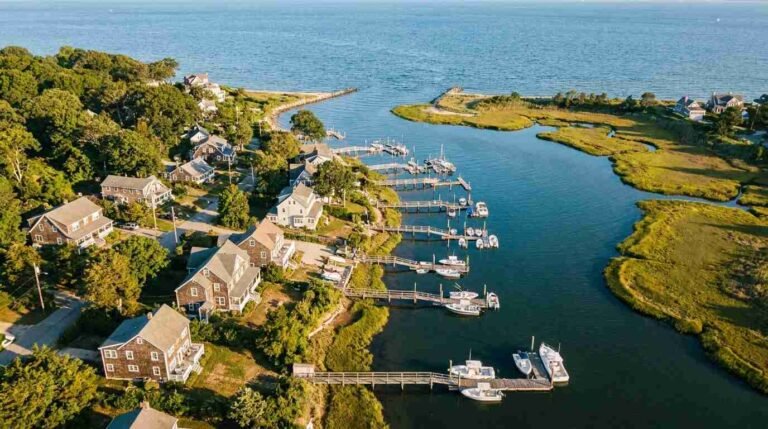
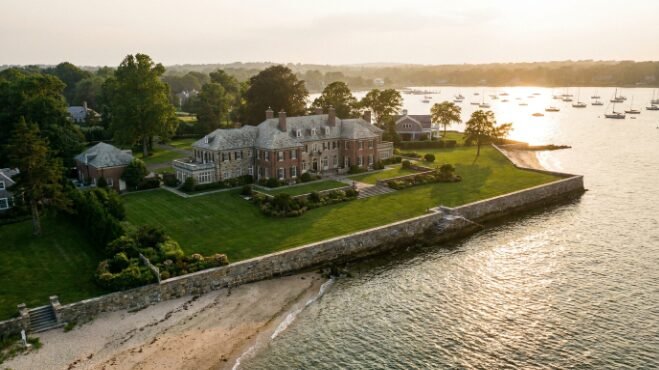
The communities generating the most conversation right now are Kings Point, Sands Point, Lloyd Harbor, and Cold Spring Harbor — places where the water isn’t a backdrop but an organizing principle of the address. These aren’t starter neighborhoods. But they’re also not purely trophy neighborhoods anymore. They’re practical choices for buyers who have done the math on what their time is worth and decided that a Sound-facing window is part of the answer.
How Much More Are Buyers Paying for Water Views vs. Inland Properties?
Precise waterfront premium figures require direct MLS comparison runs that vary by town, school district, and condition — so I’ll be honest about what’s verifiable and what requires local expertise to contextualize. What consistently shows up across broker analysis of Nassau and Suffolk MLS data is a premium in the 18% to 35% range for water-view properties against comparable non-waterfront homes in the same zip codes. The range is wide because “water view” covers a lot of ground — a glimpse of a bay inlet from a second-floor bedroom is not the same as a Lloyd Harbor lot with direct Sound exposure.
What I can tell you with more confidence, from watching listings move through the market, is that the premium isn’t just at offer. It holds at appraisal more reliably than it did five years ago. That’s meaningful for buyers, because it suggests the data is catching up to what buyers have been pricing emotionally for years.
The Northport market is one of the clearest illustrations. The March 2026 report from Educators Realty noted a median sold price of $967,500 — up 7.08% from the prior month — with long-term appreciation driving the median estimated property value to $1,021,270, a 17.5% increase over twelve months. That is not a coincidence. Northport’s water-facing identity is exactly what’s being priced.
The Towns Where the Premium Is Highest — and Why
Kings Point and Sands Point sit at the Nassau end of the Gold Coast corridor and carry the steepest premiums, driven by direct Long Island Sound or harbor frontage paired with some of the county’s most prestigious school districts. Properties on Kings Point Road or Middle Neck Road with genuine Sound exposure regularly trade at multiples that would not appraise without the view as a supporting factor. The address itself becomes a comparable.
Lloyd Harbor and Cold Spring Harbor in Suffolk represent a different kind of premium — slightly more land, slightly more architectural history, and the particular draw of a community that has managed to remain both private and genuinely beautiful. Lloyd Harbor’s long driveway culture and conservation-oriented zoning means waterfront lots stay rare. Cold Spring Harbor’s harbor access and village character have sustained appreciation even through slower market periods.
Northport earns its own mention because it operates more like a village than an estate community — walkable, with a working harbor, galleries, and restaurants that give the address year-round utility. That utility is why the premium there is increasingly defensible to appraisers who might have once questioned it.
Sands Point, which I’ve written about at length, is one of the North Shore’s most quietly stratified markets. The Forgotten Millionaires’ Row remains a useful framework for understanding how that market prices — prestige and privacy compound the waterfront premium in ways that aggregate data tends to understate.
What Sellers Need to Know Before Listing a Waterfront Property
The premium is real. But it’s also perishable if you mishandle the listing strategy.
Waterfront homes require photography that earns the view, not photographs taken at noon on a cloudy Tuesday. The light on the Sound changes hourly, and the best listing photos for a waterfront home are almost always taken at golden hour with the water doing its full work. Sellers who cut corners on marketing for a $1.8M listing are leaving money on the table — not because buyers won’t notice the view, but because they’ll notice it less.
Condition also matters more for waterfront properties than sellers typically expect. Coastal wear is real — salt air, moisture, and UV exposure accumulate on exterior finishes, windows, decks, and mechanical systems in ways that inland homes don’t experience at the same rate. A well-staged interior in a house with visibly weathered trim tells a buyer that deferred maintenance is a pattern. Getting ahead of that before the first showing is not cosmetic — it’s strategic.
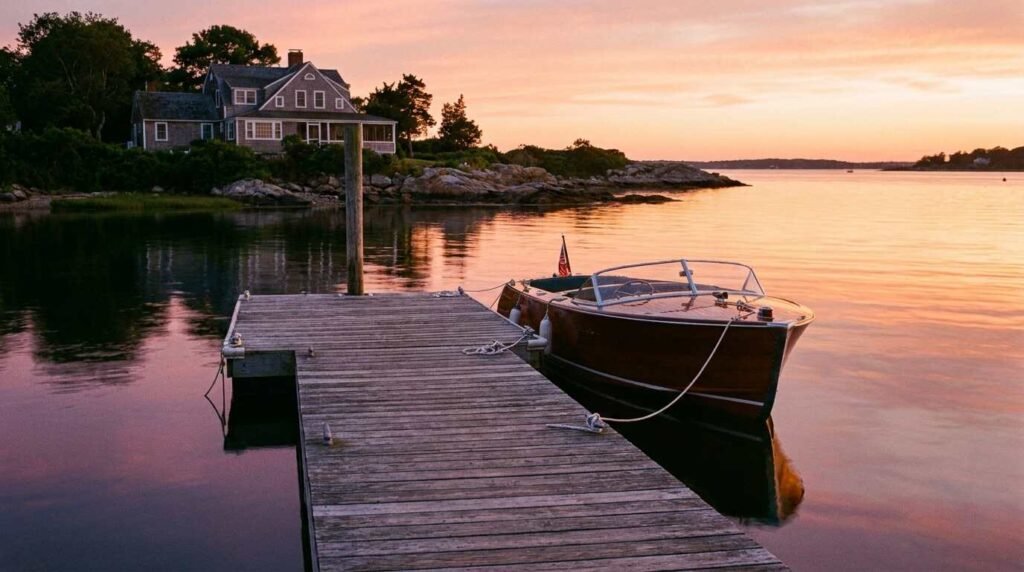
Finally: the waterfront premium only holds if the water is genuinely accessible and legally intact. Dock rights, mooring rights, and any DEC permits attached to the property need to be verified and disclosed early. I’ve seen transactions slow painfully because a seller assumed a dock configuration was grandfathered when it wasn’t. Dock rights and mooring rights are their own conversation, and they need to happen before you list. For anything involving renovation or improvement to the shoreline, the DEC wetlands permit process is not optional.
Is the Premium Sustainable? What the Data Says About 2026 and Beyond
The honest answer is that no premium is permanent — but this one has structural support that makes a significant reversal unlikely in the near term.
The inventory argument is the most durable. Boylan’s March 2026 report puts Nassau’s single-family inventory at 1,665 homes — down from 1,909 a year earlier — with sellers still receiving 99% of original list price on average. Suffolk’s waterfront submarkets are even tighter. A premium that persists through interest rate headwinds, through a broader affordability crunch, through a market where buyers have become more deliberate — that premium is telling you something real.
What could pressure it: a sustained increase in mortgage rates above 7.5% would shift more buyers to the sidelines, and luxury waterfront is not immune to rate sensitivity at the high end. A broader economic contraction that affects the equity portfolios of the buyer cohort most likely to purchase these homes would matter. These are real risks, not invented ones.
But the underlying demand — lifestyle-motivated, equity-rich, geographically committed buyers who have already chosen the North Shore and want the best version of it — is not a pandemic-era aberration. It’s a permanent component of this market now. The water isn’t going anywhere. And neither is the premium.
Real estate markets change. This post reflects conditions as of May 2026. For current listings and market data, contact Pawli at Maison Pawli.
This is for informational purposes only — consult a licensed attorney or financial advisor for your specific situation.