How to Read Your Closing Disclosure in New York, Page by Page
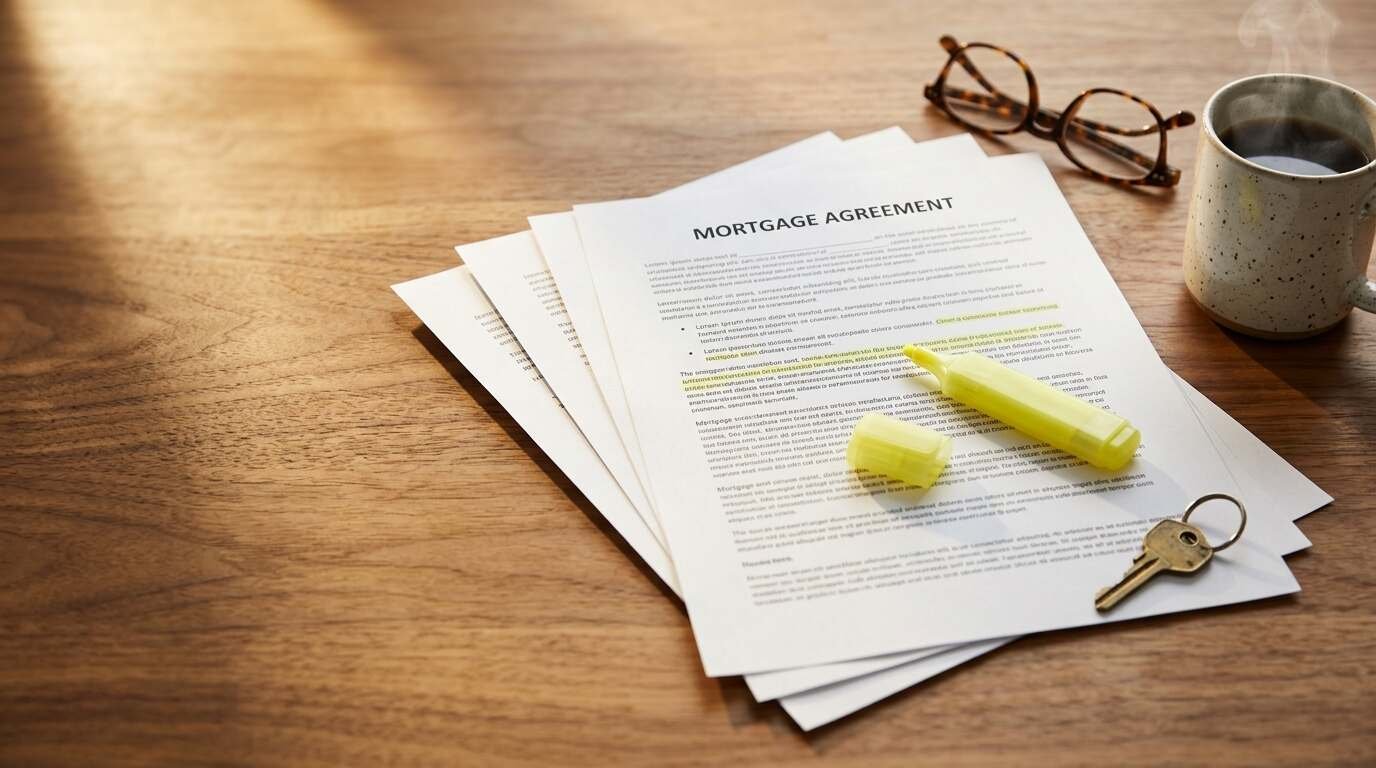
Federal rules hand a mortgage borrower five pages and at least three business days to check the lender’s final numbers before anything gets signed at the closing table. Each page checks a different part of the deal, and a mismatch on any one of them is easier to fix before closing than at it.
The form is the Closing Disclosure. According to the Consumer Financial Protection Bureau, it replaced the HUD-1 Settlement Statement and the final Truth-in-Lending form for most mortgages applied for on or after October 3, 2015. What follows walks through it in order, adds the New York and Suffolk County items that surface in it, and finishes with what to do when a figure does not match.
The three-business-day window
Under the federal regulation that governs it, a lender must make sure the borrower receives the final disclosures no later than three business days before closing. The CFPB describes the purpose plainly: time to compare the form against the Loan Estimate and to put questions to the lender, a housing counselor or an attorney.
Two practical steps come before the form arrives. The CFPB suggests contacting the lender or the closing agent (a title company, escrow officer or attorney) at least a week before closing to find out who is sending it and how, since delivery may be by email, by mail or through a website download. And the Loan Estimate for the chosen loan should be pulled out of the file now, because every comparison below depends on it.
Not every loan produces this form. The CFPB lists reverse mortgages, home equity lines of credit, certain manufactured-housing loans and some subordinate loans made through homebuyer assistance programs as exceptions; those transactions use Truth-in-Lending disclosures instead.
The three-day clock can restart. Per the regulation, only three kinds of change force a new waiting period, and everything else still has to be corrected by the time of closing.
| Change before closing | What the rule requires |
|---|---|
| The APR becomes inaccurate | Corrected disclosure and a new three-business-day wait |
| The loan product changes | Corrected disclosure and a new three-business-day wait |
| A prepayment penalty is added | Corrected disclosure and a new three-business-day wait |
| Any other change | Corrected disclosure received at or before closing, with no new wait |
The commitment letter that precedes all of this is a separate document with conditions of its own, covered in The Mortgage Commitment Letter Is Not a Loan Approval.
Page 1: loan terms and cash to close
The first page summarizes the loan, and the CFPB’s interactive explainer breaks the review into specific checks. Each of these should be compared line by line against the Loan Estimate:
- The spelling of every borrower’s name.
- Loan term, purpose, product and loan type.
- The loan amount and the interest rate.
- Whether the loan carries a prepayment penalty or a balloon payment.
- The estimated total monthly payment, and whether any items under estimated taxes, insurance and assessments sit outside escrow.
- The closing costs total and the cash-to-close figure.
One shortcut comes straight from the CFPB: the Annual Percentage Rate on the Closing Disclosure can be set beside the APR on the Loan Estimate, and a higher number is a fast signal that costs have gone up.
Page 2: itemized closing costs
Page 2 lists every charge, grouped into origination charges, services the borrower did not shop for, services the borrower did shop for, taxes and other government fees, prepaids, the initial escrow payment, and other items, ending in the total closing costs and any lender credits.

Two comparisons matter most. Charges under “Services Borrower Did Not Shop For” should be similar to what the Loan Estimate showed, and charges under “Services Borrower Did Shop For” should match the prices agreed to with each provider.
The rules about how much a fee may move fall into three groups, per the CFPB. Some fees cannot increase at all unless the borrower asked for a change in the loan or the borrower’s financial information changed. A second group is limited to a 10 percent increase. A third group has no limit. The CFPB’s page on reviewing closing documents includes a link to the list of which fees fall where, and asking the lender to sort the page 2 charges into those groups is a reasonable request.
The Suffolk County mortgage tax
The government-fees block is where New York shows up. The Suffolk County Clerk’s Mortgage Tax page describes a one-time tax paid when a mortgage is recorded, separate from the property taxes that may be collected through a monthly payment. The page gives the total as 1.05 percent of the mortgage amount, built from three pieces:
- A basic mortgage tax of 0.50 percent.
- An additional tax of 0.30 percent for the State of New York Mortgage Agency (SONYMA).
- A 0.25 percent MTA special assistance tax.
The page also states that a $30 deduction applies when the property is, or will be, improved by a one- or two-family dwelling, and that exemptions to the MTA portion exist in some situations and are claimed by affidavit at recording. For a round-number illustration, a $500,000 mortgage at 1.05 percent comes to $5,250 before the $30 deduction; an actual bill depends on the exemptions that apply, so the figure on the form should be confirmed with the closing agent. Recording-related charges also appear on the county’s fee schedule, which lists a $200 mortgage verification fee per document and a $200 real property verification fee per tax lot, among other per-filing fees. Both schedules are the clerk’s to change, so they are worth rechecking close to closing.
Purchases at $1 million or more bring a different state charge, covered in Albany Floated Mansion Tax Changes in 2026, and the ongoing side of ownership is mapped out in How Property Taxes Work in Suffolk County. A broader tour of the cost categories sits in What Closing Costs Actually Look Like on Long Island.
Page 3: the cash-to-close math
Page 3 reconciles the purchase. It shows what is due from the borrower at closing, adjustments for items the seller paid in advance, what has already been paid by or on behalf of the borrower, and adjustments for items the seller left unpaid, and it ends with cash to close. Any seller credit negotiated in the contract should appear here exactly as agreed.
Because this page produces the number a buyer actually has to deliver, re-adding it by hand is worth the ten minutes. A printing calculator or a spreadsheet makes the arithmetic traceable, and any difference from the printed total is a question for the lender or closing agent before the day of closing, not at the table.
That is also the page where wire instructions tend to come up. The CFPB warns that scammers pose as real estate or settlement agents and push last-minute changes to wiring instructions in order to redirect closing funds. A late change to instructions is best treated as a red flag and confirmed with the closing agent using a phone number already on file.
Page 4: loan disclosures
Page 4 covers the terms that govern the loan after closing, and the explainer flags these questions:
- How much a late payment costs, and whether the lender accepts partial monthly payments.
- Whether there will be an escrow account, and if not, whether an escrow waiver fee is being charged.
- Whether the loan can be assumed, has a demand feature, allows negative amortization, and what the security interest covers.
For a household that has been planning around a specific monthly payment, the escrow answer deserves a second look. An escrow account folds property taxes and insurance into the payment; a loan without one leaves those bills with the borrower. The homeowners insurance side is discussed in The Insurance Quote Comes Before the Offer.
Page 5: totals, APR and the appraisal
The last page shows the total of payments, the finance charge, the amount financed, the APR and the total interest percentage, along with a statement about the appraisal and a prompt to check contract details. These are the figures that make two loans comparable, which is why the APR comparison against the Loan Estimate matters so much.

When a number does not match
The CFPB’s guidance starts with a single step: ask the lender for a specific reason why the rate or fees changed. Some movement in closing costs is not unusual, but there are legal limits on what can change and by how much.
A rate lock does not always freeze everything. The CFPB notes that locks typically hold only if nothing changes in the application, and gives two examples of changes that can reopen the rate: an appraisal below the sale price, or income the lender cannot verify. If the explanation is unsatisfactory, the CFPB says the borrower can stop working with that lender, choose another, and may be able to negotiate with the seller to delay closing while a new loan is arranged. It adds that a borrower may have rights to compensation from the first lender if the changes were illegal, and suggests considering an attorney.
Delay is not free. Contract dates, rate locks and appraisal terms all run on their own clocks, and the interplay is covered in The Contingency Removal Deadline Is a Hard Stop and The Appraisal Gap Addendum Is a Negotiating Instrument. Rates themselves have moved quickly this autumn, which the October mortgage rate post follows week by week.
The CFPB also notes that a buyer may want a real estate attorney to review the documents, for example to confirm that a deed is structured for the ownership type the buyers intend when purchasing with another person. Its advice for the stack as a whole is short: “Ask lots of questions.”
Tools for review day
Review day is mostly paper, and a few ordinary supplies make the comparison easier. Each of the items below is an Amazon product linked through the Maison Pawli affiliate account.
- Sharpie Pocket Highlighters, Chisel Tip, Quick Dry, Assorted Fluorescent Colors, 12 Count: Separate colors can mark figures that match the Loan Estimate and figures that need a question to the lender. See it on Amazon (affiliate link)
- Pendaflex Expanding File, Letter, 13 Pockets, Color May Vary: A pocketed file keeps the Loan Estimate, each version of the Closing Disclosure and the lender emails in one place. See it on Amazon (affiliate link)
- Casio HR-170RC Plus Mini Desktop Printing Calculator: A printing calculator leaves a paper tape for re-adding the page 3 cash-to-close lines. See it on Amazon (affiliate link)
- ScanSnap iX1300 Wireless or USB Double-Sided Color Document Scanner, Black: A double-sided scanner turns the whole closing packet into digital copies for the household file. See it on Amazon (affiliate link)
- Home Buying Kit For Dummies: A general reference on the home-buying process for first-time purchasers. See it on Amazon (affiliate link)
As an Amazon Associate I earn from qualifying purchases. A commission may be earned if you buy through this link, at no extra cost to you.
Common questions
Who sends the Closing Disclosure? The CFPB says it may come from the lender or from the closing agent, so the first question to ask is which one, and by what method.

What if it has not arrived three business days before closing? The regulation puts the delivery obligation on the lender. Contacting the lender, the closing agent and the buyer’s attorney about the closing date is the sensible first move.
Does every loan get one? No. Reverse mortgages, home equity lines of credit and a few other loan types follow different disclosure rules, as described above.
Why keep the Loan Estimate? It is the baseline. The CFPB says to compare it against the Closing Disclosure to see whether fees have changed, and to ask the lender to explain any difference.
This is for informational purposes only — consult a licensed attorney or financial advisor for your specific situation. Fee schedules, tax rates and federal guidance may have changed since this post was written.
Real estate markets change. For current listings and market data, contact Maison Pawli at maisonpawli.com/about/.
You Might Also Like
- The Mortgage Commitment Letter Is Not a Loan Approval
- A Home Warranty Is Not Homeowners Insurance
- Condo, Co-op, or Townhouse on Long Island
- New York Home Inspections: What the State Standards Cover and Skip
Sources
- CFPB, Closing Disclosure Explainer
- CFPB, Review documents before closing
- CFPB, What do I do if the rate or fees are different on my Closing Disclosure than they were on my Loan Estimate?
- CFPB, What is the most important thing for me to do when I get my closing papers?
- CFPB blog, Know Before You Owe: Closing Disclosure (Sept. 23, 2015)
- 12 CFR 1026.19, Certain mortgage and variable-rate transactions (Cornell Legal Information Institute)
- Suffolk County Clerk, Mortgage Tax