
Virtual Tour, Real Liability: The Emerging Legal Exposure When 3D Open House Technology Misrepresents Condition
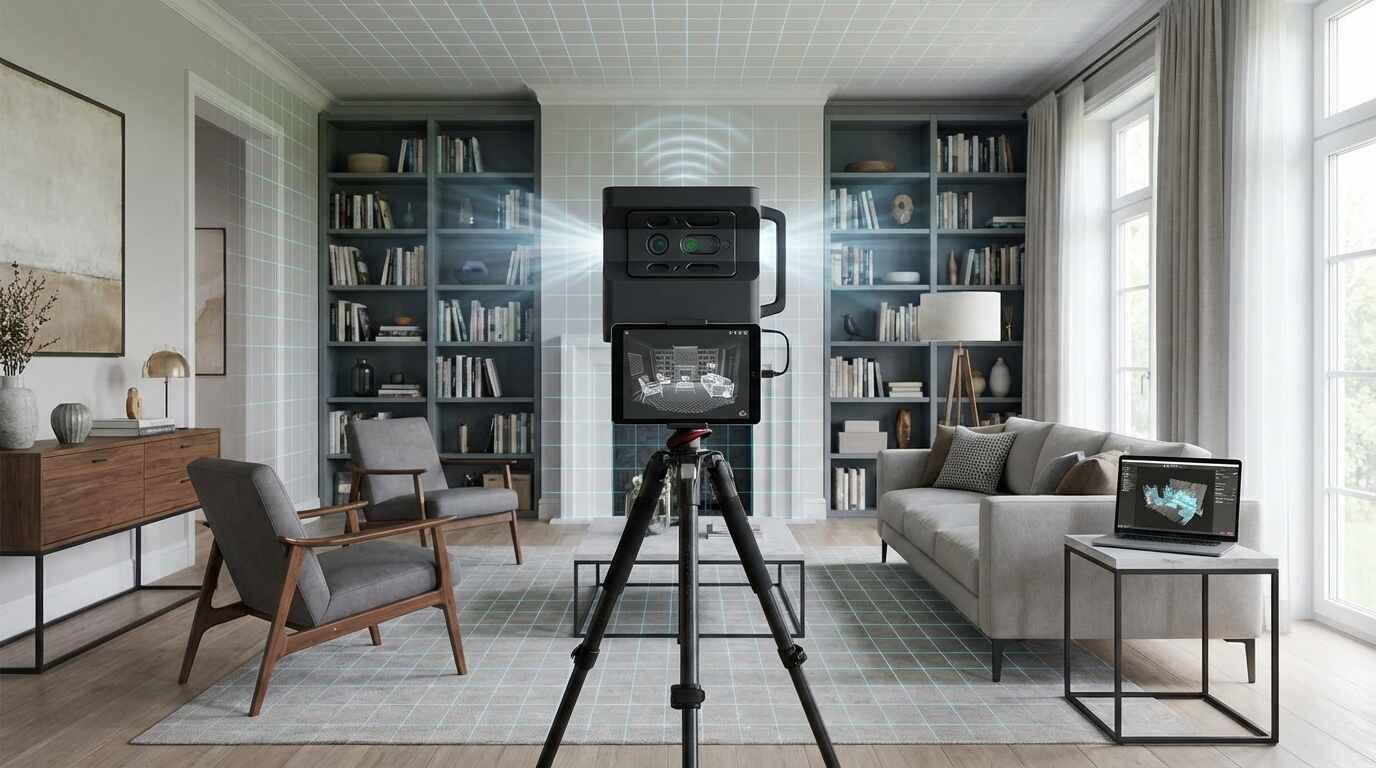
When I first started seeing Matterport tours in residential listings on the North Shore — this was several years before the pandemic made them standard — my reaction was practical: better tool, better buyer experience, fewer wasted showings. I still think that. What I have come to understand since is that the same technology that makes a property legible to a remote buyer also creates a documentary record that is considerably more durable and legally consequential than a photograph, and that neither sellers nor their brokers have fully internalized what that means.
A virtual tour is not a neutral presentation. It is a representation — a curated, technologically sophisticated representation of a property’s condition at a specific moment in time — and like all representations made in connection with a residential real estate transaction, it carries legal weight that attaches to the parties who commissioned and published it.
The Legal Status of a Virtual Tour Under New York Law
New York Real Property Law §443 establishes the broker’s duty of honest dealing and accurate representation in all matters connected to a real estate transaction. The statute and the regulatory framework that surrounds it do not distinguish between representations made verbally, in writing, in photographs, or in digital media — the obligation to avoid false or misleading statements of material fact applies across all modes of representation.
The National Association of Realtors Code of Ethics, Article 12, requires that all advertising and marketing materials present a true picture of the property. NAR guidance has addressed digital marketing representations with increasing specificity as virtual tour technology has become standard practice. The published guidance treats virtual tours as marketing representations subject to the same accuracy standards as any other presentation medium.
Where these two frameworks converge is in the analysis of what happens when a virtual tour omits, obscures, or affirmatively misrepresents a material condition. The question that is increasingly arriving in post-closing disputes — and that is beginning to generate appellate consideration — is whether a virtual tour constitutes a “representation” sufficient to support a misrepresentation or fraud claim. The answer, by application of existing New York fraud doctrine to the digital context, is yes.

How a Virtual Tour Becomes Evidentiary Material
The technical architecture of 3D virtual tour platforms — Matterport being the dominant commercial platform in residential real estate — creates a documentary record that is more specific, more reproducible, and more discoverable than any other form of property representation in common use.
A Matterport scan generates a point cloud from which the tour is rendered. The scan file carries embedded metadata: the scan date, the scan location, the individual scan points, and in many cases the precise timestamp of each scan position. This metadata is preserved in the tour file itself and in the platform’s server records. Where a virtual tour is published as a marketing representation, the scan metadata establishes precisely when the representation was made and, by necessary implication, what the property’s condition was at the moment of scanning.
In post-closing litigation where digital marketing materials have been introduced as evidence, this metadata has served two functions. First, it establishes the temporal relationship between the representation and any condition disclosed — or not disclosed — in subsequent documentation. A scan made three days after a contractor’s estimate for water remediation is a different evidentiary item than a scan made a year before the water problem developed. Second, in cases where the tour and the actual property condition are alleged to differ materially, the metadata anchors the comparison: the plaintiff can establish not only that the condition was not visible in the tour but precisely when the tour was captured and what the property record shows about the condition at that date.
Published guides from the NYSBA Real Property Law Section on digital marketing practices in residential transactions have flagged the evidentiary significance of tour metadata as a matter requiring attention from both sellers and brokers. The broker who commissions a virtual tour of a property knowing of a material condition that the scan does not show has created a document that will, in discovery, be placed alongside every other piece of evidence bearing on the seller’s and broker’s knowledge at the time.
Omission, Obscuration, and Active Misrepresentation
The virtual tour liability analysis operates along a spectrum from passive omission to active misrepresentation.
At the passive end: a virtual tour that simply does not show a particular area of the property — a basement that was not included in the scan, a utility room whose door was closed during the scan — presents a different legal profile than one in which a known defect was specifically excluded from the tour or the tour was staged to prevent the scan from capturing it. Passive omission, where the buyer had an independent obligation to inspect and the tour was not represented as a comprehensive condition survey, is harder to convert into an actionable claim.
At the active end: a virtual tour in which furniture was placed to prevent the scan from capturing a specific area of flooring, or in which the staging was designed to ensure that a ceiling condition would not be captured from the standard tour positions, presents the same analysis as the physical staging-as-concealment cases I addressed in Staged to Deceive. The technology does not change the underlying fraud analysis; it adds a layer of specificity to the evidentiary record.
The intermediate category — tours in which a condition is technically visible but presented in a way that a reasonable buyer reviewing the tour would not perceive it as significant — is the most contested space in the emerging case law. Courts evaluating buyer reliance in post-closing disputes involving virtual tours have had to address whether a buyer’s failure to perceive a condition that was technically present in the tour satisfies the buyer’s independent duty to inspect. The analysis tracks the patent versus latent defect distinction: where the condition was visible in the tour and a reasonable buyer undertaking reasonable review would have observed it, the buyer’s reliance claim is weakened. Where the condition was present in the tour but captured in a way that required specific expertise or unusual attention to detect, the seller’s and broker’s reliance on the tour’s technical inclusion of the condition provides less protection.
Broker Professional Liability
The broker who commissions a virtual tour occupies a specific position in this analysis. The decision about which areas of the property to include in the scan, how the property is staged for the scan, and what conditions are known to exist at the time of scanning all potentially fall within the broker’s knowledge and control. Where the broker knows of a condition and participates in a presentation strategy — including a scanning strategy — designed to prevent the tour from accurately representing that condition, the broker’s exposure runs on the same axes as the seller’s.
RPL §443(1) establishes that a broker’s duties include avoiding misrepresentation in all dealings with buyers and other parties. This duty does not require active fraud — it encompasses negligent misrepresentation as well. A broker who commissions and publishes a virtual tour without inquiring whether the property has conditions that should be reflected in the scan, in circumstances where a competent broker would have inquired, has not necessarily satisfied the standard of care.
The professional liability implications for brokerages are meaningful. The virtual tour is commissioned by the listing brokerage, hosted on the listing brokerage’s platform or a third-party platform to which the brokerage directs buyers, and incorporated into the listing as part of the marketing representation the brokerage makes on the seller’s behalf. The brokerage is not a passive conduit for the tour — it is the party that decided to publish it.

What the Discovery Record Has Shown
In the category of post-closing disputes where digital marketing materials have been introduced as evidence, the discovery record has shown a consistent pattern. Plaintiffs seek production of the virtual tour files including metadata, the communications between the seller and broker concerning the preparation of the property for scanning, any communications about what areas to include or exclude from the tour, the contractor and inspection records contemporaneous with the scan, and any internal communications at the brokerage about the property’s condition.
This is not a hypothetical discovery scenario. It is the pattern that has developed as virtual tours have become standard marketing practice and as post-closing disputes have begun to engage with the digital record as a matter of course. The metadata does not lie, and the communications surrounding the production of a virtual tour tend to be preserved in email and text form in ways that contemporaneous verbal communications are not.
The answer to the question of how sellers and brokers should approach virtual tours is not complicated, even if the legal analysis around failures to do so is. Scan what is there. If there is a condition that should be disclosed, disclose it in the PCDS and in any other applicable format — do not address it by excluding it from the tour. The virtual tour is a representation, not a strategy.
The properties I list are scanned as they are, with conditions that require disclosure addressed through disclosure rather than through a carefully positioned scan camera. That is not legal conservatism for its own sake. It is the understanding that the documentary record created at the time of marketing does not disappear when the transaction closes — and that if the transaction is later disputed, it will be among the first things produced.
This post is for informational purposes only and does not constitute legal advice. Consult a licensed New York real estate attorney regarding your specific situation.
Real estate markets change. For current listings and market data, contact Pawli at Maison Pawli.
You Might Also Like
- The Disclosure Doctrine at the Open House: What Sellers Are Legally Required to Reveal
- Staged to Deceive: When Open House Presentation Crosses the Line into Fraudulent Concealment
- Virtual Tour Fatigue Is Real — and the Listing That Cracks It in Port Jeff Will Win the Out-of-State Buyer
Sources
- New York Real Property Law §443 — Disclosure Obligations of Brokers
- NAR Code of Ethics, Article 12 — Truth in Advertising
- New York State Bar Association Real Property Law Journal
- Matterport Platform — Technical Documentation on Scan Metadata
- New York Real Property Law §§460–467 — Property Condition Disclosure Act
This post is part of our comprehensive guide: The Long Island Open House: What Sellers Must Disclose, What Buyers Should Ask, and What the Law Actually Says.