How to Apply for the STAR Property Tax Exemption in New York

Two words on a tax bill, STAR savings, cover a surprisingly confusing set of rules, and the first thing most new homeowners learn is that the program changed shape. The old route (filing with the local assessor) is closed to new applicants. Anyone who bought a home in recent years registers with the state instead, and the benefit arrives as a check or direct deposit rather than a smaller line on the school tax bill.
That shift explains most of the questions that follow a closing. A buyer who looks for an exemption box on the town form finds none; a seller who held an exemption for years may wonder whether the buyer inherits it. Neither does. The steps below cover who qualifies, what to gather, where to register, and how to check that the benefit actually starts.
Credit or Exemption: Which One Applies?
Two versions of the program exist side by side. Homeowners who already held an exemption keep receiving it through their assessor. Everyone else registers with the New York State Tax Department for the STAR credit.
| Situation | What applies | Where to act |
|---|---|---|
| Held a STAR exemption already and still own and live in the same home | Exemption continues; savings appear on the school tax bill | Local assessor, only for changes or renewals |
| Bought a primary residence recently, or never received the exemption | STAR credit, paid by the state | Register with the NYS Tax Department |
| Age 65 or older, income within the Enhanced limit | Enhanced STAR (larger benefit) | Same registration; the Tax Department reviews eligibility |
| Moved to a new home | New registration for the new address | NYS Tax Department |
Broader background on how the program works lives in the earlier overview, STAR Exemption on Long Island: Property Tax Savings. This guide stays on the mechanics of applying.
Who Qualifies Before the Paperwork Starts
- The home must be the owner’s primary residence. A second home, a rental, and a property held mainly as an investment do not qualify.
- Basic STAR is tied to a household income cap of $500,000 for the credit, according to the New York State Tax Department.
- Enhanced STAR is for homeowners 65 and older. For the 2026 benefit year the income limit is $110,750, a figure published by the Tax Department that is revised periodically.
- Ownership counts when the applicant holds title, or has a qualifying interest such as a life estate or a trust arrangement. Questions about trusts, co-ops, or estates are worth settling with the Tax Department or an attorney before filing.
Step by Step: Registering for the STAR Credit
- Confirm the home is the primary residence. The address on the application should match the address on a driver’s license and voter registration, which are the documents most often cross-checked in a review.
- Gather owner details. Names, Social Security numbers, and dates of birth for every owner and spouse are typically requested, along with the property address and the school district. The official fact sheet RP-5310-FS from the Tax Department lists the exact items; checking it before sitting down to the form avoids a second attempt.
- Pull income information. Basic STAR is screened against the income cap and Enhanced STAR against the lower limit. Having the latest filed state or federal return nearby makes the income fields quick.
- Register through the state. The Tax Department runs the registration through its STAR page at tax.ny.gov/star and the Homeowner Benefit Portal. Homeowners who prefer to talk to a person can call 518-457-2036.
- Save the confirmation. Screenshot the final page or note the date and any reference number. A record of when the application went in settles most later disputes.
- Watch for a letter or notice. The Tax Department sends notices about the credit, and a mailing can ask for missing information. Replying quickly keeps the benefit on schedule.
- Verify the payment. The credit arrives by direct deposit or check once processed. Timing varies by year, so the Tax Department’s site is the place to confirm the current schedule.
A Document Checklist Worth Assembling First
Every item below is routine, and most live in the same drawer, which is exactly the problem. Pulling them into one folder before registration turns a half-hour hunt into a ten-minute task.
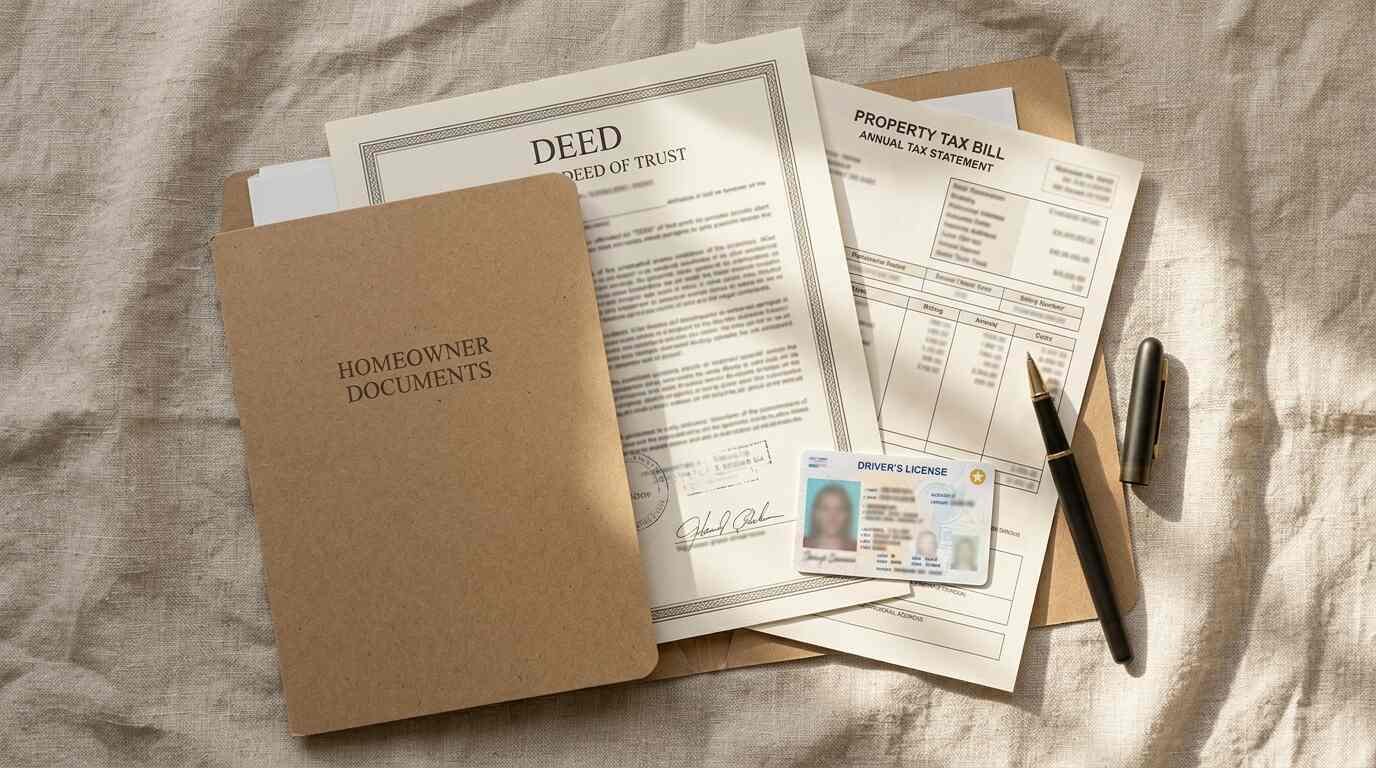
- Deed or closing documents showing the owner names and the closing date
- Most recent property tax bill (it carries the parcel identification and school district)
- Driver’s license or state ID for each owner
- Latest state or federal income tax return
- Social Security numbers for owners and spouses
- For Enhanced STAR: proof of age for each applicant
Closing packets run long and paper tends to disappear into them. Buyers who just finished that stack can review the costs involved in Closing Costs on Long Island: What Buyers Pay and keep the same folder for tax paperwork.
Keeping the Paperwork Organized
A few ordinary tools make a STAR file easy to rebuild each year. The options below are general suggestions for home organization, not endorsements of any financial product.
- Fujitsu ScanSnap iX1300: a compact document scanner that turns closing paperwork and tax letters into searchable files. See it on Amazon (affiliate link)
- SentrySafe Fiberglass Fire Resistant Bag for Documents (model FBWLZ0): a fire-resistant pouch for originals such as the deed and tax records. See it on Amazon (affiliate link)
- Pendaflex 13-pocket expanding file (letter size): a labeled accordion folder for yearly tax bills, notices, and confirmations. See it on Amazon (affiliate link)
As an Amazon Associate I earn from qualifying purchases. A commission may be earned if you buy through this link, at no extra cost to you.
Mistakes That Delay or Block the Benefit
- Registering a property that is not the primary residence, which can lead to a denial or a later recapture of the benefit.
- Applying under an old address after a move, so the credit goes to the wrong place.
- Assuming a seller’s exemption transfers. It does not; the new owner registers separately.
- Mismatched names between the deed and the application, a small typo that triggers a manual review.
- Overlooking a mailed request from the Tax Department for more information.
Questions Homeowners Ask
Does the benefit come off the tax bill?
For new registrants, no. The state sends a credit as a payment, and the school tax bill is paid in full. Homeowners with a legacy exemption see a lower bill instead.
Is there a registration fee?
Registering with the Tax Department is free. Any site or service that charges to file the application is a third party, and the official route needs no payment.
What if the home is in a trust or an estate?
Eligibility can depend on how title is held. The Tax Department or a licensed attorney can say whether the arrangement qualifies.
Can someone with a legacy exemption switch?
Rules for switching between the exemption and the credit can change. The Tax Department’s STAR page carries the current guidance.
How does STAR relate to the school tax cap?
The cap limits how fast school levies can grow; STAR reduces what an eligible household pays. See the Long Island school tax cap for 2026-27 for the levy side.
Other Ways to Trim the Tax Bill
STAR is one lever among several. Buyers estimating carrying costs can start with Suffolk County Property Taxes: What Buyers Budget Before Closing, and owners who believe the assessment is too high can review the Suffolk County tax grievance deadline for 2026.

This is for informational purposes only; consult a licensed attorney, tax professional, or financial advisor about individual eligibility. Program rules, income limits, and schedules are set by New York State and can change after publication.
Real estate markets change. For current listings and market data, contact Maison Pawli at maisonpawli.com/about/.
Sources
- New York State Department of Taxation and Finance, STAR program
- NYS Tax Department, direct deposit option for STAR credit recipients
- NYS Tax Department fact sheet RP-5310-FS (January 2026), consulted for registration details; Tax Department 2026 Enhanced STAR income limits page.