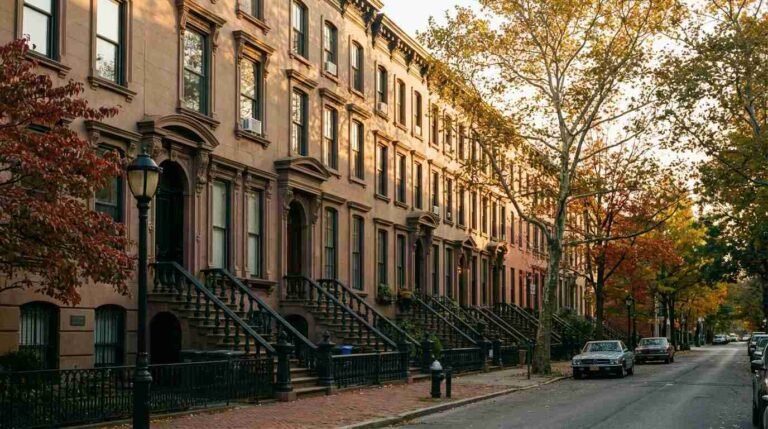
Forty Miles from the Bridge
Distance from Manhattan has always been the primary organizing principle of Long Island real estate. The closer to the city, the higher the price per square foot, the faster the turnover, the less house you get for the money. This hierarchy is so deeply embedded in the regional market that buyers internalize it before they make a single offer. Nassau over Suffolk. Western Suffolk over central. Everything east of Smithtown is for people who really need the space, or really need the beach, or have given up on the commute entirely.
That logic was always a simplification. In 2026, it’s becoming a genuinely unreliable guide.
The structural shift in how Long Island buyers weigh commute time against price is still unfolding — and its clearest evidence isn’t in the headline numbers but in which towns have seen the most sustained buyer interest since 2022 among people who identify as full-time or hybrid remote workers. The 40-to-60-mile band from the Midtown Bridge — stretching roughly from Hauppauge and Medford through Yaphank and into the western edge of Riverhead — represents the zone where the old hierarchy still prices property as though daily commuting is the assumption. Buyers who don’t share that assumption are starting to notice.
What Hybrid Work Actually Changed
The conventional read on pandemic-era real estate is that remote work triggered a migration to the outer suburbs, prices shot up everywhere, and things have since normalized. That’s broadly accurate as a summary of 2020 to 2022. What it misses is the structural residue.
Hybrid work — two or three days in the office rather than five — didn’t evaporate after 2022. Bureau of Labor Statistics data from 2025 found that roughly 22% of employed Americans were still working some days remotely, with the share higher among white-collar professional and managerial roles. The category of buyer who needs to be in Manhattan on Tuesday and Thursday, but could be anywhere on the other three days, remains real and large. For that buyer, the math that governs a 50-mile commute looks very different from the math that governs a daily one.
Specifically: a two-day commute is inconvenient. A five-day commute from Riverhead is, for most people, a disqualifier. Remove the daily frequency and the distance penalty drops sharply. What remains is the base cost of the trip and the logistical friction — and those are manageable in ways that daily grinding isn’t.
The LIRR Variable
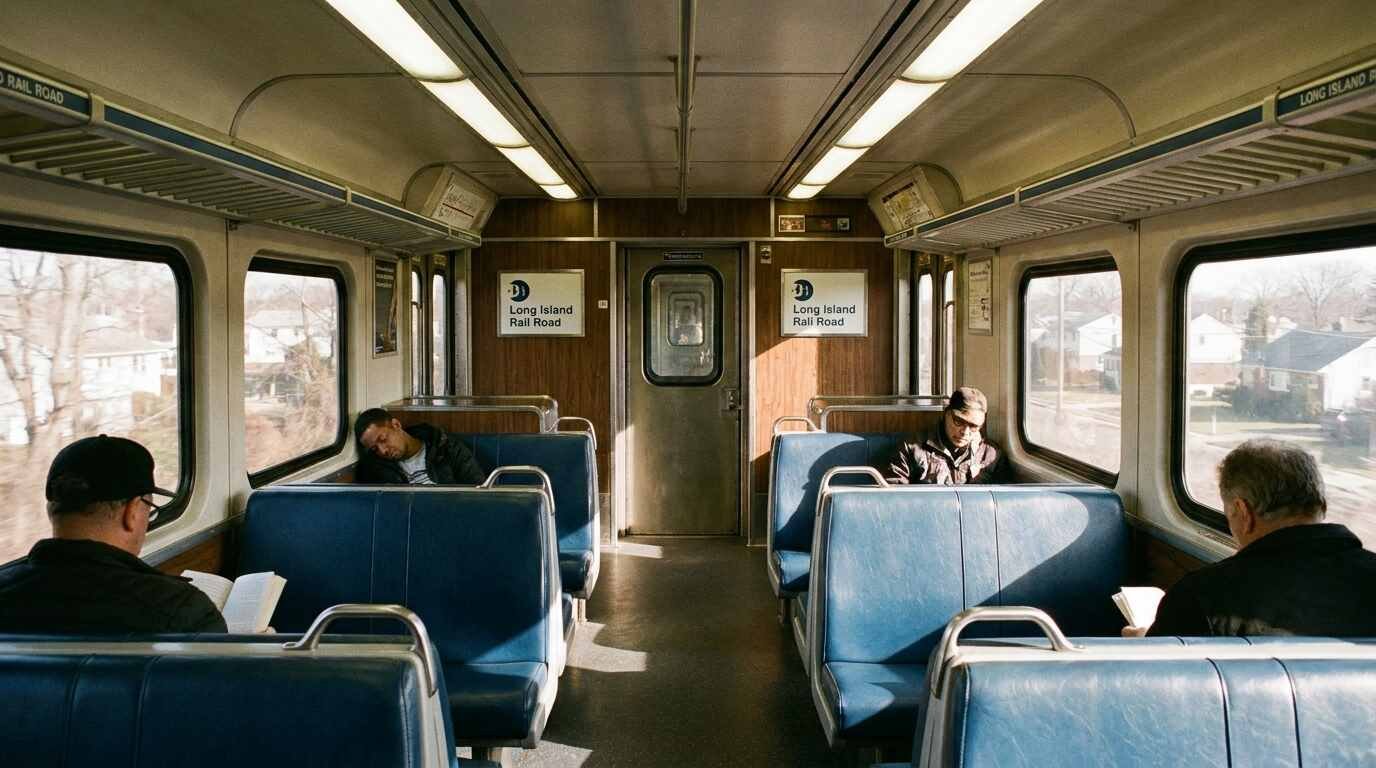
The Ronkonkoma Branch of the LIRR — the line that serves the largest commuter catchment in central Suffolk — underwent meaningful capacity improvements through the East Side Access buildout, which added Grand Central Madison as a second Manhattan terminus and roughly doubled off-peak and weekend service compared to 2019 levels. For hybrid workers, off-peak frequency matters more than peak frequency: they’re often choosing which days to go in, meaning they can pick around the schedule rather than surrendering to it.
From Ronkonkoma to Penn Station or Grand Central Madison, travel time runs approximately 80 to 90 minutes. From Medford, which sits west of Ronkonkoma on the same branch, the trip is roughly 70 minutes. These are not short commutes. But for a buyer making the trip twice a week instead of five times, the psychological and physical toll is different. The question shifts from can I do this every day to can I do this on Tuesdays and Thursdays — and for many buyers, the answer to the second question is yes.
The Riverhead situation is different in kind. Diesel service runs east of Ronkonkoma, and frequency is limited — four round trips on weekdays per the current schedule, with some extended summer service. Riverhead is, practically speaking, a driving town for anyone commuting regularly. But again: drive to Ronkonkoma and park, then train in, is a workflow that hybrid workers have adopted across Long Island’s eastern tier. It’s not elegant, but it is functional.
What the Price Gap Actually Looks Like
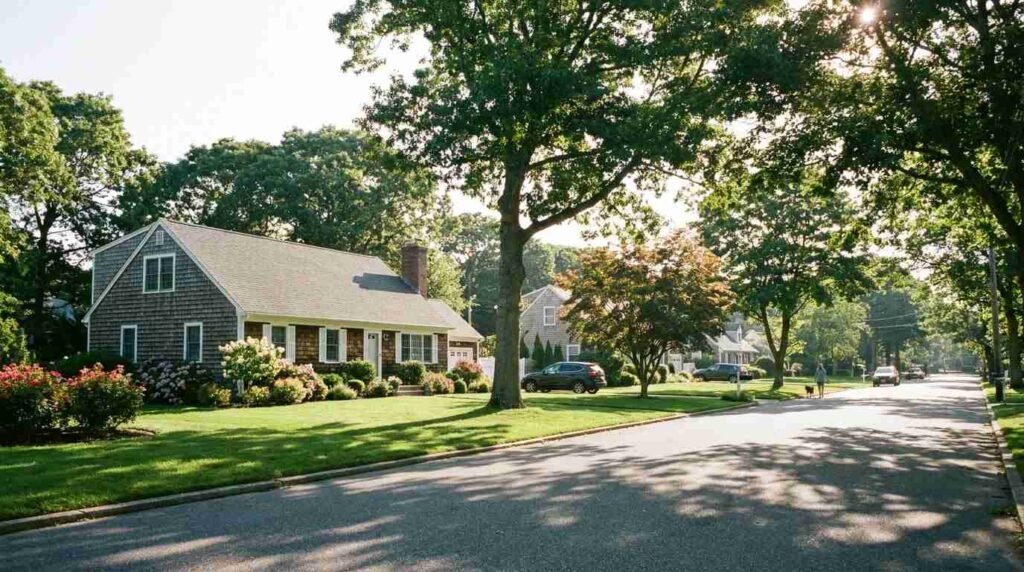
The towns in the 40-to-60-mile band — Medford, Yaphank, Ridge, Riverhead proper, parts of Middle Island — price significantly below comparable homes in western and central Suffolk. This isn’t because the housing stock is dramatically different or the schools are significantly worse across the board. It’s largely because the commuter stigma is baked into valuations that haven’t fully updated to the hybrid reality.
Riverhead, for example, has been drawing sustained attention as a market in transition. The Beacon Team at EXP noted a 10% home value increase over the prior twelve months and described the town as no longer simply “a rest stop on the highway to the Hamptons.” Local reporting via RiverheadLOCAL has tracked a consistent flow of transactions in the $485,000 to $850,000 range through late 2025 and early 2026 — not the price compression of a distressed market, but the activity of a market being discovered by a new buyer profile.
Medford and Yaphank sit in the Town of Brookhaven, which has attracted new residential development alongside the broader Suffolk County infrastructure investments documented in the county’s 2026 commercial real estate reporting. These aren’t glamorous towns. They don’t have the village character of Port Jefferson or the wine-country association of Riverhead’s North Fork adjacency. What they have is space, price, and a commute profile that makes sense for people who aren’t in the office every day.
The Remaining Friction
None of this is an argument that the 40-mile band has become the new North Shore. The distance penalty doesn’t disappear; it gets discounted for a specific buyer type. The buyer who needs to be in Manhattan four or five days a week has not been helped by any of these structural changes. For that buyer, the old hierarchy still mostly holds.
School districts in the 40-to-60-mile band vary, and buyers with school-age children need to research individual districts rather than applying county-wide generalizations. Services, restaurants, and local amenity density are thinner than in more established western Suffolk communities. Broadband infrastructure — a genuine limiter for remote workers in some pockets of eastern Long Island — is worth verifying before committing to a location rather than assuming.
And the resale question is real. A buyer who purchases in Medford or Ridge because hybrid work makes the commute workable is making a bet that the next buyer will share that lifestyle. Hybrid work patterns could tighten. Company policies could shift. Those are legitimate risks that a buyer in this zone should price into the decision, not dismiss.

The Calculation Worth Running
What the distance hierarchy’s slow adjustment creates, for buyers who are paying attention, is a lag. The pricing in the 40-to-60-mile band still reflects a commuter reality that no longer applies to a meaningful segment of buyers. That lag is not permanent — markets adjust — but it’s visible now in a way that may not be visible in three or four years.
The buyer who is genuinely hybrid — three or fewer office days per week, with location flexibility baked into their employment arrangement — should be running the numbers on these towns with the same rigor applied to Port Jefferson or Huntington Station. The commute math is different. The space math is very different. The price math may make both worth accepting.
Distance from the bridge was always a proxy for commute time. For a growing slice of Long Island buyers, commute time has stopped being the primary variable. The proxy is lagging behind.
Real estate markets change. For current listings and market data, contact Maison Pawli at maisonpawli.com/about/.