Best Long Island Towns for NYC Transplants in 2026
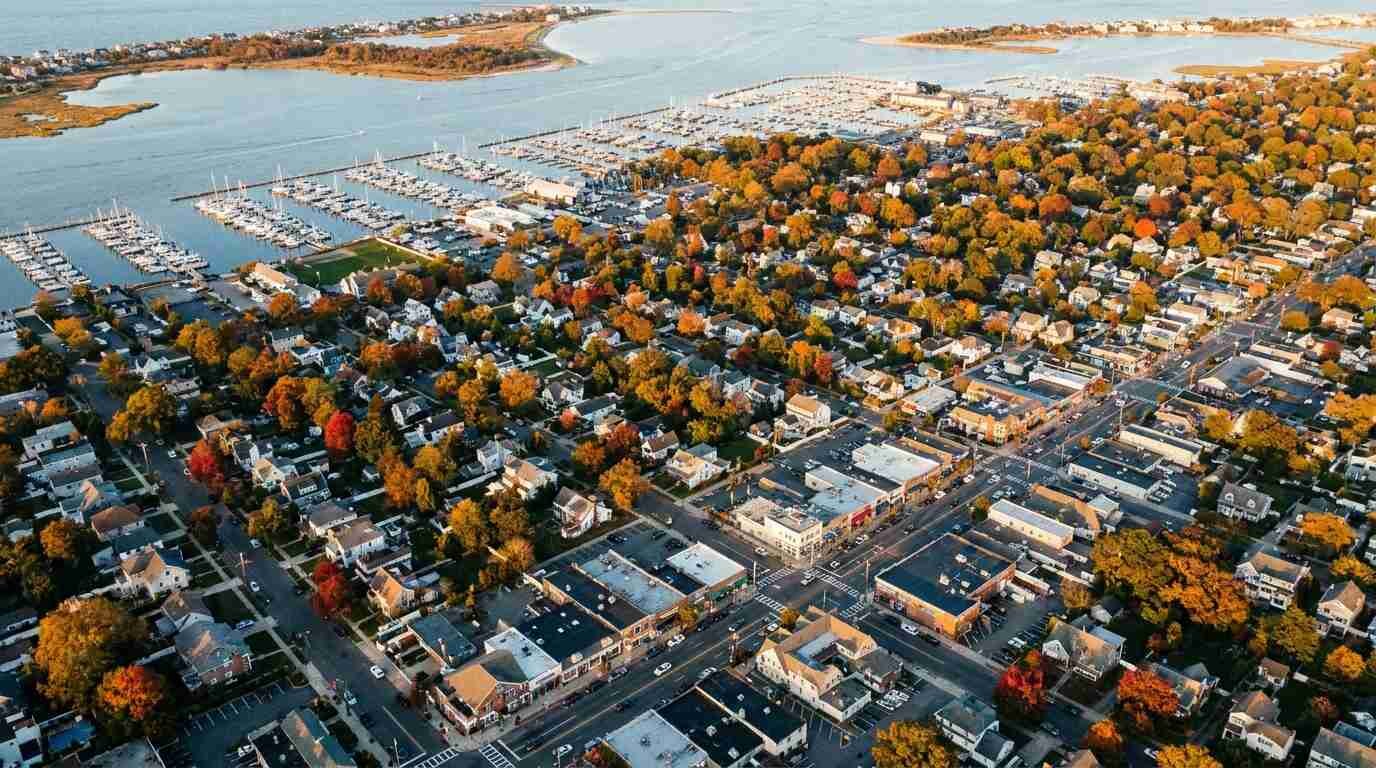
There are over 400 hamlets, villages, and unincorporated communities on Long Island. You don’t need to research all of them. You need to know the ones that are actually worth your time as someone coming from New York City — places where the commute is manageable, the schools are credible, the community has some texture, and the dollar goes somewhere meaningful.
I’ve been brokering Long Island for over a decade. I’ve watched people make great choices and I’ve watched people make choices they lived to regret — usually because they picked a house without really picking a place. The town comes with the house. It’s in your car every morning and at the end of your street on a Saturday. Getting it right matters more than most buyers realize until after they’ve signed.
Here’s my honest list.
What Makes a Town Right for Someone Coming from NYC
The buyers I work with who are coming from the city share a few consistent needs, regardless of budget or family situation. They want to feel like they’re somewhere, not just in a subdivision. They want to be able to do something on foot within a reasonable walk of their house, even if that’s just a coffee shop and a decent park. They want schools they can trust without having to study the fine print for three months.
And they want the commute to be something they can actually live with.
The towns on this list pass those tests in different ways, for different buyers. Some will resonate immediately; others may not. The goal isn’t to sell you on any of them — it’s to give you enough of the real picture that you can figure out which one is worth a Saturday visit.

Garden City: Walkable, Polished, and Pricey for a Reason
Garden City is the Nassau County town that buyers from Manhattan or Park Slope typically recognize most immediately. It was designed in the 1870s as a planned community — wide avenues, consistent setbacks, a village center built for pedestrian life — and it has maintained that character better than almost anywhere else on the Island.
The schools are excellent. The train (Garden City station on the Hempstead Branch) puts you at Penn Station in about 45 minutes. The village has restaurants, shops, and a walkability score that would be unremarkable in the city and is exceptional by Long Island standards.
The catch is price. Garden City median home prices have run north of $900,000 in recent market cycles, and the premium zip codes push well past $1 million. You’re paying for a very specific, well-maintained version of suburban life, and many buyers find it worth it. If budget allows and proximity to the city matters: it earns its price.
- Commute: ~45 min to Penn Station (Hempstead Branch)
- Schools: Garden City UFSD — consistently ranked among Long Island’s best
- Median price range: $900K–$1.2M+
Rockville Centre: The Sweet Spot That Everyone’s Figured Out
Rockville Centre is the answer to the buyer who wants the Garden City experience without the Garden City price tag — and the buyer who’s already figured that out has made it competitive. It has a genuine village center, a walkable main street, a large park system, and a LIRR station on the Babylon Branch that makes the commute predictable.
The school district is strong. The community is dense enough to feel alive without feeling claustrophobic. Prices are lower than Garden City but rising — expect $700,000–$900,000 for a solid three-bedroom. Inventory turns quickly because it’s one of the first towns city buyers identify when they do their research.
- Commute: ~45–50 min to Penn Station (Babylon Branch)
- Schools: Rockville Centre UFSD — well-regarded across levels
- Median price range: $700K–$900K
Mineola: The Underrated Commuter Town Worth Your Attention
Mineola doesn’t have the cachet of Garden City or the name recognition of Port Washington, but it has two things that matter: one of the best LIRR connections on the Island and home prices that reflect a market that hasn’t been fully discovered.
Mineola station sits at a junction of three branches, which means more frequent service than most single-line towns. You can be at Penn Station in 35–40 minutes. The village has been slowly adding the restaurant and coffee shop infrastructure that buyers want. The school district is solid without being a marquee name.
For buyers whose primary concern is commute efficiency and value, Mineola routinely outperforms towns with more prestige at significantly lower prices.
- Commute: ~35–40 min to Penn Station (multiple branch options)
- Schools: Mineola UFSD — above average, improving
- Median price range: $550K–$750K
Huntington Village: For the Buyer Who Wants Culture and Space
Huntington is where I tell buyers to go when they say they want something that still feels like a real place. The village center has a Main Street that functions — restaurants, a music venue, an art museum, independent shops, a farmers market, bars that don’t require a reservation. The harbor is close. The residential fabric around the village mixes architectural styles and lot sizes in a way that doesn’t feel like a tract.
The LIRR station (Port Jefferson Branch) is a 65–80 minute express to Penn Station, which is the right commute for someone who’s in the city two or three days a week and wants a life the other five. The school district (Huntington UFSD) has strong programs within it depending on the building you’re zoned for — worth researching at the specific address level.
Price-wise, Huntington has appreciated significantly over the past several years. Expect $650,000–$950,000 for a three- or four-bedroom home depending on proximity to the village and school zone. For the buyer who needs the North Shore lifestyle and can handle the commute: Huntington consistently delivers.
- Commute: ~65–80 min express to Penn Station (Port Jefferson Branch)
- Schools: Huntington UFSD — varies by school; research at address level
- Median price range: $650K–$950K
Port Washington: Water Views and a Direct LIRR Line
Port Washington has a specific appeal that’s hard to replicate: a harbor town on Manhasset Bay with a direct LIRR line to Penn Station in under 45 minutes. It combines Nassau County proximity with a genuine waterfront character that most of the western towns don’t have.
The school district is excellent. The village has restaurants, marinas, and a pedestrian life that functions in a way that feels disproportionate to its size. The trade-off is that the housing stock is older and varied — some of the most desirable properties need updating — and prices have climbed to reflect the demand. Waterfront and water-view properties run well over $1 million; non-water residential is $750,000–$1M+ for a good three-bedroom.
For the buyer who has dreamed of a Long Island life near the water and still needs to be in Midtown twice a week: Port Washington is the town that delivers both.
- Commute: ~40–45 min to Penn Station (Port Washington Branch, direct)
- Schools: Port Washington UFSD — consistently strong
- Median price range: $750K–$1.2M+ (varies widely by proximity to water)
Merrick and Bellmore: Solid Value, Strong Community
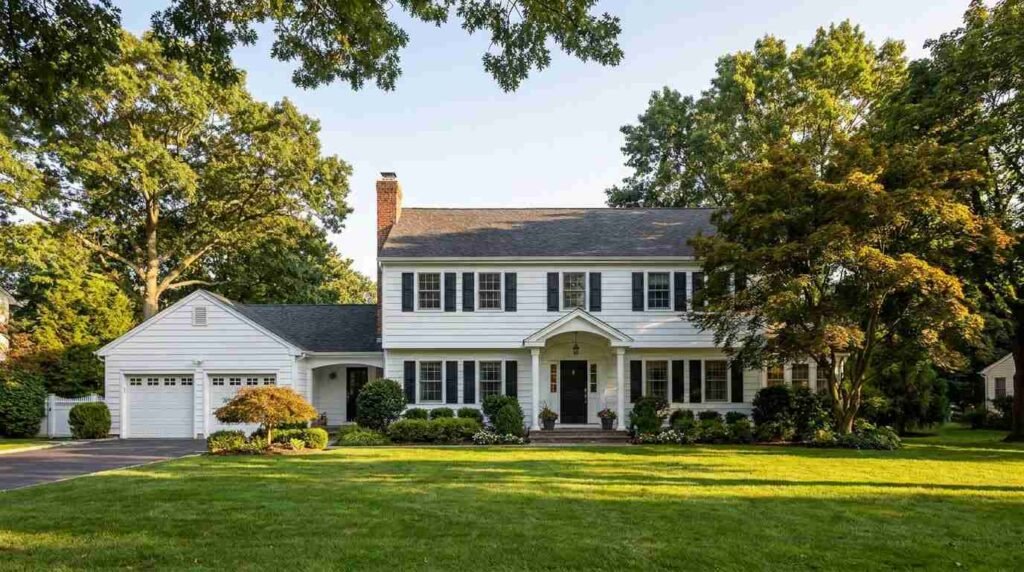
Merrick and Bellmore sit side by side on Long Island’s South Shore, and they’re the towns I point buyers toward when the conversation is about value without sacrifice. Good schools, solid housing stock (mostly colonials and expanded capes), strong community infrastructure, and a South Shore lifestyle that includes bay access, boat ramps, and a genuine neighborhood feel.
The commute on the Babylon Branch runs 45–55 minutes to Penn Station, which is manageable for most. Prices are lower than Nassau’s premium markets: solid three-bedroom homes can be found in the $550,000–$750,000 range, though inventory in good school zones moves quickly.
These are towns where people stay for decades once they land there — which tells you something.
- Commute: ~45–55 min to Penn Station (Babylon Branch)
- Schools: Merrick UFSD and Bellmore-Merrick Central — both consistently above average
- Median price range: $550K–$750K
Babylon Village: The One People Sleep On
Babylon Village is consistently underestimated by buyers who haven’t spent time there. It has a walkable main street, a train station with solid service, a boat launch, proximity to Robert Moses and Fire Island, and home prices that still reflect a market the mainstream hasn’t fully priced in.
The village itself is small and tight — more character than size — and the surrounding areas of West Babylon and North Babylon offer different price profiles if you need more room. The school district is average by Long Island standards, which is above average by national ones.
For a buyer who wants South Shore character, water access, and a price point that leaves room for renovation or building equity: Babylon Village is worth a Saturday morning visit before you make any decisions.
- Commute: ~55–65 min to Penn Station (Babylon Branch)
- Schools: Babylon UFSD — solid, not marquee
- Median price range: $500K–$700K
How to Choose Your Town Without Overcomplicating It
The buyers I’ve seen make the best decisions are the ones who identified two or three towns that fit their parameters on paper, visited each of them at different times — a Saturday morning, a Tuesday evening, a winter weekend — and chose the one that felt most like the life they were trying to build.
The metrics matter. Commute time, school district ranking, price per square foot — these are real inputs. But none of them can tell you whether you’ll feel at home somewhere. That requires presence. Drive the streets. Walk the main drag. Stop somewhere for coffee and watch who comes in. Buy something from the farmers market if there is one. Give yourself an hour in the place you’re thinking of spending the rest of your decade in.
If you’re navigating the logistics of buying while still living in the city, How to Choose the Right Real Estate Agent on Long Island is a useful companion to this guide — because the right broker is the one who actually knows these towns from the inside rather than from Zillow.
The right town is out there. It’s just a matter of showing up to find it.
Real estate markets change. For current listings and market data, contact Pawli at Maison Pawli.
Sources
- MTA Long Island Rail Road branch timetables and fare information: new.mta.info/agency/long-island-rail-road
- Walk Score town data: walkscore.com
- OneKey MLS median sale price data by town, 2026
- Niche school district rankings: niche.com
- New York State Education Department school report cards: data.nysed.gov
- GreatSchools district profiles: greatschools.org