Commack’s Hidden Atomic Age: The Backyard Bunkers and Cold War Prep That Shaped Its Ranch Homes
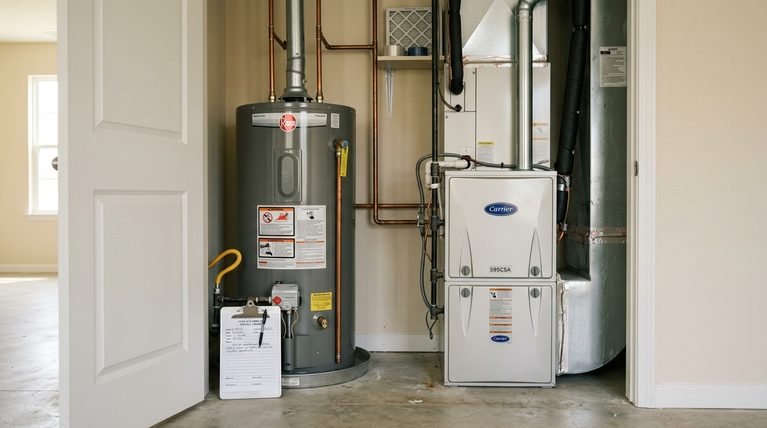
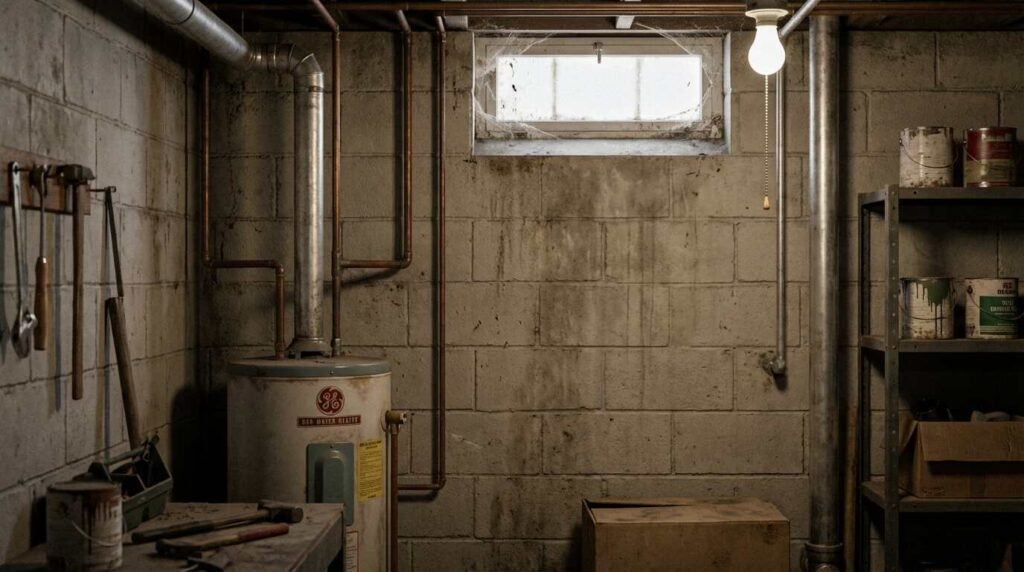
The utility room in a mid-century Commack ranch house is rarely beautiful. It tends to be a low-ceilinged, concrete-floored space off the back of the garage or tucked below grade — functional, unadorned, sized just slightly larger than strictly necessary for a water heater and a washer-dryer hookup. Most buyers barely glance at it. Most sellers never explain it.
What it is, in many cases, is an artifact.
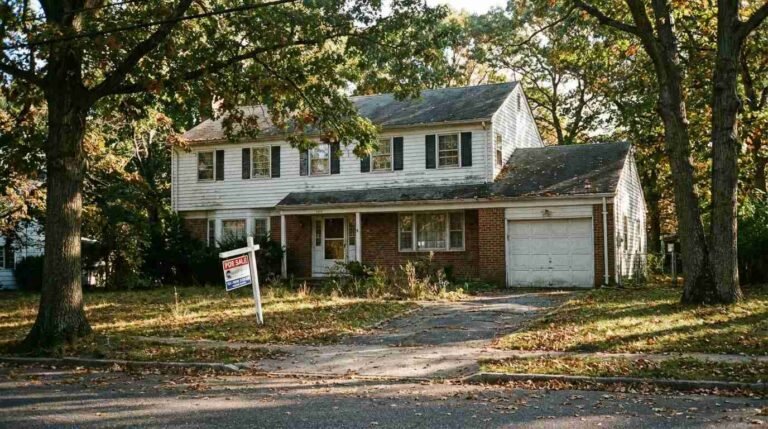
The postwar ranch homes that define Commack’s residential character — built in volume between roughly 1955 and 1968 — were not designed in a vacuum. They were designed by builders working in a moment of genuine national anxiety, with civil defense guidance filtering through every level of residential construction, and with the U.S. Army actively deploying nuclear-capable surface-to-air missiles across the Long Island landscape during the very same years those houses were going up.
None of this gets discussed at open houses. I’ve been walking buyers through these houses long enough to know that. But it should be, because it illuminates something real about the DNA of this housing stock — and because understanding what’s under the slab is always better than finding out later.
The Nike Belt Around New York
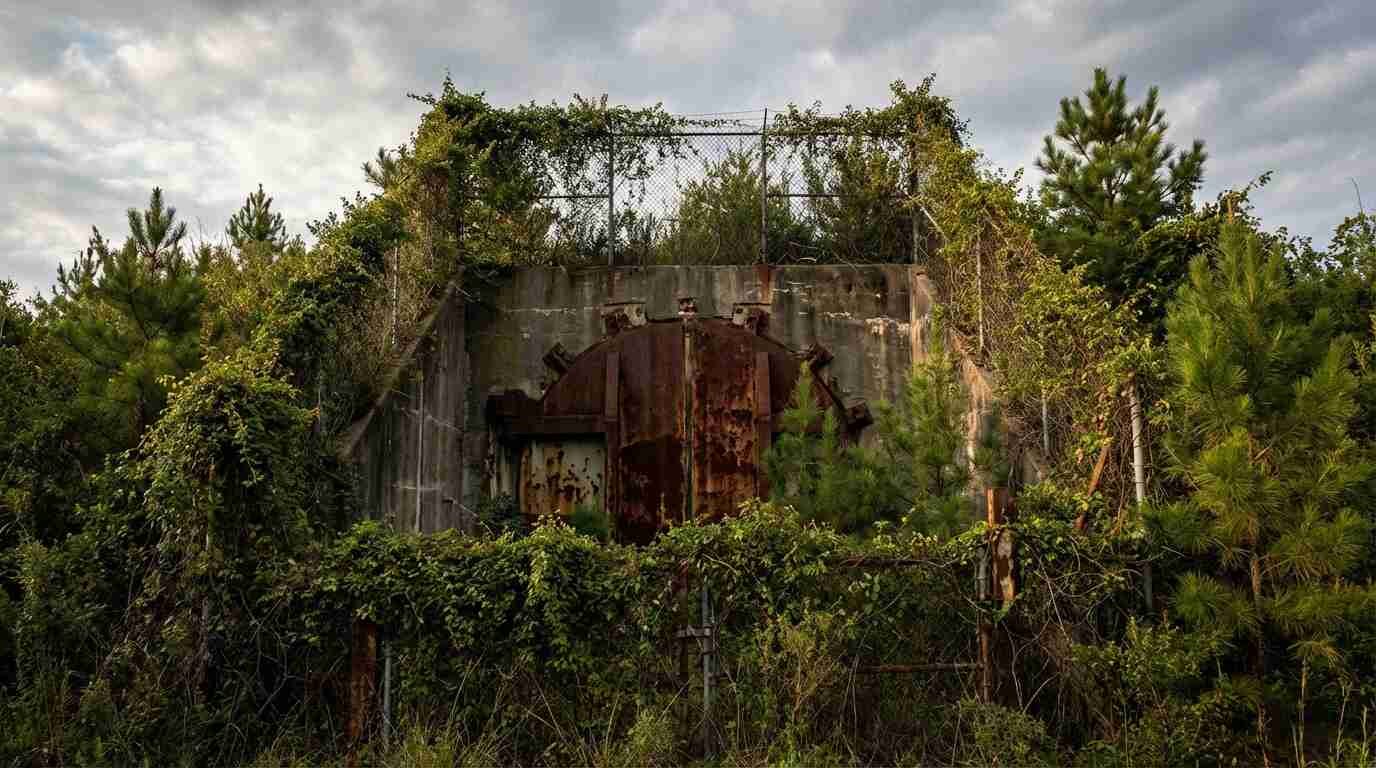
From the early 1950s through the 1970s, the U.S. Army operated a ring of missile batteries around major American cities as protection against Soviet bomber attack. The Nike Ajax and later Nike Hercules systems were deployed in an arc that covered New York City and its surroundings — stretching from New Jersey through Westchester, across Nassau County, and into Suffolk.
According to research compiled by Hofstra University’s Long Island Studies Institute and documented by the National Park Service, Long Island hosted multiple Nike battery sites. These included installations in Hicksville, Brookville, Amityville, Lido Beach, and Brookhaven — a ring of sites positioned to defend New York airspace against incoming Soviet aircraft.
What is documented: the Rocky Point site in Suffolk County (designation NY-25) was operational from 1957 to 1974, protecting the New York metro, Grumman’s Calverton facility, Brookhaven National Laboratories, and Suffolk County Air Force Base. The Westhampton BOMARC site housed 56 nuclear-tipped missiles from 1959 to 1964. Long Island was not a peripheral location in Cold War air defense planning — it was a primary zone.
That context shaped everything that was being built here during the same years.
What Civil Defense Did to Residential Construction
Here is where the renovation angle gets genuinely interesting.
Federal civil defense policy in the 1950s and early 1960s actively encouraged residential design features that would provide shelter and resilience in the event of nuclear attack. The Federal Civil Defense Administration published guides recommending that new homes include below-grade storage space, reinforced utility areas, and dual-purpose rooms that could serve as shelters. Builders and architects were not required to follow these recommendations — but in an era of genuine public anxiety, many incorporated them as standard practice.
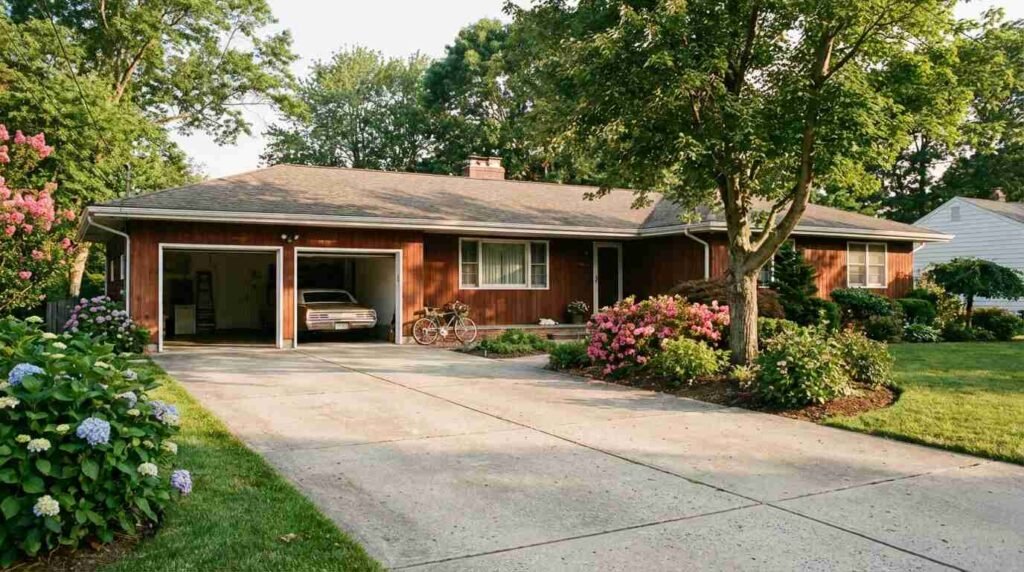
The ranch house was already the dominant residential form of the period: single-story, sprawling footprint, designed for efficiency and informality. Its natural companion was the finished basement or below-grade utility area — a feature that added civil defense credibility to what was already a practical design choice. In many Commack ranches, what presents today as a “large utility room” or “deep crawl space” or “partial below-grade area” reflects design thinking from a moment when homebuilders were genuinely considering what would happen if the sirens went off.
Some of those utility rooms were sized to serve as improvised fallout shelters. Some had heavy-gauge concrete block walls poured thicker than strictly necessary for a residential foundation. Some had secondary access points — a door or window that opened to the outside from below grade — that make no practical sense unless you understand their origin.
⚠️ The connection between civil defense guidance and specific construction choices in Commack-area homes is a pattern drawn from the historical record broadly — specific building-by-building documentation would require consultation with original permit records at the Smithtown Historical Society or Town of Smithtown building department.
Ranch Homes and What’s Under the Slab
For buyers looking at Commack’s mid-century housing stock today, a few things follow from this history.
First: these are solidly built houses. The postwar construction era — whatever its aesthetic limitations — was characterized by genuine attention to structural integrity. Builders were working with new materials (concrete block, aluminum wiring, early fiberglass insulation) but they were also working with serious oversight from FHA lending guidelines that required structural soundness as a condition of mortgage approval. As I’ve written before about the Depression-era FHA homes that still stand across Long Island, federally backstopped construction from this era often holds up better than buyers expect.
Second: the below-grade spaces deserve scrutiny, not dismissal. An oversized utility room in a 1960 Commack ranch should prompt questions, not shoulder shrugs. What’s the wall thickness? Is there a drain? What’s the slab condition? These are not causes for alarm — they’re causes for inspection. Many of these spaces are in excellent condition and represent genuinely usable square footage that a renovator can bring up to living or storage standards relatively economically. Some are not. Know which one you’re buying.
Third: aluminum wiring. This is separate from the Cold War narrative but lives in the same era. Many Commack homes built between 1965 and 1973 were wired with aluminum rather than copper — a cost-saving measure that became a safety concern as the material aged and junction points degraded. This is a well-documented issue in this housing stock, it is addressable (typically through replacement at junction points or full rewiring), and it is not a reason to walk away from a house. It is a reason to have a licensed electrician in before you close, and to price it into your offer accordingly. ⚠️ Verify the presence of aluminum wiring with a licensed electrician inspection — do not assume based on build year alone.
The Commack Market Now
Commack’s mid-century ranch stock has been undergoing slow, steady renovation for years. The houses that were considered dated thirty years ago — the ones with the low ceilings, the avocado kitchen tile, the utility room that nobody could explain — are increasingly being recognized as what they are: structurally sound, generously lot-sized, well-located homes that are significantly more forgiving to renovate than newer construction.
The open floor plan that every buyer says they want? It exists in embryonic form in most of these ranches already. The walls that are there tend to be interior partition walls rather than load-bearing structural elements, which means renovation scopes that a contractor can price without weeks of engineering evaluation. That’s not universally true — always get a structural engineer’s opinion before you swing a sledgehammer — but it is a characteristic of this building type that experienced renovators understand and value.
The neighborhoods around Commack Road and the area north toward the Smithtown line have seen consistent buyer interest for several years, in part because inventory in more obviously desirable North Shore coastal markets has stayed tight. Buyers who have been priced out of Port Jefferson or Setauket are rediscovering mid-island options that offer good schools, strong community infrastructure, and housing stock that is renovatable at reasonable cost.
The Cold War built these houses in a specific shape, for specific reasons, under specific anxieties. The anxiety is gone. The shape turns out to be pretty useful.
Real estate markets change. For current listings and market data, contact Pawli at Maison Pawli.
You Might Also Like
The Asbestos Ceiling Nobody’s Talking About: Why Suffolk County Fixer-Uppers Are Sitting on a Hidden Renovation Budget Line · Inside the Long Island Split-Level: The One Floor Plan That Breaks Every Renovation Rule · The Iron Ghost in the Yard: Why Sellers Need to Hunt Their Own Oil Tanks
Sources
“Hidden History: Long Island’s Many Missile Batteries,” Long Beach Patch, 2017 · “North Shore’s Nuclear Missile Silo: A History,” TBR News Media · Nike Missile Site documentation, Cold War Preservation · BOMARC and Nike Hercules missile sites, Long Island — NationofChange, 2020 · National Park Service Nike missile site documentation