Riverhead, NY Real Estate Market 2026: The Gateway Town That Got Serious
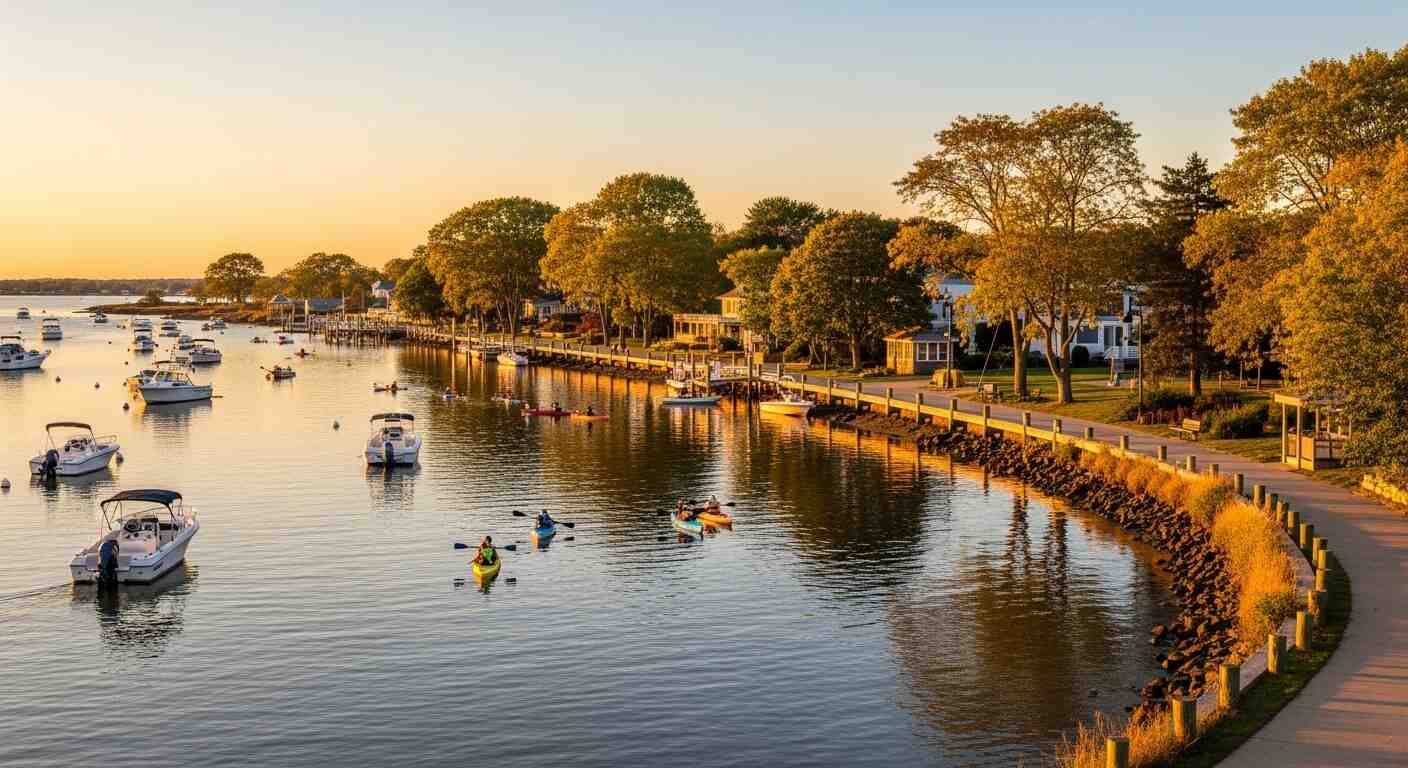
Riverhead sits at the hinge of Long Island — the point where the North Fork splits away from the South Fork, where farm country gives way to wine country, where the Peconic River meets a Main Street that has been promising a renaissance for longer than most people care to remember. I’ve driven through Riverhead a hundred times on my way to somewhere else. I think a lot of us have. It was the town you passed through on the way to the vineyards, or to the ferries, or to the Tanger Outlets on a Saturday morning before traffic made the idea feel foolhardy. The town where the potential always seemed larger than the proof.
That calculus is changing. And if you’re thinking about buying or selling in Riverhead in 2026, understanding what’s actually happening here — underneath the real estate data, inside the planning documents, along the Peconic riverfront — matters more than it did even two years ago.
The Numbers, First
Zillow’s most recent data puts the average Riverhead home value at approximately $607,000, up roughly 4.2 percent year over year. Redfin’s transaction data from late 2025 showed a median sale price around $570,000, up 8.6 percent, with homes selling in approximately 26 days on market — notably faster than surrounding areas. Downtown Riverhead specifically showed a 17 percent year-over-year jump in median price in the same period, to around $585,000, with days on market compressing significantly compared to the prior year.
Within the broader Town of Riverhead’s hamlets, the picture is more varied. The Times Review reported that Riverhead Town hamlets posted a median of around $845,000 in early 2026 data tracked by Suffolk Vision, though that figure includes a range of properties across hamlets and conditions. What’s not in dispute is the direction: prices are moving up, inventory remains constrained, and the days-on-market numbers suggest buyer demand is genuine rather than speculative.
One pattern worth flagging, because it shapes how you should think about this market: Riverhead does not look or act like the communities immediately east of it. Southold, Mattituck, Orient — the farmland preservation there is so extensive that the housing stock is essentially fixed. New subdivisions aren’t coming. The deed before the vineyard tells you who owned that land before the wine estates did, and preservation has locked most of it in place. Riverhead, by contrast, has room to grow and is actively investing in what growth should look like — which makes it a different kind of bet.

The Renaissance That Is Actually Happening
Here is where I want to be careful about the language, because “downtown revitalization” is a phrase that has appeared in Riverhead planning documents since before I was a licensed broker. The town has been promised its renaissance for three decades, and the history of that expectation is a legitimate source of skepticism.
But the groundbreaking I’m describing isn’t a promise. It’s a $32.6 million project that broke ground in December 2025. Riverhead’s Town Square project — backed by a $10 million Downtown Revitalization Initiative grant from New York State, plus a $24 million federal RAISE transportation grant, plus additional Restore New York funding — has literally put demolition equipment on Main Street. Two buildings came down, opening sight lines to the Peconic River that had been blocked for decades. J. Petrocelli Construction, selected as master planner, is now underway on a project that includes a town square, riverfront connectivity, new hotel rooms, and condominiums. RXR is investing in transit-oriented development around the railroad station.
Governor Hochul, in announcing the DRI awards, described Riverhead as sitting “at the junction of the North and South Forks” with access to beaches, natural resources, wine country, and a character that is “largely rural and agricultural” — all of which is true, and all of which is exactly what makes it interesting as a real estate story. The Long Island Aquarium, the 1933 Art Deco Suffolk Theatre, the Vail Leavitt Music Hall, the Peconic riverfront — these are not invented amenities. They exist. What has been missing is the connective tissue, the public investment that turns a list of attractions into a place people want to be in.
The master planner himself put it plainly: the goal is not for people to drive through Riverhead on the way to the forks. The goal is for them to stay. That is the whole thesis.
What This Means for Buyers
If you are looking for a foothold on the East End without the East End price tag, Riverhead is the most interesting market on that list right now. Buying opportunities in nearby hamlets like Aquebogue and Jamesport — which technically fall within Riverhead Town — were still available at sub-$1 million medians in early 2026, according to North Fork market reports. For context, Southold Town’s hamlets were posting medians significantly higher, and inventory there is structurally constrained in a way Riverhead isn’t.
What you’re weighing is present condition versus trajectory. Riverhead downtown, if the Town Square project delivers on its design intent, will look meaningfully different in three to five years. The infrastructure investment is documented, the funding is committed, and the construction is underway. That is a different risk profile than a speculative bet on a town that’s still in planning mode.
The North Fork market broadly is also being shaped by a multigenerational buyer trend that agents are noting across Southold, Riverhead, and the adjacent hamlets — buyers who grew up coming out here, whose families have deep roots in the area, and who want their own place nearby. That demand is not going away.
Flood risk is worth examining before you buy anywhere in Riverhead’s lower-lying areas. Redfin’s risk data flagged that roughly 21 percent of Riverhead properties face severe flooding risk over the next 30 years, and that risk is increasing faster than the national average. Proximity to the Peconic River and the broader coastal geography creates meaningful variation property by property. Pull the flood certificate before you make an offer, not after.
What This Means for Sellers
If you’ve owned in Riverhead for more than five years, you have likely benefited from appreciation that was quieter and steadier than the East End headline markets but real. The 4 to 8 percent year-over-year gains of the past several years have compounded. What sellers sometimes underestimate is how the Town Square narrative — even in its early stages — is already affecting buyer perception. Properties within walking distance of the riverfront and the Main Street corridor are being evaluated differently than they were 24 months ago.
The same principles that apply everywhere on Long Island apply here: pricing discipline matters, days on market is a signal the market reads quickly, and move-in-ready presentation outperforms renovation-needed in a thin-inventory environment. But Riverhead adds a layer that not every market has: buyers here are often making a bet on a town as much as a home. The quality of your listing presentation — the photography, the narrative, how the location is framed — matters in a place where the story of what’s coming is part of the pitch.
I’d also flag that Riverhead’s school district has a $218.9 million budget proposal for 2026–27 — a signal of institutional investment that families evaluating long-term residency will note. Schools are always part of how buyers evaluate community commitment.
The Honest Assessment
Riverhead is not Sag Harbor. It’s not Cold Spring Harbor. It doesn’t have the finished quality of a place that’s already arrived. What it has is a genuine location advantage — the hinge point between two forks, on a river, with documented public investment finally moving from plan to concrete — and a price point that still reflects its in-progress status rather than its potential. Whether that gap closes in two years or seven years or at all depends on execution, political continuity, and forces no market analysis can fully predict.
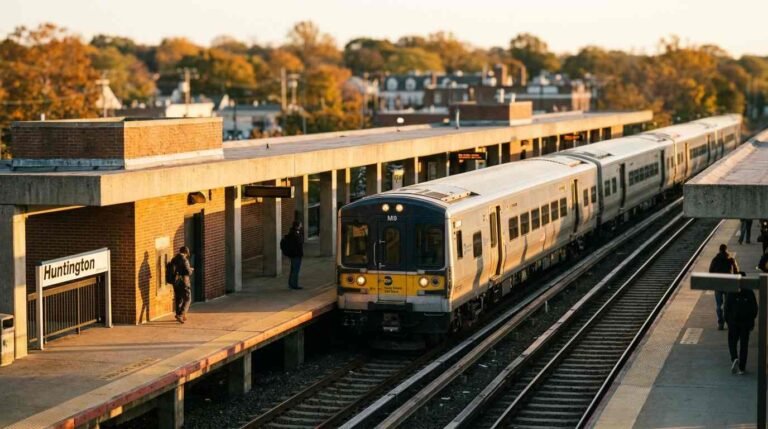
What I can say, from watching Long Island real estate through multiple cycles, is that the towns that got serious about infrastructure investment and riverfront connectivity — Patchogue, Farmingdale, Huntington — made believers of people who doubted them. Riverhead has been waiting longer. The question now is whether the money, the momentum, and the moment are finally aligned.
I think they are. But this market, more than most, rewards buyers who do their homework before they fall in love with the narrative.
This is for informational purposes only — consult a licensed attorney or financial advisor for your specific situation.
Real estate markets change. This post reflects conditions as of April 2026. For current listings and market data, contact Pawli at Maison Pawli.
You Might Also Like
- The Eelgrass Crisis in Peconic Bay — and Why Every Bayfront Buyer in Southold and Shelter Island Should Read the Water Quality Data Before Closing
- The Deed Before the Vineyard: Tracing the Agricultural Lineage of North Fork’s Most Celebrated Wine Estates
- The Forgotten Developer Who Platted the North Fork
Sources
- Zillow, Riverhead NY Home Values: https://www.zillow.com/home-values/829613/riverhead-ny/
- Redfin, Riverhead Housing Market: https://www.redfin.com/city/25331/NY/Riverhead/housing-market
- Times Review / Riverhead News Review, Reshaped real estate is putting North Fork at a crossroads: https://riverheadnewsreview.timesreview.com/2026/03/132626/reshaped-real-estate-is-putting-north-fork-at-a-crossroads/
- North Forker, Riverhead breaks ground on $32.6M Town Square project: https://northforker.com/2025/12/riverhead-breaks-ground-on-32-6m-town-square-project-to-revitalize-downtown/
- Governor Kathy Hochul, Transformational Projects for Riverhead — Downtown Revitalization Initiative: https://www.governor.ny.gov/news/governor-hochul-announces-transformational-projects-riverhead-part-10-million-downtown
- Dan’s Papers, Revitalizing Riverhead: A Gateway Becomes a Destination: https://www.danspapers.com/2023/10/revitalizing-riverhead-as-destination/
- Redfin, Downtown Riverhead Housing Market: https://www.redfin.com/neighborhood/767822/NY/Riverhead/Downtown-Riverhead/housing-market