Birdwatching at Port Jefferson, Mount Sinai and Stony Brook
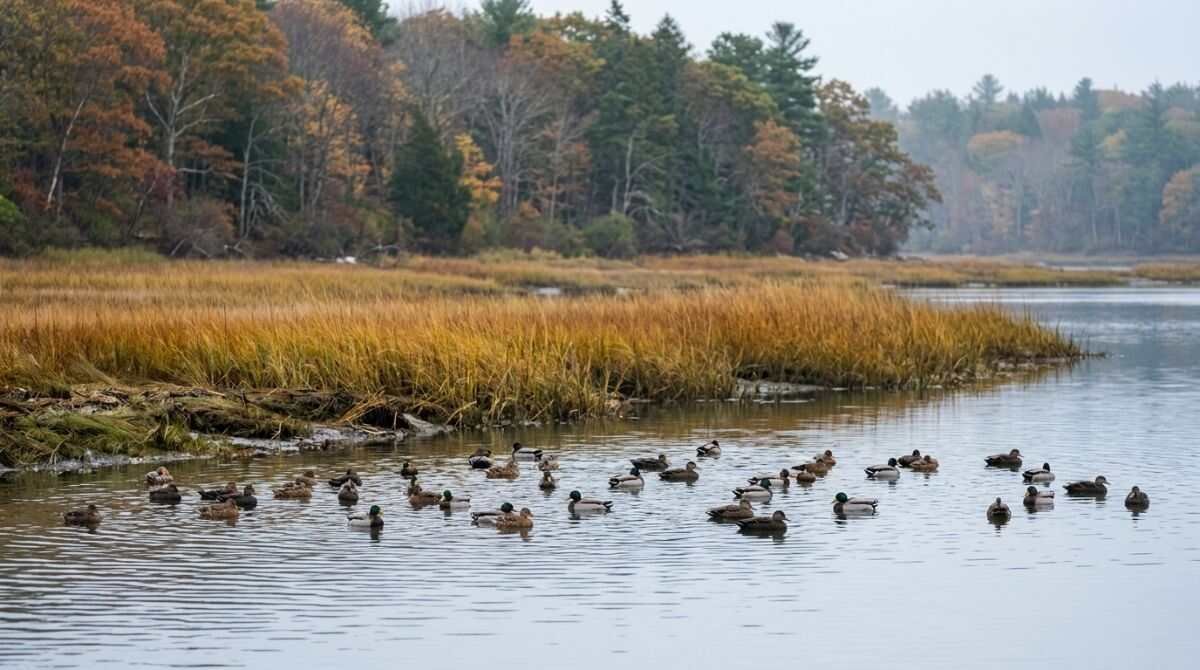
The harbors along Long Island’s north shore between Stony Brook and Mount Sinai combine salt marsh, mudflats, open water and barrier beaches, and public documents describe all of them as important to birds. The best-documented sources are New York State habitat narratives and Long Island Sound Study stewardship pages, which record species and seasons from survey work. This guide organizes that material by harbor and by season. It reflects published survey summaries rather than current sighting reports, and the older counts are marked as such.
Port Jefferson Harbor
The state’s narrative for Port Jefferson Harbor describes a habitat of about 990 acres of open water and intertidal flats with adjacent salt marshes, and notes that the northern part of the harbor is feeding ground for shorebirds. Species listed for the area include piping plover, least tern and common tern, all carrying protected status. Waterfowl are the main winter story. Mid-winter surveys between 1986 and 1996 averaged about 232 waterfowl a year with a peak of 604, including an average of about 96 American black ducks and a peak of 332 for that species.
Other waterfowl named in the narrative are mallard, scaup, Canada goose, canvasback, common goldeneye, bufflehead, long-tailed duck, American wigeon, red-breasted merganser and scoter. Winter use depends in part on ice cover.
On timing, the narrative states that waterfowl winter in the harbor from November through March and migrate through in March and April and again in October and November. For anyone reading this in the second half of October, the fall movement is under way, and the winter residents are about to settle in.
The Long Island Sound Study atlas page for the harbor also highlights McAllister County Park, a 115-acre Suffolk County park on Long Island Sound, where visitors can see local water birds. It records that the harbor has been designated a New York State Significant Coastal Fish and Wildlife Habitat and is part of the National Coastal Barrier Resources System.

Mount Sinai Harbor
Mount Sinai Harbor is smaller, at about 470 acres, and the state narrative describes it as salt marsh, intertidal mudflats and open water, with most of the water less than 6 feet deep at mean low water. The Town of Brookhaven owns the harbor and manages it for conservation. Herons, egrets, gulls, shorebirds and waterfowl all use it, and the least tern, a threatened species, feeds there.
Piping plovers have a more complicated record. One pair nested on Cedar Beach in 2001 and 2002, but the narrative says heavy human use prevents the beach from being a stable breeding site. Birds listed as probable or confirmed breeders in the harbor include green heron, belted kingfisher, black-crowned night heron, sharp-tailed sparrow and swamp sparrow.
Counts recorded in Mount Sinai Harbor are smaller than those from Port Jefferson. Mid-winter aerial surveys from 1990 to 1999 averaged 38 or more waterfowl a year with a peak of 120. The species named are American black duck, mallard, American wigeon, scaup, long-tailed duck, northern pintail and bufflehead, plus the common loon, which is listed as a species of special concern and winters in the harbor. As in Port Jefferson, annual ice cover affects winter numbers. The narrative also records documented losses of tidal wetland, with causes under investigation, and lists recreational boating, including personal watercraft, as a potential concern for the harbor’s shallow water.
The same atlas entry says Cedar Beach includes two bathing beaches, a town marina and a nature center, and describes the harbor as one of the few large, undeveloped embayments left on Long Island’s North Shore.

Stony Brook Harbor and West Meadow
Stony Brook Harbor has a regularly scheduled guided program. Four Harbors Audubon Society leads bird walks on the Avalon Nature Preserve page: monthly on the second Saturday at 8 a.m. (9 a.m. in March), starting in front of the Grist Mill on Harbor Road, with on-street parking. The walks cover the preserve’s trails, the harbor estuary and the harbor front, last about two hours, welcome all experience levels, and can be canceled in unusually severe weather. By calendar count, the second Saturdays in the next two months fall on November 14 and December 12, though the 2026 schedule should be confirmed with the society.
The Long Island Sound Study’s Stony Brook Harbor atlas entry lists Avalon as 140 acres of fields, forest and wetlands open to the public and mentions colonial waterbirds in the broader area. Its species list includes the short-eared owl and pied-billed grebe as endangered, and the least tern, common tern, piping plover and red-shouldered hawk as state-threatened. West Meadow Beach, on the same page, is noted for a walking trail, beach and playground, and for diamondback terrapin nesting. A state permit is required for public use at nearby Flax Pond, according to the same entry.
The society also takes part in community waterfront events. At the 2019 Setauket Harbor Day, a TBR News Media report says, a Four Harbors Audubon member taught a child about harbor marine life and seining.
Land birds along the shoreline
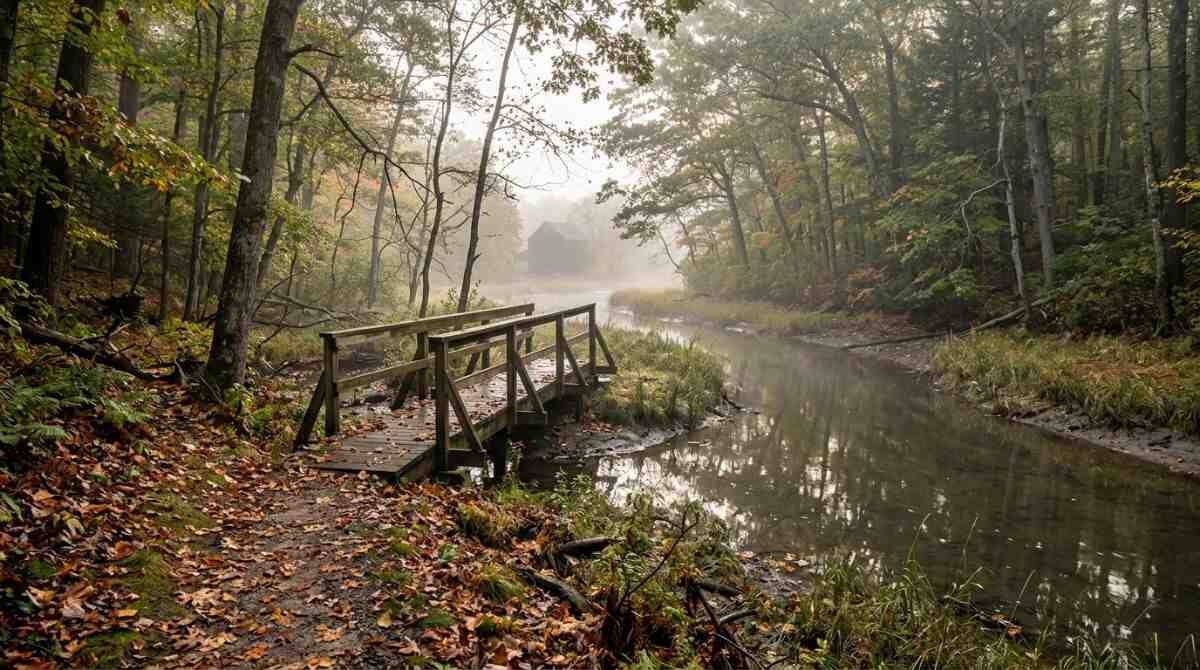
Harbor birding is not limited to the water. The nature trail at the Sherwood-Jayne Farm in East Setauket, which runs about three miles along a glacial moraine on Suffolk County parkland, lists red-tailed hawks, great horned owls, gray catbirds and downy woodpeckers among its wildlife, according to Preservation Long Island. Dogs are not permitted on that trail, and the trail is open during daylight.
A season-by-season outline
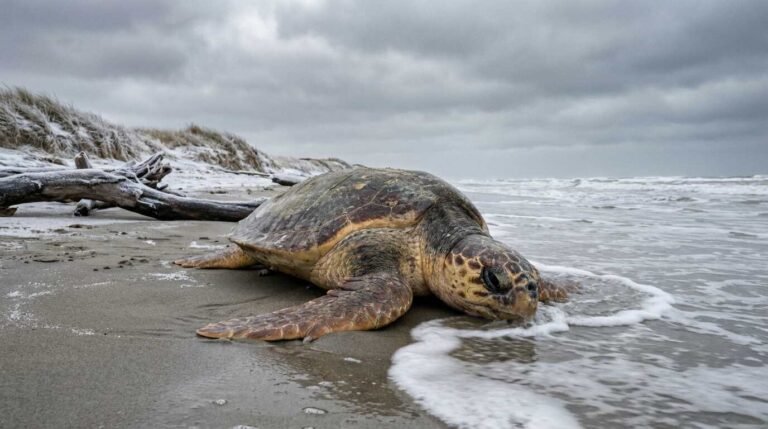
- Fall (October and November): migration of waterfowl through Port Jefferson Harbor, and the arrival of wintering birds. Juvenile Atlantic ridley sea turtles may also feed in the harbors from about August 15 to December 15, according to the state narratives, although more documentation is needed.
- Winter (November through March): the period of peak waterfowl counts in Port Jefferson Harbor, with smaller numbers in Mount Sinai Harbor. Both narratives note that ice cover affects winter numbers.
- Spring (March and April): a second migration window in Port Jefferson Harbor. Audubon walks in Stony Brook shift to a 9 a.m. start in March.
- Summer: the Mount Sinai narrative lists several breeding species, among them green heron, belted kingfisher and swamp sparrow, without giving nesting dates. Heavy human use is the reason it gives for the lack of a stable plover nesting site at Cedar Beach.
How the numbers should be read
The waterfowl figures above come from aerial surveys decades old, the most recent covering 1990 to 1999, and the breeding records for plovers date to 2001 and 2002. They show which species the state considers characteristic of each harbor rather than what an observer will see on a particular morning. Ice, weather, tide height and disturbance all change what is present. Observer-led outings such as the Audubon walks offer a way to learn what is actually being seen in a given month, and the group’s own site is the source for each season’s schedule.
The state describes the Nissequogue River in Smithtown, a short drive west, as a locally significant waterfowl wintering area with concentrations of American black duck, scaup, bufflehead, red-breasted merganser, mallard and Canada goose, plus osprey and least tern nesting, in its own narrative. It makes a useful comparison for readers who want to see how the harbors differ.
Practical notes
Binoculars and a field guide are the usual equipment, and a tide table helps because mudflats expose feeding areas at low water; the National Oceanic and Atmospheric Administration publishes predictions through its Tides and Currents tool. Access to Cedar Beach, the Port Jefferson Marina and West Meadow Beach, all of which the town lists among its pay-station locations, involves permits or daily fees under Town of Brookhaven rules, which the town explains on its parking page.
For related coverage of tidal conditions on the same shoreline, see Strongs Neck Road at low tide. This article is general information drawn from the sources linked in the text.
Useful gear
- Celestron Nature DX 8×42 Waterproof Binoculars: a related item for this activity. See it on Amazon (affiliate link)
As an Amazon Associate I earn from qualifying purchases. A commission may be earned if you buy through this link, at no extra cost to you.
Hours, programs and prices change; confirm details with the official sources linked above before visiting.
Sources
- Port Jefferson Harbor (NY Department of State habitat narrative)
- Mount Sinai Harbor (NY Department of State habitat narrative)
- Mount Sinai and Port Jefferson Harbor (Long Island Sound Study stewardship atlas)
- Stony Brook Harbor (Long Island Sound Study stewardship atlas)
- Four Harbors Audubon Society bird walks (Avalon Nature Preserve)
- Annual Setauket Harbor Day highlights local waterway (TBR News Media, 2019)
- Nissequogue River (NY Department of State habitat narrative)
- Sherwood-Jayne Farm (Preservation Long Island)
- NOAA Tides and Currents tide predictions
- Parking Information (Town of Brookhaven)