Suffolk County Well Water Test Before Closing: What Chapter 840 Requires
Chapter 840 of the Suffolk County Code stops the closing of a house served by a private well until the buyer has obtained a written laboratory certification of the water, at the buyer’s own expense, unless the contract of sale expressly waives that requirement.
Between that rule and the county’s public testing program sits a gap that the ordinance never mentions. The Department of Health Services’ well testing page posts a timetable of up to six weeks to collect a sample and at least eight more to receive results, and it tells resale customers that the department cannot ensure results in time to meet contract or closing dates.
Adopted on March 28, 2000 as Local Law No. 7-2000, the article opens with findings in § 840-1 that attribute well-water contamination to industrial and commercial activity, activity at Brookhaven National Laboratory and pesticide applications, and that conclude unsuspecting purchasers may be endangered unless a test is completed before acquisition. The same section counts about 60,000 to 80,000 Suffolk County homes on private water systems, while the county’s testing page, which carries no update date, estimates 40,000 to 45,000 private wells serving over 200,000 people, two figures that count different units and are not directly comparable.
What Chapter 840 requires of the buyer
The buyer obtains, pays for and exchanges the certification
Under § 840-3, the duty falls on the purchaser, and a purchase of a residential dwelling served by a private water system may not be consummated until the purchaser has obtained, at the purchaser’s own cost, a written certification from a laboratory approved by New York State that the system, judged on an analysis of untreated or raw water, conforms to the water quality requirements of the Suffolk County Department of Health Services for new residential construction. Buyer and seller exchange the certification at the closing.
It is the type of water system, not the address, that sets the trigger. Section 840-2 defines a private water system as any system providing drinking water other than one secured from a public water system, and it draws the public category by scale: piped water to the public through at least five service connections, or regular service to an average of at least 25 individuals daily on at least 30 days a year. A residential dwelling is any building in the county occupied or intended to be occupied as a residence, together with its land and appurtenant buildings, and the definition leaves out lodging houses, boardinghouses, motels and hotels.
Five sections make up Article I, and the last confines the rules to purchase and sale agreements made on or after the effective date while excluding gifts and transfers by operation of law:
| Section | Subject | What the text provides |
|---|---|---|
| § 840-1 | Legislative intent | Findings on groundwater contamination and the purpose of a well-water test before a residential home is acquired |
| § 840-2 | Definitions | Private water system, public water system and residential dwelling |
| § 840-3 | Certification of water quality required | A written certification from a laboratory approved by New York State, based on untreated water, obtained at the buyer’s cost and exchanged at closing; 15-day notice and the seller’s options after a failed test |
| § 840-4 | Waiver | Permitted only by a provision of the signed contract of sale |
| § 840-5 | Applicability | Agreements on or after the effective date; gifts and transfers by operation of law excluded |
Gaps in the text of Article I
No list of analytes, no expiration date and no definition of “approved”
Although § 840-3 sets a standard, the standard is referenced rather than reproduced: the section points to the department’s requirements for new residential construction, and Article I contains no list of the substances to be tested or the limits to be applied, so the panel behind a certification is a question for the laboratory and the attorney handling the purchase to settle against those requirements.
Timing receives the same treatment. The certification must exist at closing, yet the text sets no maximum age for a sample, and the 15-day notice period in § 840-3(C) runs from the point at which the test discloses a failure without saying whether that point is the day of sampling, the day of the laboratory’s report or the day the buyer receives it. The days are not identified as calendar or business days, and the form of the notice is not specified.
Two further silences concern people and paper. The article requires a laboratory approved by New York State and names no program or agency behind that approval, and it speaks only of a certification obtained by the purchaser, so it does not address whether a test commissioned earlier by the seller can serve.
Each of these gaps is a matter for the attorney who drafts or reviews the contract of sale.
The county’s testing program and the contract calendar
Up to six weeks to collect the sample, then at least eight weeks for results
In most instances, according to the county’s page, a sample can be collected within six weeks of receipt of the payment, and at least eight weeks should be allowed after collection for the results to arrive by mail, so the sequence can stretch to fourteen weeks or longer, a little over three months from payment to report. Department personnel must collect the sample under a sampling protocol, and the page rules out delivering a bottle of water to speed things up.
For homes involved in a resale, the page suggests a commercial laboratory, states that the department cannot ensure results in time to meet contract or closing dates, and notes that a commercial laboratory can test water at any time.
| Item | What the county’s page states |
|---|---|
| Sample collection | In most instances within six weeks of receipt of the payment |
| Results | At least eight weeks after collection, sent by mail |
| Sampling | Collected by department personnel; samples delivered by the owner are not accepted |
| Resales | A commercial laboratory is suggested; no assurance that results arrive by contract or closing dates |
| Fee: approved well, or residence with a valid certificate of occupancy | $100 |
| Fee: new construction, well without final approval, or no valid certificate of occupancy | $350 |
Fees turn partly on a certificate of occupancy. A well that the department has previously approved, or one serving a residence with a valid certificate of occupancy, is charged $100, while a well serving new construction, a well without final approval or a residence without a valid certificate of occupancy is charged $350; what the certificate proves, and what open permits mean for a sale, are covered in Certificate of Occupancy on Long Island.
Microbiological quality, inorganic chemical content, volatile organic compounds and petroleum derivatives make up the analyses the program usually performs, with carbamate pesticides added in agricultural areas, according to the page. That list describes the county’s own program, and nothing in Chapter 840 says that a certification for closing must match it.
As read on November 18, 2026, the page shows no date of last update.
After a failed test: fifteen days and the seller’s two options
The notice runs from the failure, and the seller holds the choice
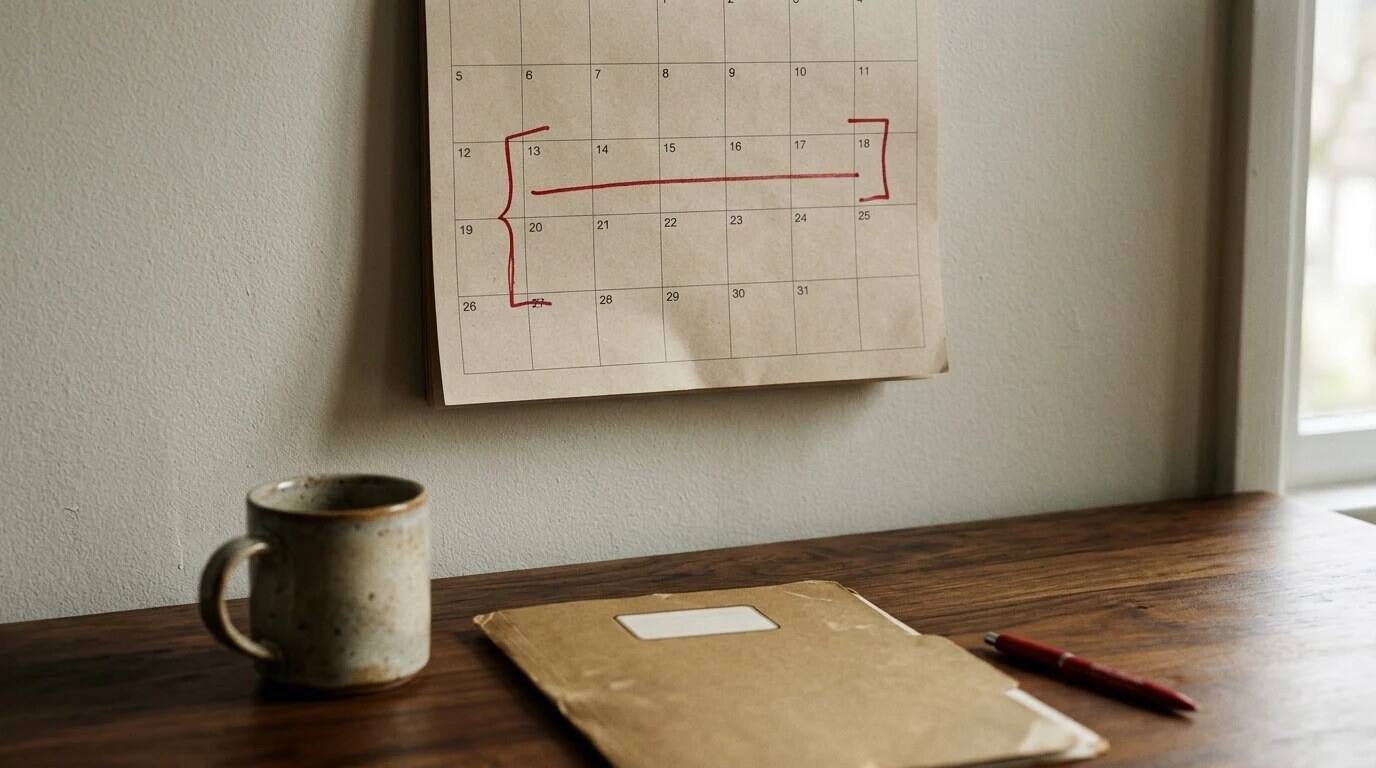
If the test discloses a failure to meet the department’s requirements for new residential construction, § 840-3(C) directs the purchaser to notify the seller within 15 days. The seller then has the option of correcting the condition at the seller’s own cost or canceling the contract of sale and returning the down payment, in which case neither party is liable to the other.
A further choice belongs to the buyer: after the seller states that the condition will not be corrected, the purchaser may agree in writing to complete the transfer despite the noncompliance.
No deadline appears for the seller’s election, and the text does not say how long a correction may take or address a retest that fails after a correction. The mechanics of the down payment returned on a cancellation, including who holds it in the meantime, are covered in How to Handle the Contract Deposit When You Buy a Home in New York.
Waiving the requirement
Only a signed provision of the contract of sale can waive the test
Limited to a single route, a waiver under § 840-4 must appear as a provision of the contract of sale, duly executed by the seller and the purchaser, that “specifically and affirmatively” waives the purchaser’s right to have the test, which the section calls an inspection, as a precondition to the transfer of title.
A disclaimer follows on the county’s behalf: nothing in the article is to be read as an affirmative representation by the county that a signed waiver means the private water system is delivering drinkable water. A waiver therefore removes a legal precondition to closing and leaves the water exactly as it was.
Because the waiver lives in the contract, the choice is made at the contract stage rather than at the closing table, and the drafting is work for counsel. The right being waived is the purchaser’s.
Why a home inspection does not cover well water
New York’s standards do not require inspectors to evaluate water quality
A licensed home inspector’s visit does not supply the ordinance test. The state’s standards of practice for home inspectors, set out in 19 NYCRR § 197-5.8, list what an inspector is not required to do in the plumbing system, and the list includes evaluating the potability of any water supply, observing and reporting on private water supply systems, and evaluating the condition and operation of water wells and related pressure tanks and pumps, along with the quality or quantity of water from on-site water supplies. Section 197-5.16, titled Limitations and exclusions, also names contaminants in water among the environmental matters outside the required scope.
As a result, a clean inspection report and a water certification answer different questions, and each runs on its own track during the contract period. How the state standards frame an inspection is laid out in New York Home Inspections: What the State Standards Cover and Skip, and Walking a Home Inspection: What to Watch and What to Ask covers the visit itself.
Laboratory choice and raw-water sampling
ELAP certification, raw-water sampling and the questions to settle first
Although the ordinance names no program behind its approved laboratory, the state’s laboratory certification program is the Environmental Laboratory Approval Program (ELAP) of the Wadsworth Center, established in 1984 under Section 502 of the Public Health Law to certify laboratories that perform environmental analyses on samples originating in New York. ELAP grants certification in fields that include drinking water, and its public search tool finds laboratories by name and by category.
On the federal side, the CDC’s guidance for well owners likewise points to state-certified laboratories and says that health departments or county governments should hold a list of those that test for different germs and chemicals. Whether ELAP certification is what the ordinance means by approval is not stated in the text, so that match is a point for counsel to confirm.
Raw-water sampling matters as much as the choice of laboratory. Section 840-3 calls for analysis of untreated water, and the county’s page says its own staff usually test raw or unfiltered water unless the department or the applicant requests otherwise. A house with a softener, filter or other treatment equipment therefore raises the question of where the sample is drawn, a point to settle with the laboratory before the appointment.
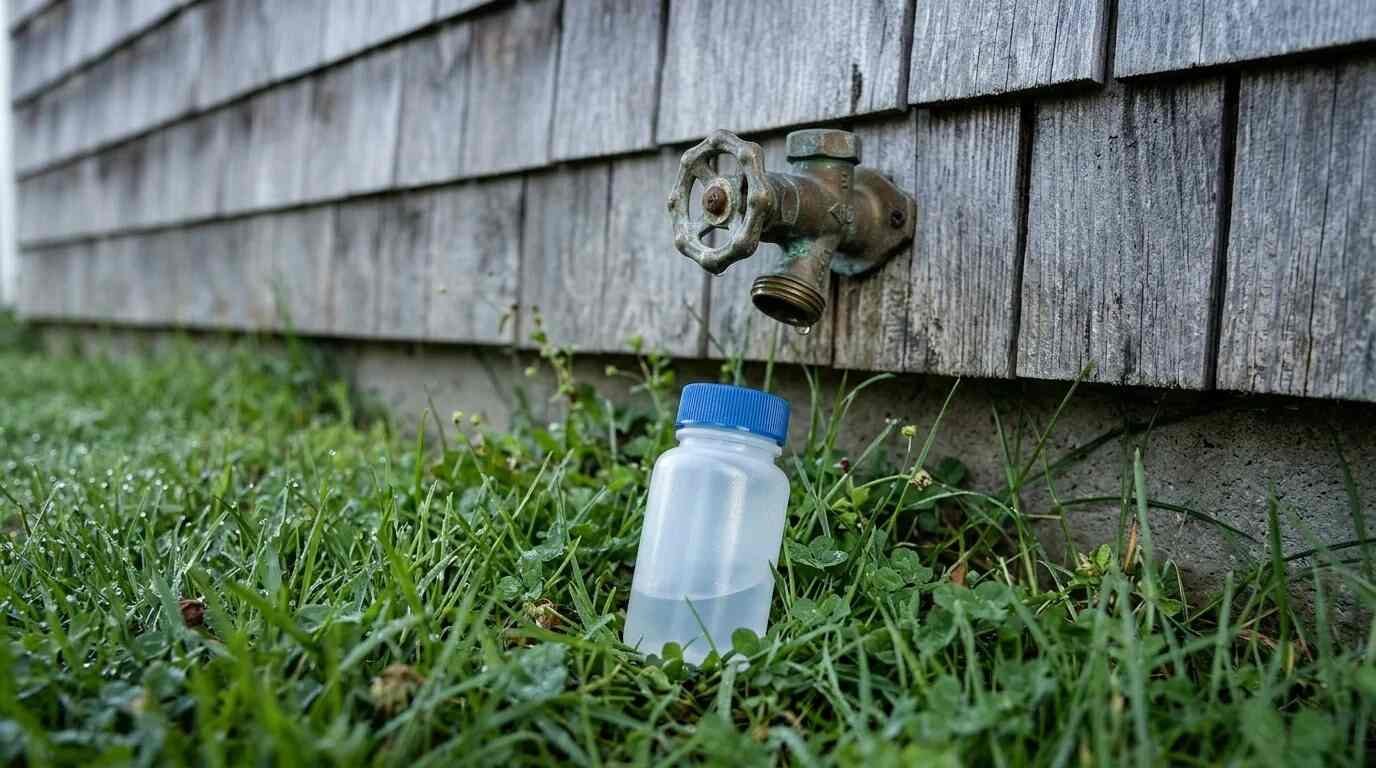
Questions worth settling before the sample is drawn:
- Which panel the laboratory runs, and whether it is built to the department’s requirements for new residential construction that § 840-3 references
- The laboratory’s ELAP certification in the drinking water field, and the form of the written certification it issues
- Where the raw-water sample is drawn when treatment equipment is installed, and who draws it
- The turnaround time, set against the closing date in the contract and any lender deadlines
- How the certification reaches the attorneys in time for the exchange at closing
- Whether the seller holds a recent test, and whether counsel treats it as meeting the ordinance
After closing, the CDC advises private well owners to test at least once a year for total coliform bacteria, nitrates, total dissolved solids and pH, to ask the local health department which other germs or chemicals warrant testing, and it states that the EPA rules protecting public drinking water systems do not apply to privately owned wells.
The wastewater side of a Suffolk purchase is covered in Sewer vs. Septic in Suffolk County: What Buyers Should Know About Wastewater Systems and Suffolk County Septic Systems in 2026: Rules, Real Costs, and Up to $45,000 in Grants, and radon testing, a separate environmental question in a sale, is covered in Radon in Long Island Homes: What State Data Shows and What Testing Costs.
For informational purposes only — consult a licensed attorney or financial advisor.
Provisions of the Suffolk County Code, fees and timetables come from the pages cited below as read on November 18, 2026, and the County Legislature, the Department of Health Services and a licensed New York real estate attorney remain the authorities on what applies to a particular purchase. This article offers general information about a county ordinance and a public program and is not legal or real estate advice.
Sources
- Suffolk County Code, Chapter 840, Article I: Well Water Testing (eCode360)
- Suffolk County Department of Health Services: Private Well Water Testing Program
- New York State Department of Health, Wadsworth Center: Environmental Laboratory Approval Program
- New York State Department of State: Home Inspection Professional Licensing, Article 12-B, Real Property Law, and 19 NYCRR Part 197 (March 2026)
- CDC: Guidelines for Testing Well Water
- Suffolk County Water Authority on YouTube: Long Island’s Aquifer and the Water Cycle