Long Island Museum in Stony Brook: What to See First
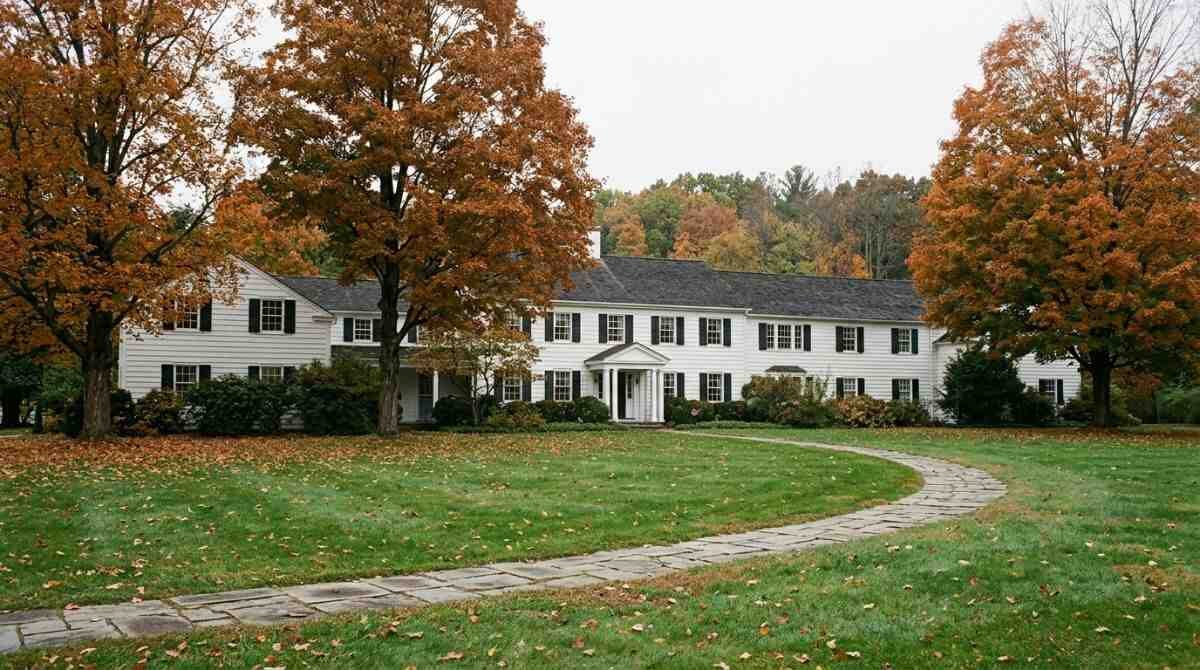
The Long Island Museum of American Art, History, and Carriages sits at 1200 Route 25A in Stony Brook, a short drive from Stony Brook Village and Setauket. A carriage collection, an art museum, a history museum and a small group of relocated historic buildings share the campus, so first-time visitors often need to decide where to begin. This guide draws on the museum’s own pages and a few published profiles to outline what each part holds and how a visit can be organized.
Hours, admission and contact
The museum’s home page lists hours of 11:30 a.m. to 7:00 p.m. on Thursdays and 12:00 to 5:00 p.m. Friday through Sunday, with the gift shop closing at 5:00 p.m. on Thursdays. The telephone number is (631) 751-0066. The home page states that admission is free and links to an admission and holiday closure schedule. Other pages on the site refer to programs “included with admission,” so the schedule page is the place to confirm current terms and closure dates.
How the museum began
The New York Heritage digital collections record for the museum, maintained by New York Heritage, traces the institution to a founding group that included Ward Melville, his wife Dorothy Bigelow Melville, the naturalist Robert Cushman Murphy, Dr. Winifred Curtis and the insurance broker O.C. Lempfert. It was incorporated as the Suffolk Museum on December 28, 1939. Ward Melville bought the current nine-acre property in 1948, and the Carriage House opened in 1951 with 80 vehicles. A new Art Museum followed in 1973, the former D.T. Bayles Lumber Mill across the street became the History Museum in 1977, and a purpose-built Carriage Museum opened in 1987.
Names changed along the way. The same record says the board adopted the name The Museums at Stony Brook in 1973, the current name arrived in 2000, and the museum became a Smithsonian Affiliate in 2006.
The carriage collection
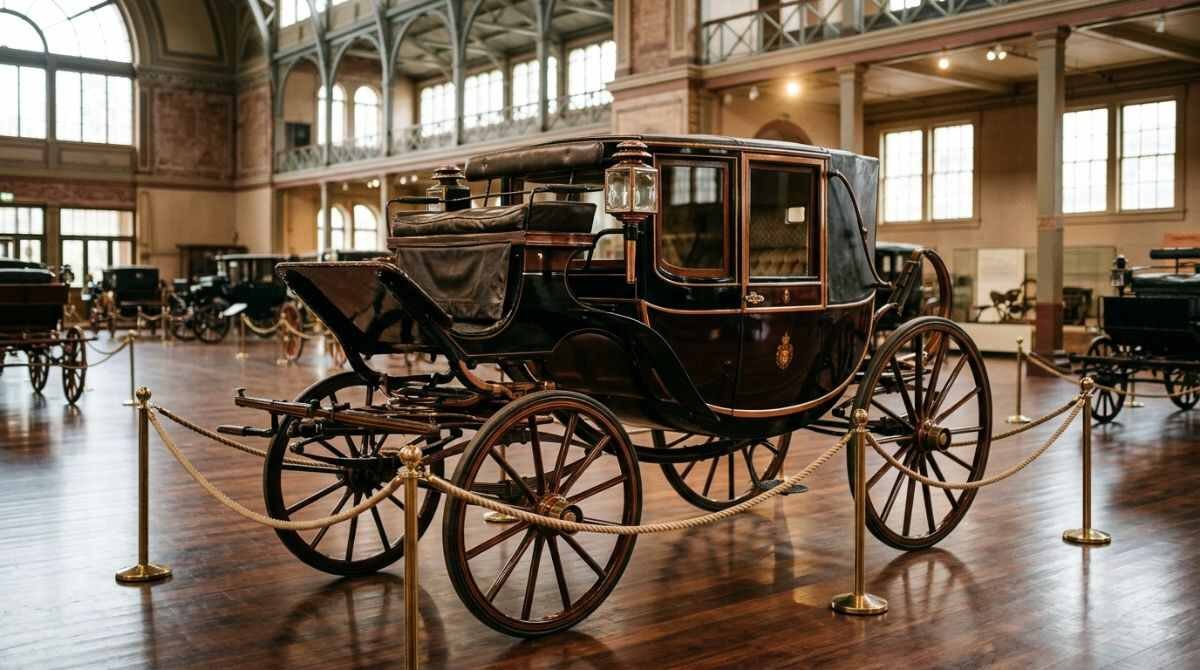
For many first-time visitors, the Carriage Museum is the clearest reason to come. According to the museum’s Carriage Museum page, the Dorothy and Ward Melville Carriage Museum occupies a 40,000-square-foot building and displays more than 100 historic vehicles, ranging from Gilded Age luxury carriages to middle-class family vehicles and commercial wagons such as a butcher’s cart and a popcorn wagon. The home page goes further, calling it the finest collection of American horse-drawn transportation artifacts in the world, a claim that belongs to the museum itself. Older published figures are larger: the New York Heritage record cites nearly 200 vehicles and the figures differ between sources.
The museum’s page singles out several pieces.
- Chariot d’Orsay (1875 to 1885, Million and Guiet, France), a carriage that belonged to William K. Vanderbilt.
- Tally-Ho (1875, Holland and Holland, London), a road coach described as the first purpose-made sporting coach in the country, now awaiting conservation funding.
- Steam Pumper (1874, Amoskeag Manufacturing Company), a fire engine from the era when New York City established a professional fire department.
- Streetcar (about 1887, J.G. Brill Company), a horsecar that appeared in the 1964 film Hello, Dolly!
- State Coach (about 1850, M. Staubwasser, Munich), used by the Wittelsbach family until the Bavarian monarchy fell in 1918.
Beyond individual vehicles, the galleries cover how carriages were made. A section called Making Carriages follows the shift from small craft shops to large factories, and the Graves Carriage Shop from Williamsburg, Massachusetts, represents a rare surviving small-town shop that operated from the 1870s until the 1920s. The Little Stony Brook area is a two-thirds-scale village of buildings from about 1900, and an exhibit titled Riding Towards Justice tells the story of Elizabeth Jennings, a Black schoolteacher removed from a streetcar in 1854 who won her lawsuit against the Third Avenue Railway Company.
The art museum and William Sidney Mount
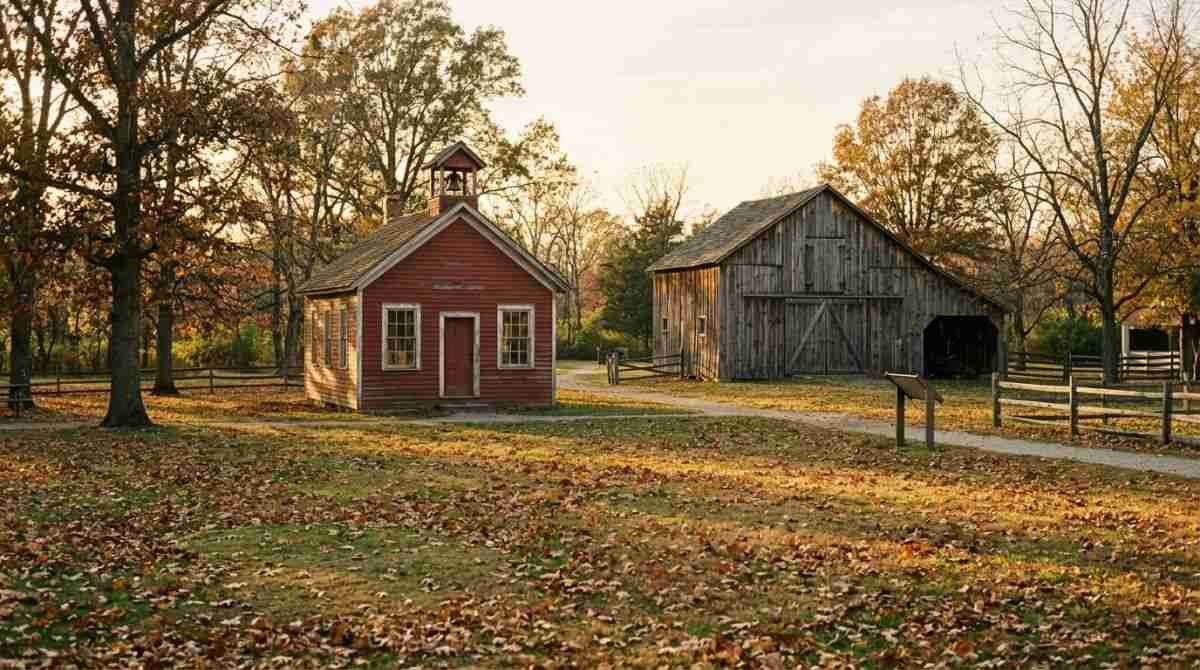
Art collections are the museum’s other pillar. The New York Heritage record states that the museum holds more than 600 paintings, including the largest collection of works by William Sidney Mount, and a 2016 Village Times Herald profile described it as holding the world’s largest collection of Mount’s work and memorabilia. That article gives Mount’s dates as 1807 to 1868, says he was born in Setauket, worked mainly in Stony Brook, and is buried in the Setauket Presbyterian Church Cemetery, and describes his genre paintings of everyday activities such as laundry, fishing and dancing. It identifies Dancing on the Barn Floor (1831) as depicting the Williamson barn, which was later moved to the museum grounds.
That barn is a convenient bridge between the art and the campus. Visitors who view Mount’s painting indoors can then look at the real building outdoors, as described below. The cemetery connection also appears in the existing article on the Setauket Presbyterian burial ground.
Current exhibitions
The museum’s home page and Long Island 250 page list exhibitions with dates. The Seat of Action: Long Island in the American Revolution and Beyond runs from February 19 to October 18, 2026 and covers the region’s experience under British control and military occupation. Long Island in the ’70s is also listed through October 18. After that date, the museum’s pages show Enduring Heart: Native American Long Island, on view in the Art Museum from August 20 through December 20, 2026. The museum’s description calls it the first exhibition at the museum to explore the historical contours and present-day artistic legacies of this story, developed with an advisory panel of Native American community members and scholars, and names works by Tecumseh Ceaser, Jeremy Dennis, David Bunn Martine and Lydia Ann Wallace-Chavez.
Because the first two exhibitions end on October 18, readers visiting after that date should plan around Enduring Heart and the permanent displays. The Long Island 250 page also describes a passport program, Long Island’s Path to Independence, with a LIM 250 stamp available at the reception desk in the History Museum and Visitors Center on the museum’s open days.
The grounds and historic buildings
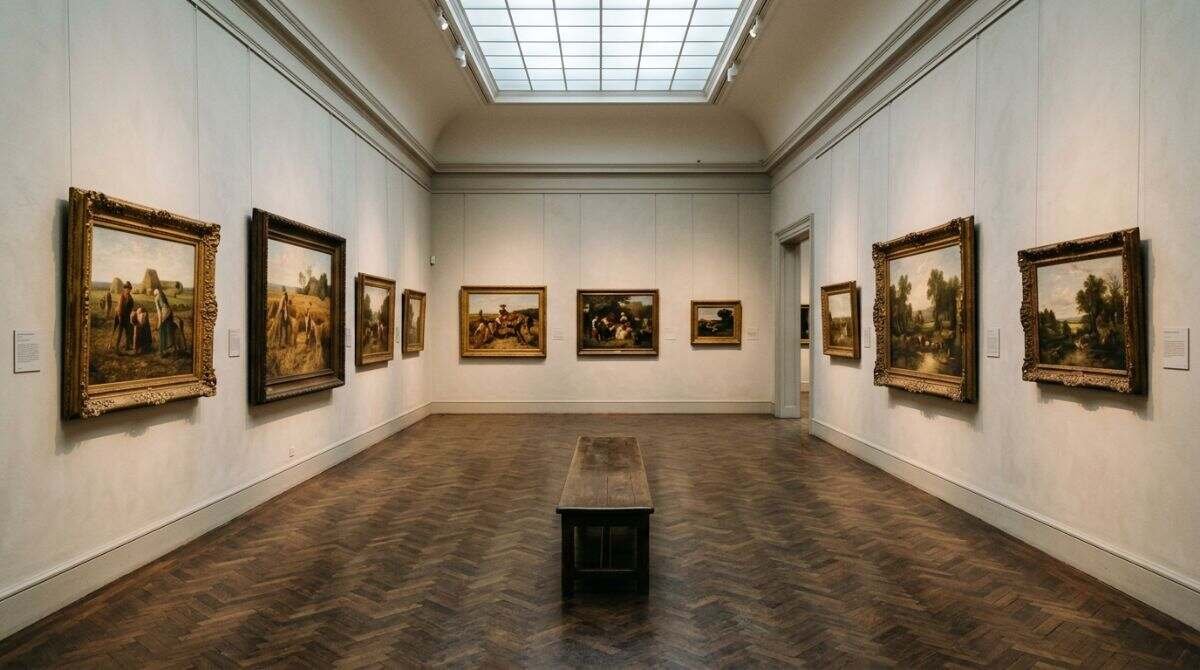
The Grounds and Historic Structures page describes several relocated buildings.
- Nassakeag (South Setauket) Schoolhouse. Built in 1877 by Frederick A. Smith on the site of an earlier 1821 schoolhouse, used until 1910 and moved to the museum in 1956. A one-room school for about thirty students aged roughly five to fifteen, where museum educators still teach classes.
- Ploch-Williamson Barn. Built in 1794 by Jedidiah Williamson, donated and moved in 1956. It was enlarged from a two-bay to a three-bay New England style barn, with a wooden threshing floor.
- Samuel H. West Blacksmith Shop. The building dates to 1834 and was largely rebuilt between 1875 and 1893 by Samuel H. West, who ran a farrier, wheelwright and blacksmith business. It was moved in 1952.
- Fountain and horse trough. A Beaux Arts stone and marble fountain donated to New York City in 1880, originally at Madison Avenue and 23rd Street, moved to the museum when the Carriage Museum opened in 1987.
An Herb Garden installed in 1993 sits at the head of the fountain. The museum’s page notes that the grounds include five historic structures but names four.
Suggested order for a first visit
Visitors with limited time can allocate it by interest. Anyone drawn to design and craftsmanship can start with the Carriage Museum, which holds the most distinctive objects and takes the longest to see. Art-focused visitors can move to the Art Museum and its Mount holdings, and history-minded visitors can use the History Museum and the schoolhouse, barn and blacksmith shop. Weather matters: the outdoor buildings suit milder days, while the carriage building is large enough to occupy a cold afternoon.
The museum also schedules recurring events, including film screenings and workshops, and its events calendar is linked from the home page. For nearby context, the existing guide to Stony Brook covers the surrounding area. This article is general information.
Further reading
- William Sidney Mount: Painter of American Life: a related title for this activity. See it on Amazon (affiliate link)
As an Amazon Associate I earn from qualifying purchases. A commission may be earned if you buy through this link, at no extra cost to you.
Hours, programs and prices change; confirm details with the official sources linked above before visiting.
Sources
- The Long Island Museum (official site)
- Long Island Museum: Carriage Museum
- Long Island Museum: Grounds and Historic Structures
- Long Island Museum: Enduring Heart exhibition
- Long Island Museum: Long Island 250
- The Long Island Museum of American Art, History, and Carriages (New York Heritage)
- Village Times Herald, August 2016: Long Island Museum exhibit (TBR News Media)