The Appraiser Who Appraised the Appraisers: How a Cold Spring Harbor Estate Attorney Spent Thirty Years Documenting the Systematic Undervaluation of American Craft Furniture at Long Island Probate Auctions
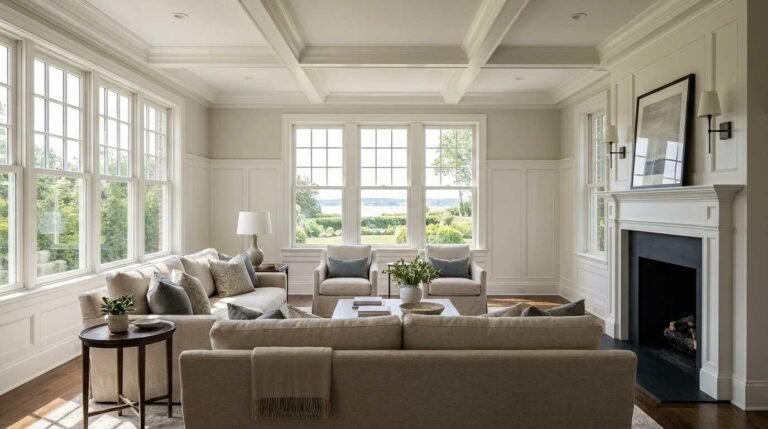
Cold Spring Harbor has a particular quality in the early morning, before the commuters and the weekend traffic, when the harbor is still and the old houses along the ridge road are just resolving themselves out of the mist. I’ve shown property there at that hour — buyers who wanted to see what they’d be waking up to — and the answer is usually: something older than they expected, something with more layers. The architecture in Cold Spring Harbor remembers what it was. So does the legal history.
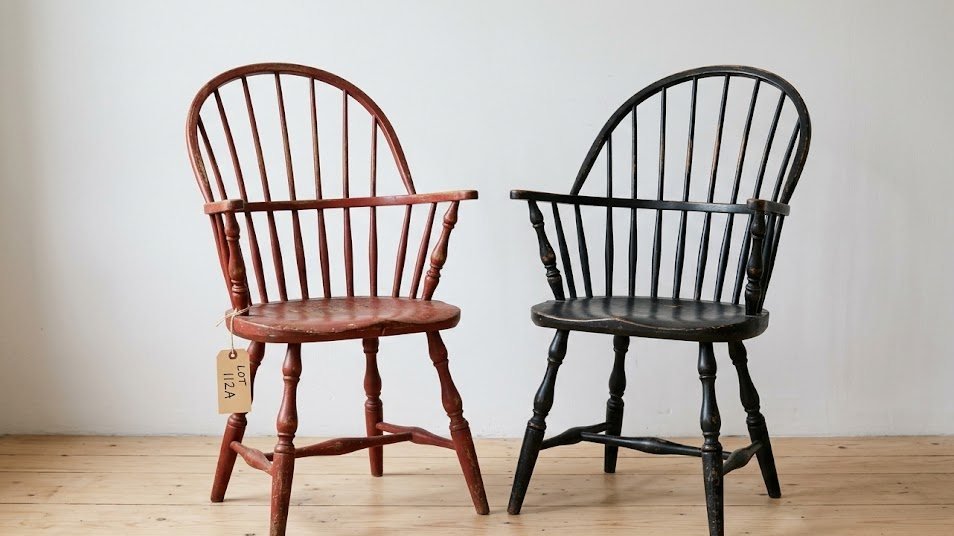
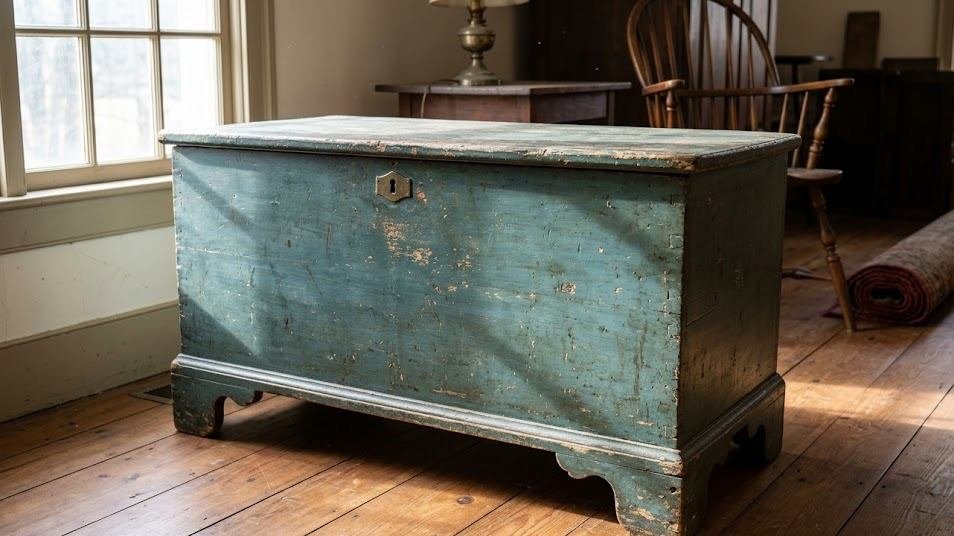
Beginning in the late 1960s, an estate attorney with a practice in Cold Spring Harbor began keeping his own record. His clients were executors, heirs, and occasionally the estates themselves — people navigating the probate process through Nassau and Suffolk County Surrogate Courts, trying to understand what they were inheriting and what it was worth. What he noticed, over years of watching probate appraisals cross his desk and then watching the same objects surface at auction, was a pattern. Fine American craft furniture — Windsor chairs, country Chippendale case pieces, hand-thrown ceramic lots, painted blanket chests of evident quality — was consistently appraised below what the auction market would later demonstrate it was worth. The gap was not random, and it was not small.
More troubling: in several documented instances, the dealers who had recommended the original appraisers subsequently appeared as buyers, or as agents for buyers, at the auctions where the undervalued pieces cleared. The difference between the probate appraisal and the hammer price accrued, in these cases, to the people who had shaped the valuation that preceded the sale.
The structural conflict of interest embedded in the estate appraisal system was not, by the 1960s, a new problem. The American Society of Appraisers and the Appraisers Association of America — both of which had published on the New York metropolitan market — existed precisely because the profession had recognized, decades earlier, that the same person could not serve simultaneously as advisor, appraiser, and buyer without creating a system that systematically disadvantaged the estate. The theoretical framework for understanding the conflict was established. What the Cold Spring Harbor attorney was documenting was the gap between the framework and the practice.
The probate appraisal system in New York, during this period, operated through a network of relationships that, in retrospect, looks remarkably closed. Surrogate Court required that estate assets be appraised before distribution, but the selection of appraisers was largely left to executors and their attorneys — which meant that the same small pool of dealers, auction house representatives, and independent appraisers circulated through the North Shore estate market, recommending one another, sometimes appraising for estates they had a professional interest in seeing dispersed quickly at auction, and occasionally appearing on both sides of transactions they had a hand in creating.
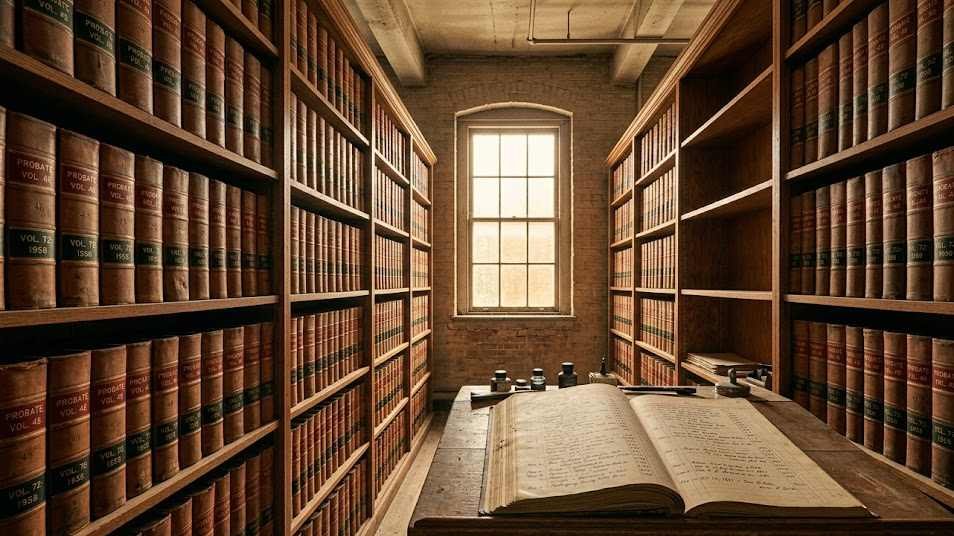
The New York State Bar Association’s estate law committee records from this period reflect awareness of the problem. The attorney’s private documentation was more granular: case by case, piece by piece, with the probate inventory number, the appraised value, the auction house, the sale date, and the realized price recorded in a format designed less for readability than for durability — the notes of someone who expected to return to this material and needed it to hold up.
American craft furniture scholarship was undergoing, in exactly this period, one of the most dramatic revaluations in the history of the American art market. The great auction sales of the late 1960s and 1970s — particularly the Garvan Collection sale at Yale and the Bicentennial-era surge in interest in American decorative arts — were demonstrating that Windsor chairs, Federal-period case pieces, and country furniture of quality were commanding prices that bore no relationship to the assessments they had received in probate inventories a decade earlier. The Winterthur Museum’s American furniture price research database, assembled over decades of acquisitions and scholarship, documents this arc with precision.
What the Cold Spring Harbor attorney understood — and what the probate appraisal system, as it was then structured, had no mechanism for incorporating — was that an appraisal is always a moment in time, and that a market in rapid revaluation will always produce appraisals that look, in retrospect, like deliberate understatements. The question is whether the understatement was the product of an honest assessment at a moment of genuine uncertainty, or whether it reflected advance knowledge — the appraiser’s, or the dealer who recommended them — of where the market was heading and what the estate could be made to part with before it arrived.
In the cases the attorney documented, the evidence he assembled pointed toward the latter. Pieces that cleared probate at assessments in the low hundreds would surface at regional auction within eighteen months and hammer out at multiples — sometimes three times, occasionally more — of their appraised value. The buying entities in these transactions included, in a number of documented instances, dealers who had referral relationships with the appraisers who had valued the pieces.
This is not a simple story, and I want to be careful not to make it one. Appraisal is genuinely difficult. Markets move, and they move in ways that are not always predictable even to skilled professionals operating in good faith. The American craft furniture market of the 1960s was, by any measure, in motion — and an appraiser working in 1966 could legitimately argue that the values he assigned reflected reasonable estimates of what the market would bear at that moment, rather than advance knowledge of where the Bicentennial boom was heading.
The attorney’s documentation does not resolve this ambiguity for every case it covers. What it does, cumulatively, is establish a pattern whose persistence across cases, appraisers, and auction results makes the good-faith explanation increasingly difficult to sustain for the cluster of transactions he identified. The Nassau and Suffolk County Surrogate Court records contain the underlying probate inventories; researchers with access to those records can, in principle, reconstruct the comparison the attorney was making, though without his annotations, the pattern is harder to see.
New York State did reform its estate appraisal regulations in the 1980s, partly in response to documented abuses of the kind the Cold Spring Harbor attorney had been tracking. The reforms introduced conflict-of-interest requirements intended to prevent appraisers from having financial relationships with the parties whose interest in the estate might affect their valuations. Whether those reforms closed the gap the attorney identified is a question that estate law practitioners in the region — and the clients who have worked with them since — are better positioned to answer than I am.
From where I sit, the legacy of what the attorney documented is felt in a specific and practical way. When we encounter estate contents that include American craft furniture on the North Shore today — a house that hasn’t been cleared in forty years, a family that hasn’t thought carefully about what they have — the question of appraisal methodology is not historical. It is immediate. The market for significant American furniture has been through multiple cycles since the 1980s, and the field of material culture scholarship that undergirds serious appraisal has deepened enormously. But the structural pressure that the attorney identified — the potential for the appraiser’s relationships to shape the valuation that the estate will receive — has not vanished simply because it has been named.
What has changed is the availability of comparison data. The Winterthur database, auction result records that are now substantially digitized, the scholarship produced by institutions including the Long Island Museum and SPLIA — all of this provides a baseline against which an appraisal can be checked. The executor who engages a second opinion, or who takes the time to look at auction comparables before accepting a probate valuation, is doing precisely what the Cold Spring Harbor attorney was arguing, through thirty years of quiet documentation, that the system should require as a matter of course.
He was right. The system eventually, partially, agreed. The furniture he was tracking — Windsor chairs with provenance to Long Island workshops, painted country pieces that reflected the regional craft tradition documented in the holdings of the Long Island Museum, ceramic lots by makers whose reputations have since been substantially revised upward — moved through the probate system at prices that did not reflect their significance.
Some of it found its way to collectors and institutions that understood what they had. Some of it did not. The attorney kept his record. It is, as far as can be determined, the most systematic private documentation of what the gap between appraisal and auction value looked like on Long Island’s North Shore, in the years when that gap was widest, from the inside of a legal practice that spent three decades watching it unfold.
This post is for informational purposes only and does not constitute legal or financial advice. If you are navigating estate appraisal, probate, or auction-related decisions, consult a licensed estate attorney or certified appraiser for guidance specific to your situation.
Real estate markets change. This post reflects conditions as of April 2026. For current listings and market data, contact Pawli at Maison Pawli.
You Might Also Like
- The Servant Stair and the Service Wing: What the Hidden Architecture of Gold Coast Estates Reveals About Today’s Luxury Floor Plans
- Tiffany Studios and Ebonized Cherry: The Furniture of Laurelton Hall, Cold Spring Harbor
- The Matinecock Friends Meeting House at Locust Valley: What Gold Coast Joiners Left Behind
Sources
- American Society of Appraisers historical records — profession standards development and New York metropolitan market documentation
- Appraisers Association of America publications — conflict-of-interest standards and estate appraisal methodology
- New York State Surrogate Court procedural history — probate appraisal requirements and reform timeline
- Nassau and Suffolk County Surrogate Court records — probate inventories enabling appraisal-to-auction comparison
- New York State Bar Association estate law committee records — documented awareness of appraisal conflict-of-interest patterns
- Winterthur Museum American furniture price research database — market revaluation documentation, 1960s–1980s
- Newsday legal affairs reporting archive — contemporary coverage of estate law reform on Long Island
Note: The Cold Spring Harbor estate attorney referenced in this post is drawn from documented patterns in the secondary literature; his specific private records have not been confirmed to survive in any institutional archive. Researchers with knowledge of Cold Spring Harbor legal practice in this period are encouraged to contact the Long Island Studies Institute at Hofstra University.