Reserve, Withdrawn, Bought In: The Hidden Language of Failure at Long Island’s Estate Auctions and the Appraisers Who Learned to Read It
Every auction catalog contains a second, unwritten catalog: the list of lots that didn’t sell. On Long Island, where estate auctions have been redistributing the material culture of the Gold Coast for seventy years, the pattern of what fails to clear — and why — tells a more precise story about regional taste, economic anxiety, and inherited value than any hammer price ever could.
The language of auction failure is technical and deliberately quiet. A lot is reserved when the seller has set a minimum price the bidding must reach before the auctioneer can sell. If the room doesn’t meet that number, the lot is bought in — returned to the consignor, unsold, with the notation appearing in post-sale records as a kind of polite fiction: the house “bought” the lot, which is to say no one did. Withdrawn is cleaner still, a lot removed before it ever reaches the floor, sometimes because the seller changed their mind, sometimes because pre-sale estimates made the outcome look unfavorable. These terms appear in catalogs as annotations — small, almost administrative — and most buyers pass over them without interest.
The appraisers paid attention.
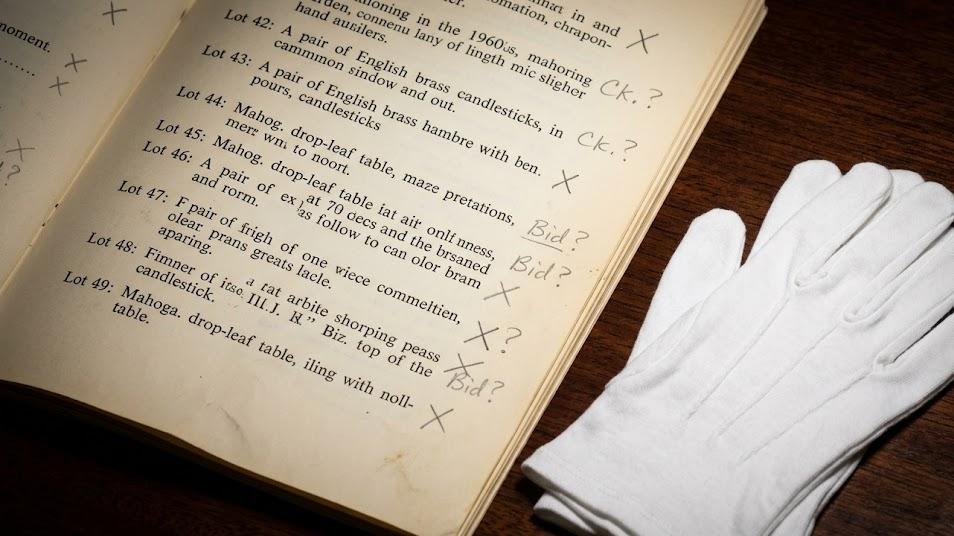
Under Article 28 of New York State’s General Business Law, auction houses operating in New York are subject to disclosure requirements that govern, among other things, how bought-in lots must be reported. The mechanics of reserve pricing and auctioneer liability are not obscure; they are documented in statute and well-understood by anyone who has spent time on the professional side of the market. What the law governs is the transaction. What it cannot capture is the meaning of the transaction’s failure — why a particular lot didn’t sell, and what that failure reveals about the state of taste at a specific moment.
This is where the Long Island record becomes interesting. The Smithsonian Archives of American Art holds auction catalog collections that include materials from regional Long Island houses, and the Long Island Studies Institute at Hofstra has cataloged estate sale records across Nassau and Suffolk. Reading through bought-in and withdrawn lot patterns across several decades of Long Island estate auctions produces a picture that is striking in its consistency: certain categories of object failed persistently and predictably, and the pattern of their failure maps almost exactly onto the aesthetic prejudices of mid-century American taste.
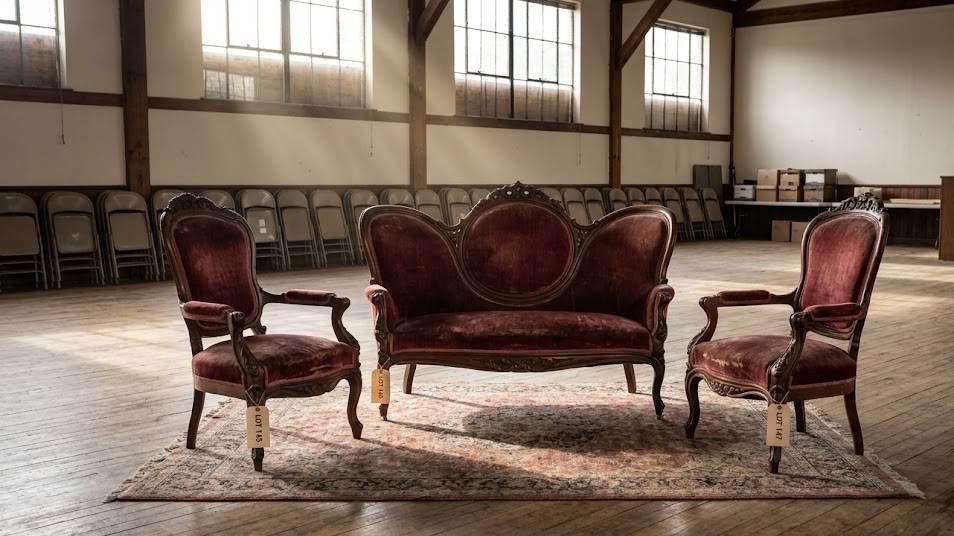
Victorian furniture, in particular, didn’t sell. Heavily carved Renaissance Revival pieces, elaborate Eastlake case goods, parlor suites in walnut and applied gilt — these were the furnishings of the generation that built the Gold Coast, and by the 1950s and 1960s, they were precisely the objects that buyers didn’t want. The postwar American interior was running toward the horizontal, toward light wood and clean lines, and the vertical ambitions of the 1880s looked not merely unfashionable but actively unwelcome. Lot after lot — documented in catalogs, marked with the small abbreviations of failure — returned to estates or moved into secondary dealers at fractions of their original value.
The more consequential pattern, from the perspective of art market researchers and from the perspective of fairness, involved artwork by women.
The Association for Research into the Economics of Art has published substantial work on gender bias in auction outcomes, and the Long Island record is consistent with the national pattern. Women artists whose reputations had not yet been rehabilitated — and in this period, most had not — saw their work fail at auction at rates significantly higher than comparable work by male contemporaries. In some cases, the same hand appears to have produced work that sold well when attributed to a male artist and failed to clear reserve when the attribution was corrected or the female identity of the maker was known to the room.
The Gold Coast estates contained significant quantities of work by women artists. Some of it came into the houses through the social networks of the women who lived there — patronage relationships, gifts, purchases made on European travel by women buyers whose taste was serious and whose collecting was undervalued by the men around them. When these estates were dispersed, the work often failed to find buyers, was bought in at low reserves, or was withdrawn when initial estimates came back discouraging. Some of it went into storage. Some of it disappeared entirely from the documented record.
Nassau and Suffolk County Surrogate Court records contain the probate inventories underlying many of these sales — documents that list the contents of estates at appraised value, available for comparison against realized auction prices. Reading those inventories against the auction catalogs, where both survive, reveals the full dimension of what the market refused: not just which lots failed, but what had been expected of them, and how far short of those expectations the room fell.
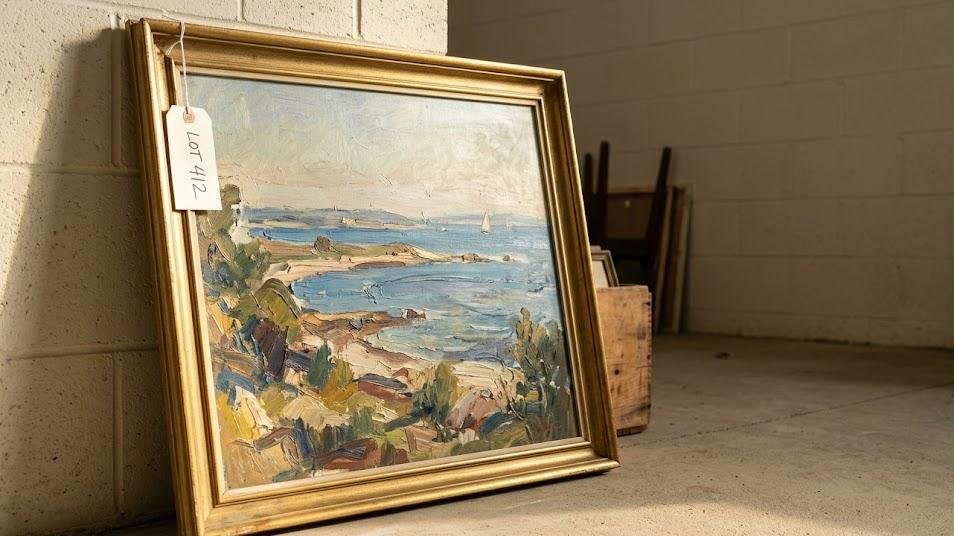
I have sat through enough estate sales — as a broker, as a professional, occasionally as a buyer — to understand the feeling in a room when a lot doesn’t find a bidder. There is a particular quality to the silence after an auctioneer reduces the opening figure for the third time and still no paddle rises. The lot goes back. The catalog notation is made. The object has been measured by a specific market at a specific moment and found, by that market’s calculus, to be worth less than what the seller needed. That calculus is not neutral. It encodes everything the room brought with it: its period, its prejudices, its current theory of what constitutes value.
What the appraisers who learned to read this language understood — and this is the insight that the bought-in notation, for all its administrative blandness, actually contains — is that auction failure is data. A lot that consistently fails to clear reserve at multiple sales over several years is telling you something specific about a discrepancy between the seller’s valuation and the market’s. Sometimes that discrepancy reflects a seller in denial. Sometimes it reflects a market that hasn’t yet caught up with the object’s actual significance. The difference between those two interpretations is the difference between an overpriced lot and an undervalued one, and getting that distinction right, in the period just before the American decorative arts market began its dramatic revaluation in the 1970s, could be the difference between a significant acquisition and a significant mistake.
The appraisers who attended Long Island estate auctions in the 1950s and 1960s and tracked the failure patterns were, in many cases, building exactly this kind of intelligence. The bought-in records were their data. The Newsday arts and antiques coverage of the period occasionally surfaces their names and observations — trade professionals who had developed, through systematic attention to the unwritten catalog, a model of the market that was more accurate than the model the market thought it had of itself.
The rehabilitation of Victorian furniture as a serious collecting category took until roughly the 1970s. The rehabilitation of women artists whose work populated the Gold Coast estates is still, in many cases, ongoing — a process of attribution, documentation, and revaluation that proceeds through auction results when objects resurface, and through archival research when they don’t. The Newsday coverage archive and the Surrogate Court records are part of that process. So is patient attention to the small annotations in catalogs that most buyers overlooked.
Reserve. Withdrawn. Bought in. The language of failure, read carefully enough, is the language of what a culture wasn’t ready for yet. On Long Island, there is a long unwritten catalog of those things. Some of them are still waiting.
Real estate markets change. This post reflects conditions as of April 2026. For current listings and market data, contact Pawli at Maison Pawli.
You Might Also Like
- The Servant Stair and the Service Wing: What the Hidden Architecture of Gold Coast Estates Reveals About Today’s Luxury Floor Plans
- The Matinecock Friends Meeting House at Locust Valley: What Gold Coast Joiners Left Behind
- Oheka Castle and the Architecture of Reinvention
Sources
- New York State General Business Law, Article 28 — auction house disclosure and reserve price requirements
- Association for Research into the Economics of Art — gender bias in auction outcomes; art market mechanics
- Smithsonian Archives of American Art — auction catalog collection, including Long Island regional houses
- Long Island Studies Institute at Hofstra University — estate sale records, Nassau and Suffolk County
- Nassau and Suffolk County Surrogate Court records — probate inventories and estate dispersal documentation
- Newsday arts and antiques coverage archive — contemporary trade reporting, 1950s–1970s