What a Listing Agreement Actually Obligates You To
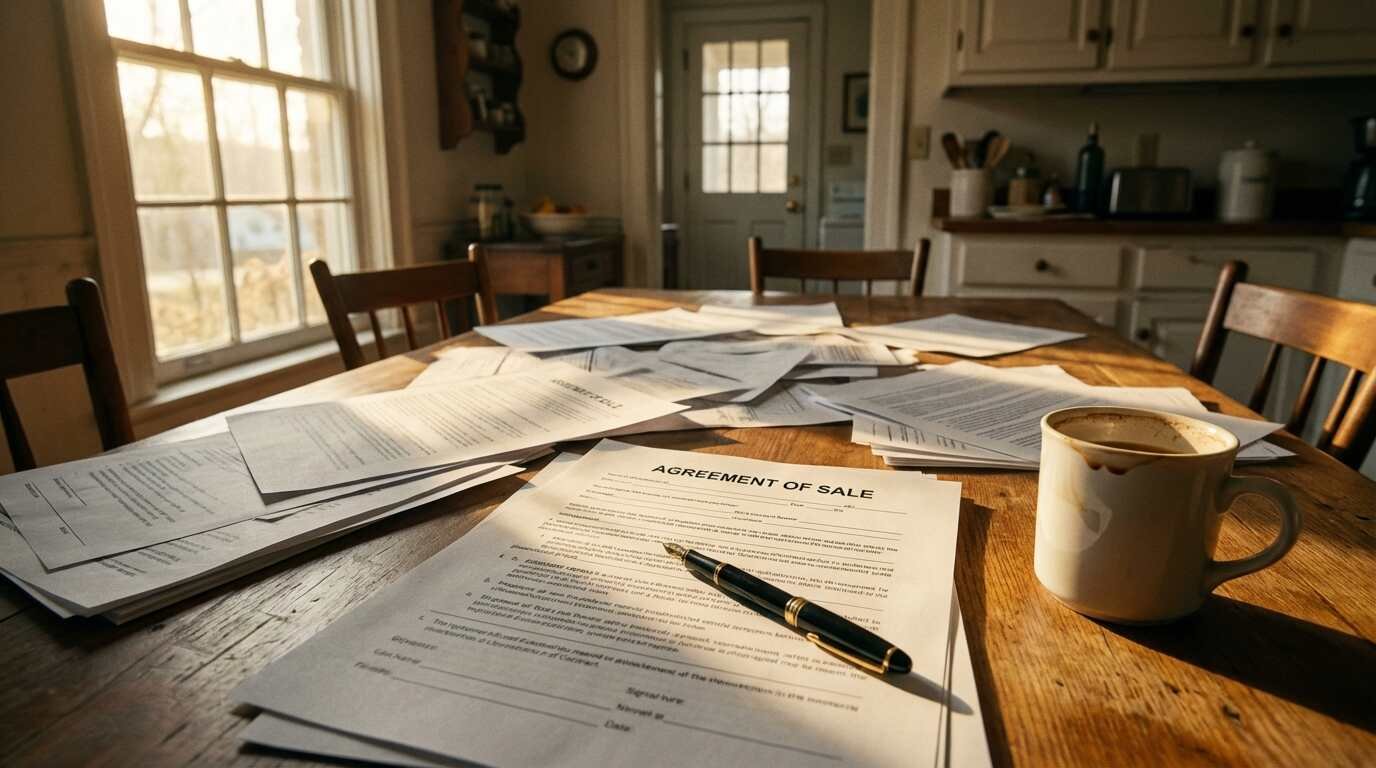
The listing agreement comes out at the kitchen table, usually after an hour of conversation about pricing strategy and marketing timelines, when the energy in the room is optimistic and everyone is already thinking about the next chapter. The broker slides it across. The seller signs. And then — in the vast majority of cases — neither party ever returns to it until something goes sideways.
I have been at that table dozens of times, on both sides of the dynamic. What I know from experience is that the listing agreement is not a formality. It is a legally binding contract, and what it says determines your exposure for months to come. This is the document that decides whether you owe a commission if the deal falls through. Whether you can fire your broker. Whether you’re still on the hook for a commission ninety days after the listing expires. Whether the agreement can renew itself without your knowledge.
Most sellers read the listing price and sign. The clauses that actually govern the relationship — the ones with real financial consequence — go unread. That ends up being expensive.
This is for informational purposes only — consult a licensed real estate attorney for advice specific to your situation.

What a Listing Agreement Is, Legally Speaking
A listing agreement is a bilateral contract between a property owner and a licensed real estate broker. It authorizes the broker to market the property and establishes the terms under which the broker earns compensation. In New York, listing agreements are governed by Article 12-A of the Real Property Law, which covers broker licensing, agency disclosure, and commission enforcement.
New York does not require listing agreements to be in writing under the Statute of Frauds — but the Department of State’s own regulations require written authorization before a broker can advertise a listing. In practice, every legitimate listing agreement on Long Island is a written contract. If yours isn’t, that’s problem number one.
There are three structures you’ll encounter:
Exclusive Right to Sell. This is the standard form used by the overwhelming majority of Long Island brokers. Under this structure, the broker earns a commission regardless of who finds the buyer — including if you, the owner, sell the property yourself to a neighbor who knocks on your door. The broker’s exclusive window means the broker’s window. Full stop.
Exclusive Agency. Less common. The broker has the exclusive right to market the property, but the seller retains the right to sell independently without owing a commission — provided the seller’s buyer was not in any way introduced or shown the property by the broker. The distinction sounds clean in the abstract but gets messy in practice.
Open Listing. Rare in the residential market. Multiple brokers can market the property, and only the broker who produces the buyer gets paid. Sellers sometimes think they want this. In reality, it tends to produce less marketing effort from every broker involved, since none of them have an exclusive stake in the outcome.
If you’re signing a listing agreement on Long Island, you are almost certainly signing an exclusive right to sell. Understand exactly what that means before you do.
The Clause That Determines When Your Broker Earns the Commission
This is the clause most sellers never think about until a deal collapses — and by then, they’re already in a dispute.
Under New York’s default legal standard, a broker earns a commission when the broker produces a buyer who is “ready, willing, and able” to purchase the property on terms the seller finds acceptable. That’s not when you close. That’s not when the contract is signed. That’s when an acceptable offer exists and a capable buyer is on the other side of it. If you then refuse to sell, change your mind, or the deal falls apart through no fault of the buyer, the broker’s commission may already be earned under the default rule.
The New York Department of State’s own legal memorandum (LI10) makes this explicit: if the listing agreement conditions commission on the broker procuring a ready, willing, and able purchaser — not on the actual closing of title — the seller can owe a commission even if no sale ever takes place.
The protective language sellers should insist on is a clause conditioning the commission on the actual closing of title. Something along the lines of: “Commission shall be due and payable only if, as, and when title actually closes.” That shifts the standard from offer-accepted to deed-transferred, which is where most sellers instinctively believe the obligation sits — and where it should sit.
This isn’t a drafting trick. It’s standard protective language that any experienced real estate attorney can add, and that many brokers will accept when asked. The time to ask is before you sign, not after the deal craters.
The Duration: How Long Is Too Long?
Listing agreements in New York must specify an end date. This is not optional — New York Department of State Regulation 175.15 explicitly prohibits self-renewing exclusive listing agreements. If a contract you’re being asked to sign contains automatic renewal language, that language is illegal under New York law and should be struck.
Typical listing durations on Long Island run anywhere from sixty days to six months. What’s right for your property depends on market conditions, price point, and what kind of marketing the broker is committing to. A property priced correctly in a tight inventory market might sell in three weeks. A unique or high-end property in a thinner price band might need more runway.
What you want to avoid is a six-month term with a broker who stops performing after week four — and no contractual mechanism to address it. Some listing agreements include performance benchmarks: minimum number of showings in the first thirty days, required marketing deliverables, or early termination triggers if those benchmarks aren’t met. Not all brokers will accept this language, but the conversation is worth having. It signals that you’re reading the contract, which is exactly what you should be doing.
Any extension of the listing term must be in writing. Verbal agreements to extend do not create enforceable extensions under New York law, and any broker who tells you otherwise is either misinformed or hoping you won’t notice.
The Exclusivity Clause: What “Exclusive” Actually Means for Your Day-to-Day
Under an exclusive right to sell agreement, you agree to refer all inquiries about the property to the broker. If your neighbor calls you directly, you forward that call. If someone who saw the property at an open house reaches out to you personally two weeks later, you forward that contact. Your obligation to refer is immediate and ongoing throughout the listing term.
This matters because the moment you begin negotiating directly — even informally, even with someone you’ve known for years — you’ve potentially created a commission liability without the broker having done anything wrong. The commission clause in a properly drafted exclusive right to sell doesn’t require broker effort if the property is sold during the listing period. It requires a sale. That’s it.
If you have an existing buyer in mind at the time of listing — a family member, a neighbor you’ve discussed it with — you can often negotiate a named-buyer exclusion that carves that specific individual out of the commission obligation. This must be written into the agreement before you sign. It cannot be added after the fact.
The Protection Period: Your Liability After the Listing Expires
Most listing agreements include a protection period — a window of time after the listing expires during which the broker can still earn a commission if the property sells to a buyer the broker introduced during the listing term. Standard protection periods on Long Island run sixty to ninety days, though they can be negotiated.
Here’s how it plays out: your listing expires in October. In December — still within the protection period — a buyer who toured the property in August makes you an offer. If that buyer was shown the property by your broker, the broker’s commission is likely still owed.
The standard OneKey MLS exclusive right to sell form used across Long Island includes protection period language. What sellers should require is that the broker provide, in writing and within a defined window after expiration, a list of all buyers who were shown the property or who received marketing materials during the listing term. That list defines the universe of protected buyers. Without it, the protection period is effectively open-ended in terms of who qualifies.
Negotiate the protection period down to thirty days if you can. Require the written buyer list within five business days of expiration. These are reasonable asks that a cooperative broker will usually accept.
The Commission Structure: What You’re Actually Agreeing to Pay
I wrote about commission mechanics in detail in What a Real Estate Commission Actually Costs You When You Sell on Long Island, so I won’t repeat that analysis here. But in the context of the listing agreement specifically, there are two things worth flagging.
First: the listing agreement will specify a total commission percentage and will likely include language about how that commission is divided with a cooperating broker (the buyer’s agent). Following the 2024 NAR settlement, sellers are no longer required to offer a specific buyer’s agent compensation through the MLS, and the structure of how commission is offered to cooperating brokers has changed. Your listing agreement should reflect the current landscape — if it contains outdated or ambiguous language about mandatory buyer-agent compensation, ask for clarification before signing.
Second: the seller’s indemnification clause, which appears in most standard New York listing agreements, can expose you to legal costs if a claim is brought against the broker as a result of following your instructions. Read this clause. Ask what it covers. If you’re directing the broker on marketing decisions, pricing adjustments, or offer handling, you are potentially assuming liability for the consequences of those directions.
What Happens If You Fire Your Broker
Terminating a listing agreement early in New York requires mutual written consent. The listing agreement is a bilateral contract; you cannot unilaterally cancel it. If the broker refuses to release you, your options narrow significantly — you can wait for the term to expire, negotiate a settlement, or pursue legal remedies if the broker has materially failed to perform.
Some agreements include early termination clauses that permit the seller to exit by reimbursing the broker’s documented out-of-pocket expenses — photography, staging costs, advertising, and similar items. If you want the option to exit cleanly, negotiate this language in before you sign. A broker who won’t accept any exit mechanism is worth thinking carefully about before you commit.
If the broker has materially failed to perform — missed contractual marketing obligations, failed to submit offers, breached fiduciary duty — you may have legal grounds to terminate without penalty. This requires documentation. Keep records of what the broker agreed to do and what they actually did. If you think you’re heading toward a dispute, talk to a real estate attorney before you send any termination letter.
One scenario I’ve seen sellers underestimate: firing a broker and relisting with someone new, only to receive a commission demand from the original broker when the property eventually sells — because the buyer was someone who toured the home under the first listing. The protection period doesn’t care about your new listing. If the buyer was the first broker’s contact, the first broker may still have a claim. This is why the written buyer list at expiration matters so much.
The Marketing Authorization Clause: What You’re Allowing
Most listing agreements include a marketing authorization section that covers photography, virtual tours, MLS submission, and third-party syndication sites. Read this section. Some sellers have strong preferences about which platforms their property appears on — or about audio recording device disclosures for showings, which New York State law addresses specifically (recording conversations during open houses or showings without disclosure is a violation of state law, and the listing agreement will typically require you to disclose any such devices).
If you have specific restrictions — no social media, no StreetEasy, no sign in the yard — those go in the agreement before you sign. They cannot be added after the fact without written amendment, and any amendment requires signatures from both parties.
The Seller’s Disclosure Obligation: The Agreement Doesn’t Cover You
I want to address something sellers sometimes assume: signing a listing agreement does not transfer your disclosure obligations to the broker. You are still legally required to complete and deliver the New York State Property Condition Disclosure Statement to any buyer prior to the signing of the contract of sale, as required by Real Property Law § 462. Your listing agreement doesn’t change that. Your broker’s marketing materials don’t change that. If you have a known material defect — and I’ve written about this extensively in The Seller’s Disclosure Form Is a Legal Document: Why Most Sellers Treat It Like a Survey — the obligation to disclose it runs from you to the buyer, not from the listing agreement.
Similarly, if your broker makes representations in marketing materials about your property’s condition, the broker is required under New York law to verify those statements. If you make a claim to the broker that turns out to be false, and the broker repeats it in marketing materials, both of you have potential exposure. The listing agreement is the beginning of your legal relationship with your broker, not the end of your own obligations.
What to Do Before You Sign
Review the agreement with the same attention you’d give a lease or a loan document. At minimum, look at these clauses: the commission-earned trigger, the term and renewal provisions, the protection period length and buyer-list requirement, the early termination language, and the marketing authorizations.
If anything is ambiguous, ask for clarification in writing. If you want protective language — closing-contingent commission, named-buyer exclusions, performance benchmarks, a defined exit mechanism — negotiate for it before you sign. Once the agreement is executed, changes require mutual written consent, and brokers have little incentive to renegotiate mid-listing.
The listing agreement should feel like a partnership document, not a trap. If the broker bristles at questions or refuses to explain clauses, that tells you something important about what the relationship will look like once the listing is live. A broker who won’t discuss the contract openly isn’t the broker you want representing your most significant asset.
This post is for informational purposes only and does not constitute legal or financial advice. Listing agreement terms vary significantly — consult a licensed New York real estate attorney before signing any binding contract.
Real estate markets change. For current listings and market data, contact Pawli at Maison Pawli.
You Might Also Like
- What a Real Estate Commission Actually Costs You When You Sell on Long Island
- The Seller’s Disclosure Form Is a Legal Document: Why Most Sellers Treat It Like a Survey
- The As-Is Clause Is Not a Shield: What Sellers Remain Liable For After Closing
- The Dual Agency Disclosure You Signed Does Not Mean What You Think It Means
- Days on Market Is a Calculated Figure, Not a Raw Fact: What Sellers Need to Know Before Relisting
Sources
- New York Real Property Law § 443 — Agency Disclosure Requirements: https://www.nysenate.gov/legislation/laws/RPP/443
- New York Department of State, Legal Memorandum LI10: Defining When a Real Estate Broker’s Commission Is Due: https://dos.ny.gov/legal-memorandum-li10-defining-when-real-estate-brokers-commission-due
- OneKey MLS Exclusive Right to Sell Agreement (Rev. 1/2025): https://www.lirealtor.com/docs/default-source/default-document-library/documents-on-demand/exclusive-right-to-sell.pdf
- New York Real Property Law § 462 — Property Condition Disclosure Statement