The Last Handwoven Tweeds: Why Harris Cloth Is Becoming Fashion’s Most Coveted Provenance Story
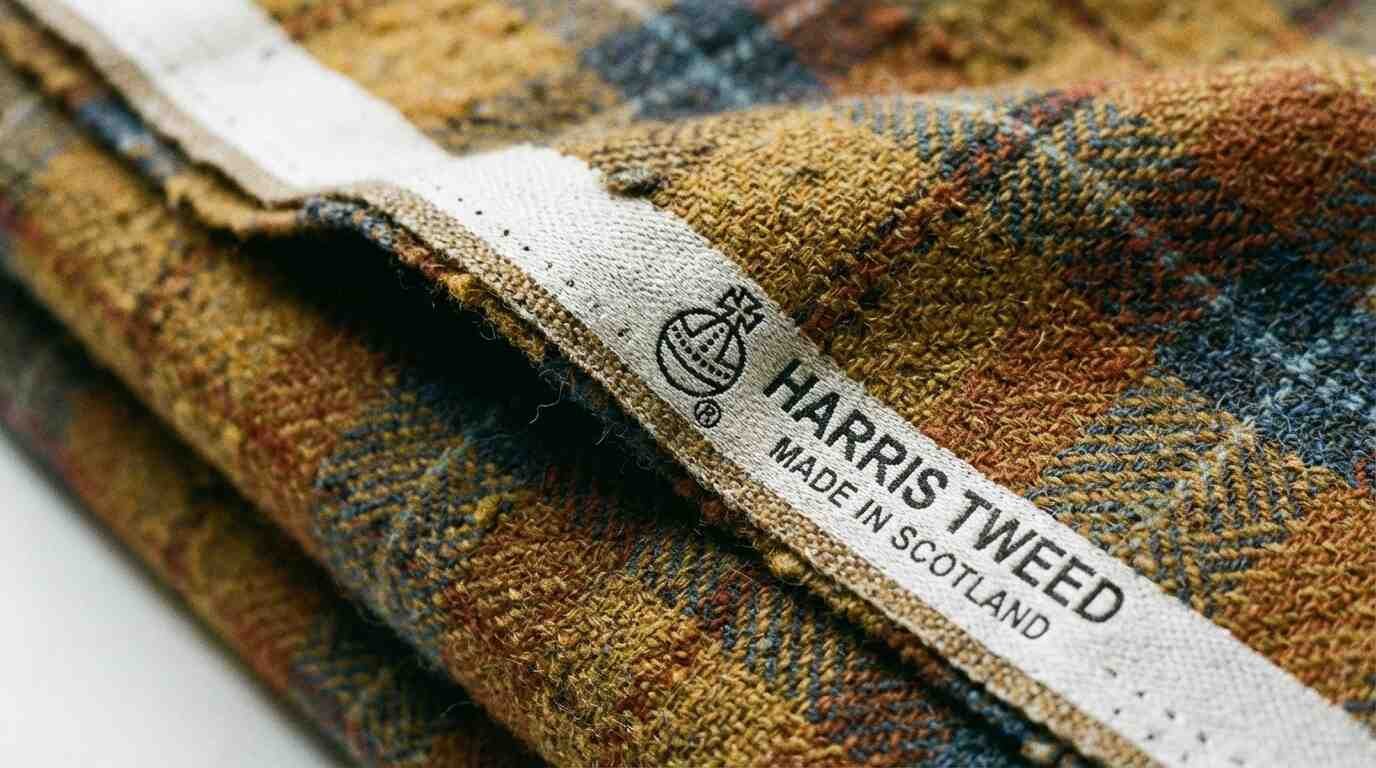
There is a piece of legislation on the books in the United Kingdom — the Harris Tweed Act of 1993 — that specifies, with a precision unusual in law, exactly what a textile is allowed to be called. Harris Tweed must be handwoven by islanders in their own homes on the Outer Hebrides. It must be made from pure virgin wool that has been dyed and spun on the islands. It must be certified by the Harris Tweed Authority, whose Orb trademark — stamped on every authenticated bolt — is one of the oldest certification marks in the world.
The Island Economy
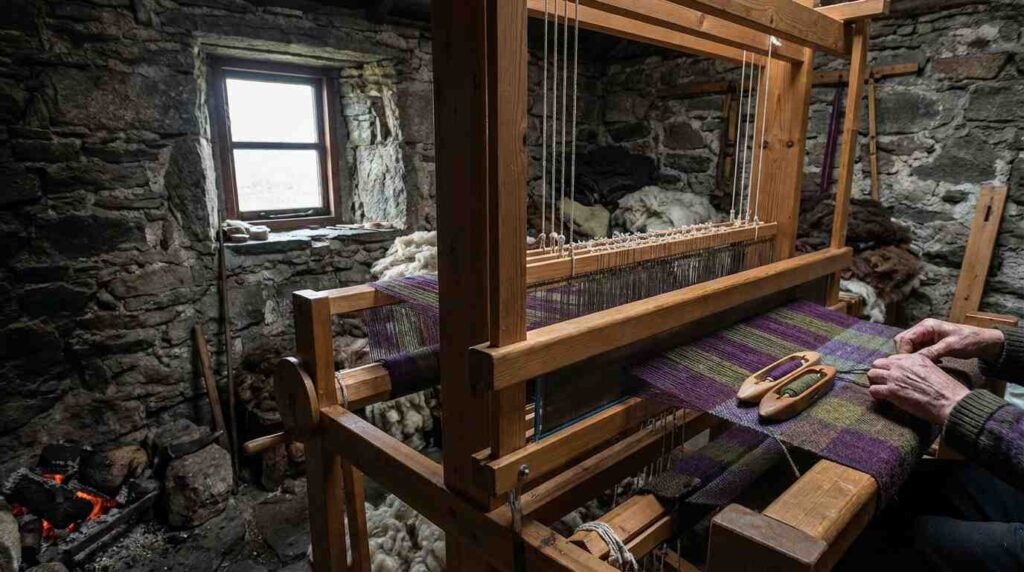
The Outer Hebrides are not, by most measures, a convenient place to sustain an industrial textile tradition. The landscape is magnificent and relentless — wind-flattened moorland, lochs the color of pewter, light that changes so rapidly it seems to have its own weather system. The villages where Harris Tweed is woven are small. The looms — wooden floor looms, each producing a noise the BBC Scotland documentary footage captures as a rhythmic, percussive thud — are kept in outbuildings attached to the weavers’ homes.
The Guardian’s 2019 feature on island weavers, which profiled Donald John Mackay of South Harris among others, documented something worth understanding: the Harris Tweed industry is not a heritage performance. It is a working economy. When fashion commissions slow, the islands feel it. When a major house — Chanel, most significantly — increases its sourcing, the looms run more hours. The Orb trademark is not a marketing device. It is an economic lifeline.
Fewer than two hundred weavers currently hold certification. That number has fluctuated across the industry’s history — the postwar decades were difficult, and the 1980s saw genuine contraction — but what has never changed is the legal requirement that the cloth be made exactly as it has always been made. The Harris Tweed Authority maintains official records of every certified weaver and every authenticated bolt. The provenance is not a claim. It is a document.

When Lagerfeld Found the Islands
Karl Lagerfeld’s sourcing decisions during his decades at Chanel are a matter of archival record, and the house’s own materials confirm what fashion press has documented extensively: Harris Tweed became part of the Chanel vocabulary early in Lagerfeld’s tenure, and it stayed. The reasons are not difficult to understand.
Chanel’s identity has always been grounded in the paradox of luxury that looks effortless, grandeur that wears like comfort. Harris Tweed — with its irregular slubs, its handmade imperfections, its colors drawn from the island landscape itself (the dyes historically derived from local plants and lichens) — is exactly the kind of textile that rewards proximity. It looks better the closer you get. The variations that industrial fabric eliminates are the things that give Harris Tweed its character.
Vivienne Westwood, whose relationship with British heritage textiles is more adversarial and therefore more interesting than Chanel’s, has used Harris Tweed to make different arguments: that craft and subversion are not opposites, that the most radical thing you can do with an old material is refuse to let it become merely nostalgic.
The private clientele that the Harris Tweed Authority’s records gesture toward — the commissions that flow through bespoke tailors rather than retail collections — are the quietest part of the story. There are people who have understood for years that if you want a fabric that will outlast the clothes built around it, that will age into something richer rather than something worn out, the Outer Hebrides is where you start.
Provenance as the Point
I have been thinking for some time about what the word “provenance” actually means — in real estate, in art, in the objects that move between serious collectors. In real estate, provenance is the record of what a property has been: who built it, who owned it, what was done to it and when. A well-documented provenance commands a premium not because the history makes the property more functional but because it makes it more knowable. You understand what you are acquiring.
Harris Tweed operates on exactly this logic. The Orb trademark doesn’t tell you the cloth is warmer or more water-resistant than other wool (though it is both). It tells you the complete story of what you are holding: the island, the weaver’s home, the wooden loom, the certified bolt number. When provenance becomes the point, scarcity stops being a marketing word and starts being a structural fact.
Fewer than two hundred weavers. One authenticated trademark. A piece of law that makes deviation impossible.
There is a particular kind of collector — in fashion as in real estate — who understands that this is not a limitation. It is the entire value proposition.
This post is for cultural and informational purposes. For questions about North Shore properties, contact Pawli at Maison Pawli.