First Alert RD1 Radon Test Kit Review: What a $17 Screening Test Can and Cannot Tell a Long Island Homeowner
As an Amazon Associate I earn from qualifying purchases. A commission may be earned if you buy through this link, at no extra cost to you.
Radon is the kind of risk a buyer or homeowner cannot see, smell or taste, which is why a $17 test kit sells. The First Alert RD1 is one of the best known, and it does one narrow job: it screens a home for radon over a short period and sends the result back from a lab. This review lays out what the kit does, what federal and state sources say about radon, and where a short-term screening test stops being enough.
A note on method. This review draws on the kit’s manual, on two independent reviews, on EPA’s published health information and on a New York State Department of Health statement. It is not based on hands-on testing, and nothing here claims otherwise. This post is general information, not legal, inspection or medical advice. Questions about what a New York seller must disclose, or what a contract requires, belong with a licensed New York real estate attorney.
Why radon testing comes up at all
EPA estimates that radon is the leading cause of lung cancer among people who have never smoked and the second leading cause overall. It puts radon’s toll at about 21,000 lung cancer deaths a year in the United States, roughly 2,900 of them among people who never smoked. EPA’s action level is 4 picocuries per liter, written 4 pCi/L, and the Surgeon General’s 2005 advisory urged Americans to test their homes and to fix them at that level or above. EPA also suggests considering a fix between 2 and 4 pCi/L and notes that getting below 2 is difficult.
New York’s Department of Health says the same thing from the state side. Testing is the only way to know whether a home has radon, tests are best done in winter with windows and doors closed, homes should be retested every five years and after remodeling or weatherizing, and homebuyers should test. The Department adds that mitigation systems can reduce radon by up to 99 percent when installed by certified contractors. Those are agency statements, not claims about any one kit.
How the RD1 works, according to its manual
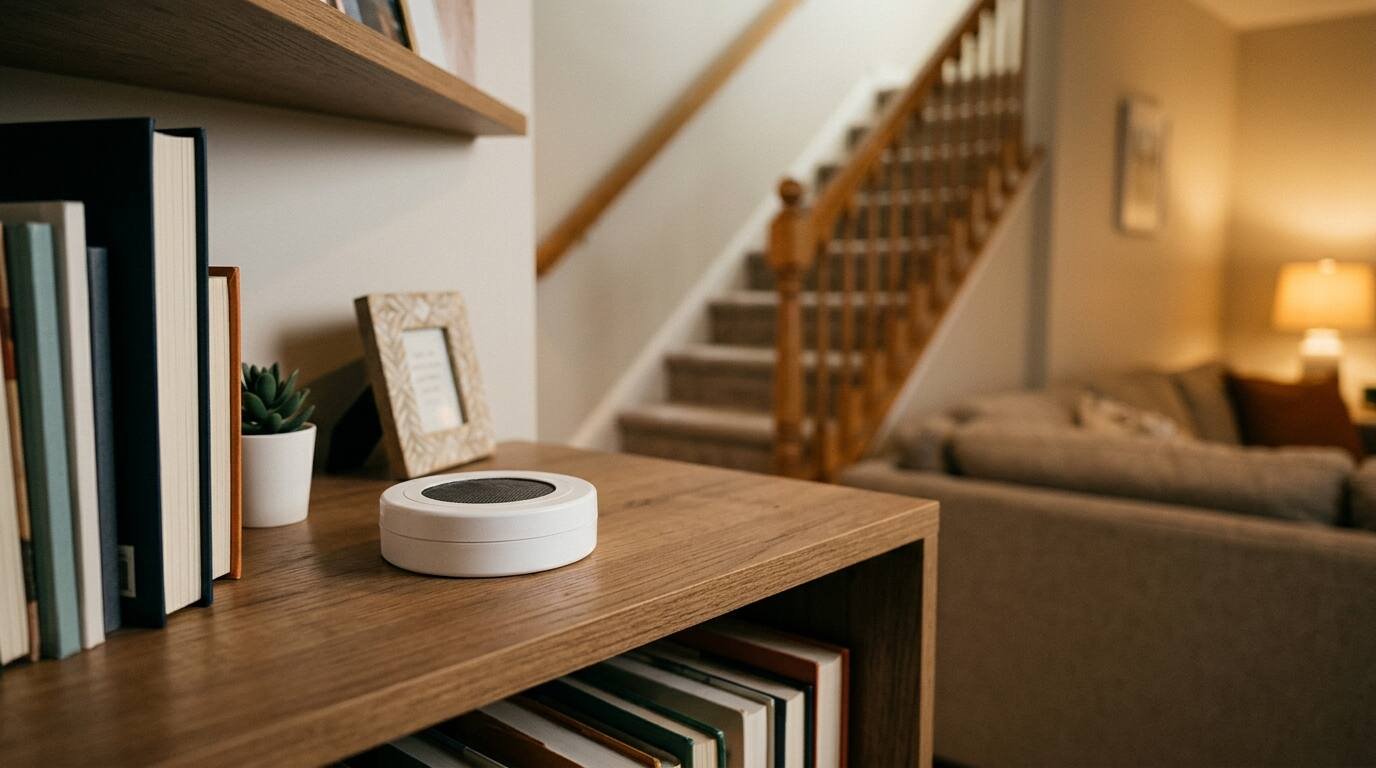
The manual describes a 48-hour test. The kit goes at least two feet off the floor in the lowest area of the home that people regularly use, away from vents, fans, heat sources and direct sunlight, and away from damp areas such as kitchens, laundry rooms, garages and crawl spaces. Windows and exterior doors stay closed, apart from normal entry and exit, for at least 12 hours before and during the test. After the test, the kit goes back in the mail within 24 hours with the information card, to Alpha Energy Labs in Carrollton, Texas, which must receive it within 10 days for the result to be valid. The manual says results usually take two to three weeks, including transit.
The manual also lists the EPA action framework. For an initial result below 4 pCi/L, no immediate follow-up is needed. From 4 up to 10, EPA suggests a follow-up test, either long-term or a second short-term one. At 10 or above, an immediate follow-up short-term test is advised, and if the average of the two is 4 or higher, the home should be fixed. The manual notes that levels below 4 still carry some risk.
One discrepancy to flag. A Bob Vila review of radon kits describes the RD1 as left in place for two to four days with results by email three to five days after the lab receives it, and says the kit cannot stay in place longer than seven days. That differs from the 48-hour test and two-to-three-week turnaround in the manual. Product instructions change over time, so follow whatever is printed in the box you receive.

What the reviewers found
Bob Vila’s reviewers tested six radon kits over five months. They found the RD1 easy to use and praised its price and its accuracy for a short-term test, and rated its accuracy 4.5 out of 5. Its drawbacks were the timing rules: the kit cannot stay in place long and the sample must reach the lab within ten days. The same review makes a point that applies to every short-term kit: radon levels fluctuate, so short tests are the fastest and cheapest option but the least accurate, and longer tests smooth out the spikes.
A second site, Inspect and Test, describes the RD1 as inexpensive, easy to start with and useful for a first screen. It lists the common errors that spoil a result: a humid or drafty spot, disturbing the kit, opening windows during a short test, and mailing late. It notes that a short-term result is a snapshot that can shift with weather and season, which is why EPA recommends confirming an elevated reading with a second test. Its table listed the kit at $16.98 on Amazon on October 11, 2026, with a warning that prices change.
Where a screening kit stops being enough
The most important limit comes from the same Inspect and Test review: DIY kits generally are not appropriate for real estate transactions, which call for a certified professional or a tamper-resistant device. The kit has no protection against tampering or interference, which matters when a buyer and a seller both have an interest in the number. The manual itself says real estate transactions call for two kits, placed together four inches apart or one after the other. A buyer or seller should ask their agent and attorney what testing protocol their contract calls for before using a consumer kit as a deal input.
New York has its own disclosure rules for residential sales. A law firm summary says a Property Condition Disclosure Statement became mandatory for contracts signed on or after March 20, 2024, replacing the old $500 credit option, with exemptions for some transactions. The summary did not say whether radon appears on the form, and this review cannot say so either. A New York attorney can say what applies to a particular sale.
A single high result also does not equal a diagnosis of the house. EPA’s framework calls for a second test before deciding on mitigation, and a certified mitigation contractor is the next stop after a confirmed elevated result.

Pros, cons, who it suits, and who should skip it
- Pros: priced around $17 on the listing reviewed by one source.
- Pros: simple placement instructions and a lab-read result, per the manual.
- Pros: rated well for accuracy as a short-term screen by one reviewer.
- Pros: the manual lays out EPA’s action levels and follow-up steps.
- Cons: a short-term snapshot, which may not reflect year-round levels.
- Cons: results depend on following placement and mailing instructions exactly.
- Cons: strict timing windows for returning the sample.
- Cons: not suitable as the sole test in a real estate transaction, per one reviewer and the manual’s two-kit rule.
- Cons: instructions in the reviews differ from the manual on test length and turnaround.
It suits a homeowner who has never tested and wants a low-cost first screen, or one who retests every few years. It is a poor fit for a buyer or seller who needs a result to rely on in a contract negotiation, and for anyone who wants continuous readings, which digital monitors offer at higher prices.
The verdict, and where to find it
For the money, a short-term kit is a sensible first step toward finding out whether a home has a radon problem. The RD1 gets solid marks from reviewers for that role and no more. It will not stand in for professional testing in a sale, and a result of 4 pCi/L or higher is a reason to follow up, not to panic.
You can find the First Alert RD1 Radon Gas Test Kit through the button at the top of this post or the link here. Because I link through an affiliate account, I earn a commission if you buy, at no extra cost to you. Confirm the kit’s contents and lab fee on the listing, since packaging and instructions change.
This post is general information, not legal, inspection or medical advice. Questions about what a New York seller must disclose, or what a contract requires, belong with a licensed New York real estate attorney.
As an Amazon Associate I earn from qualifying purchases. A commission may be earned if you buy through this link, at no extra cost to you.
Sources
- First Alert RD1 user manual (ManualsLib)
- Bob Vila, Best Radon Test Kits
- Inspect and Test, First Alert Radon Test Kit guide
- U.S. EPA, Health Risk of Radon
- New York State Department of Health, Radon Action Month release (2025)
- Law firm client alert (bbgllp.com), Mandatory Property Condition Disclosure Statements Replace $500 Closing Credit Option