The Raynham Hall Brief: How Oyster Bay’s 18th-Century Spy House Became the Evidentiary Centerpiece of Culper Ring Historical Scholarship
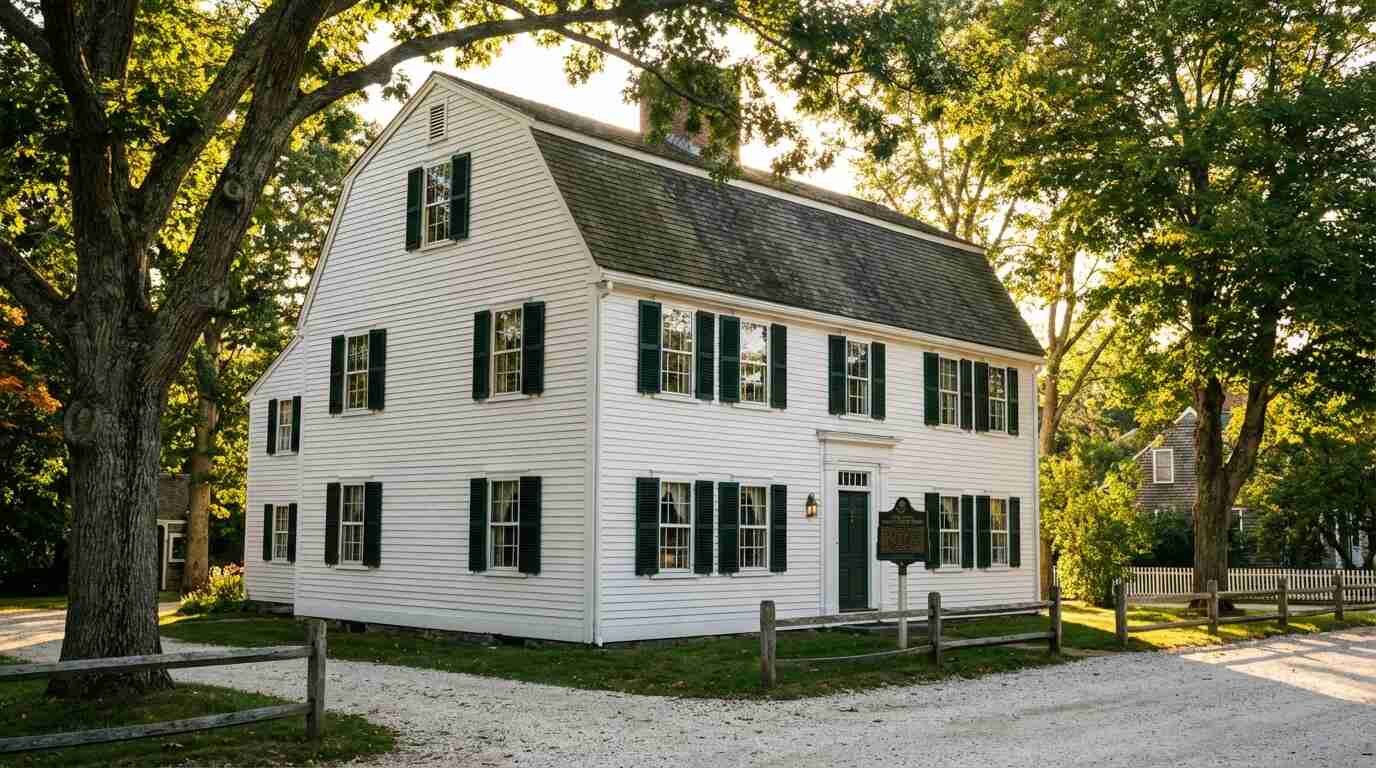
There is a house on West Main Street in Oyster Bay that most people drive past without slowing. The sign is modest, the exterior familiar in the way that 18th-century frame structures become familiar when they survive long enough — absorbed into the visual grammar of a town until they register as backdrop rather than document. I have walked through Raynham Hall perhaps a dozen times, always with the particular attention I bring to properties whose walls have held more than the ordinary accumulation of domestic life. Each time, I find myself thinking about the difference between history as story and history as evidence.
The Culper Ring is, by now, a story. It has been adapted, dramatized, and popularized to the point that its cinematic version has largely displaced the documented one in public memory. What the scholarly and archival record actually establishes is a more methodical and, in several respects, more interesting argument — one in which Raynham Hall occupies a specific evidentiary role that repays careful analysis.
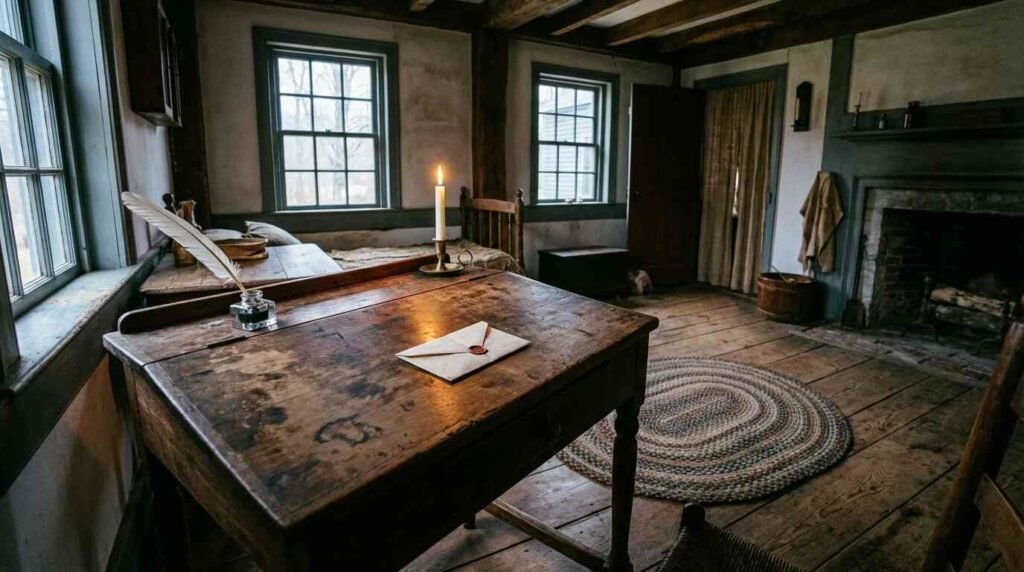
The Factual Foundation: What the Structure Is
Raynham Hall is the preserved home of Samuel Townsend, a prosperous Loyalist merchant who acquired the property in Oyster Bay in 1738. The house — expanded over subsequent decades — was occupied during the British garrison of Long Island following the Battle of Long Island in August 1776. From late 1778 through the winter of 1779, it served as the headquarters of Colonel John Graves Simcoe, commanding officer of the Queen’s Rangers, one of the most effective Loyalist military units in the British order of battle.
Samuel Townsend’s son, Robert, would be identified — posthumously, and with some scholarly dispute about the identification’s certainty — as Agent Culper Junior, the final link in the intelligence chain that ran from Long Island through Abraham Woodhull (Culper Senior) to Caleb Brewster’s whaleboats crossing the Sound to Benjamin Tallmadge and ultimately to Washington’s headquarters.
The house’s significance to the Culper scholarship is not that espionage occurred within it — it is that it is the only surviving primary structure associated with an identified Culper operative that has been preserved, documented, and subjected to sustained archival investigation. That distinction matters for understanding what it can and cannot establish.
The 1930 Discovery and Its Evidentiary Status
The scholarly foundation for Robert Townsend’s identification as Culper Junior rests substantially on the work of Morton Pennypacker, a Long Island historian whose 1939 publication General Washington’s Spies presented the first systematic decipherment of the Culper correspondence held at the William L. Clements Library at the University of Michigan. Pennypacker’s handwriting analysis — comparing Robert Townsend’s known commercial correspondence against the Culper letters — established the attribution that subsequent scholarship has largely accepted, with varying degrees of confidence about specific details.
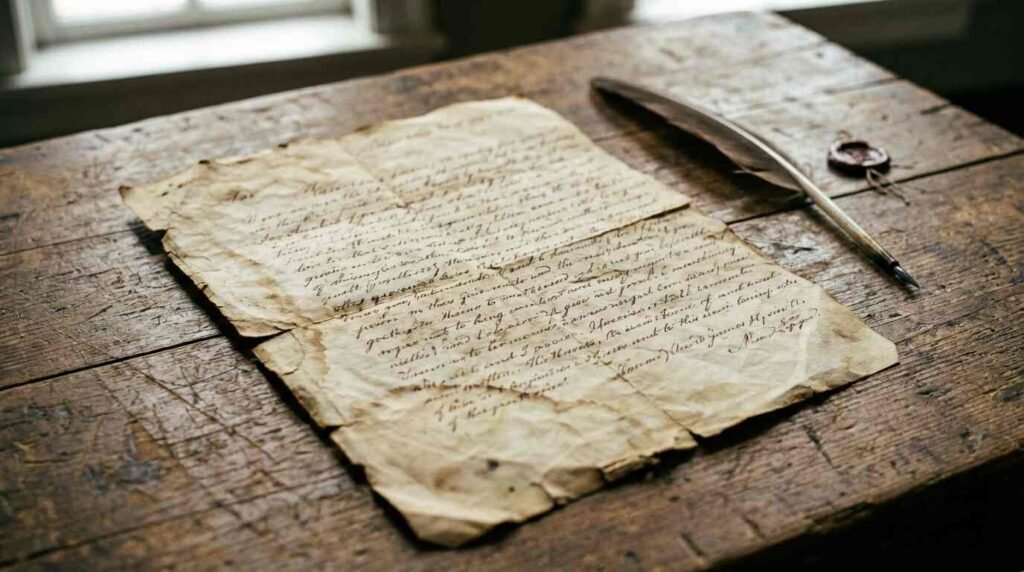
In 1930, before the Pennypacker volume appeared, a letter was discovered concealed within Raynham Hall — found, according to the museum’s documented account, in the structure itself during a period of investigation. This letter, written by Simcoe and referencing intelligence concerns, has been treated in the museum’s collection as material evidence connecting the house’s wartime occupancy to the active intelligence environment in which Robert Townsend was operating. Its evidentiary value is real but bounded: it establishes that significant intelligence activity was centered at or near the structure; it does not independently confirm Robert Townsend’s role.
The Culper correspondence at Michigan, analyzed by Pennypacker and subsequently by historians including Alexander Rose (Washington’s Spies, 2006), constitutes the primary documentary backbone of what can be established. The surviving letters, written in a numerical cipher and occasionally in invisible ink using a formula developed by Hercules Mulligan, document an operational intelligence network. The handwriting attribution, the geographic and temporal fit of Robert Townsend’s movements with the operational record, and the corroborating detail of Simcoe’s quartering at his family home constitute the chain of inference supporting the identification.
What the Documentary Record Actually Supports
A methodical reading of the available evidence supports the following with reasonable scholarly confidence: that Robert Townsend was recruited into the Culper network by Abraham Woodhull around 1778; that he operated in New York City as a commercial cover identity, gathering intelligence on British troop movements and fortifications; that his intelligence passed through Woodhull to Brewster to Tallmadge and to Washington; and that the Culper network’s product was used in the planning of several significant Continental operations, including the identification of British awareness of the planned French landing at Newport.
What the record supports with less certainty: the specific content of individual intelligence items attributed to Culper Junior; the precise mechanics of how intelligence passed from Robert Townsend through his family network and whether Raynham Hall itself served as a transmission point; and certain biographical details about Robert Townsend’s personal experience of operating under British occupation of his family home.
What is speculative: much of the narrative texture that has accumulated around the Culper story in its popular form — particular conversations, the role of specific family members whose participation is inferred rather than documented, and the dramatic elements that make for compelling adaptation but require going beyond what the surviving letters and records actually say.
The Material Record at Raynham Hall and Its Historical Function
The Raynham Hall Museum’s collection functions as a primary source site in a specific and important sense: it preserves material evidence from the occupation period — period furnishings, documentary records, and the physical structure itself — that grounds the historical narrative in verifiable physical reality. The 1778 quartering records associated with the Queen’s Rangers, the structure’s period correspondence archive, and the physical evidence of the house’s occupation layer constitute a category of evidence that written records alone cannot supply.
Historians who have worked with primary source material on the Culper network — Rose’s work being the most comprehensive popular synthesis of the scholarship — have treated Raynham Hall as a significant site precisely because it anchors the story in physical place rather than abstraction. The house that Simcoe occupied, where Robert Townsend presumably navigated the presence of the British officer who would eventually discover and dismantle portions of the network, is not a reconstruction or an approximation. It is the structure.
That physical continuity is rarer than it seems in colonial-era historical scholarship. Most primary structures associated with Revolutionary-era intelligence activity — safe houses, transmission points, meeting locations — are gone. Raynham Hall’s survival is not incidental to its significance; it is constitutive of it.
I have always found that properties with documented history sell differently — not necessarily at higher prices, though sometimes that too, but with a different quality of attention from buyers. There is something about a structure whose material record extends into historical significance that changes how people stand inside it. They stop being prospective buyers and become something more like witnesses.
Raynham Hall operates this way on a different scale entirely. It is a property whose evidentiary record has been the subject of scholarly argument for nearly a century, whose walls held, during a span of perhaps two years in the late 18th century, some portion of the documentary and operational history of an intelligence network that contributed measurably to the outcome of the Revolution. The scholarship does not establish everything that the popular narrative claims. It establishes enough.
You Might Also Like
- The Setauket Three and the Streets They Left Behind: What the American Revolutionary Spy Ring Still Does to Port Jefferson Area Property Values
- What Your Title Commitment Is Actually Telling You: How to Read a Chain of Title Like a Property Historian
- Chain of Title and the Matinecock Deed: What 17th-Century Land Transfer Documents Reveal About the Legal Foundations of Gold Coast Ownership
Sources
- Raynham Hall Museum, Oyster Bay, NY
- William L. Clements Library, University of Michigan — Culper Spy Ring Papers
- Alexander Rose, Washington’s Spies: The Story of America’s First Spy Ring (Bantam Books, 2006)
- Morton Pennypacker, General Washington’s Spies on Long Island and in New York (Garden City, 1939)