Huntington Village, NY — The North Shore Neighborhood Guide
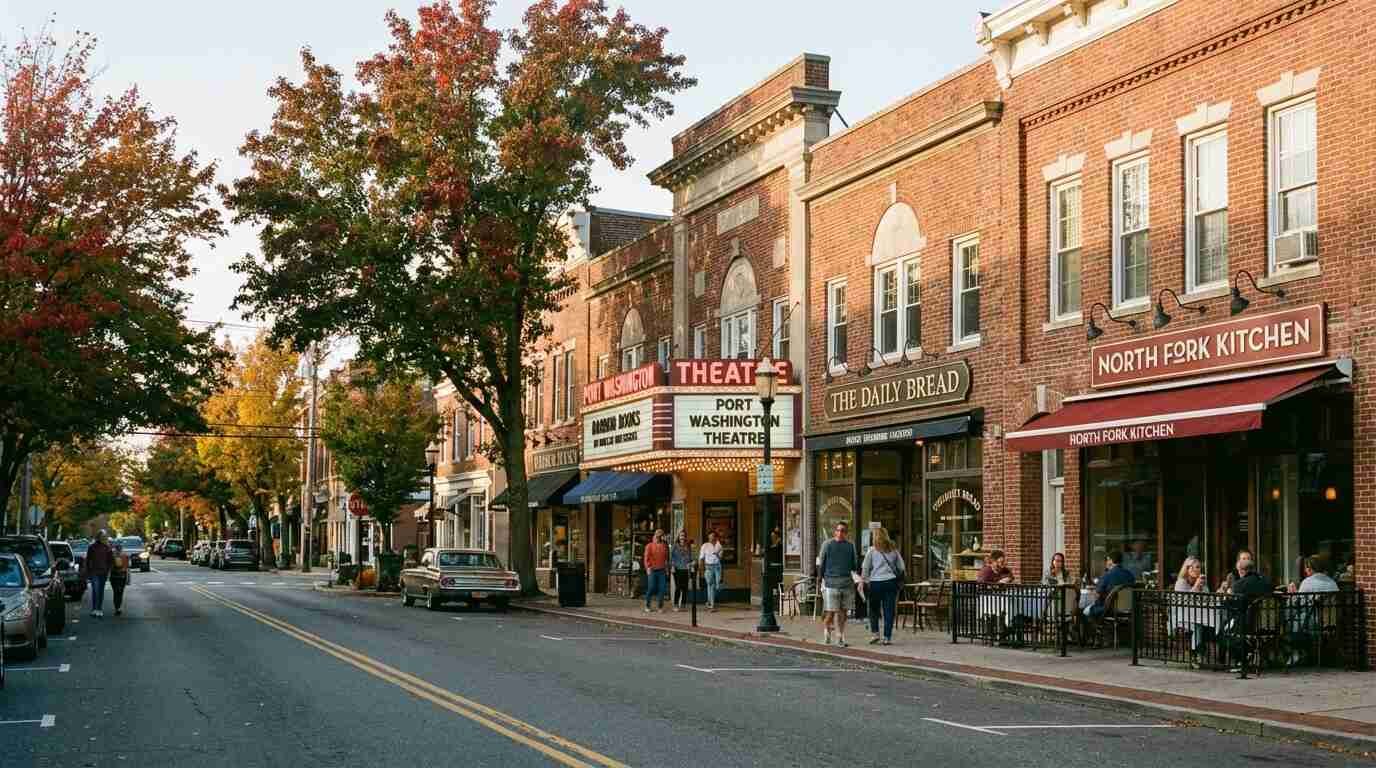
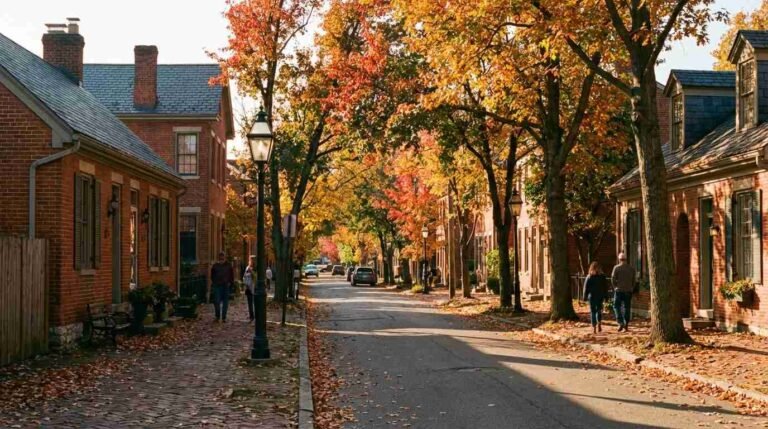
The first thing you notice about Huntington Village is that people are actually walking. Not in the way people walk through a parking lot to a big-box store — walking the way a place designed for it produces: unhurried, sidewalk-facing, stopping to look in windows. Main Street in Huntington Village has that quality that most North Shore commercial corridors abandoned decades ago and now spend enormous amounts of money trying to recover. It still has it natively. That’s a harder thing to price than it looks.
Huntington Village sits within the Town of Huntington on the western end of the North Shore — about 35 miles from Manhattan by road, closer by rail. The village proper is a dense, walkable core surrounded by residential neighborhoods that expand outward toward the harbor, the hills, and the quieter blocks where the houses get larger and the driveways longer. The distinction between “Huntington Village” and “the Town of Huntington” matters to buyers: the Village is the walkable commercial heart, the town is the larger municipality. When people say they want to live in Huntington, what they usually mean is that they want to be close enough to the Village to use it without thinking about it.
The Village Center
Main Street and New York Avenue form the backbone of the commercial district — restaurants, independent shops, galleries, a coffee culture that has deepened considerably in recent years. The vibe skews local rather than chain, which is not an accident: Huntington’s downtown has resisted the homogenization that has flattened a lot of Long Island commercial strips, and its residents are actively invested in keeping it that way.
The Paramount theater anchors the block on Main Street and has been drawing national touring acts for years — it’s one of the reasons Huntington’s cultural reputation extends well beyond its footprint. A Friday night in downtown Huntington has a density that takes people by surprise if they’re arriving from quieter parts of the North Shore. It’s not Manhattan, but it’s recognizably alive.
Heckscher Park sits at the northern edge of the downtown core — 18 acres of gardens, lawns, and waterfront access on Huntington Harbor. The Heckscher Museum of Art is there, housed in a 1920 Beaux-Arts building, and the park hosts summer concerts, festivals, and the kind of low-key daily use that transforms a neighborhood rather than merely decorating it. I wrote at length about the Heckscher Museum’s cultural history and its formative role in the local arts scene in The Huntington Arts District’s Invisible Infrastructure — worth reading if you’re trying to understand why the arts scene here is institutional rather than incidental.
The School District
Huntington Union Free School District serves the village and surrounding areas. The district includes Walt Whitman High School, South Huntington Union Free School District serves some portions, and buyers should verify exactly which school zone a specific address falls into — the town’s boundaries and district lines don’t always match the intuitive geography. That said, Huntington High School has a strong academic profile with extensive AP offerings and a robust arts program, and the district overall is considered one of the better public school options on the western North Shore.
For buyers weighing the school question carefully, our post on The Best School Districts in Suffolk County and What They Do to Home Prices gives useful context for how district quality maps onto price, and what to verify before making an offer in any town with complex district boundaries.
Commute and Access
Huntington Station on the LIRR’s Port Jefferson Branch puts Penn Station roughly 75 to 90 minutes away by rail, with express service options shortening that considerably during peak hours. The proximity to the Long Island Expressway (Exit 49 series) and the Northern State Parkway makes the car commute to western Long Island or the bridges workable. For professionals employed on Long Island — Huntington Hospital, the Northport VA Medical Center, Estee Lauder’s facilities in Melville — the commute may be negligible.
The average commute time for Huntington residents runs just under 34 minutes, which is somewhat above the national average but reflects the reality of a community where a significant portion of the working population commutes into Manhattan. The LIRR is widely used, and a meaningful share of buyers factor train proximity into their decision with the same rigor they’d apply to lot size or school district.
The Waterfront
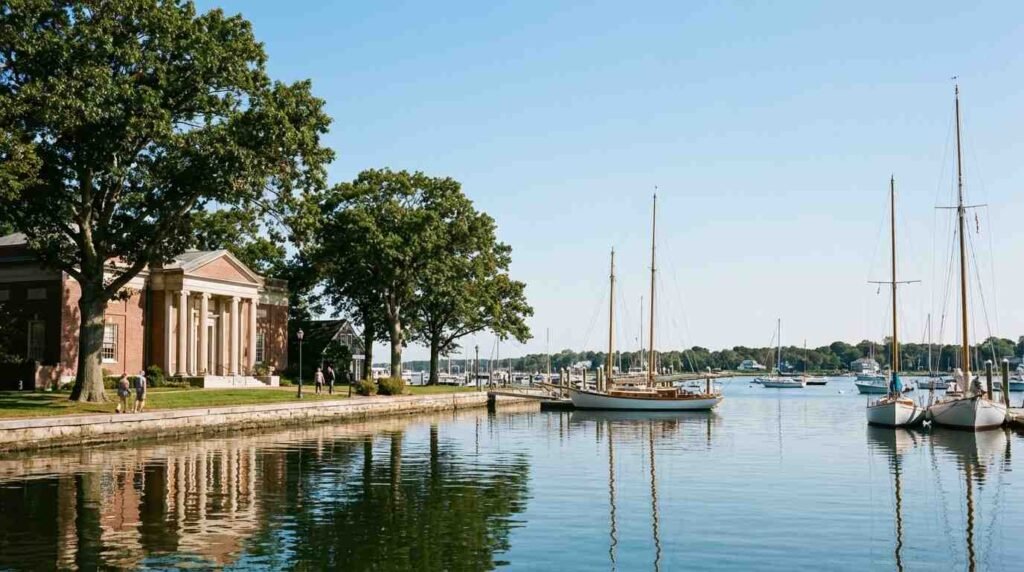
Huntington Harbor is not incidental — it is load-bearing to the character of the neighborhood. Cold Spring Harbor opens to the west, and the harbor-adjacent streets (particularly around the Mill Dam Road area and the properties overlooking the water) command a premium that reflects the view, the boating access, and the feel of a town that genuinely faces the water rather than turning its back on it. The Vanderbilt Museum and Marine Museum in nearby Centerport — which I explored in The Landlord Nobody Remembers: How the Vanderbilt Estate Breakup Shaped Modern Centerport — adds cultural weight to the broader harbor area.
Crab Meadow Beach gives residents Sound access. The harbor is active with small craft through the warm months. The restaurants and bars near the water stay busy in a way that beach communities on the South Shore would recognize — seasonal energy that fades at the edges in winter and returns at the center in summer.
The Housing Stock
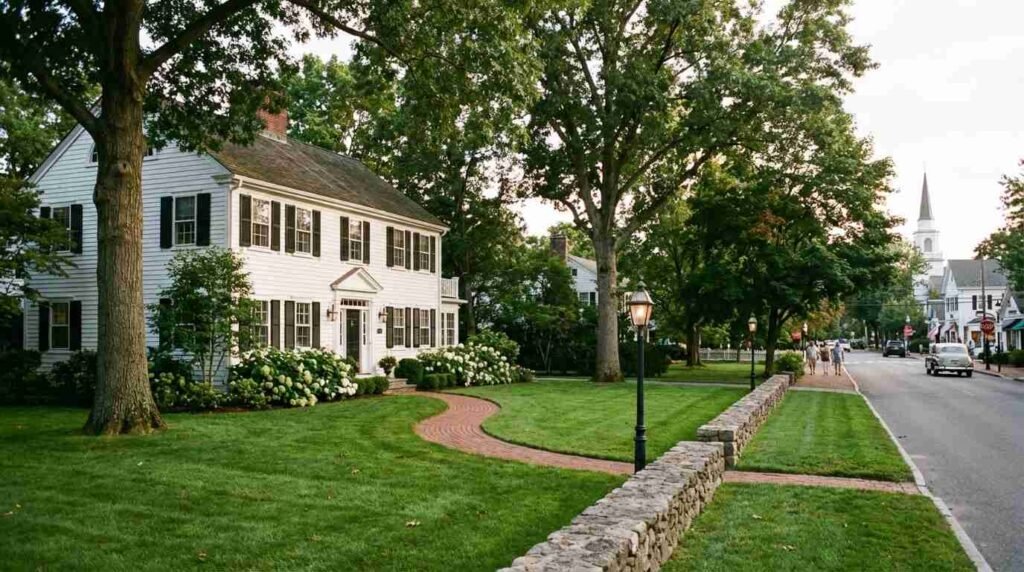
The residential neighborhoods around Huntington Village offer considerable variety. The blocks closest to the downtown core tend toward Colonials and center-hall layouts on half-acre lots — houses built with enough substance to have aged into character rather than obsolescence. Move north toward the harbor or up into the hills west of the village and the lots expand, the houses grow, and the price per square foot shifts accordingly.
New construction exists but is not the dominant story here. This is mostly a market of existing homes, renovation activity, and the occasional teardown on a particularly desirable lot. Buyers who are looking for something move-in ready and newer should expect to pay the premium for it — or factor renovation into their approach, which means thinking carefully about the issues I covered in The Contractor Shortage Nobody Warned You About, particularly the permit timeline reality in Suffolk County.
The Market
The Town of Huntington real estate market has been tracking a median sold price in the range of $820,000 to $850,000, with year-over-year appreciation running in the mid-to-high single digits as of late 2024 and into 2025 — verify current figures before acting. Homes in Huntington have been selling in roughly 34 to 42 days on average, which is active without being frantic. The inventory picture remains tight: there are buyers for good properties, and well-priced homes in the village core move quickly.
Huntington Village proper skews toward the higher end of that range. The walkability premium is real and has become more so as buyers emerging from remote-work arrangements have reoriented toward places where they can actually use their neighborhood. The combination of walkability, waterfront access, cultural infrastructure, and a school district that performs — that’s a package that is genuinely difficult to replicate on the North Shore, and the market reflects it.
Who Lives Here and Why
The buyer and resident profile in Huntington Village is distinctly mixed, which is part of its character. Young professionals who want the urban texture of a walkable downtown without the Manhattan price tag. Families anchored to the school district and the park. Empty nesters who sized down from larger homes in Smithtown or Dix Hills and found that the Village gives them everything they actually use. A creative and arts-adjacent cohort drawn by the Paramount, the galleries, and the general sense that cultural life here is taken seriously.
Per capita income in Huntington runs substantially above state and national averages, and the educational attainment of the adult population is strikingly high — over two-thirds of adults hold four-year college degrees or beyond. The professional composition of the town skews toward management, healthcare, finance, and education, and that profile is particularly concentrated in the neighborhoods nearest the village center.
I find that buyers who end up in Huntington Village often describe it as the place they kept coming back to after looking elsewhere. It has a gravitational quality — the kind of place that’s easier to appreciate on the second and third visit than on the first. The first time, you notice the traffic on Route 25A. The second time, you notice the sunset over the harbor. By the third, you’re asking about schools.
You Might Also Like
- The Huntington Arts District’s Invisible Infrastructure
- The Landlord Nobody Remembers: How the Vanderbilt Estate Breakup Shaped Modern Centerport
- Miller Place, NY — The North Shore Neighborhood Guide
- The Best School Districts in Suffolk County and What They Do to Home Prices
Real estate markets change. This post reflects conditions as of April 2026. For current listings and market data, contact Pawli at Maison Pawli.