Commission Lawsuits, New Rules, and What Long Island Buyers Are Actually Paying Agents in 2026

Commission conversations in real estate have always been a little awkward. There’s a convention that persisted for decades: the seller pays, the split happens behind closed doors, the buyer never really thinks about it. That convention is gone now — or at least it’s supposed to be.
The NAR settlement took effect August 17, 2024. We’re now nearly two years in, and I still field questions weekly from buyers who aren’t sure what they’re agreeing to when they sign a buyer representation agreement, and from sellers who aren’t sure what they’re obligated to offer. The confusion is understandable. The coverage has been noisy, some of it contradictory, and the on-the-ground reality here on Long Island doesn’t always match the national narrative.
Let me give you the honest version.
Where the NAR Settlement Rules Stand in May 2026
The core mechanics of the NAR settlement have been in place since August 2024 and are not going anywhere. The two most significant changes for buyers:
First: Buyer’s agents working with a buyer to tour a home must have a written buyer representation agreement in place before that tour. The agreement must specify, in concrete terms, how the agent will be compensated — a flat fee, a percentage, or an hourly rate. “Whatever the seller offers” is no longer acceptable language. The number has to be there.
Second: Offers of buyer-agent compensation can no longer be communicated on NAR-affiliated MLSs. Sellers can still offer to pay a buyer’s agent — many do — but that offer happens outside the MLS, through direct negotiation rather than as a field in the listing data.
New York followed. NYSAR adopted the settlement’s requirements, and OneKey MLS — which covers Long Island — implemented the rule changes on the August 2024 schedule. For North Shore buyers, this means that if you tour a home with an agent, you will have signed an agreement specifying what that agent earns. Full stop.
A separate piece I wrote covering the practical mechanics of these agreements — The New Buyer’s Agent Agreement: What Long Island Buyers Must Sign Before Their First Showing — goes deeper into what to look for in that document and what language to push back on.

What ‘Buyer Representation Agreements’ Mean for Long Island Buyers
The buyer representation agreement is not inherently bad for buyers. Done right, it’s clarifying. It tells you exactly what your agent expects to earn, what services you’re getting, and under what circumstances you can walk away.
What to look for in the agreement — and what to ask about:
The compensation figure. It must be a specific number or percentage. If an agent hands you an agreement with vague language about compensation being “whatever is customary” or “subject to negotiation,” that’s a red flag. Ask for a number.
Exclusivity and duration. Most agreements are exclusive — you’re committed to working with that agent for a specified period on properties in a specified geography. A 90-day exclusive with a reputable agent for the North Shore is reasonable. A 12-month agreement covering all of New York State is not something most buyers should sign.
The exit clause. What happens if things aren’t working? A fair agreement has a clear process for termination. If an agent is unable or unwilling to explain what happens if you want to end the relationship, that tells you something about how they operate.
Who pays. The agreement will state a compensation figure; the agent may or may not ultimately be paid that amount by the seller. If the seller’s offer of buyer-agent compensation is less than what your agreement specifies, the gap is theoretically yours to fill. In practice on Long Island right now, most sellers are still offering buyer-agent compensation — but more on that below.
Are Sellers Still Offering Buyer Agent Compensation on Long Island?
Yes — more often than the headlines would suggest.
The fear when the settlement rules took effect was that sellers would opt out of offering buyer-agent compensation, forcing buyers to pay their agents out of pocket and effectively pricing first-time buyers out of representation. That hasn’t happened at scale, nationally or here.
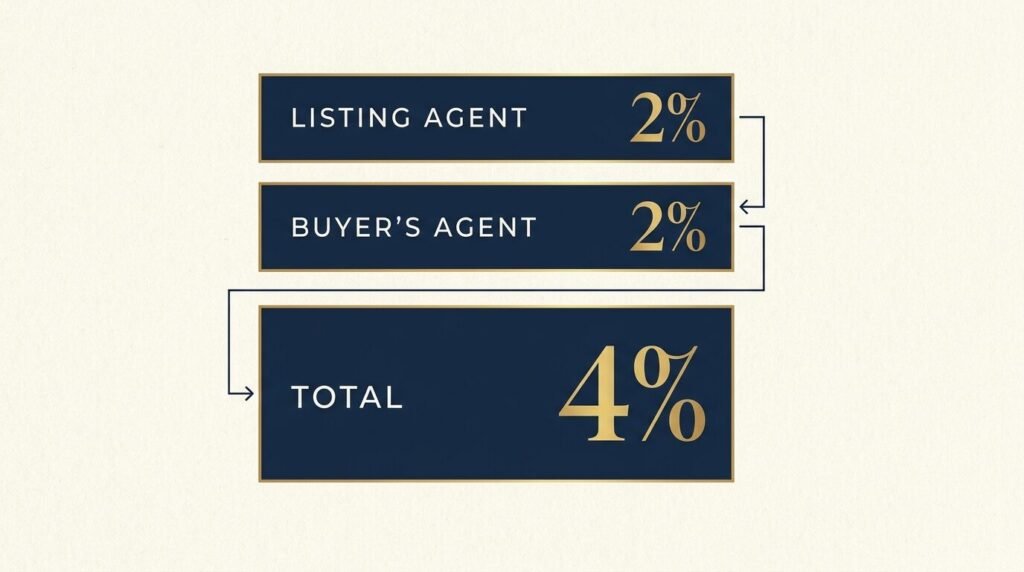
Data from HousingWire reporting on post-settlement commission trends showed that among Real Brokerage’s survey of 300 agents, 63% reported home sellers often covering buyer-broker commissions, with another 21% saying sellers occasionally covered the cost. Commission rates nationally have actually ticked slightly upward since the settlement — Clever Real Estate’s survey found the average total commission at 5.44% in 2026, with buyer’s agents averaging 2.67%. That’s modestly above pre-settlement levels.
The reason is straightforward market logic: sellers who refuse to offer buyer-agent compensation often see less traffic. Buyers working with agents have a natural preference for listings where their agent gets paid, and in a market where sellers still need every qualified buyer they can attract, most have concluded that offering compensation is good strategy.
On Long Island, I’m seeing this clearly. Well-priced listings in Mount Sinai, Miller Place, Setauket — the ones that come to market properly — almost universally include an offer of buyer-agent compensation. It’s not guaranteed, it’s not automatic, but it is the dominant pattern.
This can change if the market shifts further toward buyers, and sellers gain enough leverage to push back. But we’re not there yet on the North Shore.
How Maison Pawli Approaches Transparent Commission Conversations
I’ll be direct about how we operate, because this matters.
Maison Pawli’s listing commission structure is tiered and fully disclosed. Our Smart Seller package is $500 plus 0.5%. Our Professional tier is 1%. Our Premier tier is 2%. We’ve written about this at length in The 1 Percent Model: Why Maison Pawli Lists for 1% When Nobody Around Us Will Tell You What They Charge because we believe sellers deserve to know what they’re paying and why.
On the buyer representation side, I operate the same way: the agreement you sign with me specifies exactly what I earn and under what circumstances. If a seller offers buyer-agent compensation that covers my fee, you pay nothing out of pocket. If the seller’s offer falls short, we have that conversation explicitly — before you make an offer, not at the closing table.
What I don’t do is obscure the math. The history of real estate commissions has been defined by opacity — everyone knew money was moving, few people knew exactly how much or why. That era is over, and I think the industry is better for it.
If you’ve had an agent hand you a buyer representation agreement and struggled to get a straight answer about how they’re compensated, that’s worth noting. The settlement’s transparency requirements aren’t just legal formalities. They’re minimum standards for a professional relationship.
The Bottom Line: What to Ask Before You Sign Anything
Whether you’re a first-time buyer navigating this landscape for the first time or someone who bought a decade ago and is returning to a market that’s changed substantially, here are the questions that matter:
What is your commission, exactly? Get a number. Percentages are fine; “it depends” is not.
Who pays you, and what happens if the seller doesn’t offer enough? Understand the gap scenario before you’re in it.
What are the terms for ending our relationship if it’s not working? A fair agent has a clear answer.
Can I see a sample of the buyer representation agreement before I sign? Any reputable agent should say yes without hesitation.
What services does your fee include? Showings, negotiation strategy, contract review coordination, inspection guidance, closing support — make sure the services match the compensation.
The commission conversation is no longer a secret one. It’s a professional one. The buyers who go into it prepared are the ones who get the best representation — and who avoid the version of this where they’re surprised at closing by costs they didn’t anticipate.
If you’re thinking about buying on the North Shore and want to have that conversation directly, I’m here. We can talk about what working together looks like, what it costs, and whether it makes sense — before anyone signs anything.
Real estate markets change. This post reflects conditions as of May 2026. For current listings and market data, contact Pawli at Maison Pawli.
This post is for informational purposes only and does not constitute legal or financial advice. Consult a licensed real estate attorney for guidance specific to your situation.
You Might Also Like
- The New Buyer’s Agent Agreement: What Long Island Buyers Must Sign Before Their First Showing
- The NAR Settlement’s Buyer Agreement Rule Is Fully In Effect — Here’s What Changed
- Full-Service at 1% vs. Full-Service at 6%: A Line-by-Line Comparison of What Sellers Actually Get
- The Dual Agency Disclosure You Signed Does Not Mean What You Think It Means
Sources
- NAR Settlement FAQs
- HousingWire: Are NAR Settlement Rules Pushing Down Agent Commissions?
- Clever Real Estate: 6% Real Estate Commission — 2026 Rates
- Forchelli Deegan Terrana Law: Effects of the NAR Settlement in New York
- StreetEasy: NAR Settlement Implications for the NYC Market