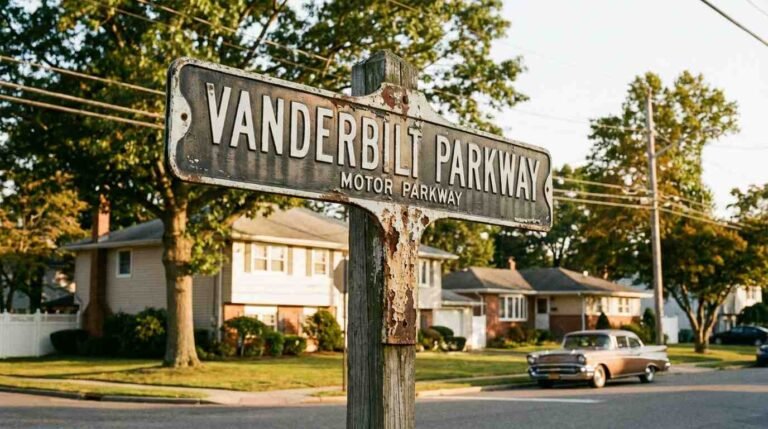
Suffolk County’s Route 110 Corridor Overhaul Is Moving — What the 2026 Construction Timeline Actually Means for Commuters
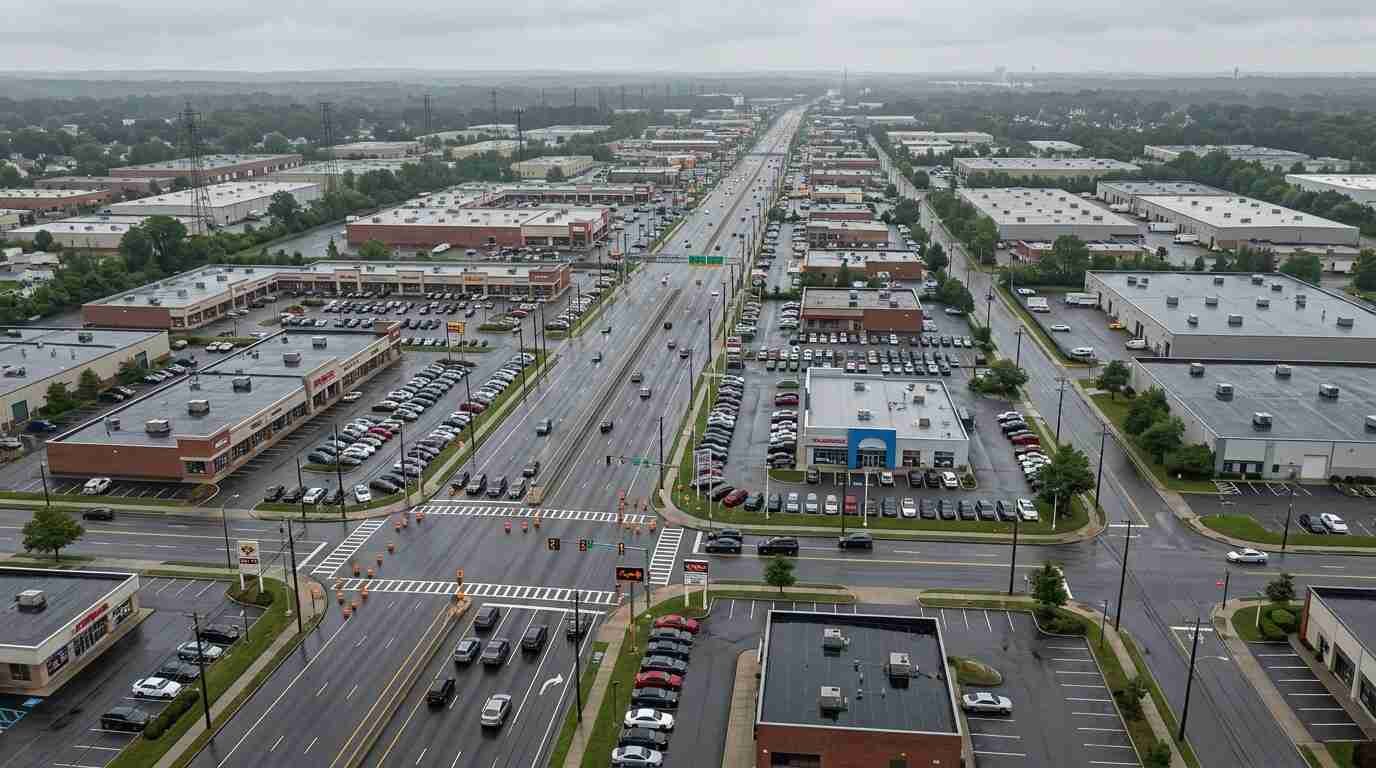
They paved over the problem for thirty years. Now the bill came due and it came due all at once.
Route 110 is not subtle about what it is. Fifteen miles of it, Amityville to Halesite, one of the most commercially packed stretches of road in New York State. Car dealerships. Industrial parks. Strip centers. Office buildings stacked behind parking lots stacked behind more parking lots. The Regional Plan Association estimates that corridor alone accounts for roughly 30 percent of all jobs in Suffolk County. Thirty percent. That is not a road. That is an economy held together by traffic signals and wishful thinking.
For decades, the fix was deferred. Widen a lane here. Repave a stretch there. Signal upgrades that took three years longer than anyone said they would. Meanwhile 50,000 vehicles a day used the road, the road asked nothing back, and everyone pretended the arrangement was sustainable. It wasn’t. Anybody who drove it during morning rush knew it wasn’t.
Now Suffolk County is in the final design phase of the Route 110 Bus Rapid Transit project — the first BRT line ever proposed for Suffolk County and for Long Island broadly — and the construction footprint that comes with it is not theoretical anymore.
What’s Actually Being Built on Route 110 Right Now
The project connects Amityville LIRR station on the south end to the Huntington downtown area on the north, threading through Farmingdale, Melville, and half a dozen in-between communities that have never had high-frequency transit in living memory. The design links all three LIRR branches — Port Jefferson, Ronkonkoma, Babylon — into one north-south spine. Theoretically, someone could take the bus from a job center in Melville to a LIRR train without a car. Theoretically.
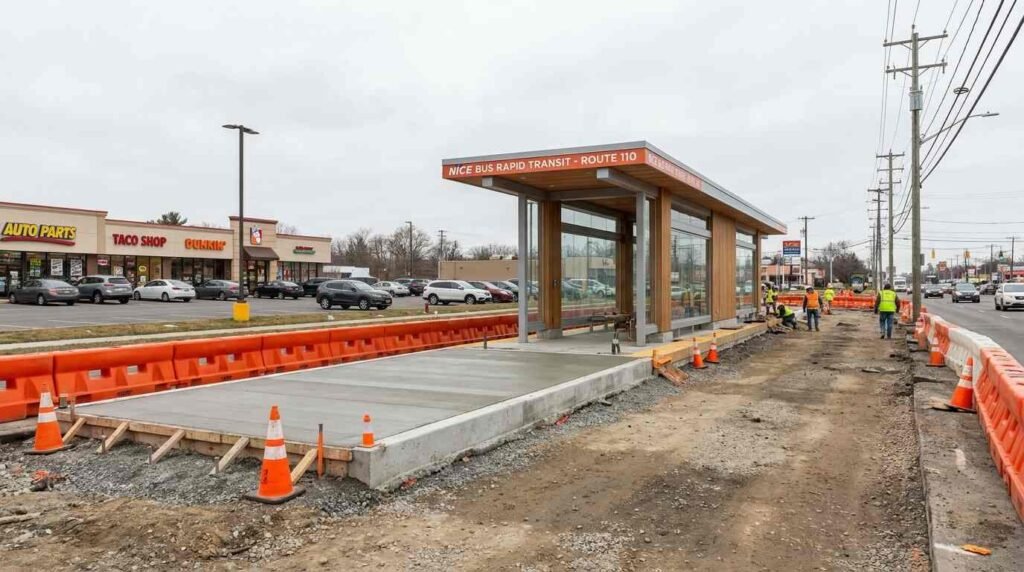
What’s being built, according to Suffolk County’s own project documentation: branded BRT stations with shelter infrastructure, bus-priority signals at key intersections, pedestrian facility upgrades at transfer hubs, and roadway modifications to support dedicated or near-dedicated bus lanes in the corridor’s most congested sections. The state transportation improvement program lists row acquisition funding for 2027, with the total project cost estimated in the $32–$50 million range.
The right-of-way acquisition piece is what most coverage misses. You can’t install bus stations and lane modifications without moving some things that don’t want to be moved. Business access points. Utility infrastructure that was never mapped correctly in the first place. The kind of complications that look simple on a rendering and run eighteen months in the field.
Which Intersections Are the Worst Bottlenecks This Season
The choke points are what they’ve always been. The LIE interchange at Route 110 is the obvious one — the $60 million reconstruction project from 2013 bought a decade of breathing room and now that decade is expiring in real time. The Northern State interchange is a second one. Both were built for traffic volumes that no longer exist on paper and that absolutely exist in the actual morning commute.
The proposed BRT station locations add new friction in the short term at nodes like the Farmingdale State College area and the Wyandanch LIRR connection — places where bus-priority treatments mean signal timing changes that will move delays around without eliminating them.
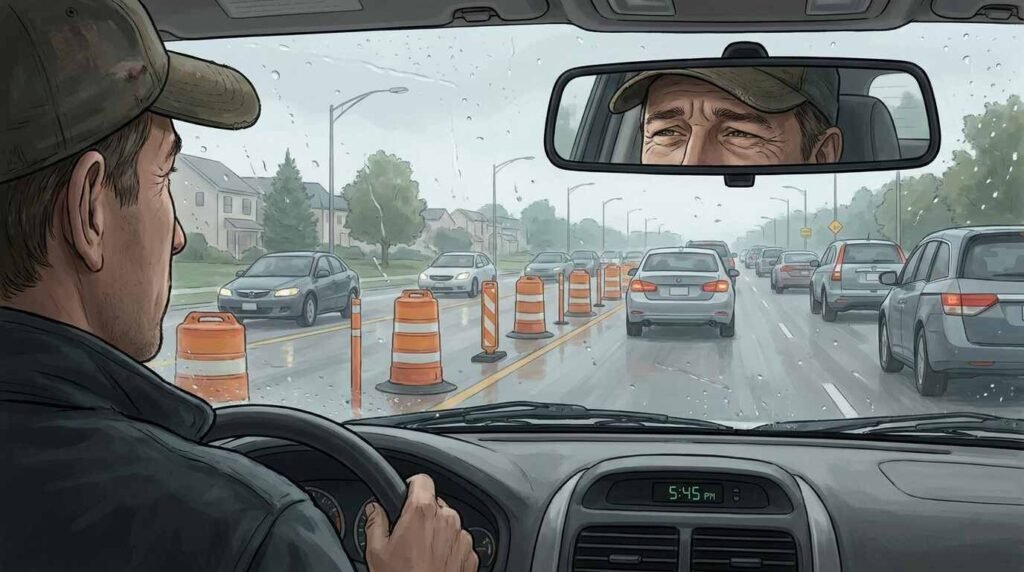
Melville in particular is going to absorb most of the construction-phase disruption. That section of Route 110 between the Northern State and the LIE has the densest concentration of office parks, and office workers have nowhere else to go. The Expressway is not a substitute. Walt Whitman Road is not a substitute. You sit on Route 110 and you wait, and the orange barrels multiply like something you can’t explain.
How Local Businesses Along the Corridor Are Absorbing the Hit
This is where the math gets honest. The businesses on Route 110 — particularly the ones with high parking-lot dependency, the dealerships and strip retail and fast-casual chains that rely on drive-through impulse traffic — are not built for reduced access. Their financial models assume you can get in and out without thinking about it. When you have to think about it, you often don’t bother.
Smaller operators have less cushion. The independent shops that occupy the B-grade retail between the big-box anchors run on margins that don’t accommodate a construction zone. Two months of diverted traffic is the difference between a good year and a bad one. Six months is something else.
The county’s own project language says access to businesses will be maintained during construction. That’s the standard commitment. It’s also the kind of commitment that sounds better before the first lane closure than after it. Every contractor who has ever done road work on a commercial corridor has made that promise. Not all of them have kept it.
Suffolk County’s economic development apparatus has positioned the BRT project partly as a tool for corridor revitalization — the idea that transit access unlocks transit-oriented development, that the office parks and strip centers eventually give way to denser, mixed-use nodes around the new stations. That is probably true on a twenty-year timeline. It is cold comfort to the diner that can’t get delivery trucks in during peak hours.
What the County Legislature Approved and When It Takes Effect
The Route 110 BRT has been in various stages of planning, study, and political consideration since Suffolk County’s original BRT feasibility study in 2014. The Transit Alternatives Analysis came in 2015. Preliminary engineering and environmental review ran through 2023. The project is now in final detailed design — refining construction-ready plans for roadway modifications and station sitings before construction mobilization.
Federal funding is part of the picture. The state transportation improvement program includes CMAQ funding allocations for the project in 2027. Row acquisition is listed for the same year. Vehicle equipment and charging infrastructure for the electric bus fleet — approximately 30 battery-electric buses — is programmed separately. The pieces are in place. They are moving at the speed that public infrastructure moves, which is a specific kind of speed: slower than anyone planned, faster than it looks from the outside.
The county legislature’s involvement has been consistent if not always urgent. Transportation infrastructure at this scale requires sustained political will across multiple electoral cycles, which is why projects like this take a decade from feasibility study to ground-breaking. Every election introduces new voices who want to renegotiate the assumptions from the prior cycle. Route 110 has survived that process. Most projects don’t.
What Drivers Should Realistically Expect Through the End of 2026
Here is the honest version. Through the end of 2026, the Route 110 corridor will continue to operate under the current condition with construction-phase preparation underway — final design work, right-of-way acquisition processes beginning, utility coordination happening below the surface. What you won’t see yet: lane closures at scale, signal timing disruptions, or station construction. That phase is programmed for 2027 and beyond based on current funding timelines.
What you will see, already, is the upstream effect. Businesses repositioning. Real estate along the corridor being looked at through a different lens — transit-oriented development potential is a real underwriting consideration now, not a planning hypothetical. The Hauppauge Industrial Park area and the Route 110 Melville office park corridor have been absorbing deferred investment for a generation. The BRT announcement is not a cure. But it is a signal.
For regular commuters, the practical advice is to expect phased disruption beginning in 2027 and to start learning alternative routes now, before you need them. Walt Whitman Road. Conklin Street. The back ways through Huntington Station that locals know and outsiders discover the hard way. The commute you have today is not the commute you’ll have in two years. The corridor is changing. The only question is whether the change catches you or you catch the change first.
Every time a road gets rebuilt, somebody acts surprised. The road didn’t get worse overnight. The decision to fix it just arrived.
This post reflects information available as of May 2026. Construction timelines and project phases are subject to change — verify current status at connectli.org or Suffolk County’s Route 110 BRT project page. For how infrastructure changes affect North Shore property values, contact Pawli at Maison Pawli.
You Might Also Like
- Poured Concrete and Postwar Optimism: The Forgotten Modernist Office Parks of Route 110
- The Forgotten Factory Town: How Hauppauge Industrial Park Rose From a Potato Field
- The Vanderbilt Connection Nobody Talks About: How Gilded Age Money Quietly Shaped Commack and Huntington Station’s Street Grid
Sources
- Connect Long Island — Route 110 BRT Project
- Regional Plan Association — Route 110 Corridor Opportunity Analysis
- RPA Fourth Regional Plan — Long Island Route 110
- NYSDOT Statewide Transportation Improvement Program (STIP) — Route 110 BRT funding listings
- Wikipedia — New York State Route 110
- Suffolk County — Route 110 BRT project page